
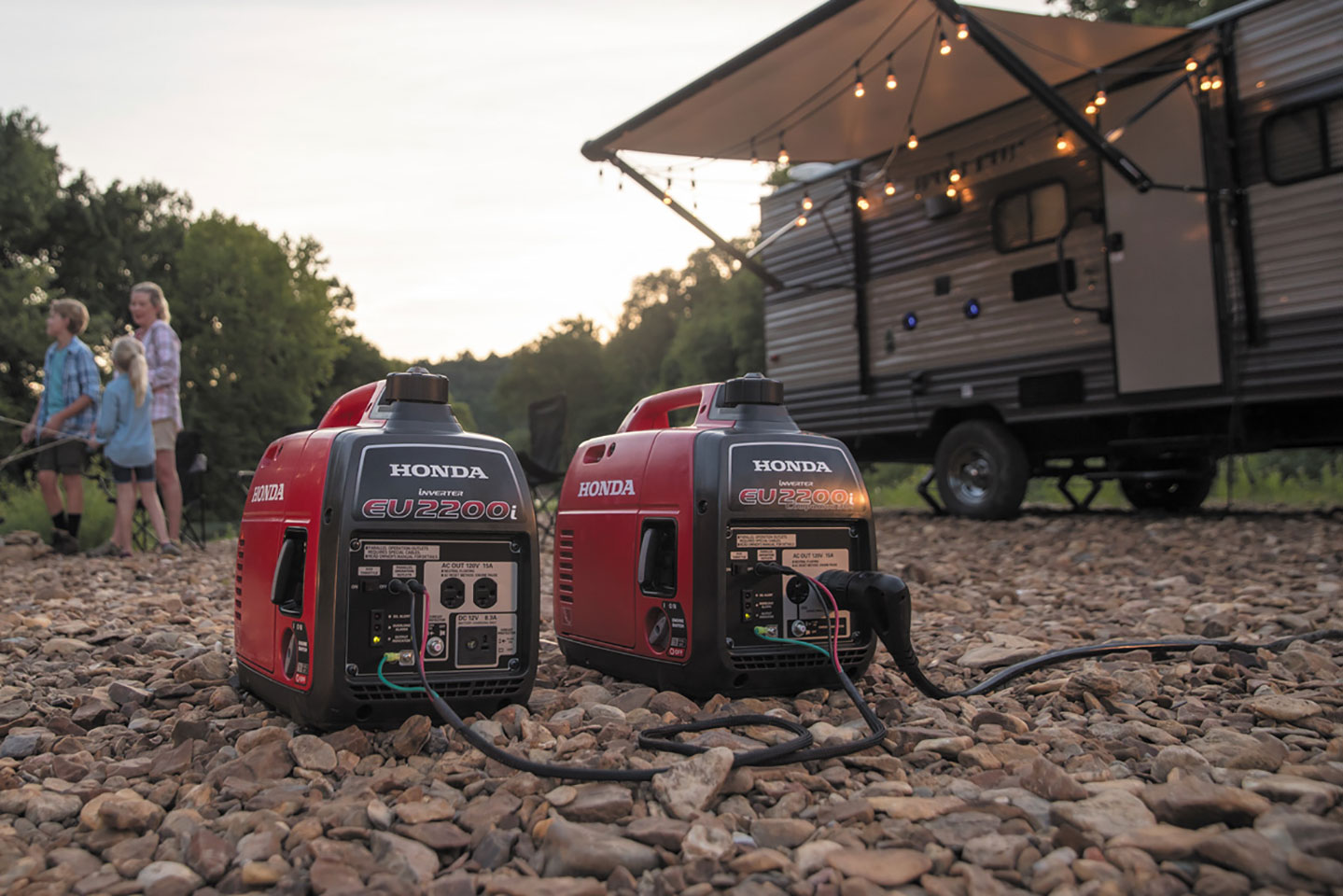
Considerations include output, size, noise level, and whether a unit is portable or permanent.
By Mark Quasius, F333630
July 2018
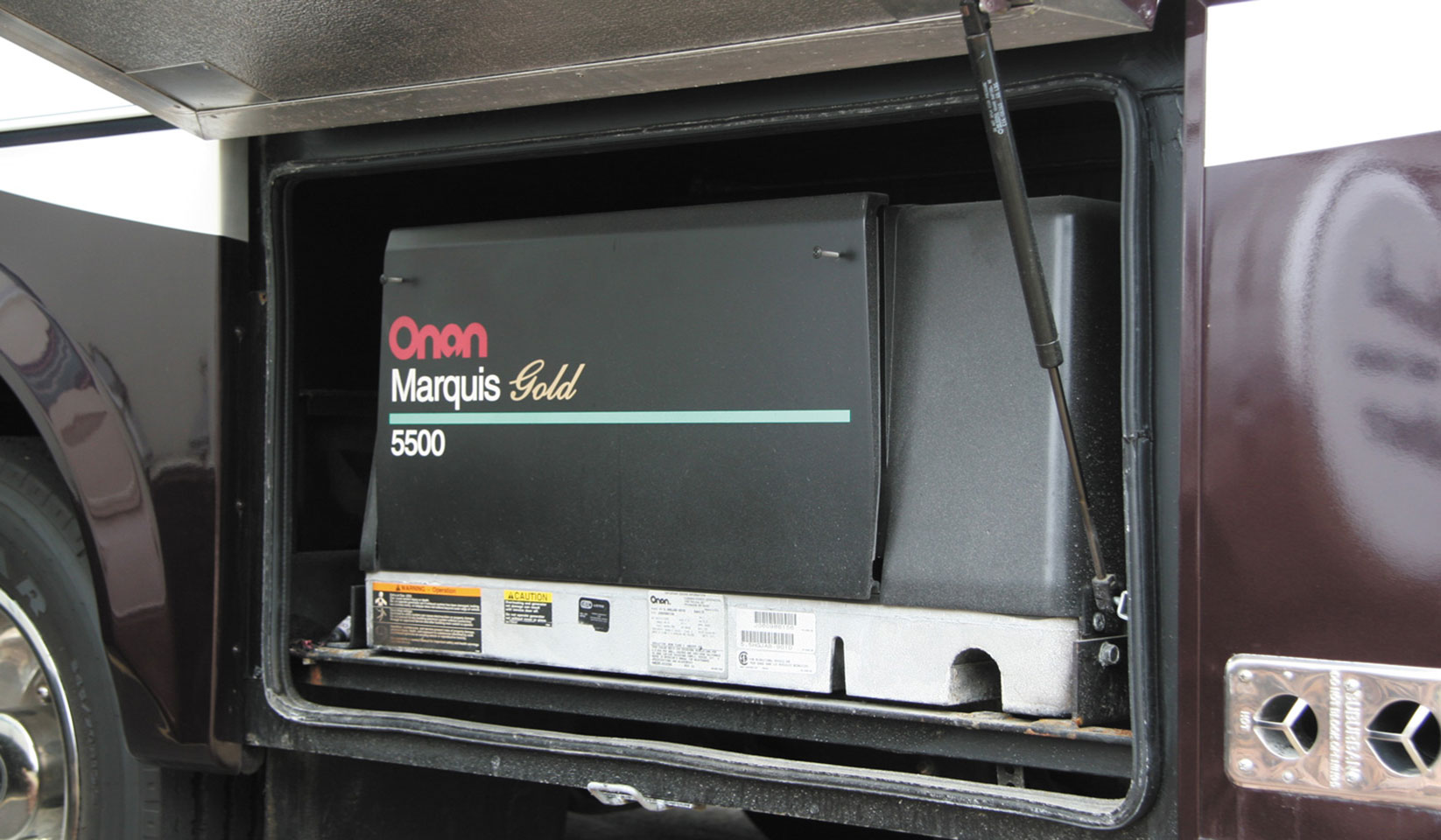
Generator options include the Cummins Onan Marquis Gold 5,500-watt gas-powered unit.
It’s nearly impossible to make do without electricity. If electric hookups are not available at a campsite, an RVer may turn to an inverter, which takes 12-volt-DC power from the RV batteries and changes it to 120-volt AC. But the batteries eventually lose their charge. And so, many RV owners at one time or another rely on a generator, whether to recharge the batteries or to provide AC electricity to run various components. Here’s what you need to know about generators.
Technology
Generators vary in type and size, but they all create electricity via a rotating magnetic field powered by an engine. Each time the magnet passes over a coil of wire, it induces a burst of electricity into that wire. The number of times this occurs per second is referred to as frequency, which is measured in hertz (Hz). In North America, AC power is generated at 60 Hz.
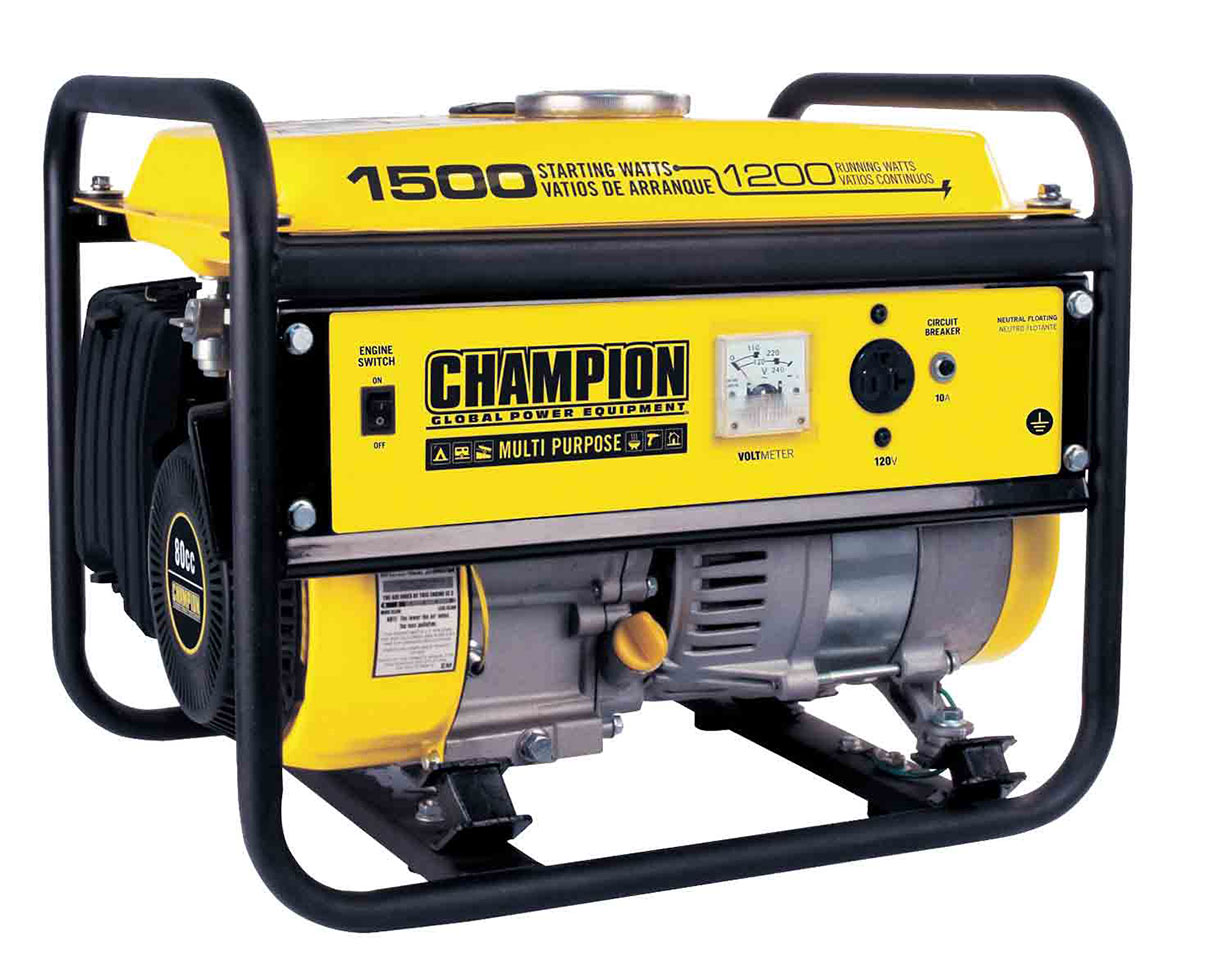
Champion 1,500-watt gasoline-powered generator.
In order to achieve 60 Hz from an AC generator that has two magnetic poles, the generator must spin at a constant 3,600 rpm. A generator with four poles in its rotor need only turn at 1,800 rpm to produce 60 Hz.
Most small portable generators are two-pole, 3,600-rpm units. The compact size of two-pole rotors allows the generator to be reasonably lightweight. The downside is that it is very loud as a result of its higher rpm.
A four-pole 1,800-rpm generator, with a larger rotor, frame, and engine, is heavier. But it is much quieter because of its lower rpm. The 1,800-rpm units generally are stationary and mounted in an RV, where weight and portability aren’t as important as noise levels.
Inverter Generators
Inverter generators have an engine powered by gasoline, diesel, or propane. DC current passes through the inverter and changes to 60 Hz AC current. Unlike a conventional generator that turns at a specific rpm, the inverter generator’s rpm is variable and regulated so it runs slower when the electrical load is light and it increases when more current is required. That lowers the noise level and improves fuel economy at slower speeds. Inverter generators can range from 1,000-watt portables, which are perfect for light camping operations, to 8-kilowatt diesel units permanently mounted in large diesel-powered motorhomes.
Sizing
Obviously, not everyone needs a 10-kilowatt to 20-kilowatt generator set, but choosing an undersized unit won’t do, either. Therefore, it’s important to analyze your power needs. Keep in mind that you may not need to run everything at the same time. Select a generator based on the maximum concurrent load.
Also keep in mind that generators can lose power at high altitudes or in extreme temperatures. According to the Cummins Onan RV Generator Handbook, generator power decreases 3.5 percent for each 1,000 feet above an altitude of 500 feet. In addition, power decreases by 1 percent for each increase of 10 degrees Fahrenheit above 77 degrees.
Stationary Or Portable?
You’ll need to decide whether you want to permanently install the generator or carry it as a portable unit. Much will depend on the unit’s size and your available storage space. If you have a light RV with minimal storage, you may choose a portable unit that can ride in the bed of a pickup truck rather than the RV. Portable units also have other uses, such as providing power during an electrical outage at your home.
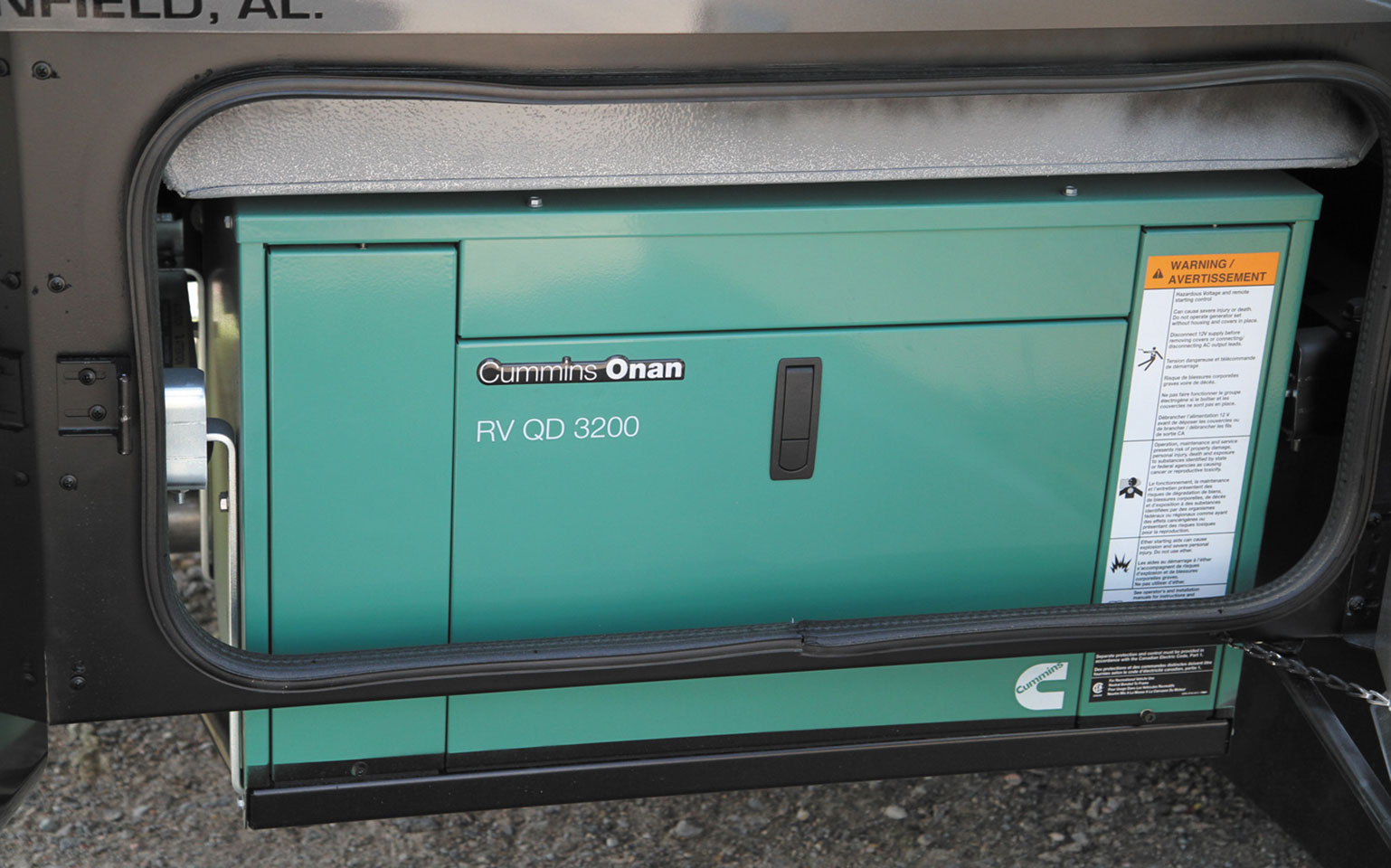
Cummins Onan 3,200-watt diesel unit.
Because small inverter-based units are extremely light and compact and have a low noise level, they can be a great choice for owners of smaller trailers, such as pop-up campers, who wish to power just a few basic items. As the energy demand increases, larger portables are an option, but noise level can be an issue in some areas.
A permanently installed generator most likely will be an 1,800-rpm unit, which is heavier but quieter. It also may be an inverter-based model, with variable rpm. Compact gasoline-powered units in the range of 3 kilowatts to 4 kilowatts are commonly installed in Type C motorhomes where the height in basement compartments is fairly short. Larger gasoline-powered units in the 5.5-kilowatt to 7-kilowatt range typically are found in Type A motorhomes with taller compartments.
More Options
Diesel-powered motorhomes have a wider variety of options. Compact 3.2-kilowatt units can be found in smaller Type C diesel-powered coaches, while Type A diesel pushers usually have their diesel-powered generators mounted behind the front cap. Generators often are mounted on slide-out rails that allow the unit to extend from the front of the motorhome for ease of service access.
Some diesel-powered generators, such as the Cummins Onan Quiet Diesel series, are large inverter-based generators, which minimize noise levels and fuel consumption when running at lighter loads. Such technology was common in the Quiet Diesel 7.5 series (which is no longer being made) and tops out at 8 kilowatts in the Quiet Diesel 8 series. In the Quiet Diesel 10-kilowatt and 12.5-kilowatt models, inverter technology is not used; the units run at a constant 1,800 rpm.
In most cases, the fuel tank that powers the motorized RV’s engine also provides fuel for the generator. So, gasoline-powered coaches usually have gasoline-powered generators while diesel-powered coaches typically have diesel generators. Gasoline is the primary power source for portable units.
Taking the time to select the best generator for your needs and camping style will ensure that you’ll be able to enjoy your RV experience in comfort without having to worry about power
issues.