
By Gary Bunzer, Technical Editor
July 2019
Reluctant Generator
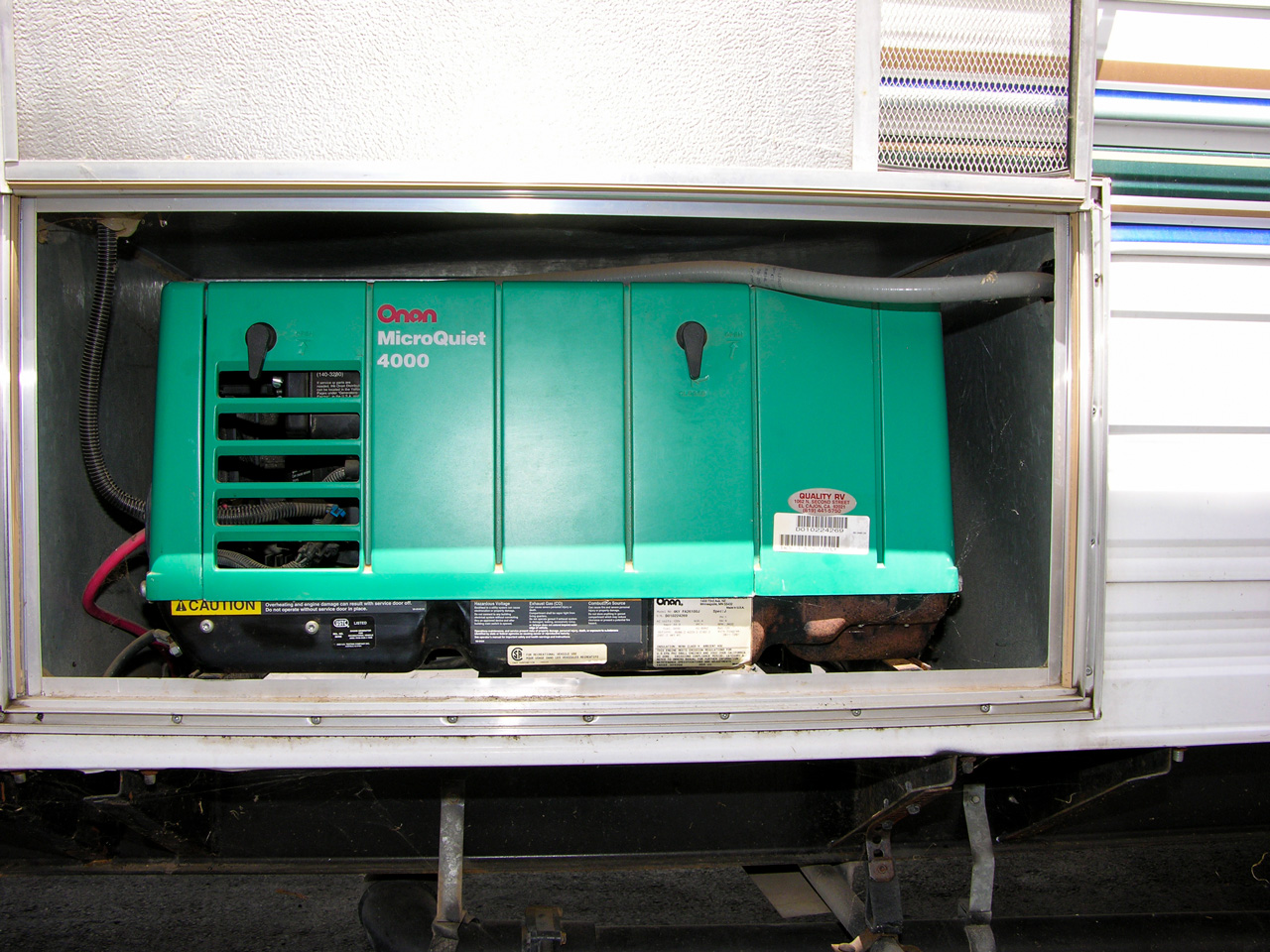
We have a 4,000-watt Onan RV generator that runs for about five minutes and then shuts down. I’m thinking the problem might be the electric fuel pump on the generator. Any ideas?
William Cronin, F496103
Auburn, Massachusetts
You may be correct about your generator, though there’s an outside chance it could be something electronic. Check the entire length of the fuel line, from the tank to the generator. It’s not uncommon for cracks in the rubber hose to allow air to be sucked into the system.
To verify or eliminate the fuel pump as the failed component, you can run some quick tests. You’ll not only check for fuel flow but also the actual fuel pressure. To perform the tests, you’ll need a fuel pressure gauge (available at most automotive parts stores).
1. Remove the fuel outlet line to the carburetor and connect the fuel pressure gauge.
2. Press the start button on the generator and hold it until a pressure reading is constant. The normal pump pressure should be 3.5 psi, +/- 0.5 psi.
3. If the pressure is zero, check the electrical connections. If the pressure is higher than 5 psi, carburetor flooding may occur. Pressure that is too high or too low may indicate improper fuel line installation. If yours has been fine until recently, then this is not likely the issue.
4. If the pressure is below 3.5 psi, replace the pump.
Another component, the inline fuel shut-off solenoid, can mimic the symptoms of a pump failure. To test the shut-off solenoid, connect a positive battery lead to the top terminal on the solenoid. Connect a negative battery wire to the grounded terminal of the solenoid. The plunger should withdraw and open the valve when the solenoid is energized. If it does not move, replace the solenoid.
Tow Vehicle Limits
I have a 2004 Ford F-150 XL 4×4 with an 8-foot bed. It is equipped with a 4.6-liter V-8 engine with 3.55 gears. We love the truck, as it’s a good runner and the gas mileage isn’t bad on the highway. I’m looking to buy a towable, so I’m doing the research. I was told to forget about a fifth-wheel and that I would have to modify my truck extensively to pull a decent travel trailer, so I’m not sure I can afford that. I’m definitely not able to buy another truck and I’m at my wits end. I’d really like something I can use year-round if possible.
Rusty
Via email
According to Ford, you can safely tow a conventional travel trailer weighing up to 6,200 pounds loaded if your truck has a 126-inch wheelbase. But if your truck has a 132.5-inch wheelbase, you are limited to 5,900 pounds. The gross combination weight rating (GCWR) is 11,500 pounds, so the combined weight of the truck and trailer, including all cargo and passengers, must not exceed that.
If you have a 144.5-inch wheelbase, the GCWR is 11,700 pounds. You can tow a loaded conventional travel trailer weighing up to 6,300 pounds if you have a regular cab, or 6,000 pounds if you have a SuperCab.
To tow a fifth-wheel, here are the numbers: If you have a 126-inch wheelbase (regular cab), the maximum fifth-wheel weight is 6,200 pounds; the GCWR is 11,500 pounds. If you have a 144.5-inch wheelbase, GCWR is 11,700 pounds; you can tow a fifth-wheel weighing 6,300 pounds if you have a regular cab, or 6,100 pounds if you have a SuperCab.
If you have 18-inch wheels, reduce the above weight limits by 500 pounds.
All of the above assumes you will not exceed each axle’s weight rating. That info can be found on the safety certification label on the doorjamb or in the owners manual.
The truck will certainly need to be outfitted with the proper hitch for either type of trailer, plus a brake control unit in the cab. Some F-150s are delivered with the brake controller installed, so you may already have one. It’s also wise to have the truck equipped with a heavy-duty radiator and high-output alternator.
I wouldn’t say you’re out of luck, but you are certainly limited.
Questioning The Fix
We have some concerns about how our dealer is handling our problem of a wet wood floor, which they caused. We took our Type A Newmar Canyon Star motorhome to the dealer to fix a washing machine water leak. Workers apparently left the city water hooked up overnight. The valve that feeds the toilet in the half-bath apparently broke, and water flowed all through the rig and onto the wood floors. Water has now leaked into the two compartments below.
We feel they should be attacking this problem better. They are running our heat pumps to dry things. The concern is they are using our equipment to fix the problem. We’re waiting for them to turn on the furnace to dry out the underfloor ducts. Any thoughts on this would be appreciated.
Todd & Laura Lee, F472308
Sun City Center, Florida
I’m so sorry to hear of your water issues. What a mess! I am happy to hear they are addressing it, though. The important thing is that they document everything very clearly, even to the point they admit causing the overnight issue. Did they not use a water pressure regulator on the fresh water supply? The documentation could become critical should another issue surface later with the flooring or storage areas. The write-up must be very complete, detailed, and accurate.
I wouldn’t be too concerned about them using your heat pumps (though that is not the professional methodology, in my opinion), as long as they are using their electricity and not your generator/fuel.
Before accepting the motorhome, be sure everything is totally dried out and no other subsequent issues arise, such as warping or distortion of the flooring. You might even run a load of wash while the coach is still in the dealer’s possession. It may take some time to discern any long-lasting effects or new issues, but most competent shops should have you back on the road in no time. Trust me, you’re not the first couple to survive such a flooding, and you won’t be the last. I wish you well!
Proper Draining
Will my water heater drain properly if I just open the safety pressure valve and open the RV cold-water drain?
Bob Medina, F342972
San Tan Valley, Arizona
Nope! Your water heater will not drain properly simply by opening the temperature and pressure (T&P) relief valve and the cold drain. Here are some reasons why.
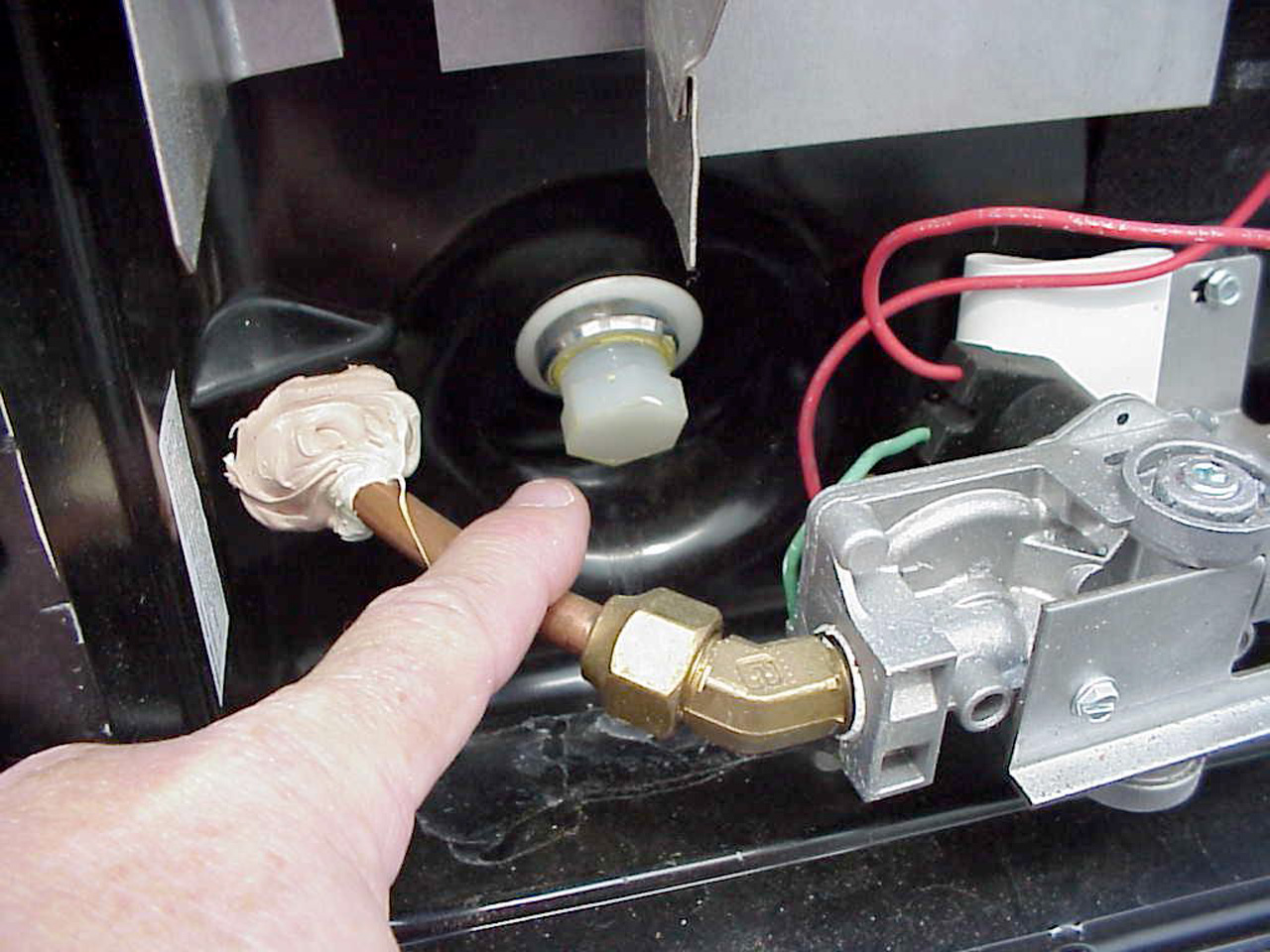
The drain plug on an Atwood water heater.
That cold drain is called the cold low-point drain, meaning it is located at the lowest point in the fresh-water plumbing system on the cold side. Inside most RV water heaters, the cold inlet is fed through a tube that extends internally to the top of the tank. It’s not a straight-through fitting at the bottom of the tank, even though the cold inlet is positioned at the bottom of the heater on the exterior. And, many water heaters are equipped with a backflow preventer — a check valve installed at that cold-inlet fitting to the heater. This prohibits water from escaping the heater backward through the cold system.
Even if you open the hot low-point drain valve, a hot faucet, and the T&P valve, it is unlikely the water heater will drain properly, since hot water exits at the top of the tank. All RV water heaters have a drain opening directly into the tank, and even this is incapable of completely draining the heater, since there always will be about a quart of water left inside, along with all the mineral deposits.
An Atwood/Dometic water heater has a simple drain plug, whereas on a Suburban water heater, the drain plug also includes the sacrificial anode rod. The best practice is to drain the heater at the heater tank drain plug and then agitate and flush out the remaining mineral deposits using a curved hose attachment made especially for RV water heaters. Some water always will remain in the heater tank, since the drain opening sits a little above the bottom of the tank, but at least it will be clean, fresh water and nothing to worry about.