

Mobileye’s vision-based driver-assistance technology is designed to help RVers avoid collisions.
By Gary Bunzer, Technical Editor
September 2019
I was driving down a highway in a rental car the first time I encountered it, and it startled me: a blinking symbol flashing inside my driver’s-side mirror, along with an audible beep. The alert told me that a vehicle on the four-lane road was passing me on my left. That was my introduction to advanced driver-assistance systems (ADAS), and I have appreciated them ever since.
Today, most new passenger cars and trucks are equipped with some form of this electronic safety-enhancement tool. Now, RV manufacturers are jumping on board.
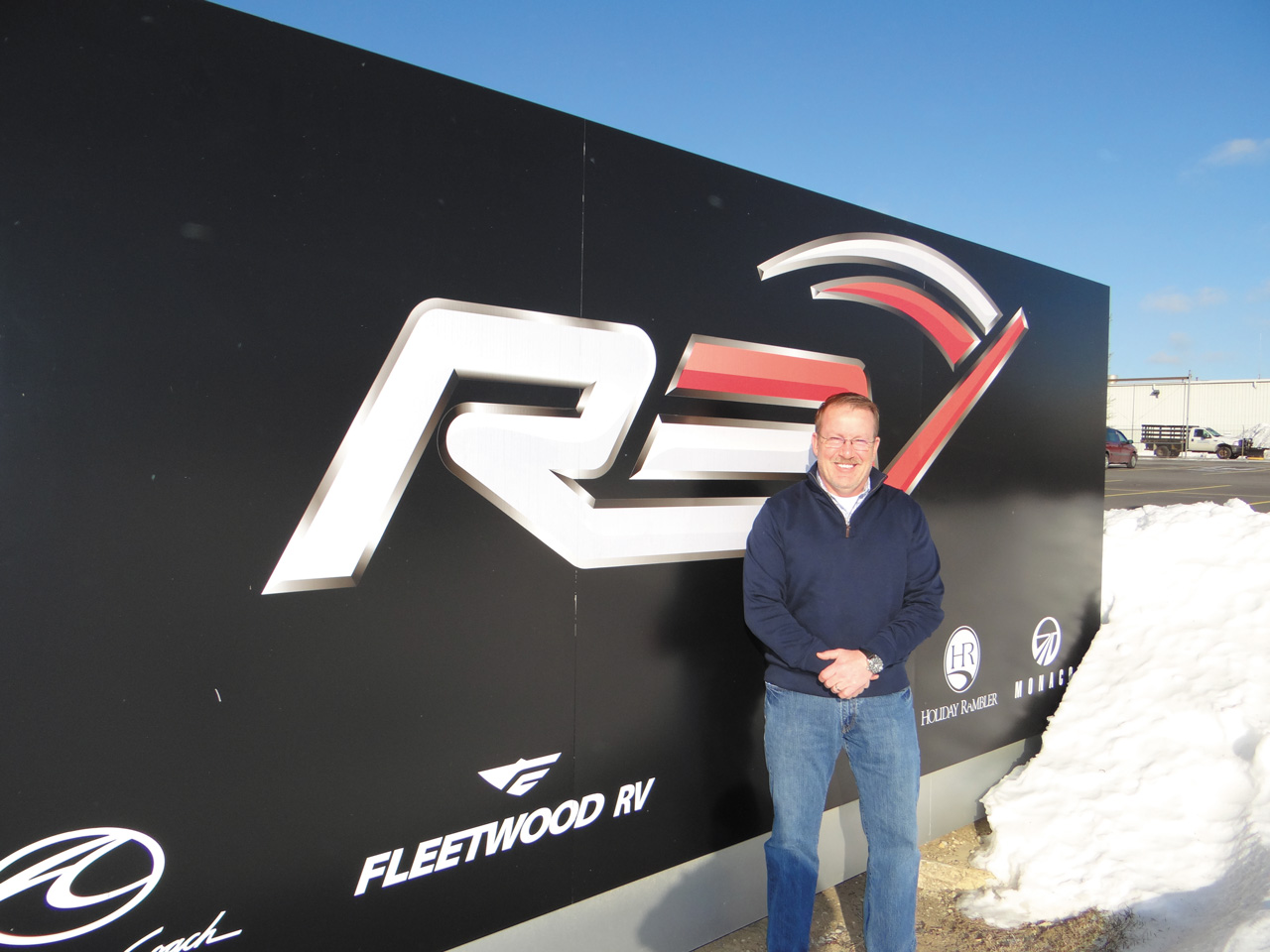
Steven Wenger, Mobileye’s business development manager
For more than six years, the Mobileye Advanced Collision Avoidance System has been prevalent in many high-end motorhomes. In fact, Decatur, Indiana-based REV Recreation Group has been installing this safety feature in all diesel models produced under its American Coach, Fleetwood RV, Holiday Rambler, and Monaco Coach brands. And the number of RV manufacturers offering Mobileye, at least as an option, continues to grow. Brands such as Winnebago, Newmar, Tiffin, Newell, Phoenix Cruiser, Dynamax, Foretravel, and Renegade can be ordered with the system.
Mobileye, launched in 1999 and acquired by Intel Corporation in 2017, has its North American headquarters in New York. Although relatively new to the RV world, Mobileye’s advanced vision- and driver-assistance systems can be found in more than 30 million vehicles from 25-plus automakers.
I sat down with Steven Wenger, Mobileye’s business development manager, at REV Group headquarters in Decatur to learn more about how this technology benefits RV owners.
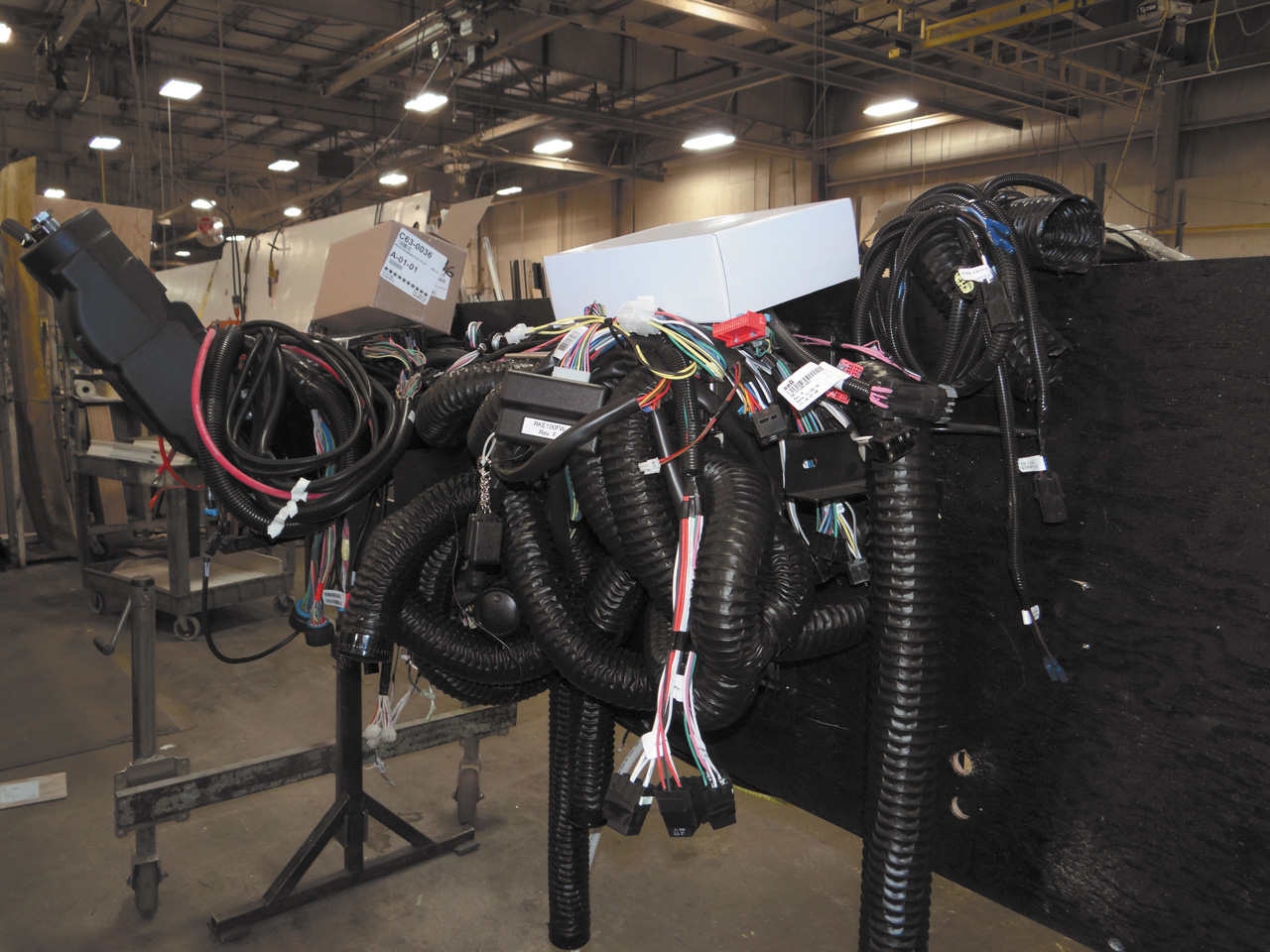
Mobileye installation starts in the area where the dash is built
For one thing, it provides peace of mind. Mobileye does not replace good driving skills and focused awareness, nor does it negate the importance of staying cautious behind the wheel. But the audible and visual alerts do afford adequate advance warning of an impending incident. According to the National Highway Traffic Safety Administration (NHTSA), driver error is a factor in 94 percent of on-the-road crashes. Having Mobileye as an ever-vigilant copilot may allow RVers to minimize or perhaps avoid disaster.
Mobileye’s Forward Collision Warning feature is a default function; in other words, it cannot be turned off. The sensor, mounted on the windshield of the motorhome, constantly scans the area from the windshield forward, ready to warn the driver before a possible rear-end collision with the vehicle ahead. The Urban Forward Collision Warning feature is similar, but it works at speeds below 19 mph, such as when navigating through a campground, a busy downtown, or perhaps a convention site.
Another cool feature, the Pedestrian & Cyclist Collision Warning, automatically provides a safeguard when you’re driving through a campground or resort during daylight hours. The alert has two features. When an impact is imminent, a large, red, human-like icon flashes and you hear a series of high-pitched beeps. When the sensor sees a pedestrian in the designated “danger zone” but a collision is not close at hand, a smaller green icon flashes to let the driver know someone is in front of the motorhome, so stay alert.
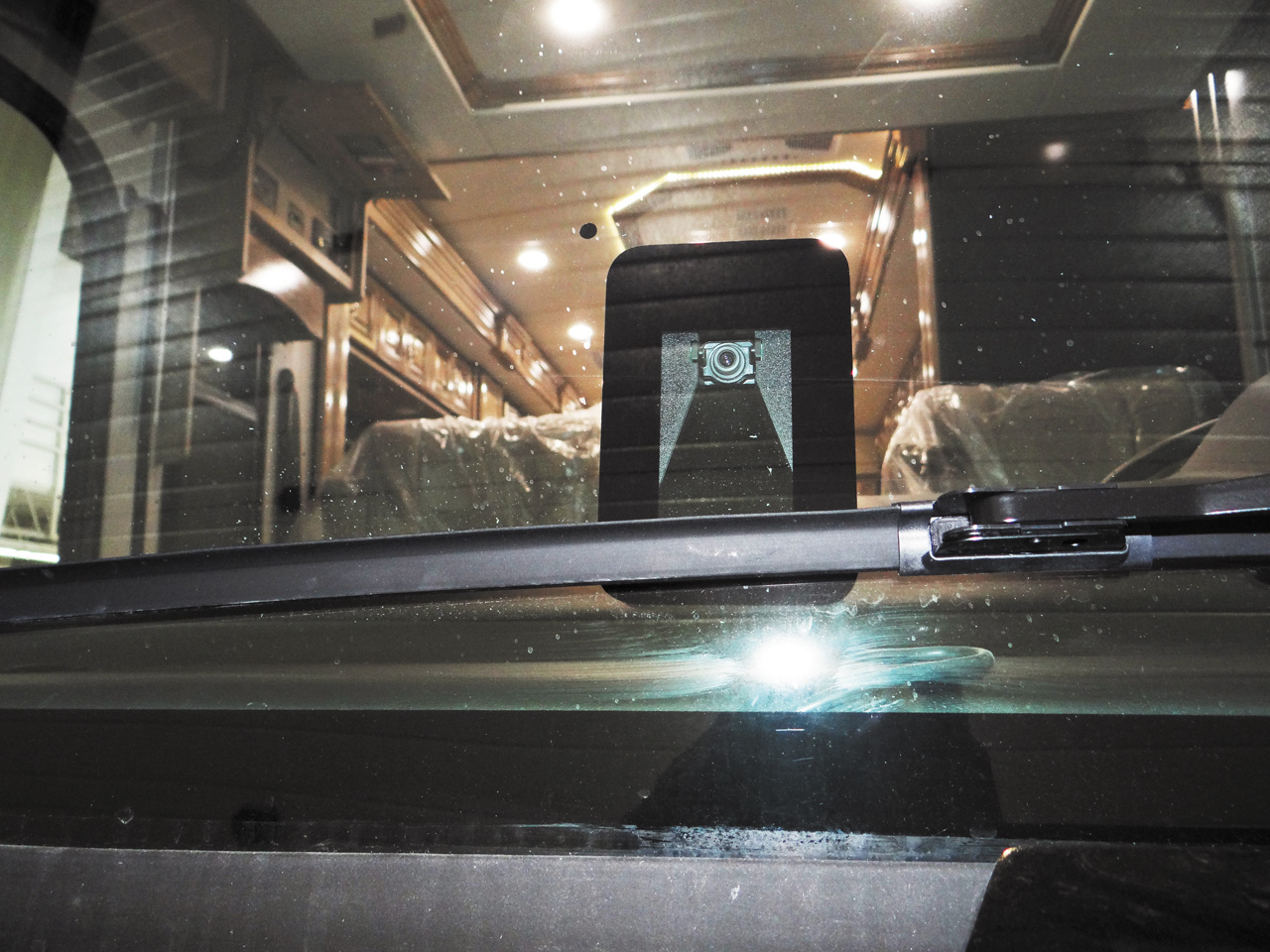
Mobileye sensor
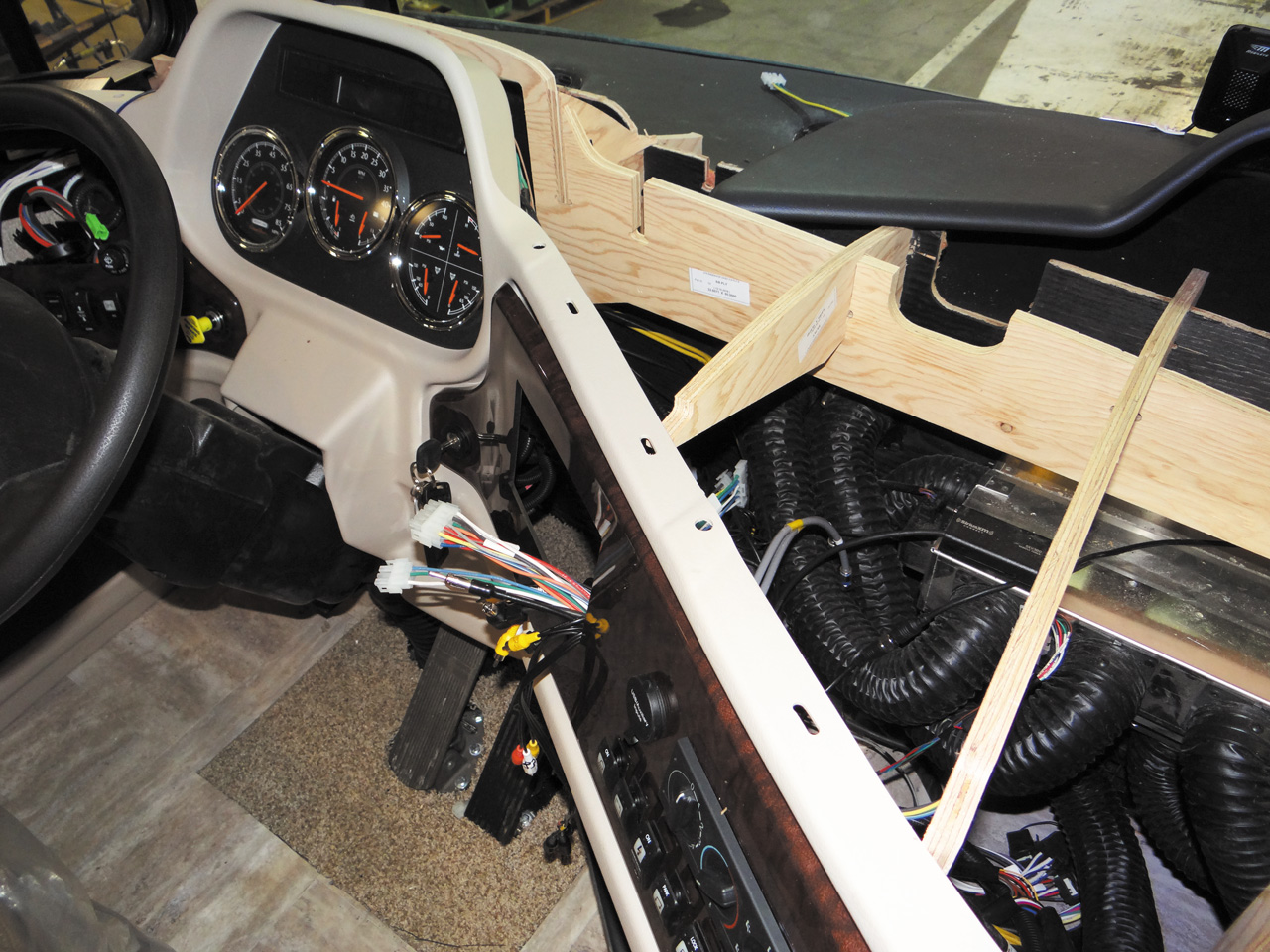
Unfinished dash assembly for Mobileye
The Lane Departure Warning automatically alerts the driver if the RV — at speeds above 34 mph — strays from its lane without the driver operating the turn signal first. When the RV crosses a lane marking, Mobileye makes a series of short, sharp beeps and the monitor indicates which side of the lane has been crossed. This feature works only when the driving lane is clearly marked by painted lines.
The Headway Monitoring & Warning displays a green icon of the vehicle up ahead. As you close in on that vehicle, the display shows the number of seconds (in green numerals) until a rear-end impact. When the time before impact is less than 2.5 seconds and a quick reaction is needed, the numbers appear in red.
Also incorporated is the Speed Limit Indicator, which displays the posted speed limit, even in construction zones. In addition, many RV manufacturers include the Intelligent High Beam Control as a standard feature, but it may be too costly in retrofit situations.
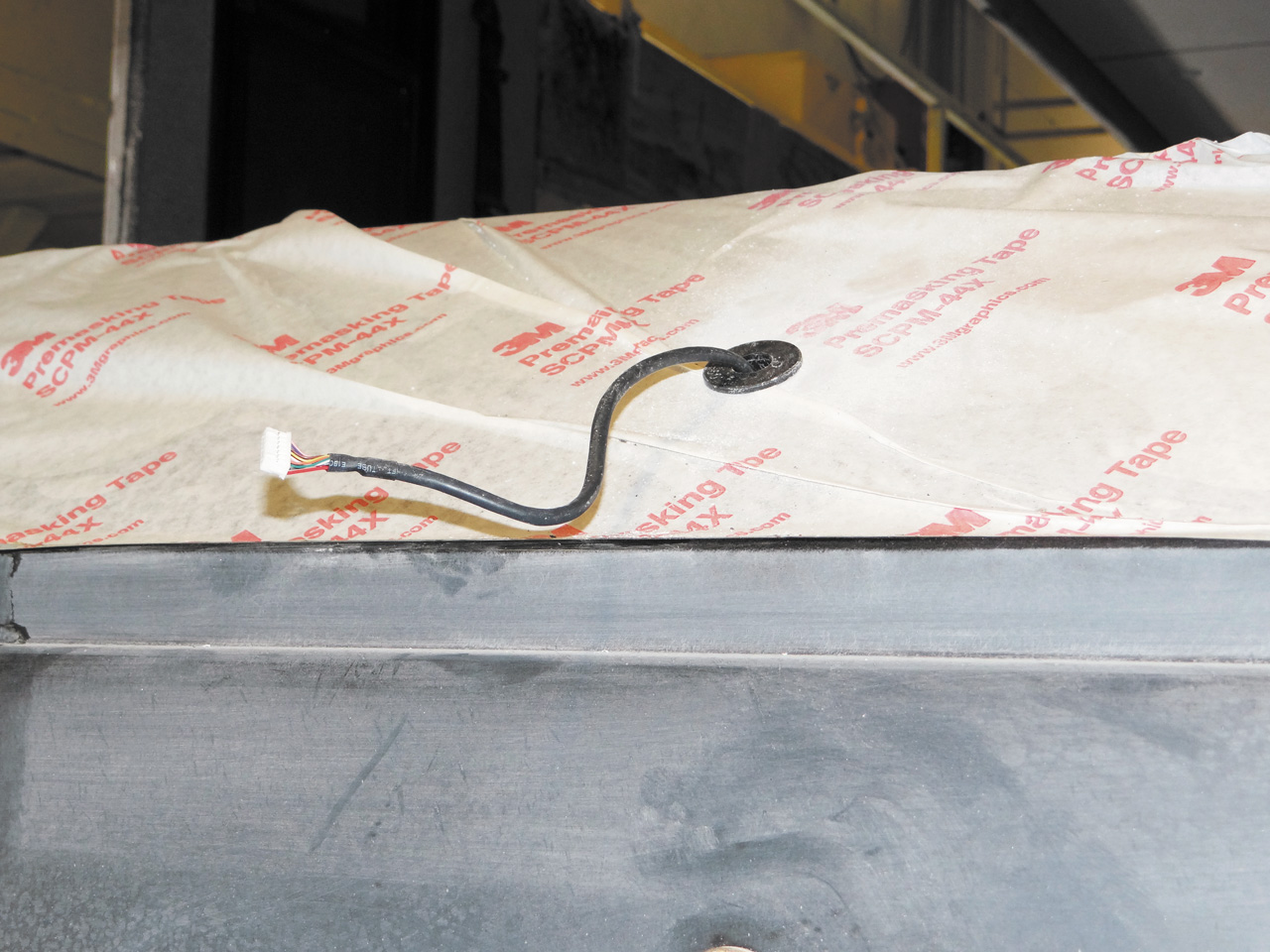
Mobileye sensor cable
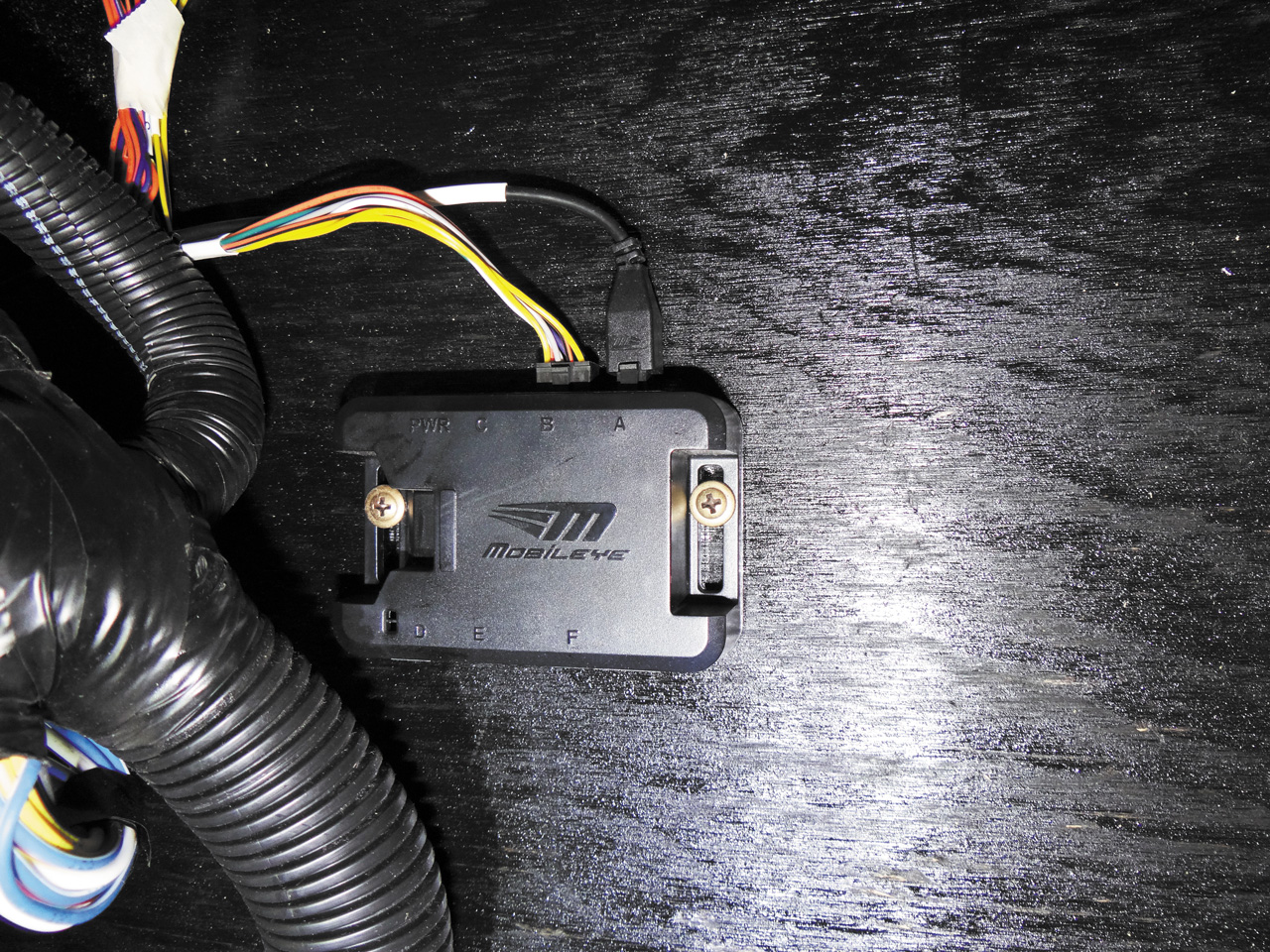
Mobileye e-box
As nice as these features are, I must again stress what Mobileye points out in its manuals. The system “cannot ‘see’ better than the driver. It is the driver’s responsibility to be alert and aware at all times, and to depend on his or her eyesight and hearing when driving.” That said, there is no doubt such technology benefits RVers.
Incorporating this advanced technology into an RV starts with the peering eye of the sophisticated sensor (it’s inaccurate to call it a camera). It mounts on the windshield of the motorhome or tow vehicle, in the path of the windshield wipers (so as to maintain a clear view), and is calibrated in that fixed position. During factory construction of the RV, a single cable is routed up through the dash and connected to the sensor. This computerized device, about the size of a smartphone, interprets the scene at 50 frames per second, and provides instant information that is processed and passed to the driver via audible and visual alerts.
Another component of the system is what Mobileye calls the E-box. It is mounted below the dash and connected to the chassis’ low-voltage, 12-volt-DC battery system, as well as to the cable from the windshield-mounted sensor. Usually hidden from view, the E-box interprets the data captured by the sensor and feeds it to the third major component of the system, the EyeWatch Display. The display is mounted so that the driver can easily see visual alerts.
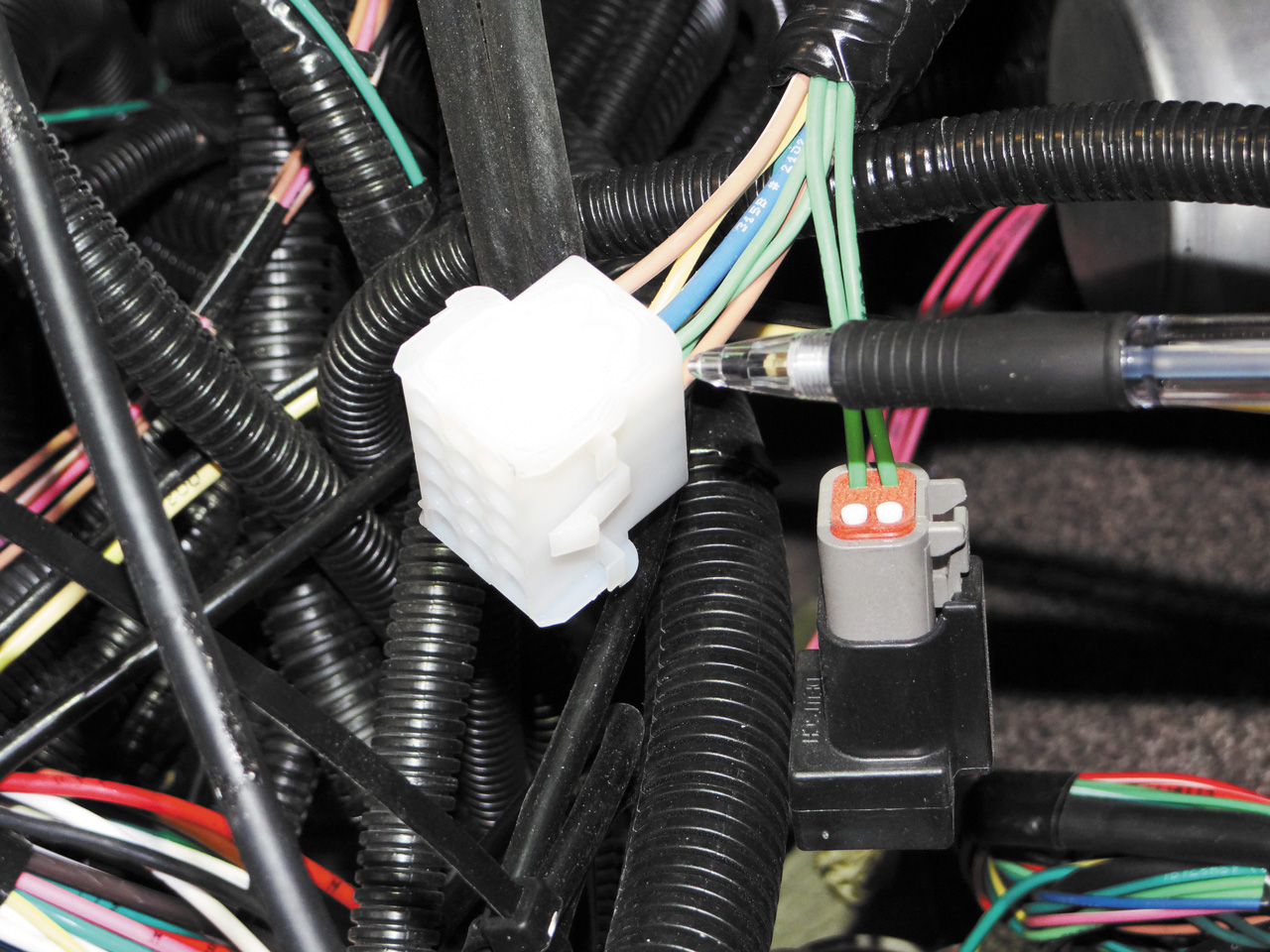
Mobileye plug-and-play connection
Most Mobileye systems in RVs are installed by the RV builder. It’s much easier to route all the conductors and harnesses while the RV is rolling down the assembly line.
RiverPark Inc. is an Elkhart, Indiana-based electronics distributor that works with RV plants to streamline the installation process for each Mobileye system. RiverPark has designed and created electrical harnesses specific to each brand and model of motorhome, as well as for other motorized vehicles.
RiverPark’s electrical team also works with chassis builders such as Freightliner and Spartan. RiverPark provides convenient plug-and-play connections for each chassis, and ships completed Mobileye kits to each builder fresh with “flashed” electronic data that fits seamlessly into each specific coach/chassis combination. When a new motorhome model initially is produced, RiverPark determines all the necessary parameters, tests for accuracy, and assists the factory in perfecting the installation.
“Mobileye and RiverPark have been instrumental in the development of each system for our products,” said Joe Ruble, electrical engineering manager for REV Recreation Group. He noted that after installation, “Every vehicle is test driven to verify correct functionality. RiverPark and Mobileye are also proactive and provide frequent line audits of our installations to better support REV and our customers.”
The availability of Mobileye is not limited to new RVs. But given the technical complexity and RV-specific nature of the Mobileye system, it certainly is not a DIY-type of aftermarket add-on. Mobileye has established a consortium of about 200 RV facilities and specialty retailers in the United States and Canada, each with specially trained installers. The shops must purchase and participate in a comprehensive online training course before officially hanging out the Mobileye shingle. Depending on the vehicle, the price to retrofit it with a Mobileye system ranges from about $1,200 to $1,500, installed.
As noted, having a motorhome or tow/towed vehicle equipped with Mobileye technology provides peace of mind not only for the driver, but for the copilot and passengers as well. Never underestimate the value of added safety as it applies to people and equipment.
And remember, RVing is more than a hobby; it’s a lifestyle!
For more information about Mobileye, visit www.mobileye.com/us.