

Winter Storage Tweaks
By Steve Froese, F276276
My family and I try to use our RV year-round, although our excursions in the winter are less frequent than in spring and summer. Since we live in a climate that experiences near-zero temperatures in the winter, I either winterize my unit between uses or keep it plugged in to prevent freezing. I am lucky to be able to store my 40-foot motorhome at home, where I can keep an eye on things.
Whether you are year-round users as we are or you store your RV over the winter months, you should find useful information among these tips and reminders related to winter storage and usage. There are certain things you should check or do differently during the winter, and the relevance or importance of them will vary by climate and temperature. We are well into winter now, and this is not an article detailing winterization steps, nor is it a comprehensive article about winter storage, as these topics have been covered recently. View this article as a supplement to those, as it will cover things that may not be addressed elsewhere and may present you with additional ideas for items to check while your unit is idle.
For starters, I will assume that your RV either is already winterized or doesn’t need to be because of use or climate, so plumbing winterization will not be covered here. I also will focus on colder temperatures. Even though I am Canadian, I live in Vancouver, whose weather is fairly unique in our country in that the temperature rarely dips below freezing, nor do we tend to get much snow. However, the rest of the country, and much of the United States, experiences a deep-freeze most winters, so my target audience is those of you who reside in one of these geographical areas. Having said that, some of these tips will apply regardless of the weather.
Rodent Infestation
I shared some ideas for critter proofing your RV in the June 2020 Tech Talk e-newsletter, so I’ll just hit the highlights here.
If your RV is in storage, remove as much food as you can, or at least move it to drawers and cupboards not accessible to the critters. Implement a cleaning regimen, or check on a stored RV every few weeks, which allows you to keep an eye on areas where nesting may be occurring. This includes outside storage areas. Regularly check cupboards, storage areas, and drawers, going so far as to pull them out and look under them. In addition, investigate places such as the furnace and water heater compartments. Note that you may have to unscrew and remove access panels.
In addition to removing or relocating food, do the same with linens, bedding, clothes, plastics, and anything else rodents may chew on.
The best thing you can do is to keep them from getting in to begin with. Carefully inspect the underside of your unit, as well as basement and other storage areas, looking for ways rodents can gain access to the inside of your RV. Keep in mind that a mouse can enter a space as small as ¼ inch. If you have a motorized unit, don’t forget to crawl under the entire chassis. If you find any sort of hole, including entry points for wiring or plumbing, stuff industrial steel wool (not the coated type used to scrub dishes) in the holes. If need be, set traps or other deterrents (mechanical, sonic, electrical, or otherwise), but be sure to check them regularly.
Rooftop Snow Clearing
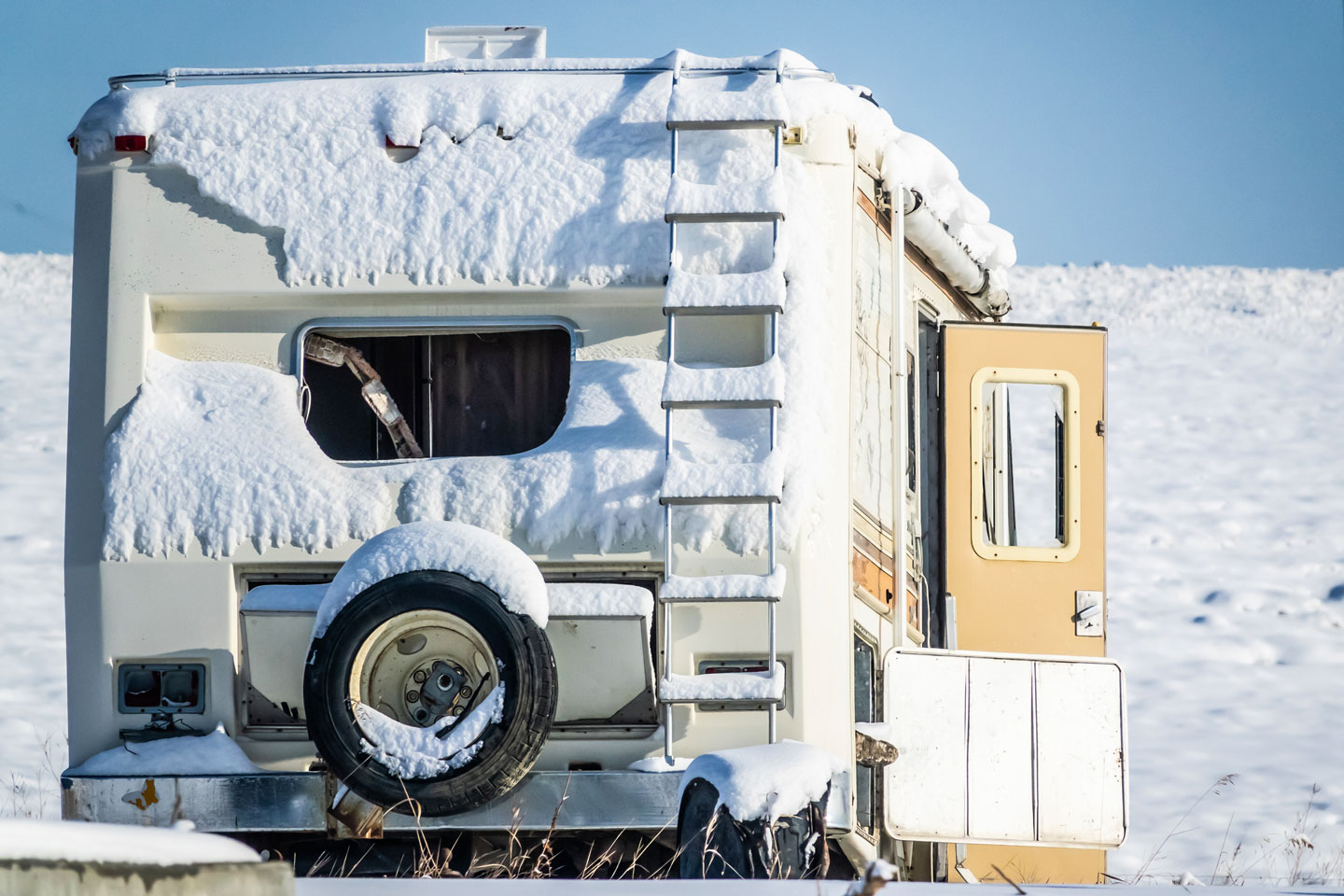 You can certainly ignore this section if you don’t get snowfall. One foot of heavy, wet snow weighs approximately 20 pounds per square foot (psf). While many factors dictate the strength of plywood in bending, I will use wood engineering tables to make a rough estimation that under average construction conditions, an RV roof fabricated with 3/8-inch plywood has a strength of approximately 117 psf. So, how much and what type of snow your area receives will dictate whether snow loading on your RV roof is a problem; generally, it is not. However, you should consider clearing the snow from your RV for reasons not related to snow loading.
Freezing and thawing of snow that accumulates on your RV roof is a concern. Consider what occurs when snow has accumulated on your roof and the weather warms up slightly and allows some of the snow to melt. The snow turns to water and runs into cracks in the sealant on the roof. Then the weather cools down again to below freezing. The settled water freezes, which expands cracks in the sealant, making them much bigger. The problem is compounded greatly if the sealant was damaged enough to allow the water to reach the substrate of the roof or seep into the walls. In this case, the ice can do serious damage to the RV, exerting large forces in the constricting directions, causing seams and joints to open. Therefore, while you are considering whether you should clear the snow off the RV roof, contemplate what can happen if the temperature fluctuates just a few degrees around freezing.
If you decide to clear the snow from the roof of your RV, do NOT go on the roof or climb a ladder to do it. Both are hazardous conditions that should be avoided. Use a roof rake or employ a professional to do the job.
Water Intrusion
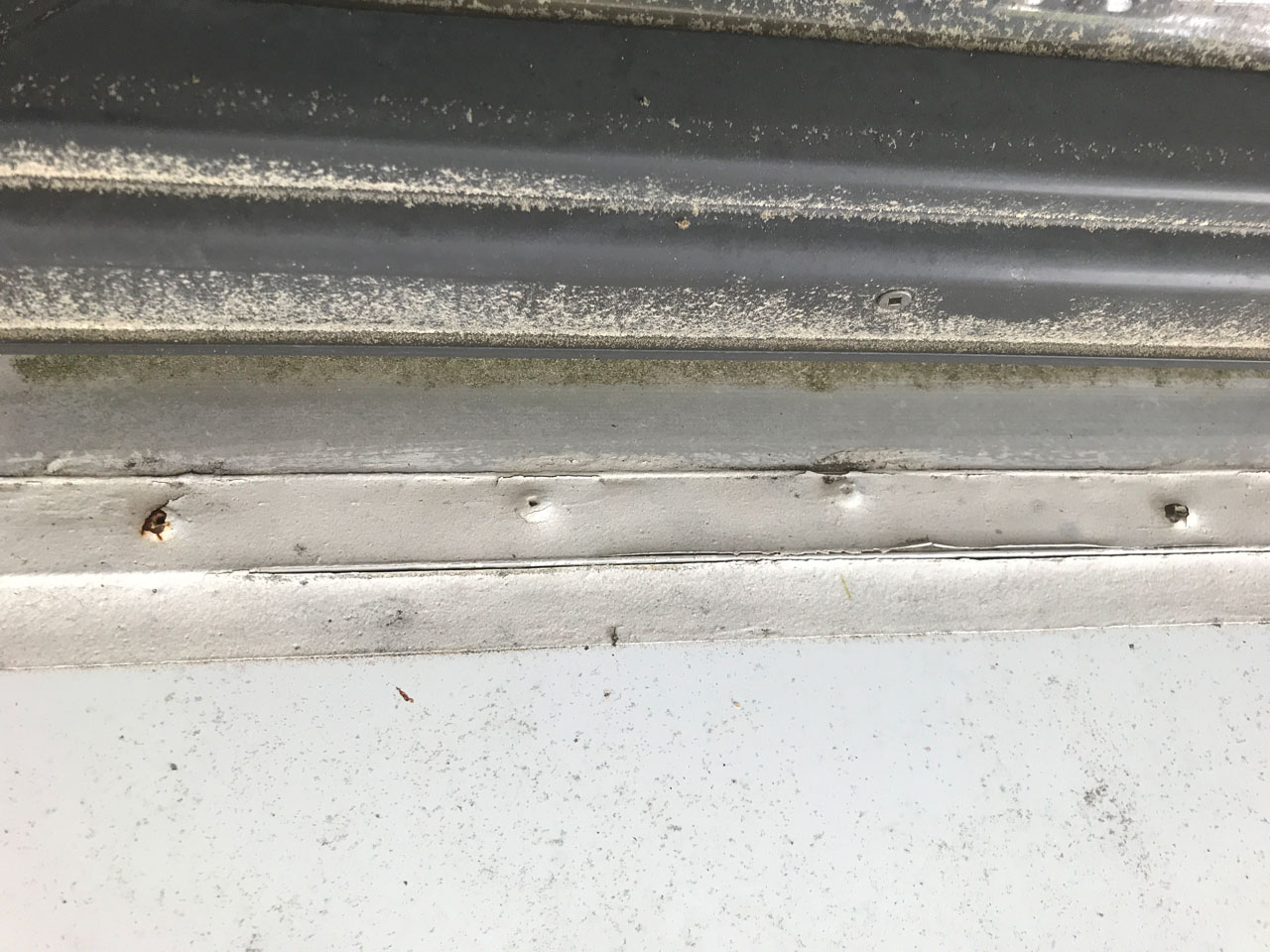 While ice can cause both water and structural damage, it’s important to remember the risks associated with regular water damage in an RV. Water intrusion is something all RV owners must think about. Whether your RV is in storage or in use, examine your exterior seals regularly and keep an eye out for water intrusion inside the vehicle.
It may come as a surprise that many RV manufacturers and other experts recommend inspecting your sealants every three months. At the very least, be sure to check them annually. Follow your manufacturer’s guidance regarding types of sealants to be used on the different surfaces of your RV. For instance, you will most likely use a different sealant on the roof than on the sidewalls. Carefully inspect every square inch of the RV sealants, paying particular attention to the roof. Check all moldings, vents, lights, windows, mounting brackets, and anything else that uses screws, nails, rivets, etc. to attach it to the roof or otherwise penetrates the roof membrane or sidewall.
Be thorough, but be extremely careful on the roof! Stay away from the edges, and move slowly and carefully. Don’t go on the roof if it’s wet, slippery, or below freezing, or if you have general concerns about doing so. Crawling on your hands and knees is safer than walking and much better for inspecting the seals. Look for cracks; dry, open, and separating sealant; or any other damage that may be allowing water to penetrate the sealant. If you think water might be getting in, assume it is!
Depending on the extent of the damage, you can either strip the old sealant off and reseal or you can cover the old sealant with new, referred to as “cap sealing.” If you wish to strip and reseal, be sure to use a plastic scraper so you don’t damage the roofing material.
If you decide to cap seal, first scrape off any loose sealant. Next, whether you are cap sealing or resealing, thoroughly clean the area with denatured alcohol and allow it to dry. Use the appropriate sealant for each area. Don’t forget to completely cover exposed seams, screw heads, voids, and anything that was sealed originally.
If you suspect there may be water intrusion, you can remove ceiling screws, vent shrouds, or other items that penetrate the ceiling. In the case of screws, check them for rust. For roof vents, fans, speakers, or lights, you can remove them to gain access to the attic area between the ceiling and the roof. You can do the same thing for the walls by removing items such as AC receptacles. Check for moisture, which often is best evidenced by wet batt insulation. Water wicks and runs along surfaces, so if you find moisture, don’t assume you have found the origin. You will generally find a water trail to the source, although it may be a subtle trail. If you do find water, it’s important to track down the source and seal it as soon as possible!
Mold And Mildew
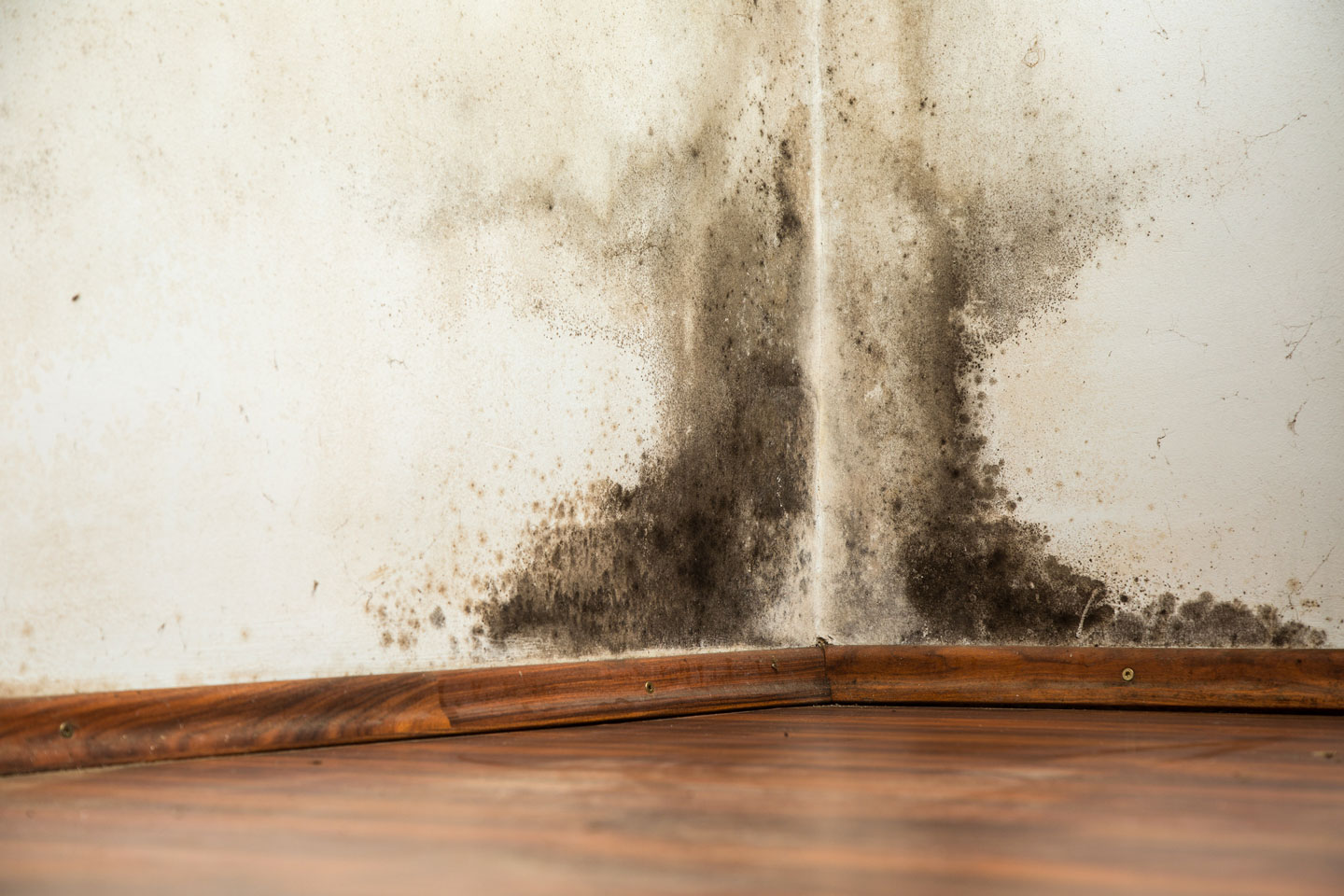 It’s important to keep mold and mildew out of your unit over the winter. If you live in an area of high humidity, consider operating at least one dehumidifier inside your RV. If you have electricity available, you also can use space heaters to keep condensation at bay. These are preferable to propane furnaces, as the latter create additional moisture. Crack open a few windows and turn on a fan for a few hours to evacuate the wet air. You also can cover the windows with a plastic film to reduce moisture buildup. Leave cupboard and cabinet doors open to keep the air moving in and out of confined spaces.
Winter Water Use
 If you use your RV over the winter, you may have to keep your fresh water in jugs and use outside facilities instead of using your fresh-water and waste-water holding tanks, but this will depend on whether your RV has heated tanks. If you are using onboard water, make sure your furnace and water heater are on at all times.
There are other things to consider when using or storing your RV over the winter months, but I chose the ones I believe to be the most often overlooked. The common thread here is to check on your RV frequently while it is in storage, regardless of the time of year. Inspection and maintenance are just as important when the RV is in storage as they are when it is in use.
Send Your Troubleshooting Questions to Steve Froese at techtalk@fmca.com. The volume of correspondence may preclude personal replies. Not all responses will apply in every instance. Some situations may require a visual inspection and hands-on testing. If you choose to follow any procedures outlined in this column, first satisfy yourself that neither personal nor product safety will be jeopardized. If you feel uncomfortable about a procedure, stop and make an appointment with an RV service facility.