
Travel
Jimmy Carter National Historical Park
By Josephine Matyas, F468364
Plains, Georgia, is the kind of town you relax into easily. It’s a small agricultural community — population 776 — with peanut farming at its core. It’s a place where the Southern culture of family, church, and farming fill the air and shape its citizens.
On a map, Plains is just a tiny speck, a 138-mile drive south of Atlanta. But in terms of history, the city is larger than life. Plains is the home of Jimmy Carter, the 39th president of the United States, and the place that helped shape his compassion, unbending moral code, and politics.
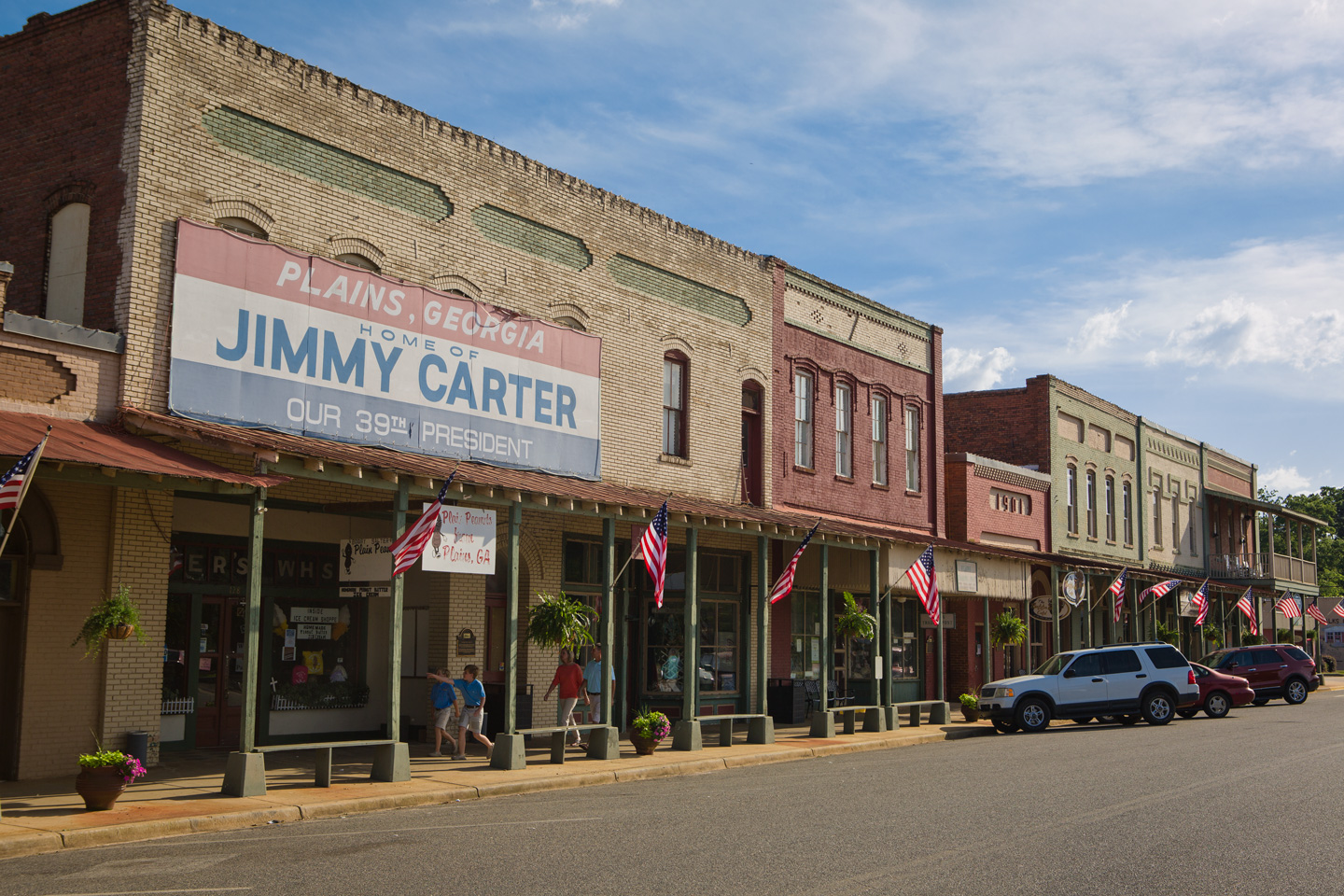
Signs on historic downtown buildings in Plains, Georgia, recognize the towns most famous resident, former President Jimmy Carter.
Informally, President Carter dominates the city. Historical markers line the roads. Streets and buildings bear his name and that of his wife, Rosalynn; his mother, Lillian; and his brother, Billy. The town’s mascot, a giant peanut with a toothy smile, stands a stone’s throw from the community church where the Carters still worship.
More formally, his story is gently told at Jimmy Carter National Historical Park — a chain of lovingly maintained steppingstones throughout the city that link together the life of its most famous resident.
For example, President Carter’s boyhood school is now the Plains High School Museum and the official visitors center, the place he attributes many of his values to his teachers’ formative influence. The schoolrooms are set in period. There’s a replica of the “Resolute” desk from the Oval Office, which many U.S. presidents used, as well as a bookstore and exhibits detailing the president’s life and career.
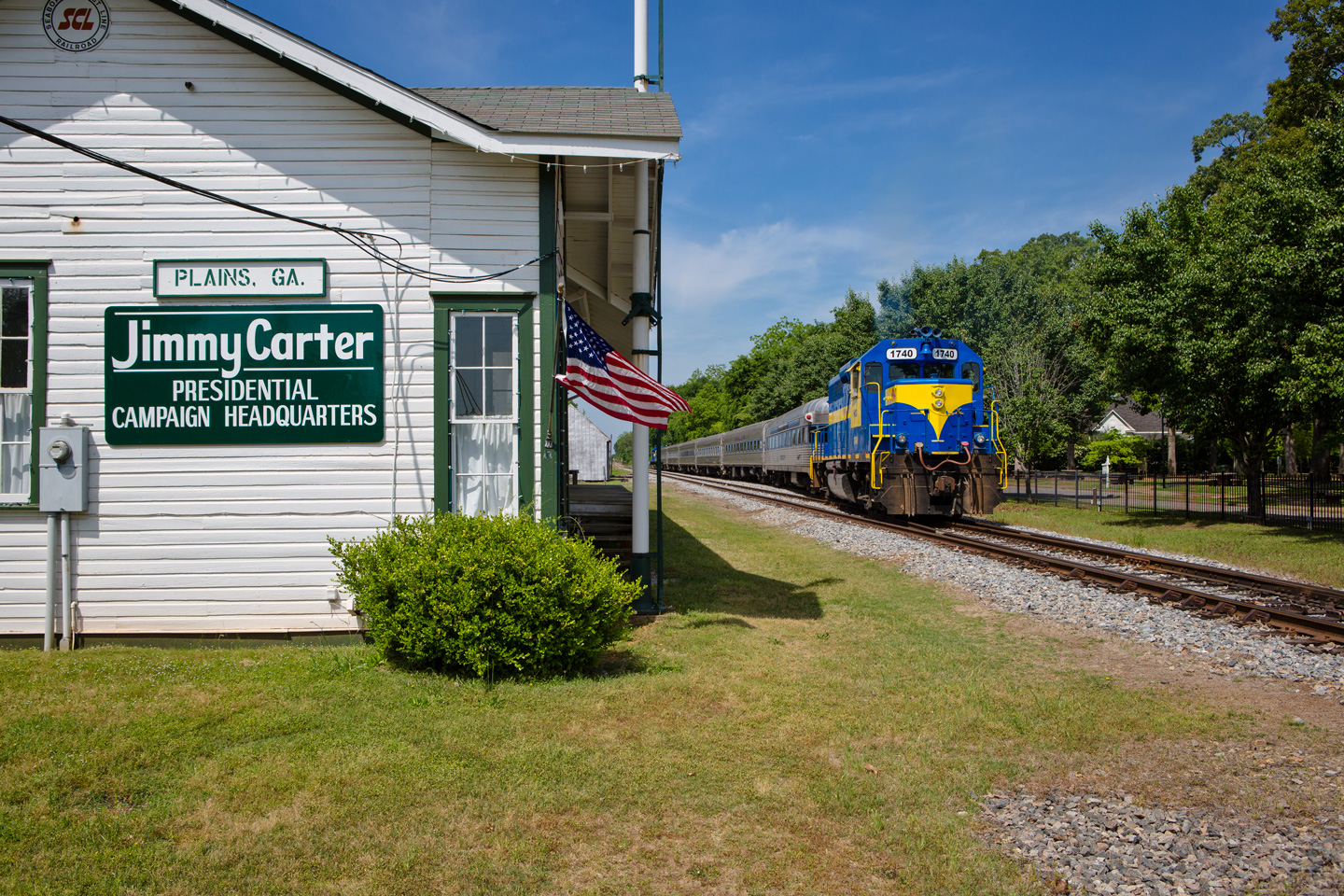
Former President Jimmy Carter receives recognition in Plains, Georgia, where his life is documented in a series of sites, including the train depot that served as his campaign headquarters.
A half-hour film touches on President Carter’s boyhood through post-presidential years — how he left Plains to use his formal nuclear physics training aboard a Navy submarine; his governorship of Georgia; how he and Rosalynn returned to take over the family farm after the passing of his father; his term as president; and the couple’s post-presidency return to their hometown, where they still live in the ranch house they built in 1961.
The town’s Historic Preservation District is “peanut influenced.” As a boy, Jimmy Carter would walk three miles into town to sell boiled peanuts, earning about a dollar a day. The peanut-processing plants throw shadows on the block-long main street. Shops sell an assortment of political memorabilia, fried peanuts, peanut brittle, and peanut butter ice cream. The Plains Train Depot is now a museum, restored to its 1976 appearance as Carter’s presidential campaign headquarters.
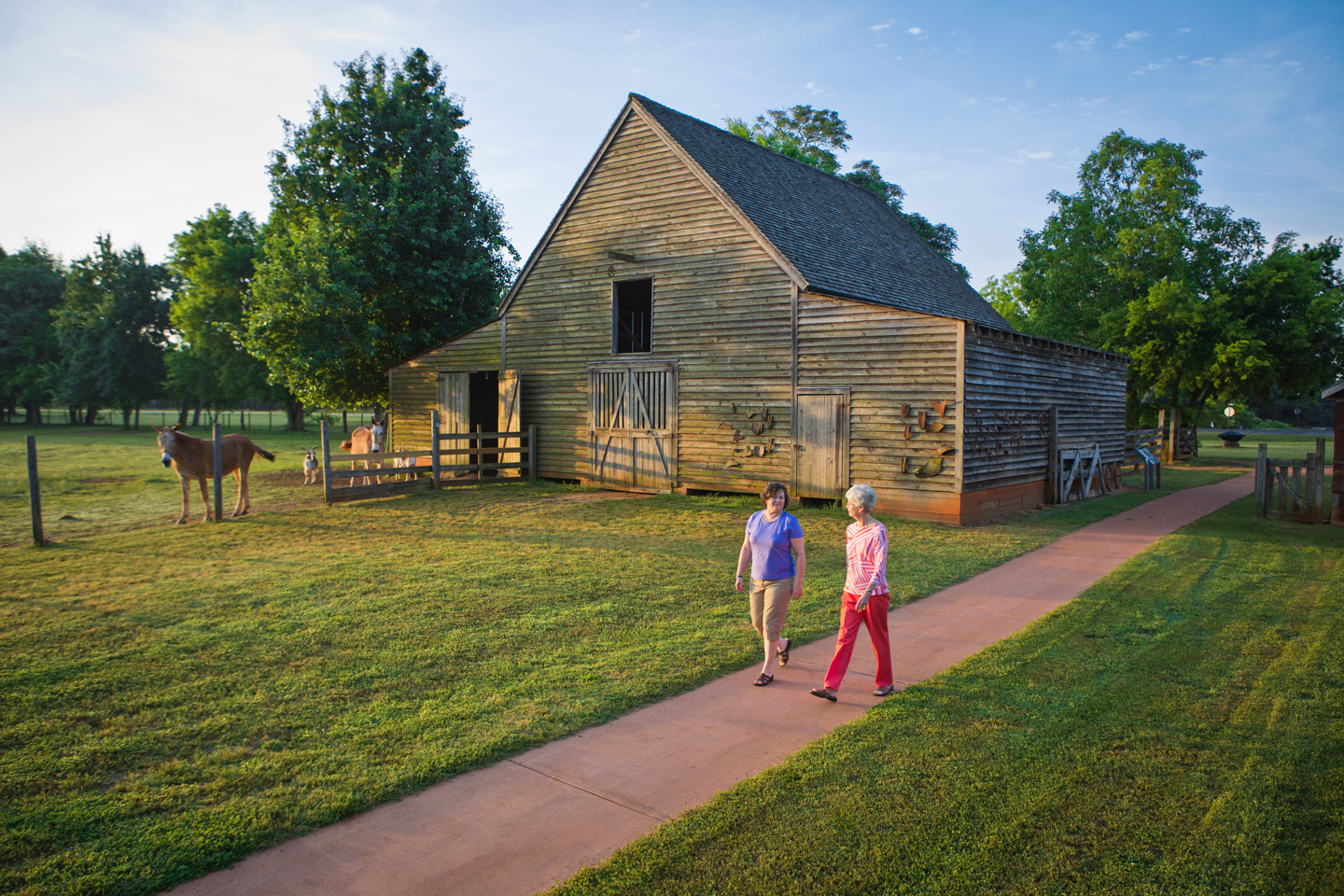
A short drive from town, the family farm has been re-created into the Jimmy Carter Boyhood Farm, where the Carters grew cotton, peanuts, and corn. The plain, white farmhouse is surrounded by a windswept yard, a donkey enclosure, a windmill, and a country store.
Few public figures have such close ties with the communities where they were born and raised. Plains stands as the tranquil hometown of a modest Georgia farm boy who would one day sleep in the White House.
Info
Jimmy Carter National Historical Park
300 N. Bond St. • Plains, GA 31780
(229) 824-4104, ext. 0 • www.nps.gov/jica
Bookshelf
A Trip Back In Time
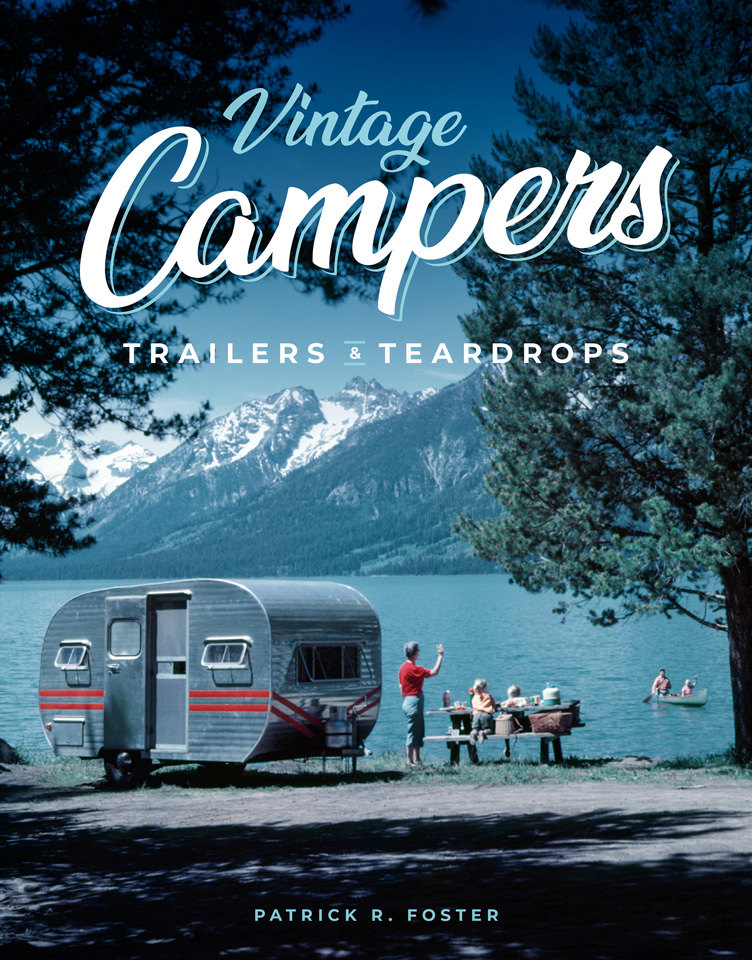 If you’re going to hit the highway, Patrick Foster is a great traveling companion. The Connecticut-based author has written more than two dozen books on the history of classic vehicles — Hudsons, Packards, Jeeps, even those interesting cars produced by American Motors Corporation, such as the Pacer and Gremlin.
In March, Mr. Foster took a turn off the interstate and into RV campgrounds with a new history book, Vintage Campers, Trailers and Teardrops (Quarto Publishing, $35.99). Through 160 pages filled with vintage photos, old advertisements, and modern photos of refurbished classics, he travels down memory lane, stopping to take a closer look at what he calls “tin cans,” “canned hams,” “covered wagons,” and “silver bullets.”
Already the author of an entire book on Airstreams, Mr. Foster gives what he calls the “king of vintage camper brands” plenty of coverage, but he doesn’t overdo it. The Volkswagen Microbus of hippie fame gets its own section, as do pickup shells, slide-in campers, and pop-up trailers. FMCA gets a nod in the section on “The Vintage Camper Life,” which also includes a brief history of 15 brands of old, such as Aladdin, Bee-Line, Go Tag-A-Long, Palace, and Vagabond.
Cartoons and jokes are scattered throughout the book — “The Good Lord made shinbones strictly to help people find their trailer hitch in the dark!” — placed alongside mind-boggling photos, such as an Airstream being pulled by a Jaguar E-Type sportscar, or a circa 1926 fifth-wheel hooked into a car’s trunk.
For today’s RVers, flipping through the pages and looking back at the origins of the industry is both enjoyable and entertaining — and, in some cases, bewildering. The tiny trailers painted pink and yellow were considered luxurious at the time, but it may make one wonder how people managed to survive before slideouts, theater seating, and hydraulic leveling jacks.
App File
Baseball
Spring means the start of baseball season. Here’s how to find teams, stadiums, and tickets wherever your travels take you.
 MLB: The app has so many features that it’s like catnip for baseball fans. Watch or listen to every game, get data on every player, dig deep into stats. For those who just want to find out when a team is playing and what the stadium is like, the Ballpark feature offers a schedule, an A-Z ballpark guide, and a concessions guide detailing unusual food items and what concessions are found in each section. A free version gets you the basics, or a $19.99 annual fee ($2.99 monthly) gets you everything. Available for Android and iOS devices.
 MiLB First Pitch: Minor League Baseball is a different experience, with a greater emphasis on fun and fan interaction. And with 120 teams scattered around the continent — from the Batavia Muckdogs to the Jacksonville Jumbo Shrimp — there’s probably a ballpark near you. The free app — available for Android and iOS devices — connects you to schedules, tickets, promotions and giveaways, and player info.
 SeatGeek: Rather than bartering with scalpers outside the stadium, SeatGeek lets you purchase tickets online. You can sort by price, best deals, or seating availability on ballpark maps. The app is free for Android and iOS devices.