
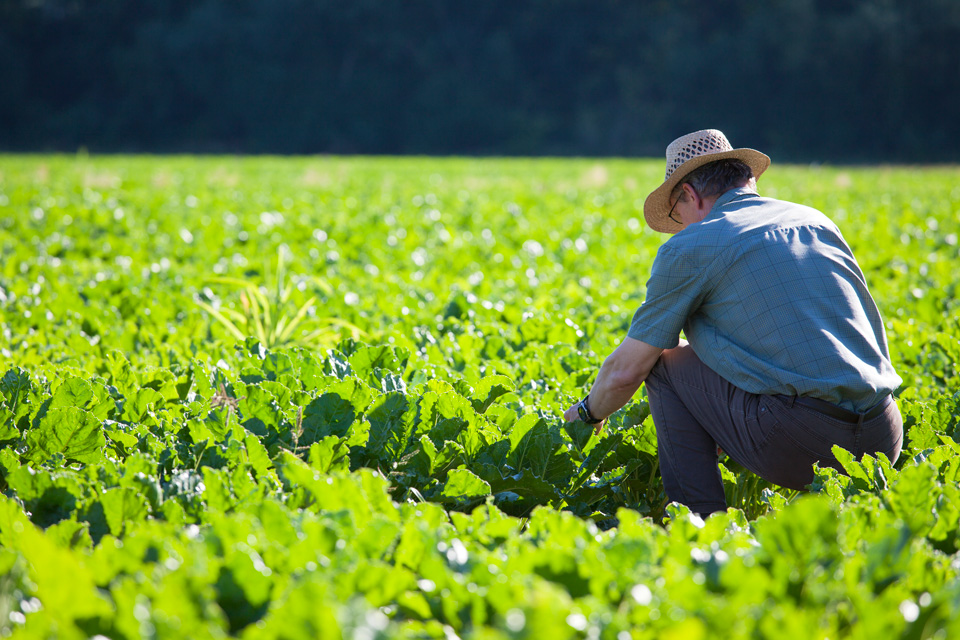
Learn about modern farm life and earn cash to fund more RV getaways while taking part in the sugarbeet harvest this fall in America’s heartland.
By Kathyrn Doherty, F499712
June 2021
The Red River Valley is a fertile swath of land that stretches across eastern North Dakota and western Minnesota. One of the crops produced by farmers in this area is sugarbeets, which ultimately show up on our tables as crystallized sugar, among other products. Each year when it’s time to harvest this crop, area farmers hire temporary help. This provides an opportunity for RV owners looking to earn a little extra cash and to learn more about farming and sugar production in the process.
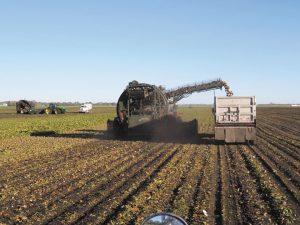
At fall harvest time, farms hire temporary workers to drive trucks that transport sugarbeets right from the fields to the pilers.
The Red River Valley Sugarbeet Growers Association (RRVSGA) is stepping up recruitment efforts for the 2021 fall harvest. Each year, member farmers hire temporary part-time drivers to transport truckloads of sugarbeets to and from the pilers in North Dakota and Minnesota. What is different from past years? Of the more than 2,700 farmer shareholders who make up the RRVSGA — a cooperative that owns the American Crystal Sugar Company — many will be extending a hiring hand directly to RVers and others to contact individual farmers through the RRVSGA’s website. That’s a huge advantage over working through an employment agency that hires hundreds of folks part-time to work at the various piler locations — where the beets are stacked in massive piles before being transferred to the sugar factory for processing — in the Red River Valley.
You may be thinking, “But I don’t possess a CDL (commercial drivers license).” No need. During harvest, North Dakota and Minnesota suspend the DOT rules requiring a CDL. Anyone with a valid drivers license can drive for a Red River Valley farmer.
For those of you who have not experienced agriculture in its raw form, you will be in for a treat. Last fall, an RVer who was camped next to us in Sundance, Wyoming, recommended that we contact a specific sugarbeet grower near Casselton, North Dakota. Schatzke Farms owners Jason and Tanya Schatzke, the largest farm for sugarbeets in that area, opened our eyes to the trials and tribulations farmers experience in bringing crystalized sugar, which seems like a simple ingredient, to our dining table.
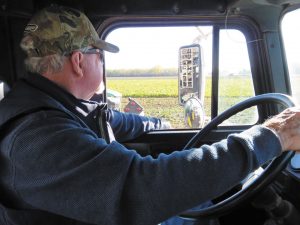
Drivers watch for the signal on the tractor that indicates it’s their turn.
Harrison Weber, executive director of the RRVSGA, works on behalf of farmer shareholders such as the Schatzkes on important issues that affect the success of each year’s sugarbeet harvest. Mr. Weber’s office is the point of contact for the website that is expanding to include a harvest jobs section indicated in this address: https://rrvsga.com/sugarbeet-harvest-jobs/. The site, which was still ramping up at this writing, includes FAQs, job categories, and specific job listings. It will allow you to select a farm and contact a farmer directly, making your acquaintance personal and cutting out a middleman.
Remuneration differs from farm to farm, as does parking information for your RV. The region has 32 RV campgrounds that welcome harvesters, and many farmers take care of reservations and pay the site fees as part of the hiring process. For us, the Schatzkes provided a 50-amp full-hookup site in Casselton.
The Schatzkes also allow spouses to accompany drivers during their shifts. I went along with my husband and took photos. Each day differed as we drove to and from various locations, offering an interesting perspective. Some drives were only a few miles round trip to the piler; on other days, the distance one way exceeded 30 miles. Regardless, during the 12-hour shifts, the driving itself was not difficult.
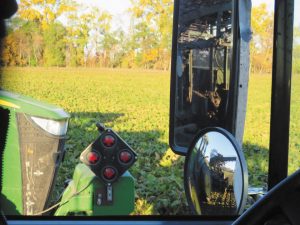
The tractor signal alerts them when they can travel alongside the harvester to have their truck filled with sugarbeets. The tractor signal alerts them when they can travel alongside the harvester to have their truck filled with sugarbeets.
Much of the Schatzkes’ harvest is processed at the American Crystal Sugar plant in Moorhead, Minnesota, some 30 miles from their farm in Wheatland, North Dakota.
I thought I’d share a little history to enlighten you. The RRVSGA was formed in 1926 to ensure proliferation of the sugarbeet industry among farmers who grew the crop for the American Beet Sugar Company, which later became the American Crystal Sugar Company. In 1973, the farmer shareholders purchased the American Crystal Sugar Company to ensure the ongoing success of sugar production.
Until we participated in this harvest, we didn’t realize the importance of sugarbeets in everyday life. Sugarbeets and sugar cane share a roughly equal percentage of sugar production today in North America; more recently, sugar beets have had the lead. Byproducts of sugarbeets end up in feed for farm animals, dog food, and related sweetener products.
When we met with Jason Schatzke for the first time, he asked my spouse a simple question: “Are you capable of driving and maintaining six feet off the harvester at 10 miles an hour?” My spouse replied, “I flew the same distance off another guy’s wing in the Air Force at much higher speeds.”
Obviously, the interview was successful. We were instructed to park our motorhome at the Governor’s RV Park and Campground in Casselton and to meet him and the other drivers at 7:00 the next morning at the GPS coordinates he texted us. Voila! Our learning experience was about to begin.
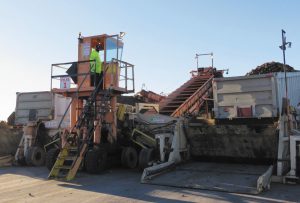
Drivers transport their sweet cargo to a piler at the designated location for offloading.
We spent the first hour becoming acquainted with the empty truck and taking a ride with an experienced driver to learn the location of the piler and the dump procedure for that day. This was the start of a couple of weeks of sugarbeet transportation during the harvest.
As we waited for our work to begin, we admired the healthy field about to meet the defoliator, which cuts the leafy tops off the sugarbeets. Shortly thereafter, the rotating blades of the digger pop the sugarbeets out of the ground for collecting. We waited in line for our turn to have the truck filled, maintaining at least a truck length of distance until we were called on to ride parallel to the harvester, dubbed the “Ferris wheel.” The harvester scrapes the beets into its continuously rotating wheel at ground level. As the wheel collects the sugarbeets, it shakes off excess dirt while elevating the beets 180 degrees to a large wire basket at the top that feeds the conveyor. The conveyor channels sugarbeets into the empty truck.
Once loading began, we watched for an arrow signal to light up and listened for a quick horn beep that would tell us when to advance the truck forward 10 or more feet to evenly fill the load of sugarbeets. The tractor driver pulling the harvester controls the conveyor that feeds the truck. He is the one who sends the signal to advance. Usually by the third advance, we were side-by-side with the tractor driver as his experienced eye gauged when to tell us to advance our truck until full. When signaled, we sped up for a few seconds until the driver signaled us to stop. After five or six runs, we got the hang of it and knew where to stop. Simple and systematic.
Once our truck was deemed full, the tractor driver beeped his horn three times to indicate that we should leave the field and drive off to unload at the designated piler. As we approached the piler area, we stopped to have the truck weighed and pick up a ticket. These tickets sometimes accompany a request for a sample of approximately 30 pounds of sugarbeets. Samples are used to track the health and sugar content of the sugarbeets from each respective farm.
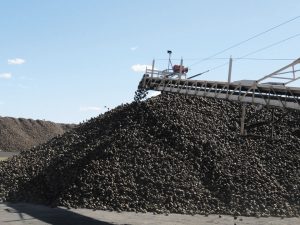
A piler offloads sugarbeets via a conveyor.
Next, we lined up to drive onto the chute. A worker used hand signals to guide us, making sure the back of the truck was best positioned to begin dumping the load. The driver watches a lighted arrow sign on the piler that monitors the speed of the dump. This tells when to start and stop raising the truck bed to incrementally offload the truck and to avoid overflowing the chute. It’s not a pretty sight when that happens, as beets fall over the chute and the operation ceases until the ground crew can pick up the scattered beets. After a couple of runs, we systematically lifted the truck in three increments, which seemed to work well at the piler.
Next, a ground worker guided us forward to pick up excess dirt from that load so we could return it to the same field. A logical reason exists for this. If the dirt carries a fungus or disease, taking it back where it came from prevents contaminating another farm’s crop.
Once you arrive back at the farm, you must first dump the dirt and then proceed back to the field to line up for another load. It doesn’t take long to develop a rhythm when riding wingman to the harvester, or by watching the rearview mirror in anticipation of moving the truck forward to balance the load. Either way, it was an interesting experience. We met several folks who had come back once again to drive for a couple of weeks.
The Schatzke farm has been in the family since 1881. The image of a farmer in bib overalls and carrying a pitchfork no longer fits. Today, everything is high-tech, and one piece of equipment could easily cost more than $200,000. Multiply that times two or three; add tractors, trailers, wagons, and several fleet trucks; and you begin to realize how costly it is to be a farmer. Then add 80,000 pounds of seeds plus pesticides, fertilizer, and who knows what else purchased earlier in the year in the hopes of a bountiful sugarbeet harvest. And that’s not including any of their other crops.
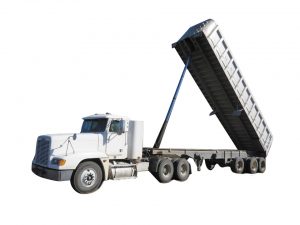
Truck drivers return excess dirt from each load to the same farm.
Qualified maintenance and repair personnel are available around the clock at the Schatzkes’ 21st-century farm, because any downtime of their equipment costs dearly. The retail price of sugar is dependent upon optimum weather and an uneventful harvest.
The Schatzkes harvested 2,170 acres of sugarbeets in 2020. And, while we were there, they still had soybeans and corn to harvest, which also provides driving opportunities.
“Farmers are always looking for extra help,” Jason Schatzke said.
Driving for a sugarbeet farmer not only puts a few quarters in your pocket, but it is truly an eye-opening experience. The full harvest operation begins on about October 1, and it runs 24 hours a day until completed, which can take from 10 days to three weeks.
Think you might enjoy a couple of weeks in the agricultural world? To learn more, check out this video, which includes an interview with an RVer who traveled from Florida to North Dakota each fall to work at the sugarbeet harvest: www.youtube.com/watch?v=ksN7h-ZpFWc. You also can visit the Red River Valley Sugarbeet Growers Association website or the Schatzke Farms Facebook page to learn more.
You will gain a greater appreciation for those teaspoons of sugar you may add to your morning coffee and cereal.