
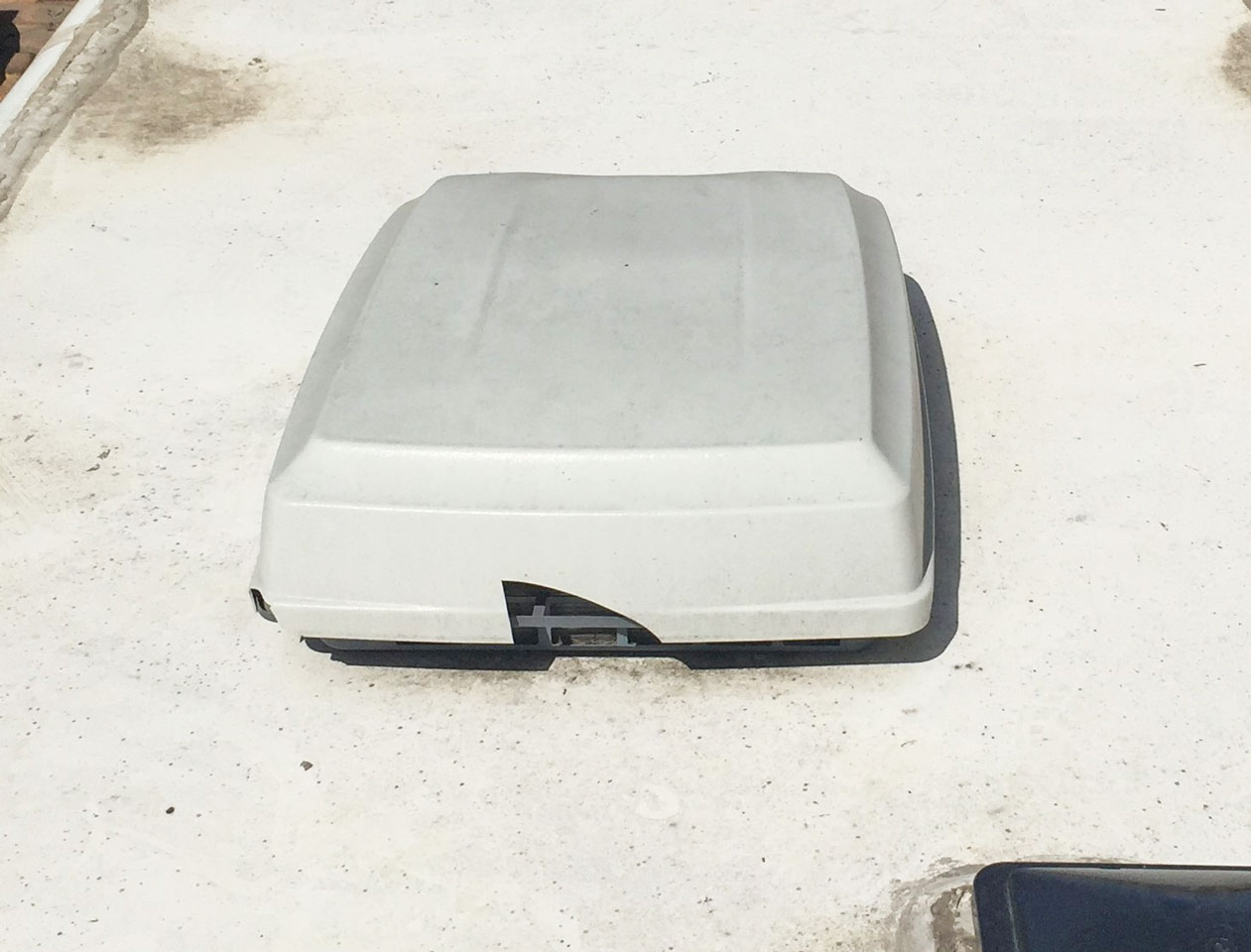
RV air conditioners have their limitations, but with some basic maintenance and a few simple tricks, staying cool this summer should be no sweat.
By Steve Froese, F276276
July 2021
With summer finally upon us after an exceedingly difficult year, I decided to turn my attention to the issue of keeping RVs cool. This month, I address a question from a reader who is lamenting the fact that his RV air conditioner doesn’t seem to keep him cool enough in the Arizona summer heat — and he throws in a related question regarding his refrigerator. The answer to his queries may help others as well.
“Any tips on surviving 110-degree Arizona heat? Our A/C only drops the temperature about 20 degrees. And the fridge gets too warm.”
The difference between the ambient (outside air) temperature and the temperature you want to achieve inside can be referred to as the delta temperature, or ΔT. Under ideal conditions, such as low humidity and a perfectly functioning air conditioner, the maximum delta temperature that can be achieved by a rooftop RV air conditioner is about 16 to 20 degrees. Therefore, your A/C actually is doing a good job. No matter what kind of air conditioner you have, you will not be able to cool your RV to 70 degrees if it is over 100 degrees outside. In your case, 110-degree ambient temperature would, theoretically, get you 90 degrees inside at best, if relying strictly on the air-conditioning unit.
You can do some things to help, though. Keep the blinds closed, especially the windshield blind in the case of a motorhome, or any other windows directly facing the afternoon sun. The heat transfer caused by windshields is enormous. Extend the window awnings if you have them, and start your A/C early in the morning so it can get a head start on the heat load.
Crack open a roof vent/fan or two so the hot air can escape. This is more effective if you have multiple roof fans in your RV. In the case of Dometic FanTastic Vent fans, try setting one to intake and one to exhaust to better move the air. It may seem counterintuitive to open a vent with the A/C on, but since hot air rises, open vents help the air conditioner by expelling warmer air. Also, try cooking outside as much as possible, and limit the amount of time the door is open.
While I suspect your A/C is working properly, it wouldn’t hurt to remove and clean the inlet filters. These filters can be found behind the A/C ceiling plenum and/or duct inlet louvres. You can simply wash them in soap and water and let them dry before reinstalling them. You may want to do this in the evening and reinstall them in the morning, since you should not run the A/C without them in place. You also can vacuum them, or even purchase new media, cut it to size, and replace them. RV owners often overlook the task of cleaning A/C filters, and I have seen some that are so dirty it is surprising they let any air through at all. They can definitely become dirty enough to restrict airflow through the system. Get into a routine of cleaning your A/C filters at least once per year.
If it is safe to do so, go on the roof and inspect the air conditioner cooling fins. Do not mount the roof in wet or otherwise inclement weather, and stay safe while on the roof. Watch your footing, and keep away from the edges of the RV. If you are not comfortable going on the roof, do not do so. If your RV does not have a built-in ladder, it could be an indication that your roof is not strong enough to support your weight. Check with the RV manufacturer regarding roof strength. If the roof can’t support your weight, or if you are not comfortable going up there, it is best to have your RV service center perform the inspection for you.
If the A/C fins are bent, damaged, or clogged with debris over a significant area, clean and/or comb them. Fin combs are the best tool for this job, and they can be purchased at most big-box hardware stores or online.
High ambient temperature also affects your refrigerator. In order to function (and without going into too much detail here), the refrigerator cools the interior compartments by utilizing phase changes within the cooling unit. The cooling unit must shed heat to the ambient air in order to cool the fridge and freezer. If the ambient air temperature is too high, the hot air produced by the cooling unit cannot be transferred efficiently, or may not even transfer at all. This is likely why your fridge is not working properly. While I’m sure the evenings are warm also, you may find the refrigerator works better overnight. Also, don’t overload the fridge, as a high food load can impact its effectiveness.
If possible, park your unit so the exterior fridge vents are in the shade or facing away from direct sun.
Once again, focusing on the roof of your RV, remove the cover of your exterior fridge roof vent and make sure it is clear of debris and allows for adequate airflow. Check the vent cover for damage; they are very easy to replace. If your fridge is in a slideout, it has an upper sidewall vent instead of a roof vent. Remove its cover and make sure there is a good path for airflow. Sometimes RV manufacturers do not properly install the upper baffles, resulting in pockets where hot air can become trapped. The baffles should force all the air coming up through the cooling unit out through the sidewall vent. This often requires a slanted piece of wood leading from the top of the cooling unit tubing to the top of the vent. Use aluminum tape to block off any gaps. If you have your owners manual, it should include an installation section describing this.
You can also try installing a thermostatically controlled cooling fan at the rear of the refrigerator. It should be placed just above the lower fridge vent, and it forces air up and out the upper vent. The fan is controlled by the temperature of the ambient air around the rear of the refrigerator. Your fridge may already have one, especially if it is equipped with an upper sidewall vent. You may want to have your RV service center install the fan for you, since it often requires removal of the refrigerator to access the back. These fans have been known to improve fridge efficiency up to 40 percent.
I’m hopeful that this information helps you to better understand the cooling capabilities of your RV air conditioner and refrigerator.
SEND YOUR TROUBLESHOOTING QUESTIONS to Steve Froese at techtalk@fmca.com. The volume of correspondence may preclude personal replies. Not all responses will apply in every instance. Some situations may require a visual inspection and hands-on testing. If you choose to follow any procedures outlined in this column, first satisfy yourself that neither personal nor product safety will be jeopardized. If you feel uncomfortable about a procedure, stop and make an appointment with an RV service facility.