
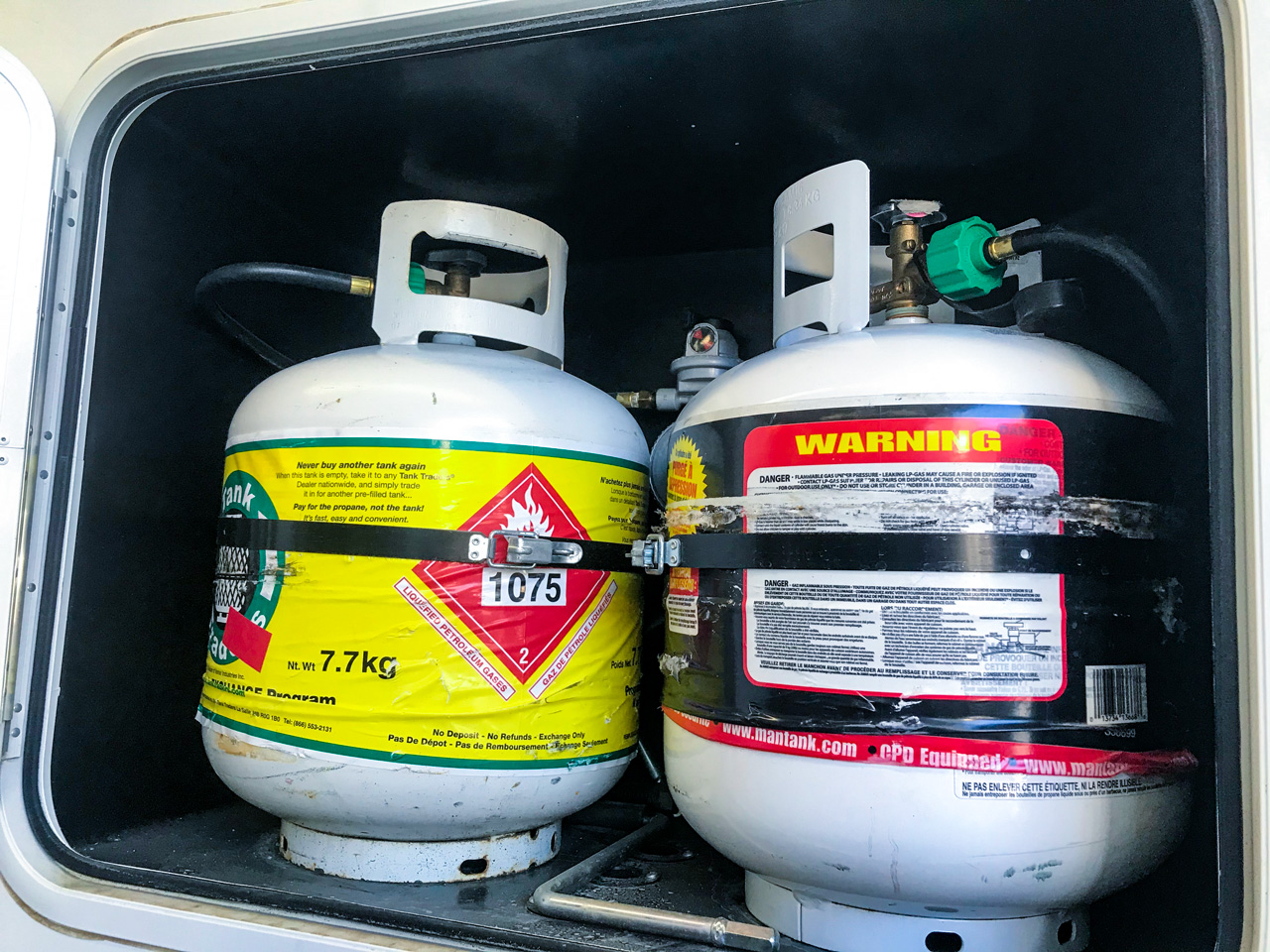
In between having your RV’s propane system serviced by a professional, you can check for leaks yourself – regardless of whether your nose detects that telltale odor.
By Steve Froese, F276276
June 2022
We received an email from a reader recently inquiring about his propane system. Sadly, he was referring to an article written by the late Gary Bunzer (the RV Doctor). This reader raises a good question about maintaining propane systems. I will share his email and my response in hopes that it will help others as well:
I read your 2012 article in Family RVing, which is the best thing I have seen from a technical perspective on this topic. I have just purchased a 1988 23-foot Tiffin Allegro Type C motorhome on a Chevy G30 chassis that has good bones, but I have had some issues with getting work performed on the propane system as I restore the van back to its original splendor. In general, the big RV companies won’t work on anything older than 10 years.
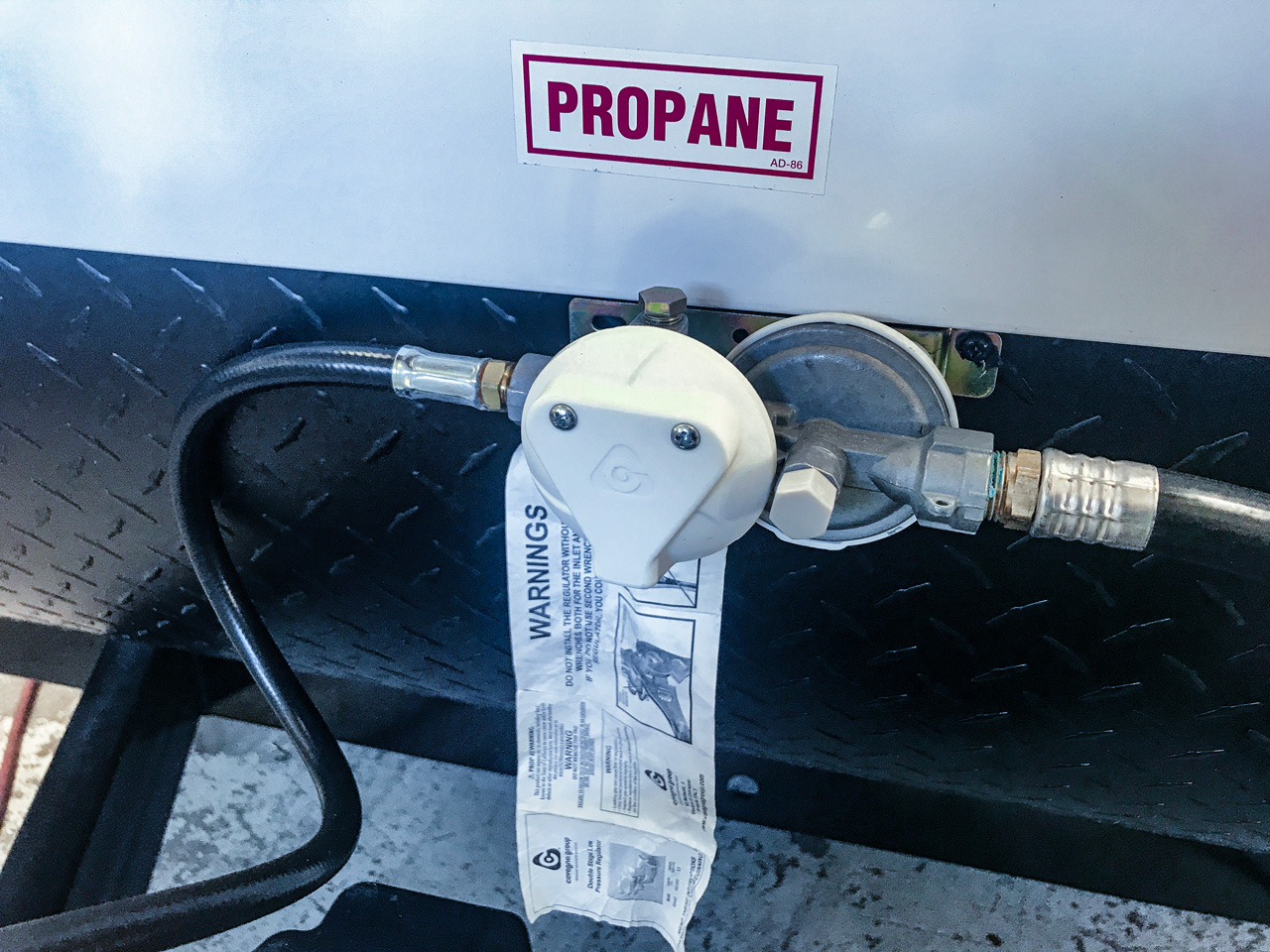
Leaks can occur at the propane regulator, so be sure to include it when conducting a test with a soap mixture.
I have the mechanical systems tuned and tight and am working on the RV-specific systems currently. Your article answered many questions about the propane system — and created others. I am a mechanical engineer and have restored autos back to stock, but this is my first RV. Looking for some assistance.
When I purchased the vehicle, the seller was able to demonstrate all of the appliances: furnace, refrigerator, stove, etc. But there was a distinct mercaptan odor in the van interior — leaks. Soapy water solution indicated many fitting leaks. The propane has all leaked out since then (probably a good thing), and my intention is to replace all tank-located fittings and safety devices, replace the regulator, fix leaks (likely flare fittings and tank fittings), add all safety/convenience/versatility devices I can that were developed post 1988, and perform proper system tests per NFPA 1192.
I would prefer to restore and upgrade the existing system versus replacing the tank, but I also don’t want to get flak from propane retailers that won’t fill the tank purely due to its age or would be looking for a certification sticker that is not required on an ASME tank. Any assistance is greatly appreciated. Thanks in advance.
The author is concerned about the state of the propane system in his senior coach. I will address some of his specific comments in case other readers may be wondering the same things.
The mercaptan odor the author is referring to is ethyl mercaptan. This odorant is added to liquified petroleum products to give them the smell of sulfur, or rotten eggs. Since propane gases are odorless and colorless, propane distillers add mercaptan to the gas to warn the user of a leak, as the author of this email detected. However, it is a toss-up whether you will smell rotten eggs before your propane alarm senses the leak and alerts you. But in either case, it is a warning that you need to identify the cause of the leak.
While I highly recommend you have your propane system professionally serviced at least once per year, you can perform some simple checks yourself for some peace of mind. Note that these self-checks should not replace a professional annual service.
You can check for leaks in your RV by using a low-concentrate dish soap and water mixture in a spray bottle. Do NOT use anything that contains ammonia or alcohol, as it can damage propane hoses and systems. The most common areas for propane leaks are around fittings, valves, burners, and faulty appliances.
If you suspect a leak, or want to check for one, make sure everyone is out of the RV and turn off the main propane valves, as well as the appliances. Generously spray the soap mixture on and around the propane valve, regulator, and fittings. Carefully watch for bubbles to form, grow, pop, and/or dynamically change. It is normal for small bubbles to form because of the soap. You are looking for the type of bubbles you would see if you blew through a straw into a milkshake, for instance. It is common for regulators to leak after a while, so watch for bubbles around the regulator and vent hole.
Next, spray the propane line fittings at each appliance. This is where the copper or neoprene propane line meets the appliance fitting at the brass flare nut. It is possible for these nuts to come loose or, in extreme cases, crack. If you find a leaking flare nut, ensure it is tight and assess it again. If it is cracked or damaged, it can be replaced, but to do this yourself, you must be experienced with creating tubing flare connections. You must use a new nut that is either forged or stress relieved. Machined or milled nuts are not permitted to be used on RV propane systems.
It is also possible for the fittings underneath the RV on the main manifold to leak. While the main manifold (usually a black iron pipe) is required by law to be fully accessible, it generally runs under and along the chassis of the RV and may be concealed by “underbelly” material. This usually makes it, and the T-fittings that feed the individual appliance branch lines, extremely hard to reach. As a result, I highly recommend you leave leak checks in this area to professionals. Similarly, a leaky appliance is hard to identify and should be left to an RV technician as well.
The NFPA 1192 the author refers to is within the National Fire Protection Association codes/standards; section 1192 regulates RV fire and life safety criteria. RVs must be manufactured to this code. During a propane system check, an RV service center will verify whether the standards are still being met. These checks require special tools that most DIYers do not have, such as a gas manometer. For everyone’s safety, it is important to ensure that your RV always meets this standard, especially as it ages.
Finally, in terms of the propane containers on your RV, there are two types. The first is the kind you find on towable RVs and portable grills; this type is referred to as a “cylinder.” It must be recertified after 10 years initially, and then every five years after that. Propane filling stations are not legally allowed to fill a cylinder that is older than 10 years from the first recertification or five years from subsequent ones, regardless of the visual condition of the cylinder. I generally recommend that people trade in their old LP cylinders for new ones; this is offered at most big-box stores or gas stations. I trade in my propane cylinders for new ones every few years, even though they have not yet reached the five-year recertification mark. The cylinders you receive in the trade are usually older ones that have been refurbished and restamped with the new expiration date. The design and standards for these cylinders is governed by the Department of Transportation (DOT).
The propane containers found on motorhomes are referred to as “tanks.” These do not require recertification, but sometimes filling locations will do a quick visual check to ensure there is not excessive rust on the tank. Although there is no definitive legal requirement to replace or recertify propane tanks, it is a good idea to perform visual inspections on a regular basis to make sure all components are in good working order. The design and standards for propane tanks is governed by the American Society of Mechanical Engineers (ASME).
Having the propane system in your RV regularly serviced, inspecting for leaks in between appointments, and keeping your tanks or cylinders up-to-date will go a long way toward ensuring safe operation of its components.