
Roof seals are exposed to the natural elements and, like many other RV parts and components, need regular maintenance.
By Steve Froese, F276276
July 2022
I frequently mention the importance of RV seal maintenance in my articles. This is especially true of roof seals, which are consistently exposed to the elements. Many components on the roof require frequent seal inspection, monitoring, and maintenance. Failure to maintain these seals — as well as all others — eventually results in expensive water damage to the RV. The standard methodology has always been to maintain, cap, and/or reseal the vehicle at least annually to avoid this. However, several products now on the market can be used to coat RV roofs; some even claim to provide lifetime protection against leaks. And the best part is that no maintenance is required.
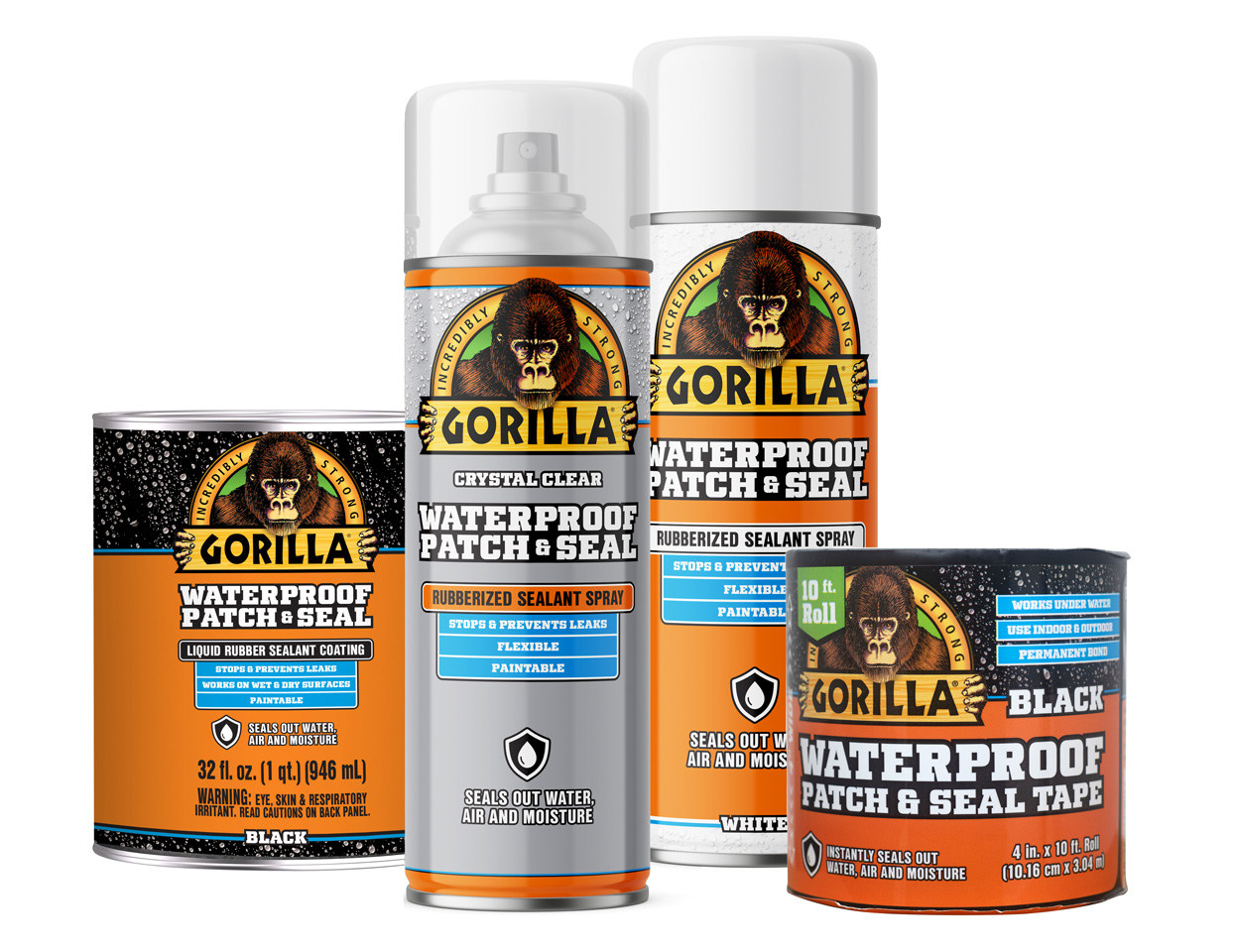
For most RV owners, though, regular roof maintenance remains key. And if you discover a roof leak, you should act quickly to find and fix it. I recently heard from an FMCA member who opted to try a sealant product from The Gorilla Glue Company to repair a leak. Many of us recognize Gorilla-brand adhesives. One of the company’s newer offerings is a leak repair product that comes in the form of a tape as well as a spray-on liquid. Note that unlike products from other manufacturers, this was not created expressly for use on RVs, or even roofs, as it is designed to fix any leak on a variety of surfaces. Member Michelle documented her roof repair adventures using Gorilla’s Waterproof Patch and Seal. Full disclosure: She was aware of Gorilla products because the company is one of her business clients. However, this article is not an endorsement of the product, as I have not had the opportunity to test it myself. The intent is simply to share the experience of an FMCA member.
Michelle told me that at the end of a long day of driving near the New York-Pennsylvania border, as they pulled into their camping spot, they heard a “thunk.” They didn’t think much of it at the time, as they were happy to find a 50-amp RV site just before a holiday weekend, and rain was in the forecast. Michelle was quite certain that the sound came from the general area of the bathroom, but after checking the cabinets, toilet, water lines, and shower, nothing unusual was identified. So, they went about the task of settling in.
That evening, heavy rain set in, and Michelle and her husband realized the thunk was probably something on the roof, because they soon discovered water dripping from the channel surrounding a skylight. “When I pressed on the ceiling at 4:00 a.m., I got a nice rush of drops right on my head,” she said.
Note that water can penetrate the roof of an RV in many places, and it tends to run along rafters and joists until it finds a location to enter the interior. Therefore, the location of water inside an RV is rarely indicative of the entry point. This also means the water is doing damage all along its path.
Michelle and her husband made the necessary short-term adjustments, and once they returned home, the search began for a more permanent solution. With the pandemic overload at service centers and a real desire to avoid any more contact with people than necessary, they decided to troubleshoot the problem themselves. Michelle, her husband, and son took turns looking for an obvious gaping hole that they could repair, but they found that in general, the roof sealant that had been applied and reapplied several times by their RV maintenance team was in good, albeit dirty, shape.
They tried running their fingers along seams, looking for splits or “flaps” of loosened epoxy, and marked anything that was suspect with blue painter’s tape. Because they were familiar with the quality of Gorilla brands (glue, tape, and a resealable tube of sealant had all come in handy on their coach), they chose a new product from the company called Waterproof Patch & Seal Spray. They were sold on that product because packaging stated it had a larger coverage area and the best of ingredients to avoid premature aging and cracking in the elements. It also comes in three colors, including clear, so they didn’t have to worry about it being an eyesore. While using this product, make sure to wear gloves and have paper towels or rags on hand.
After using a series of spray cans and giving a little extra attention to the areas marked with blue tape, they waited a few days before getting out the garden hose and testing it. On the interior, Michelle had taken a piece of dry toilet paper and slightly tucked it into the channel surrounding the leaky skylight where they had seen dripping water before. This was to prove the area was currently dry and to check whether the issue had been resolved.
They were shocked to find that although the leak was much better, it still certainly was present. Another trip onto the roof ensued, with a new focus on the domed skylight that had already been inspected around the edges. There were still no visual signs of a problem. At the last second, they reached down and pressed slightly on the dome. A split in the skylight itself that no one had seen before became very apparent. They pulled out the Gorilla sealant that they had previously relied on for a slight drip from the RV windshield and applied it over the split.
Michelle said the motorhome’s skylight and roof have now been tested with a hose, a few rainstorms, and subsequent travel. She is pleased to report that for less than $50, they are back in business with no leaks. An added bonus for someone like Michelle, who is particular about details, is that she can’t see any evidence of the repair while standing in the shower. As noted, Gorilla Waterproof Patch & Seal Spray products come in three colors: black, white, and clear.
It is important to mention that there are other products on the market, most of which are designed to be spread over the entire existing roof. These products then dry and provide a long-lasting membrane that protects the roof, joints, and fixture seams.
And while I have not used the Gorilla product myself, I would deem it to be a temporary, albeit likely long-lasting, solution. It is reasonably priced and can be carried in your RV toolkit for repairs such as those mentioned here by Michelle.
Michelle said they never did identify exactly what the “thunk” was, but it was by sheer luck and determination that the split in the skylight was discovered. This really underscores the importance of performing thorough sealant checks on your RV every year.
Thanks, Michelle, for sharing your story with us!