
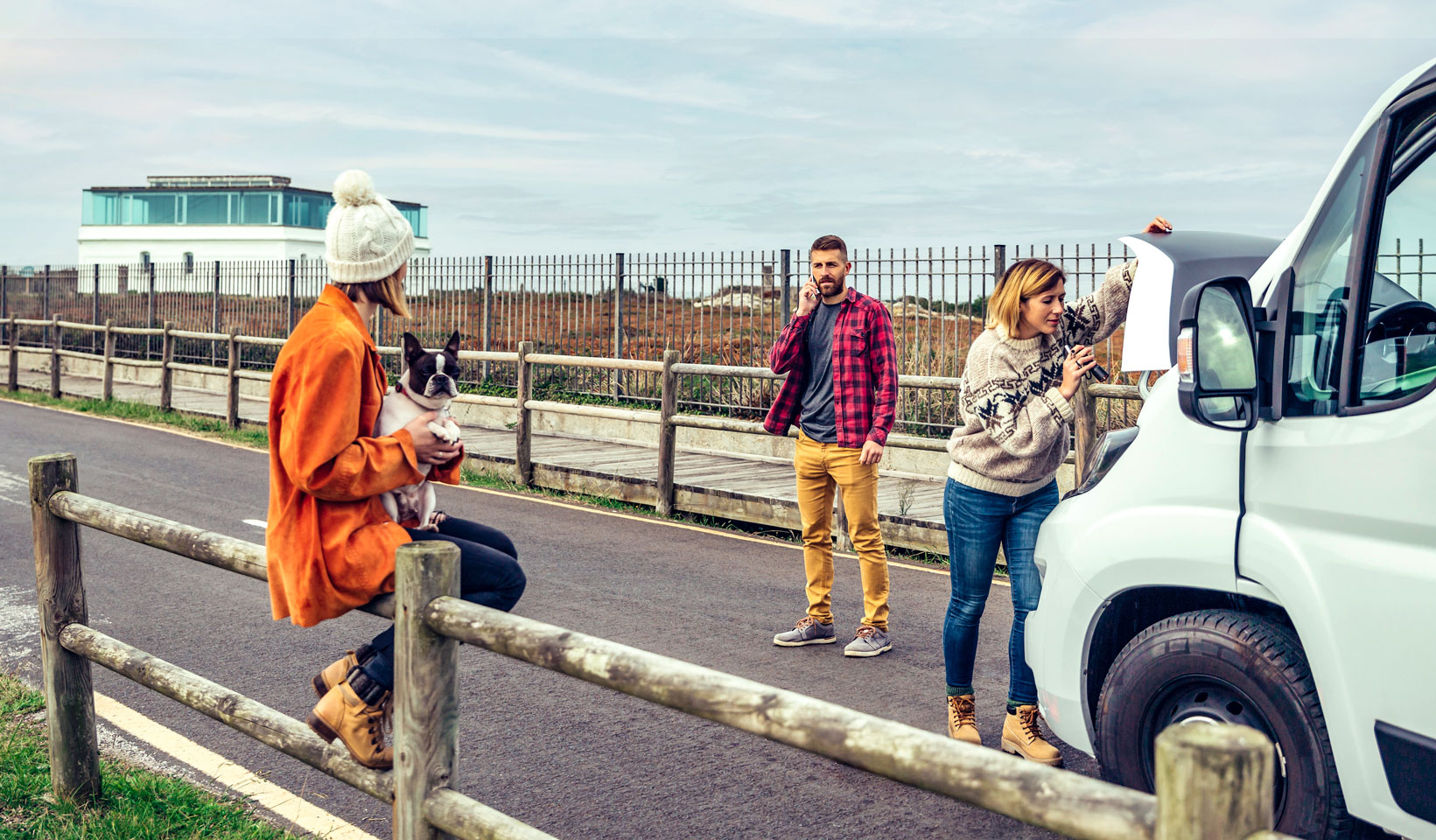
Breakdowns happen, so it’s important to know what to do in that situation and who to call.
By Steve Froese, F276276
August 2022
At some point it happens to many of us, and when it does, it’s good to be prepared. I am referring to what happens when your RV breaks down and you need to have it towed. It is important to understand the processes involved and how to prepare both yourself and your recreational vehicle in the case of a breakdown. I’ll explain how to prevent unnecessary breakdowns, what to do if you do have one, and some things to think about related to breakdowns and towing.
First and foremost, it is important for all RV owners to have an emergency road service membership. FMCA Roadside Rescue, powered by SafeRide RV Motor Club, offers comprehensive plans for both motorhomes and towable RVs at a reasonable price. This helps to ensure that you will not end up stranded or have huge out-of-pocket expenses if you suffer a breakdown.
In addition, the following general common-sense rules will help to prevent accidents:
*Never operate a handheld device such as a cellphone or GPS while driving. (In fact, many U.S. states and provinces prohibit their use while driving.)
*Never drive while tired, impaired, or under the influence of drugs or alcohol.
*Always be diligent and aware of your surroundings when operating an RV. Operating large vehicles comes with added responsibility. Many accidents result from driver fatigue, distraction, or impairment.
If you have a breakdown on the road, be sure to call your roadside service provider with a description for the problem and your exact location. They will ask if you are in a safe location, and if you don’t feel like you are, they will send police to assist. While you are waiting for service, take the following steps to prepare for the tow truck.
If you have signed up for the FMCA Roadside Rescue roadside assistance program, note that plans are available to cover all types of RVs. However, if the pulling vehicle is a Class 6, 7, or 8 truck, you will require a second Roadside Rescue policy to be covered by the program. This program covers your RV and most other street-legal vehicles you own, rent, or borrow. Therefore, if you are pulling a travel trailer and have a breakdown, it doesn’t matter whether it is your towing vehicle or your trailer that experienced the failure. However, because differences exist between towing a conventional travel trailer and a fifth-wheel, the towing company will need to know so that they dispatch a tow truck with the proper equipment.
Ensure you are as far off the road as possible, turn on your hazard lights, and put out flares or reflectors onto the road if you have any. Do not disconnect the trailer until the tow truck arrives, since it is important that the flashers remain visible to drivers of other vehicles, for everyone’s safety. For your safety, stay away from the roadside to avoid possible injury from passing vehicles. Remain with the vehicle unless you need to seek assistance. In that case, return to your vehicle as quickly as possible.
Secure all articles inside the disabled unit. Be aware that when the RV is connected to the tow truck, it may be tilted at a steeper angle and be subject to more force than normal, so items may require additional preparation for towing. Make sure awnings, slideouts, bikes, racks, etc. are secured or removed. Close all propane tank valves. If you have a motorhome, disconnect any tow bars, dollies, and towed vehicles.
When the tow truck arrives, the operator may provide additional instructions. If you have a disabled motorhome, the tow operator will remove the drive shaft; this is a normal procedure to decouple the rear axle from the drivetrain on rear-wheel-drive vehicles. (More on this later.) It is critical for owners of Type A motorhomes equipped with air brakes and/or air-ride suspensions to know the location of the remote air supply, so as to avoid wasting time searching for it.
States and provinces have different laws regarding whether passengers can remain in a towed vehicle during recovery. It is possible that your family will have to seek alternate transportation if you have a motorhome breakdown. This is easy if you are traveling with a towed vehicle; otherwise, you may have to call a taxi or request an Uber or similar transportation. If you need a ride, don’t forget to call for that as soon as you have a good idea when to expect the tow truck.
In terms of preventing breakdowns, have your RV regularly inspected and maintained by professional technicians. This includes inspection of the chassis components, such as brakes and tires, as well as house systems such as propane and batteries. The heart of the RV system is propane and electricity, so it is important that these systems are kept safe and in good working condition.
Bear in mind that towing a motorhome or trailer is more costly and complex than having a passenger vehicle towed. FMCA’s Roadside Rescue specializes in assisting RVers and dispatching the proper recovery trucks and crews for the job. This is true whether you have a breakdown while towing a pop-up camper or driving a 40-foot diesel coach. In the latter case, you will be serviced by a large tandem-axle tow truck that can easily carry the weight of a heavy diesel pusher. However, even a small folding camping trailer requires special skill on the part of the tow truck driver, especially if there is a problem with the wheels or axle.
Since motorhomes can’t be towed backward, and because most are rear-wheel drive, the tow driver will have to remove the drive shaft (or two half shafts) from your vehicle before it can be towed, as mentioned earlier. They will usually put the shaft somewhere on their truck during the trip, then leave it with the mechanic at the destination shop. The shop will reinstall the drive shaft during the repair process, but it is important to understand that this step does occur during the recovery process. Don’t be alarmed when the driver crawls under your rig to remove your drive shaft — this is a perfectly routine process and mechanics are familiar with replacing the shaft.
Given the specialized equipment needed and knowledge necessary to tow all types and sizes of RVs, the cost to have your vehicle towed to a mechanic could be exorbitant without a roadside assistance membership. Whether you are pulling a travel trailer or driving a motorhome, you likely will need specialized service, be it from an RV repair shop or heavy-duty mechanic.
If you are like most RVers and enjoy traveling to parts unknown, it is unlikely you will be familiar with where the repair locations are. FMCA’s Roadside Rescue and other services work with tow providers to ensure your vehicle or trailer is towed to the closest capable mechanic or technician. One of the many benefits of driving a diesel pusher is that the heavy-duty truck shops equipped to perform mechanical service generally are open until very late at night, or sometimes even 24 hours. Many of these truck shops have driver lounges and may even have RV electrical hookups for your convenience while you wait.
I hope you never have to use these safety and towing tips, but if you find yourself stranded with your RV, perhaps this article will be of some help. You may also want to keep a copy of the roadside assistance checklist found here: www.fmca.com/pdfs/roadside/roadside_checklist.pdf