
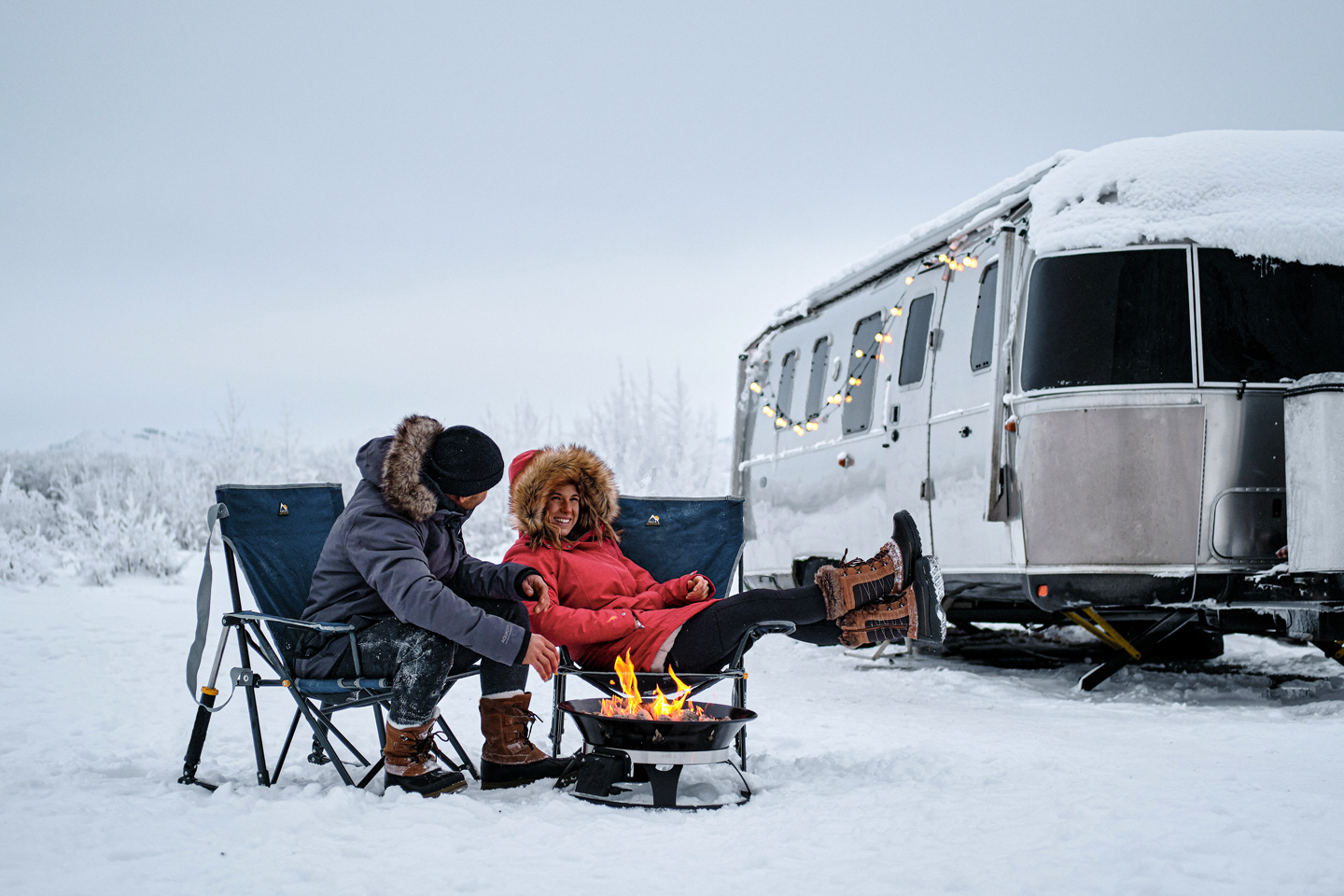
As you plan your winter wonderland trips, be sure your vehicle is ready for freezing temperatures.
By Steve Froese, F276276
November 2022
Many owners put their RVs in storage for the winter, particularly those who live in colder climates, while others enjoy the beauty of winter camping. If you don’t live in a geographical location that experiences cold winters (or, heaven forbid, actual snow), you might want to take a winter road trip to colder climes. It’s truly a wonderous experience.
Although I highly recommend camping at this time of year, it does require extra care on the part of the owner to protect both the RV and the occupants from the ravages of winter. The good news is that there are many ways to enjoy winter camping while protecting your RV from cold damage.
The safest way to winter camp is in a fully and properly winterized RV. Winterize the plumbing, and use only bottled water or water stored in containers inside the RV. While this means you can’t use your RV plumbing, you will still have a warm, comfortable, livable space to spend time in when you’re not outside enjoying winter nature. Arguably, this is most convenient when you are staying in an RV park or resort with heated bathroom facilities and showers.
If you choose to enjoy all the amenities of your RV while winter camping, I suggest taking the following precautions:
Exterior
*Create a weather barrier. Purchase some high-density foam insulation boards from your local home improvement store and cut them to fit around the skirt of your RV (between the chassis and the ground).
*Make sure the exterior of each window is properly caulked and sealed to prevent drafts. The same goes for the doors. Install or replace weatherstripping where required.
*Place wooden blocks under stabilizing or leveling jacks to prevent them from freezing to the ground.
*Keep snow and ice off awnings, including slideout awning toppers, to prevent sagging and damage. Snow accumulation on the roof is not an issue unless the snow is particularly wet (dense or heavy), is piled deep, or turns to thick ice. Do not attempt to clear an RV roof of snow by mounting the roof; seek professional help if you decide to clear the snow, or use a roof rake to clear it from the ground.
*Keep the roof and body seals in good shape throughout the year to prevent voids in the sealant where water could enter. If this happens and the water freezes, moderate to severe damage can occur.
*Ensure your holding tanks are empty prior to starting your trip. Add about a quart of RV plumbing antifreeze to each holding tank to protect the dump valves. Dump your tanks only when they are full, and refrain from using your sewer hose except when dumping. Store it in a heated area to keep it from getting cold and brittle. Each time you dump your holding tanks, pour more antifreeze into them.
*Wrap all exposed plumbing lines in neoprene pipe wrap, and consider using electric pipe and tank heaters if you plan on camping for an extended time in sub-zero temperatures. Fill your fresh-water tank instead of using the campsite spigot, as it likely will be shut off. If you are in a campground or resort that has year-round water and you choose to use a fresh-water hookup, switch to a heated hose. If you don’t have a unit with basement furnace ducting, place a space heater in exterior areas that contain water lines or the water pump.
*If you don’t have double-paned windows, use thick curtains, foam insulation sheets, or window film to insulate. For motorhomes, consider a thick curtain between the cockpit and the rest of the RV.
Interior
*Place insulating pads or pillows in the ceiling vents and fans.
*The refrigerant in RV absorption refrigerators can gel up at around 20 degrees Fahrenheit and become a permanent condition. To help prevent this, if you must use the fridge, place duct tape over the top two vents on the outside access panel. Be sure to add duct tape to the inside of the panel also. A small space heater or light fixture can help in the compartment, but it must be kept away from flammable objects. If your fridge has an ice maker and/or water dispenser, you must insulate the water line.
*If the furnace in your unit is ducted into the basement, it is important to run the furnace at all times. However, you can save propane by keeping the thermostat low and wearing extra layers of clothing. If you don’t have basement heating, you can save propane by using a space heater inside the RV — just be sure to crack a window or vent for ventilation.
*Ensure the water heater is turned on and functioning at all times. Consider using both propane and electric energy sources for the heater in case you have a failure of one system.
*Winter camping will generate significant condensation inside the RV. You can run a dehumidifier to limit this.
*Propane use is fine in cold weather, but note that the vaporization temperature of propane is minus 40 degrees, so if it’s colder than that, your propane appliances will not work. Propane will be consumed rapidly in cold weather, so know where you can fill up.
*Be sure to clear ice and snow from the slideout roof prior to retracting it. It is also a good idea to spray antifreeze on the exterior slide seals to keep them from freezing, which can prevent the slideouts from functioning. Consider retracting the slides the night before you leave an RV park to prevent overnight freezing of the seals and mechanism. Similarly, keep the slide mechanism lubricated.
Since many of these precautions require 120-volt AC in order to work, extra care must be taken if you are dry camping. In that case, it may be difficult to keep your plumbing safe unless you have an arctic package installed (additional insulation, a sealed underbelly, heated and enclosed holding tanks, PEX plumbing, etc.). Remember that frozen plumbing can cause significant damage. Solar panels are not efficient in the winter, even in sunlight. Therefore, battery consumption may be significant.
Finally, practice due diligence. Be sure to check the weather at your destination(s), and make sure the parks and campgrounds you plan to stay at are open. Carry all the recommended cold-weather equipment, such as tire chains, sleeping bags, flashlights, spare clothing, water in an insulated container, a liquid-fuel camping stove, GPS, weather-band radio, and other winter-related gear.
Send your troubleshooting questions to Steve Froese at techtalk@fmca.com. The volume of correspondence may preclude personal replies. Not all responses will apply in every instance. Some situations may require a visual inspection and hands-on testing. If you choose to follow any procedures outlined in this column, first satisfy yourself that neither personal nor product safety will be jeopardized. If you feel uncomfortable about a procedure, stop and make an appointment with an RV service facility.
You may also want to consult the FMCA Forums (https://community.fmca.com) to see whether your question has already been addressed or, if not, to post it.