
Behind The Scenes At FMCA
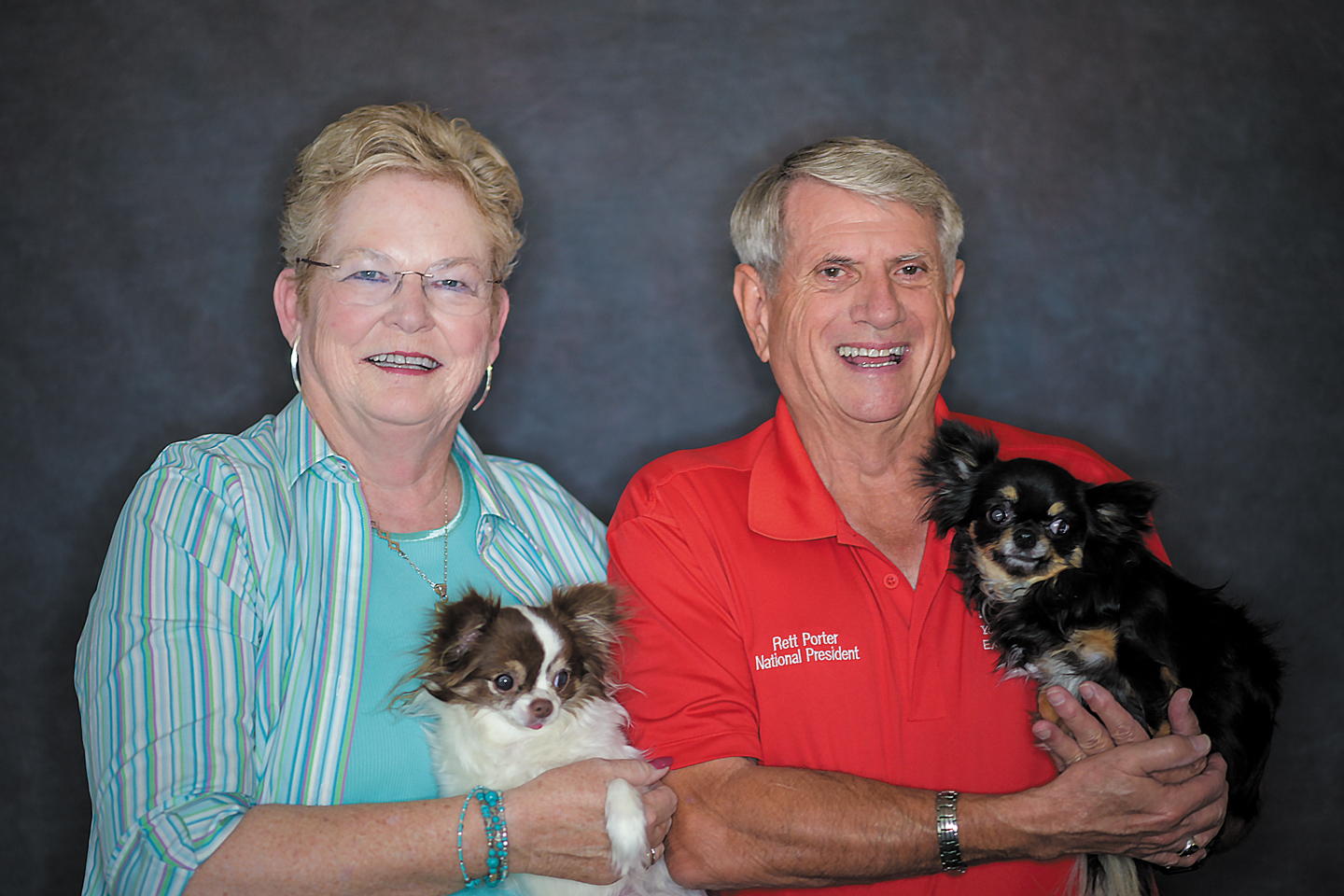
This month we’re taking you backstage to introduce you to the many people who play a role in serving FMCA. FMCA President Rett Porter and FMCA CEO Chris Smith collaborated on this column.
By Rett Porter, F369084, FMCA National President, and Chris Smith, CEO
March 2023
 FMCA has many similarities to a community theater. Really? The audience sees the play and the actors, but rarely witnesses what goes on behind the curtain to make the play successful. Each production needs scene builders, among them carpenters, painters, and prop makers. Musicals require musicians. Administrative personnel are needed to sell tickets, maintain accounting functions, print the programs, and procure ads. Ushers seat attendees and pass out the programs. The actors have people to help with hair, makeup, and costumes, as well as acting coaches and directors. Some of these positions are paid, but many of them are volunteers.
This is similar to how FMCA operates, with many employees and volunteers interacting with the membership in ways we usually don’t think about. Most members join FMCA not knowing or thinking about how the organization functions. FMCA is much more complex than just a social club. The association has thousands of members who enjoy conventions, member benefits, and group discounts. What allows FMCA to offer all these wonderful things to members? Employees are part of the equation to make this work.
Some theaters have full-time employees, and FMCA is no different. FMCA has 37 full-time and part-time staff members working at the home office in Cincinnati, Ohio. The staff is very loyal and dedicated to serving our members. This is evidenced by the fact that 10 of the 37 employees have over 20 years of service to FMCA!
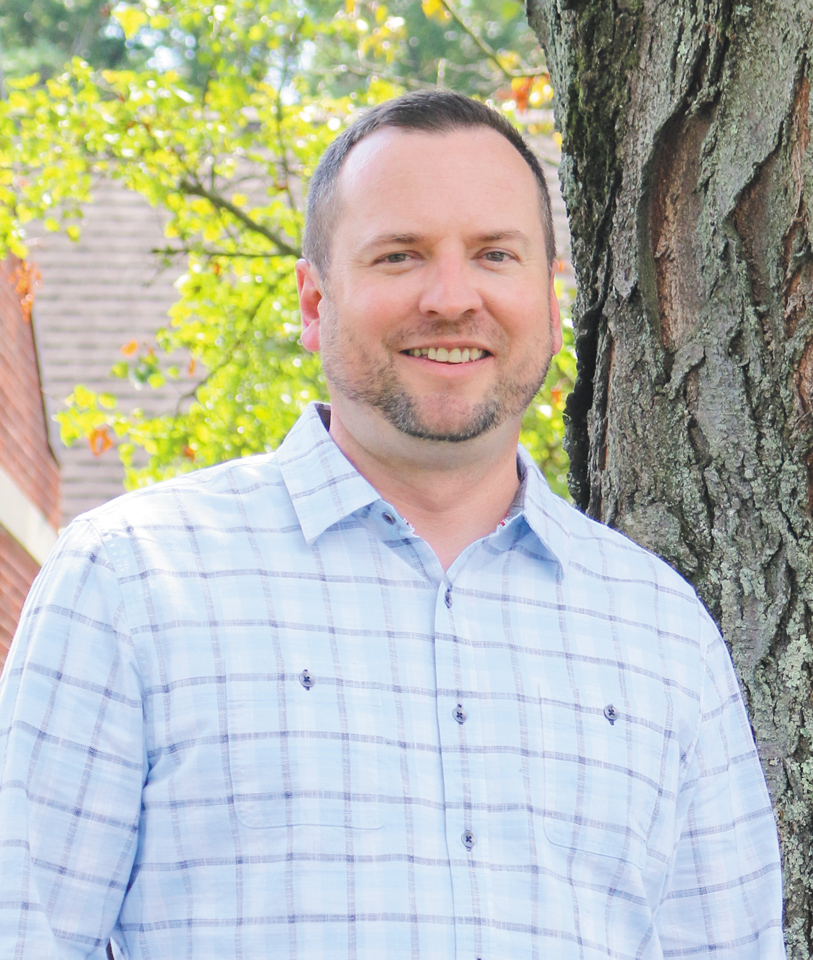 FMCA has eight departments with varying responsibilities. A chief executive officer oversees these departments and the day-to-day operations of FMCA.
When developing a theater, the community has operating costs, and FMCA has an Accounting and Finance Department to handle accounts payable, accounts receivable, and financial reporting. This department also plays a key role in the development of the annual budget and provides information for the yearly financial audit.
A large theater may have a full-time office to manage operations. FMCA has enough full-time people to have an Administrative Services Department, which handles receptionist duties, in-house printing, building maintenance, project management, and human resources functions.
Community theaters sometimes have patron services to support their loyal members. FMCA has the Chapter Services and Governance Department, which has four main areas of focus: chapters and chapter maintenance; FMCA committee work; Executive Board and Governing Board meetings; and governance document maintenance. The members of this department are the rule keepers of FMCA, if you will. They provide guidance to chapters and committees while ensuring that these groups work within the guidelines outlined in the FMCA Constitution, Bylaws, and Policies and Procedures.
Like the theater, FMCA has to promote events and activities. This begins with the Communications Department producing Family RVing magazine. The department also assists with other written and visual communications of the association, such as convention programs and related artwork, fliers, membership brochures, area rally artwork and ads, pins, etc., as well as FMCA’s public relations and media relations efforts.
When it is time to go to the play, the ticketholders need to know where to park, when to arrive, etc. FMCA members receive instructions in arrival procedures provided by the Events and Commercial Services Department, which handles all planning, registration, marketing, and production for FMCA’s two international conventions each year, along with planning for future FMCA conventions. At the time of the convention, approximately 20 FMCA employees attend the event to ensure registrations were processed, answer member questions, document the event with pictures, produce daily newsletters on activities, prepare for the nighttime professional entertainment, etc.
Like any play being promoted, the FMCA Marketing Department ensures that the association speaks with one unified voice while collaborating with all departments to produce materials that represent the organization. These employees engage daily with FMCA’s large social media following and continually create new content.
A community theater must have sponsors and patron activities to keep their membership active and growing. FMCA has the Membership/Member Services Department, which helps to find new benefits and discounts, signs up and renews members, fields and answers member questions, and takes care of many other tasks to give members the best possible customer service experience.
FMCA has a department that most community theaters don’t have and that is the Information Technology Department, which supports all the other FMCA departments through the creation of cost-effective technology solutions, in-house development, software and hardware support, automation, reporting, and project planning.
FMCA employees do a super job, but volunteers are also an integral part of the total FMCA workforce. A community theater will have volunteers to serve as stage crew, ushers, greeters, and more. FMCA volunteers play key roles at all levels of the association. Have you thought of FMCA parkers being like ushers? During chapter and area rallies and international conventions, much of the work done to allow attendees to have fun and safe events is accomplished by volunteers. For instance, have you ever wondered how your welcome bags are assembled for conventions and rallies? Volunteers walk alongside long tables and assemble items one by one to be included in each bag. The process takes hours, and these volunteers definitely get in their daily steps during this activity.
When a theater presents musicals, they have musicians. FMCA’s Frustrated Maestros volunteer their musical talents to entertain attendees. Yes, they arrive at the convention early, have long days of practice, and then get up early each morning to entertain us as we have our coffee and doughnuts — which, by the way, are served to us by volunteers. In addition, we have volunteers for parking, security, trams, communications, information, mentors, seminars, youth activities, and many other areas.
Unlike community theaters, FMCA has volunteers serving as members of FMCA committees who put in countless hours doing research, preparing documents, and holding meetings to help make FMCA a better association. FMCA prides itself as being a committee-driven organization, with 19 active committees led by and made up of member volunteers. These committees make recommendations and play vital roles in decision-making for FMCA. Areas these committees focus on include finances, convention planning, the FMCA Constitution and Bylaws, Policies and Procedures, member benefits and services, and many others.
Large theater operations are governed by a board. FMCA has the Executive Board, which is another volunteer group that has immense responsibility when it comes to decision-making for FMCA. The 14 voting individuals on the board are elected by their fellow members. Their main duties are to approve specific member and volunteer policies, to review and approve budgets, to exercise fiscal oversight, and to engage in strategic planning for the organization. The Executive Board acts on behalf of the Governing Board on all ordinary matters requiring attention between meetings of the Governing Board or in the event of unusual or emergency situations. These positions involve countless hours of work and, as noted, great responsibility.
Because FMCA is an international organization and has hundreds of chapters, we have a Governing Board. The Governing Board is composed of one national director from each chapter. This body meets once per year at FMCA’s summer convention. They have oversight responsibility for the affairs, funds, and property of FMCA, and the power to carry out the purpose of FMCA in accordance with the Constitution, Bylaws, Policies and Procedures, and the Strategic Plan. Two important aspects of their obligations to FMCA are to think always in terms of “FMCA first” rather than “mine own self,” and to remember to represent, at all times, the best interests of the entire FMCA membership, not just a chapter or area. Members governing FMCA is what makes it such a unique and wonderful organization.
All these individuals and groups play an important role behind the scenes. As you can tell, FMCA is a viable organization. A lot of time, effort, and volunteerism is needed to offer everything we do. Of course, we would not be able to do any of this without each and every one of you — the members of FMCA.
FMCA and the community theater have much in common when it comes to operations and having support behind the scenes. The volunteers and employees working together are the backbone of FMCA, and like a community theater, we want to produce the best show possible to be enjoyed by our members and/or the audience.
We hope you have enjoyed this analogy between FMCA and a community theater in how we operate. Our goal was to make this column interesting while explaining how our employees and volunteers work together. The next time you attend an FMCA event, we hope you will look at what goes on behind the scenes to make these great productions. Take the time to meet and thank our volunteers and employees.
Travel safely, and we hope to see you at the next FMCA event.
Contact An FMCA National Chaplain
Chaplains Connection Line: (833) 458-0778
Email: chaplains@fmca.com
The mission of FMCA is to bring together RV owners who share similar interests in congenial traveling, recreation, and social activities in order to preserve and perpetuate the traditional ideals and spirit of friendly and wholesome family fellowship as manifested by the founders of FMCA.
Notice Of Annual Membership Meeting
FMCA’s annual Membership Meeting will take place on August 26, 2023, during the 107th International Convention & RV Expo in Gillette, Wyoming.