
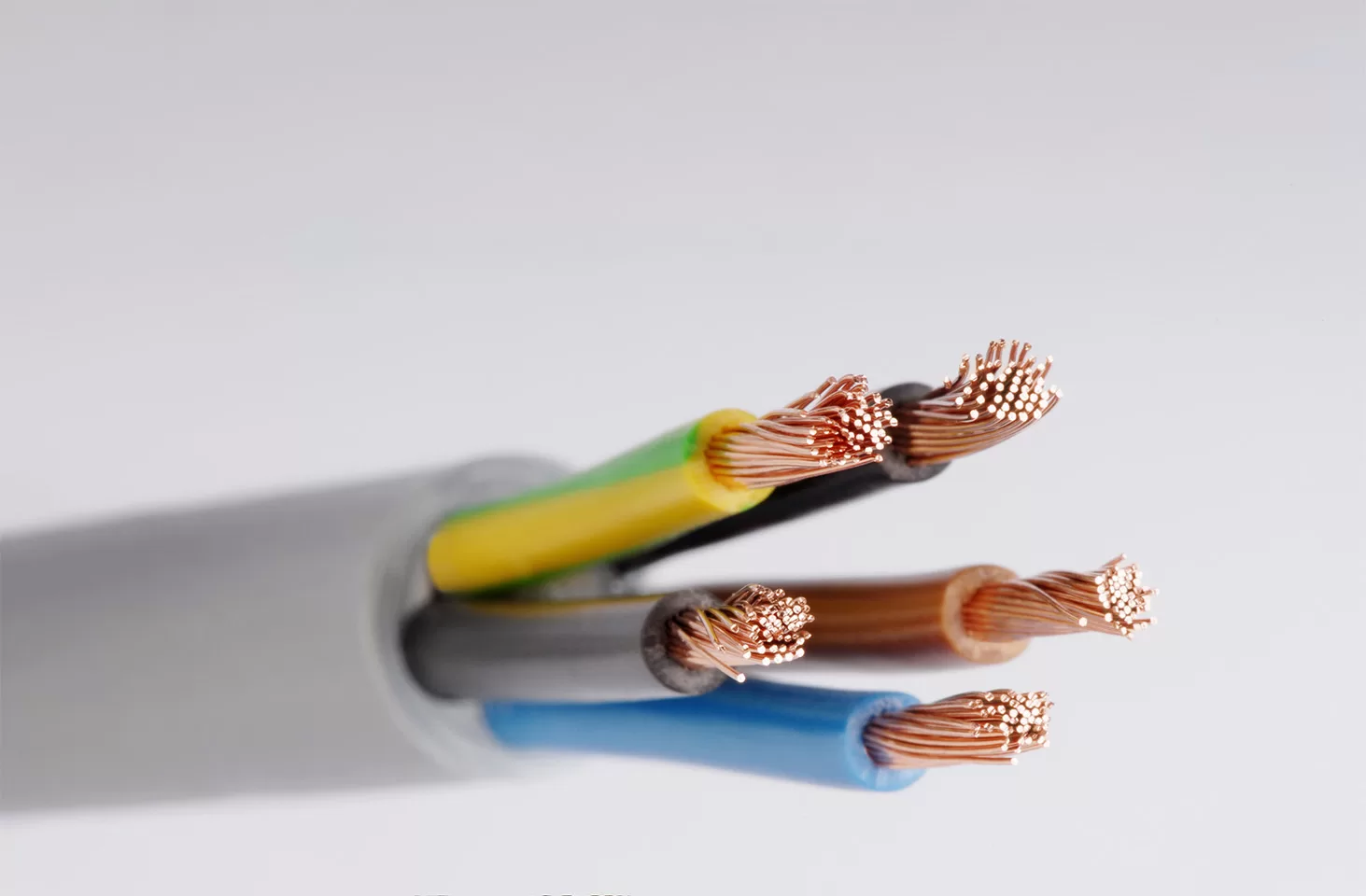
Having at least a fundamental understanding of your RV’s electrical system is essential for the enjoyment of your travels.
By Chris Dougherty, F263059
August 2023
Our lives are touched by electricity every day. Technology is truly amazing! My iPhone and CPAP monitor my sleep; all my data is accessible through my internet of things (IoT) devices; and many of the appliances and comfort gadgets in my life are controllable from anywhere on the planet with a web connection. Now more than ever, the electrical systems in our RVs are providing us with safety, comfort, connectivity, and convenience wherever we are.
There is, of course, a downside to all this technology: stuff breaks, and usually at the most inopportune times. Understanding how something works and the basics of troubleshooting will help keep you on the road rather than in the parking lot of a repair shop.
This is an elemental introduction to understanding RV electrical systems. Of course, further study and experience may enable you to diagnose and repair various problems you encounter with your RV’s electrical system. However, safety should be your primary concern, so it is important to know when to seek the assistance of a professional technician.
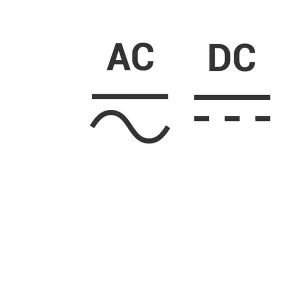
Electrical power is transmitted in two ways: alternating current and direct current. AC is the “high voltage” system, and DC is the “low voltage” system
ELECTRICAL BASICS
Electricity, in simple terms, is the movement of electrons through a conductor that then outputs work. That work can be in the form of light, heat, or mechanical energy when converted through a motor. Electricity also allows our electronics to function, be it a simple transistor radio, a computer, or a device with integrated circuit boards.
Electricity generally flows in one direction, from source (positive) to load and back (negative). Of course, there are exceptions, but we’ll keep it simple for this exercise.
Conductors of electricity are materials that easily allow the flow of electrons, and insulators restrict the flow. The wiring in our RVs is made of copper, an excellent conductor. The plastic wire insulation; plastic junction boxes, if so equipped; and such are insulators.
A simple circuit consists of a wire from the positive terminal to a load and connected back to the battery’s negative terminal.
A switch is a device that interrupts the flow of electricity in a circuit. A closed switch allows the electricity to flow (on), and an open switch disconnects the circuit (off).
We primarily employ two kinds of wire in the RV: stranded copper and solid copper. Stranded cable is used where flexibility is required, and solid copper is used in household AC wiring for receptacles and appliances. A wire is sized based on the load it will carry and how long it is. Larger-diameter conductors have a lower gauge number and carry higher currents, whereas smaller-diameter conductors have a higher gauge number and carry lower currents.
Two forms of electricity are used in RVs: alternating current (AC) and direct current (DC). Alternating current is used for household appliance loads or 120-volt items plugged into the wall. The electrical grid in North America utilizes 60-hertz AC to aid in long-distance power transmission that can be reduced for household use to 120 or 240 volts.
Direct current, which our vehicles and devices run on, has a single positive conductor that always provides the positive charge. In other words, the polarity remains con-stant, like a straight line. DC is the primary electrical system in any RV’s house system.
Of course, to properly design, build, operate, and diagnose an electrical system, we have to be able to measure electricity. Electricity, whether AC or DC, is measured in volts, watts, amps, and ohms. Volts represent the force or pressure of electricity. Watts represent the amount of power a device uses or creates. Amps measure current, or flow, and ohms measure resistance in the device or circuit. An AC/DC clamp multimeter (or a standard multimeter with amp capability) and simple calculations called Ohm’s and Watt’s laws determine these values. These calculations are simple but beyond the scope of this article.
Circuit protection in any electrical circuit is essential for safety. We use fuses and circuit breakers to protect the wiring in a circuit from overcurrent flow, which can heat the wire and cause it to catch fire. In an unprotected overcurrent situation, the weakest link in the circuit becomes the fuse or circuit breaker. If there is no intentional fuse or breaker, the conductor overheats. In that case, the insulation melts, and a dead short creates an arc and further heating, igniting surrounding combustibles and potentially starting a fire. Properly sized circuit protection prevents this by opening the circuit when the limit is reached.
Another type of circuit breaker is called a ground fault circuit interrupter (GFCI). A GFCI is a safety device to protect people from electrical shock in wet locations. Your RV may have one or more GFCI circuits. Most RVs utilize a GFCI receptacle in the bathroom, galley, and on the exterior, but some manufacturers may use GFCI circuit breakers in the main distribution panel. A GFCI monitors the potential difference between the hot and neutral conductors, and if it senses a difference of 6 milliamps or greater, it opens the circuit.
In most builds, several standard receptacles are wired in series with the GFCI, extending its protection to these downstream receptacles. So, if any one receptacle in the series is subjected to a ground fault, the GFCI will open.
Another safety item in your RV is the grounding system. Electricity loves a ground and will always go toward the path of least resistance. In any electrical system, we want current to flow to the ground through conductors, not humans, so we wire in an earth ground. In homes and commercial services, the ground and neutral are bonded, or tied together, so an errant current from a wiring or appliance malfunction will go to the ground.
In the RV, the chassis stands in place of the ground, kind of like a busbar. In the RV, there is no local ground; the neutral and ground conductors remain separate. When the RV is plugged into shore power, the ground is connected to a good earth ground in the utility system of the campground or building. This is to reduce the risk of hot skin.
What is hot skin? Hot skin occurs when the metal parts of the RV, such as the chassis, are energized by the AC electrical system. This happens when line voltage is applied to the ground and neutral due to a miswired pedestal, a shorted wire or motor inside the RV, etc. This failure can lead to a person who touches that RV being electrocuted. The ground and neutral inside the RV are kept separate to ensure that in the event of a fault, the errant voltage goes to an effective ground on the utility side, not through a person touching the RV. To prevent hot skin, it is important to check the electrical pedestal using a multimeter or RV campground pedestal tester before plugging into it. Portable RV EMS, or energy management systems, are also effective for identifying incoming power problems and protecting the RV from those issues. Also, ensure your shore power cord is in good condition.
THE DC SYSTEMS IN YOUR RV
RVs have two direct current (DC) systems: the house system and the chassis system. As a rule, the two are entirely separate except for a battery or charge circuit controlled by a solenoid or relay.
The DC house system is the primary electrical system in any RV; the house batteries are the foundation of that system. The house DC system is responsible for all the control circuits in the RV, such as thermostats; multiplex monitoring and switching; lighting; entertainment; power locks; fans; and the control boards for air conditioners, furnaces, water heaters, and RV refrigerators. We also use the DC system to operate power awnings and power steps, and to recharge smart devices via 12-volt receptacles or USB charging ports. In most cases, lighting in an RV is 12-volt DC.
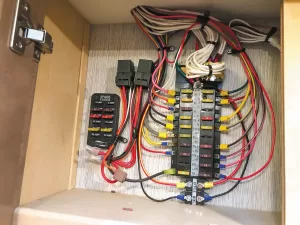
In some cases, especially in motorhomes, an RV will have separate 12-volt fuse, breaker, and relay access points.
Many RVs have multiple charging sources for the DC system. When plugged into AC shore power, a converter takes 120-volt AC power from the grid or generator. It converts it to DC (about 13-14 volts) to charge the battery bank and provide additional current for device operation.
The most common alternate charging source is solar. A solar panel, usually installed on the RV’s roof, provides DC via a solar charge controller. The amount of current varies based on the size of the panel or solar array and the amount of solar energy it collects, as well as the type of controller that is used. Other sources, such as power cells and wind generation, are sometimes employed.
The DC system can also energize the alternating current (AC) household electrical system via an inverter. Inverter systems range from basic models that clip directly on a battery’s terminals to operate a small load all the way to larger units that provide many kilowatt hours of power and enough current to power an air conditioner. The inverter takes DC from the batteries, inverts it, and rectifies it into AC power for household loads. The bigger the battery bank, the more power is available in a fully charged bank. Inverter-chargers combine the functions of a multistage battery charger with an inverter.
The chassis of any RV has a separate DC system. For trailers, it is a basic wiring system that connects to the towing vehicle to operate lights, brakes, and a charging line. However, it is more complex on a motorhome, as it is a fully operational 12-volt-DC system.
Your motorhome DC system will have its own battery (or bank of batteries). Usually, the only connection between that system and the house DC system will be the solenoid or charge controller. Specific accessory circuits can be connected to slideout controllers, dash stereos, etc.
RV 120/240-VOLT AC SYSTEM
The RV AC electrical system consists of a flexible shore-power cable, a circuit breaker box (or boxes), Romex wiring, switches, receptacles, junction boxes, connectors, and appliances. If the RV has a built-in generator or inverter system, it may have an automatic transfer switch.
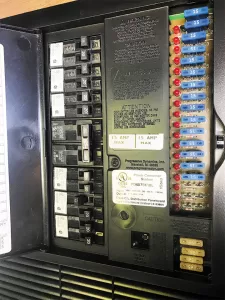
Most RVs will have a single power center like this 50-amp version, with 12-volt-DC fuses in the same panel. The two legs of the 50-amp service feed 50 amps to each side of the panel at 120 volts AC.
The Romex wiring is the same as in your house. Three gauges — 10, 12, and 14 — are used based on the amount of load expected on the circuit. Romex is identified by gauge and the number of current-carrying conductors, so 10/2 is 10-gauge with two conductors (white and black) and a bare ground wire.
RVs come with 30-amp or 50-amp service. Clarification is commonly needed here. Remember that the AC power grid provides the home with 120/240-volt AC power. We call this single or split-phase power. The 30-amp service feeds the entire RV with a single 120-volt, 30-amp cable. Calculated out, this is 3,600 watts of power available. So, to compare, a typical electric space heater uses 1,500 watts or 12.5 amps.
A 50-amp service utilizes two 50-amp hot conductors (L1 and L2), a neutral, and a ground. This is a split phase at the campground pedestal, which means the 60-hertz sine waves of the two hot conductors peak at opposite points. So, each leg is 120 volts AC, but if you put a meter between the two hot legs, you get 240 volts AC. We don’t use the split phase in RVs, as we don’t use 240-volt-AC appliances. Instead, we divide the 50-amp circuit breaker panel into two separate 120-volt, 50-amp sides to feed the RV’s circuits, making 100 amps available throughout the RV. This means a 50-amp RV service provides 12,000 watts of power to the RV. That’s 3.3 times the power of a 30-amp service.
RVers often will not have access to a 50-amp campground hookup and will need to use a reducer or “dog bone” to connect to a 30- or 15-amp receptacle. It is important to remember that electrical capacity is severely reduced when using an adapter. So, care must be taken to turn off all unnecessary loads to avoid overloading the circuit and tripping a breaker.
RVers often wonder about the benefits of using a surge protector or energy management system (EMS). Using a surge protector designed for RV use is a minimum requirement, and some RVs come equipped with them from the factory. A plug-in type of model is adequate and will help prevent damage from lightning or if some other damage to the grid causes a surge.
An EMS does more. It will turn off power to the RV if it senses any problem with the incoming electricity, including surges, brownouts, or open or reversed conductors or grounds. An EMS can protect the whole electrical system and save money in the long run.
Having a general understanding of how your RV receives power, and the components involved, may help you to avoid some issues down the road.