

Having an unbiased, trained third party conduct an evaluation before you purchase a home on wheels may save headaches and expenses down the road.
By Pat Jennette, F505807
March 2024
An RV purchase is a major investment. Whether you’re deciding to upsize, downsize, or buy for the first time, a thorough examination of the unit, its warranties, and other important facets is key, just as it would be for any other big purchase.
We’ve been RVers for 12 years now, six of those full-time. During that period, we’ve owned two different types of RVs. In 2020, my husband, John, became a certified RV inspector through the National RV Inspectors Association (NRVIA). Although he decided not to pursue this as an occupation, the training he received proved to be immeasurable. It has benefitted our RV ownership and has helped family and friends who have reached out for guidance.
The information in this article is intended to provide an overview of what one might expect when hiring an RV inspector.
WHY HAVE AN RV INSPECTED?
After visiting dealerships or searching online sites and narrowing down RV choices, it’s time to contact the seller.
While descriptions and photos can provide a great deal of information about the potential purchase, it’s impossible to know whether the RV’s components are in good working order without seeing the vehicle firsthand. Are the electrical parts intact and safe? Do the water and sewage systems operate efficiently? Is the roof solid? Are the tires in good condition?
 Hiring an RV inspector may confirm that you’ve found the RV of your dreams in excellent condition, or it could unveil issues that might have otherwise gone unnoticed, potentially saving you thousands of dollars down the road. A thorough RV inspection helps to give the buyer some assurance that the RV of choice is solid, dependable, and worth its stated value.
Inspectors take intensive courses over multiple weeks and are tested on the information they’ve studied to make certain they are ready to examine RVs in depth. They train to scrutinize, in finite detail, the condition of any type of RV. It’s a specialty niche and one intended to offer RVers peace of mind.
A certified RV inspector with the NRVIA adheres to a 12-point code of ethics to ensure a credible and reliable inspection is conducted.
PPI VERSUS INDEPENDENT RV INSPECTION
When buying from an RV dealership, a prepurchase inspection, or PPI, typically takes place. A dealer technician or representative goes over the unit to make sure it is structurally sound and in safe operating condition. Even with this inspection, things can and will be missed.
The dealership will also provide a “walk-through.” This is a valuable opportunity for the buyer to learn how to operate the new RV. It’s also a chance to ask questions. During the walk-through, however, buyers often do not get up on the roof and look for potential problems or lay under the vehicle to check for signs of stains, leaks, or loose wires.
While the PPI is an important part of the purchase, the difference between a dealer inspection and one conducted by a third-party certified RV inspector (someone who is not employed by the seller or the dealership) is that for one, the inspector takes a detailed look at everything and documents it all. Second, the inspector is unbiased. He or she has no financial stake in the purchase or sale.
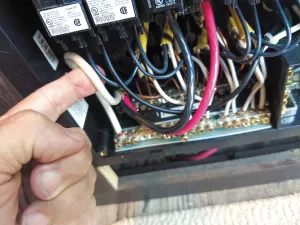
The RV inspection process should include examining the wiring in the main electric breaker box.
Depending on the size of the RV, an inspector can spend anywhere from several hours to more than a full day conducting a thorough review. John pointed out that inspectors go above and beyond state safety inspections — if they’re even required.
“Not all states require a safety inspection, so it’s even more important to have a ‘new to you’ RV looked over very carefully,” he explained.
One example that sets an RV inspection apart from a standard PPI is the testing of fluids from the engine, transmission, and cooling systems. Some inspectors offer this service for an additional fee. They send these samples to an accredited lab, which can identify contaminants in the fluids that may suggest wear or failure of the drivetrain.
While the idea of an RV inspection may seem like overkill to some, it’s important to understand that the vehicle is essentially a house on wheels. It is more complicated in that it incorporates many systems found in a house but combined with those in a vehicle. Plus, ever-changing technological advancements add challenges. For instance, some RVs — new ones especially — incorporate solar power and multiple large storage batteries.
Some RV components, such as refrigerators, operate on both shore power and propane, while others work off batteries. This can make it complicated for the average person to understand or to know whether those components are in reliable working order. An RV inspector has been trained specifically to know how they operate, independently or together.
THE INSPECTION PROCESS
RV inspectors use one of several inspection software programs to document a final report. The NRVIA offers on its website (nrvia.org) a 40-plus-point outline of items that an RV inspector will review, check, or test. These include:
- The exterior from top to bottom, including the roof to check for leaks and the underbody to look for leaks, suspension problems, or loose wires.
- Safety components, including fire extinguishers, smoke alarms, and carbon dioxide monitors.
- Smells or noises from the engine, transmission, and exhaust systems (inspectors aren’t trained to diagnose drivetrain problems).
- Visual inspection of braking systems, steering, and suspension components.
- Propane systems.
- Condition of the upholstery, furnishings, cabinets.
- Air conditioning and heating systems/furnace.
- All DC and AC electrical systems, including generators.
- Plumbing and water systems, to confirm that no leaks or defects are present and that they areoperating efficiently.
- Refrigerators, stoves, water heaters, and other appliances, to be sure they are in good working condition.
- Tires and wheels.
- Windows and doors.
- A check for previous collision damage; some inspectors will run the RV’s vehicle identification number (VIN), or investigate whether any factory recalls have been issued for the RV.
- Check for water damage.
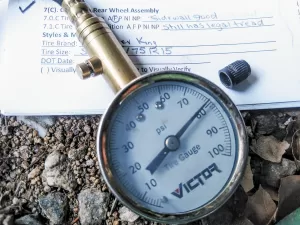
Tires and their pressures should be inspected as well.
In short, the inspector looks at everything, from walls, doors, and windows to awnings, slideouts, and steps, and all parts of the RV in between, to make sure it is in the best condition it can be.
RV inspectors have experience and a trained eye to look for subtle things such as water stains, a spongy roof, or a soft floor substrate. Any of these, if not found during an inspection, could lead to unexpected costly repairs.
John explained that inspectors also have specialty tools that can identify hidden problems, such as propane leaks, that aren’t easily seen or smelled.
Broken, worn, or incorrectly wired components can lead to an electrical shock or something more serious. Old and weathered hoses, tubing, or loose fittings can result in propane or fuel leaks.
John noted that even a new RV can have some issues. A case in point, he said, occurred when friends asked him to look over their new RV, only to find that part of the water system had been installed incorrectly at the factory. He said that snafu could have created a major flooding issue throughout their new RV and ruined the floor and more.
An inspection of another friend’s RV subsequently unveiled several small issues that the buyer wasn’t aware of at the time of purchase.
Once an RV inspector completes the examination, he or she will supply the client a detailed report that also will note anything that needs to be addressed. This report is most often accompanied by photos the inspector takes of the RV during the inspection process. These photos substantiate and/or illustrate in further detail whatthe inspector finds. Many RV inspectors will also take the time to review the report with their client and explain anything the client doesn’t understand.
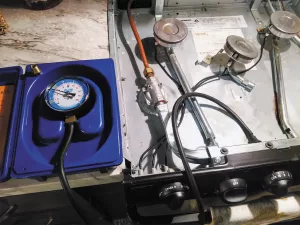
An RV’s propane system and gas range need to be tested routinely using a leak detector.
IMPARTIAL OBSERVERS
Clients may ask the inspector whether he or she would recommend purchasing or selling the vehicle in its current condition. While the inspector can provide a detailed report, it’s up to the client to make that decision. John explained that inspectors are trained to do just that — inspect. He said even if they could fix or resolve some of the problems discovered, it would be a conflict of interest.
Also, inspectors are not able to provide any repair estimates, as they vary widely from state to state and from one repair center to another.
At that point, it’s up to the client to accept the report and make a decision on the purchase and/or whether to pay for the needed repairs. An inspection report also empowers the buyer to negotiate the price, whether purchasing from a private owner or a dealership.
Just as buyers should have their RVs inspected, so should sellers consider this as an additional service to potential buyers. Even the most well-intentioned and astute owners can miss or overlook things during their RV ownership. The cost of the inspection will help to assure the seller that his or her RV is in the condition stated in the marketing and is worth the value requested. Providing potential buyers with a copy of the report shows due diligence on the part of the seller.
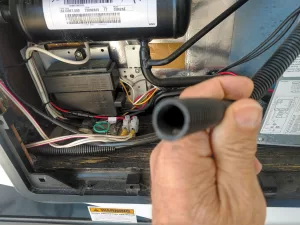
Refrigerator components on the exterior of the RV should be visually inspected.
In the end, whether buying or selling, an RV inspection provides some confidence that the RV is sound, safe, and meets the required standards.
John noted that as RVs continue to change and become more sophisticated over time, it’s even more important that someone with current and up-to-date professional training performs a thorough review of one’s RV purchase.
Newer RVs need the same attention to detail as automobiles and trucks, which have morphed over the decades and now require automotive technicians. Professionally trained inspectors are required to keep up with current industry standards to maintain their certification.
 HOW MUCH?
Clients may ask, “What does an inspection cost?” This varies widely, depending on the type and size of the RV and the location. For example, an inspection of a travel trailer may cost less since it has fewer components. On the higher end, large motorhomes, larger Type Cs, and fifth-wheels cost more. An estimated range would be between several hundred dollars for a very small RV to a thousand dollars or more for large motorhomes.
In the end, John noted, buying an RV is a major investment. If the cost to inspect it uncovers problems or concerns, it’s well worth the money spent. And if the RV receives an “A” in the end, it’s a win-win for the buyer and the seller.