
Travel
Idaho: A State Gem
By Liz Brisson, F521676
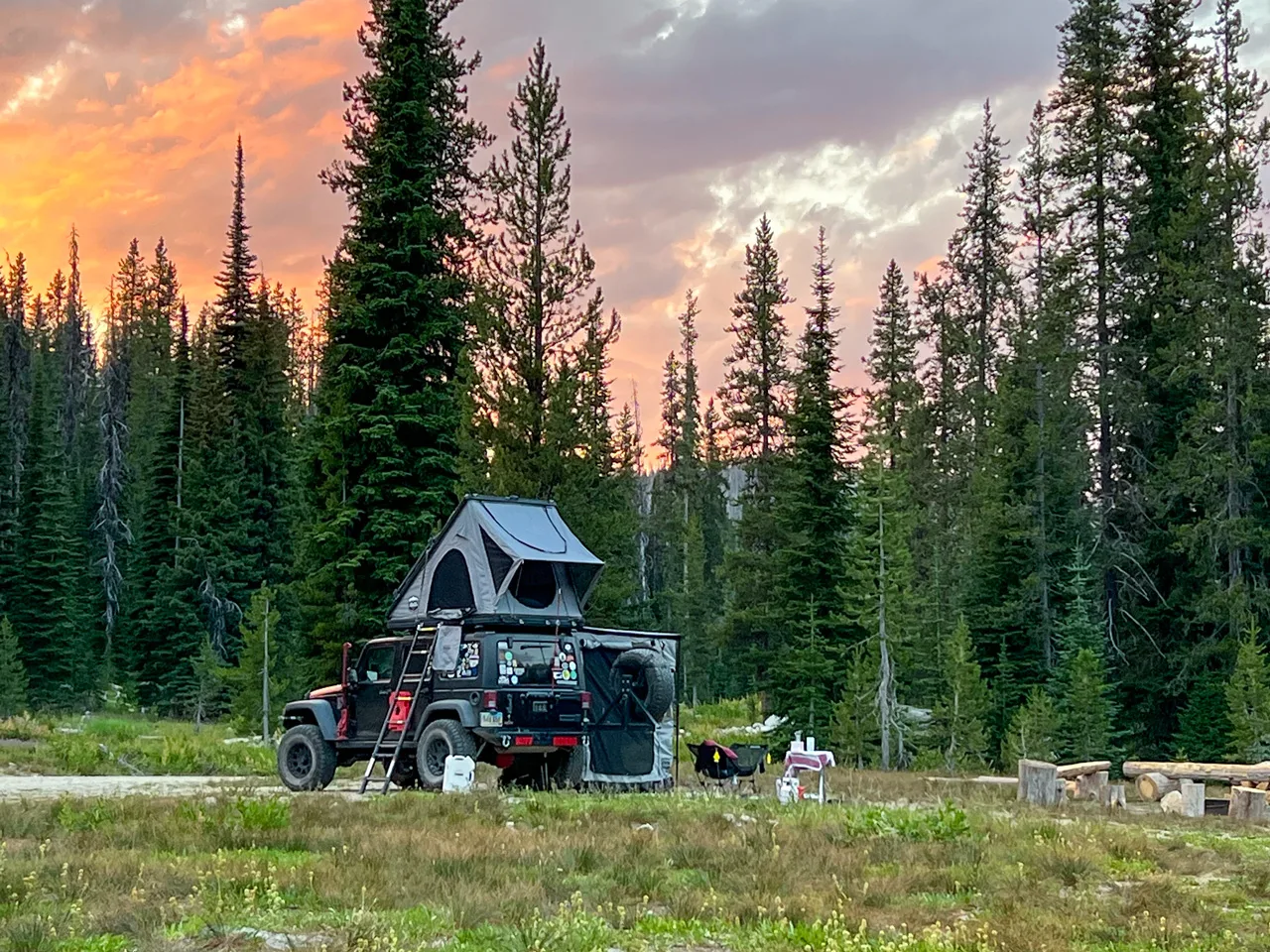
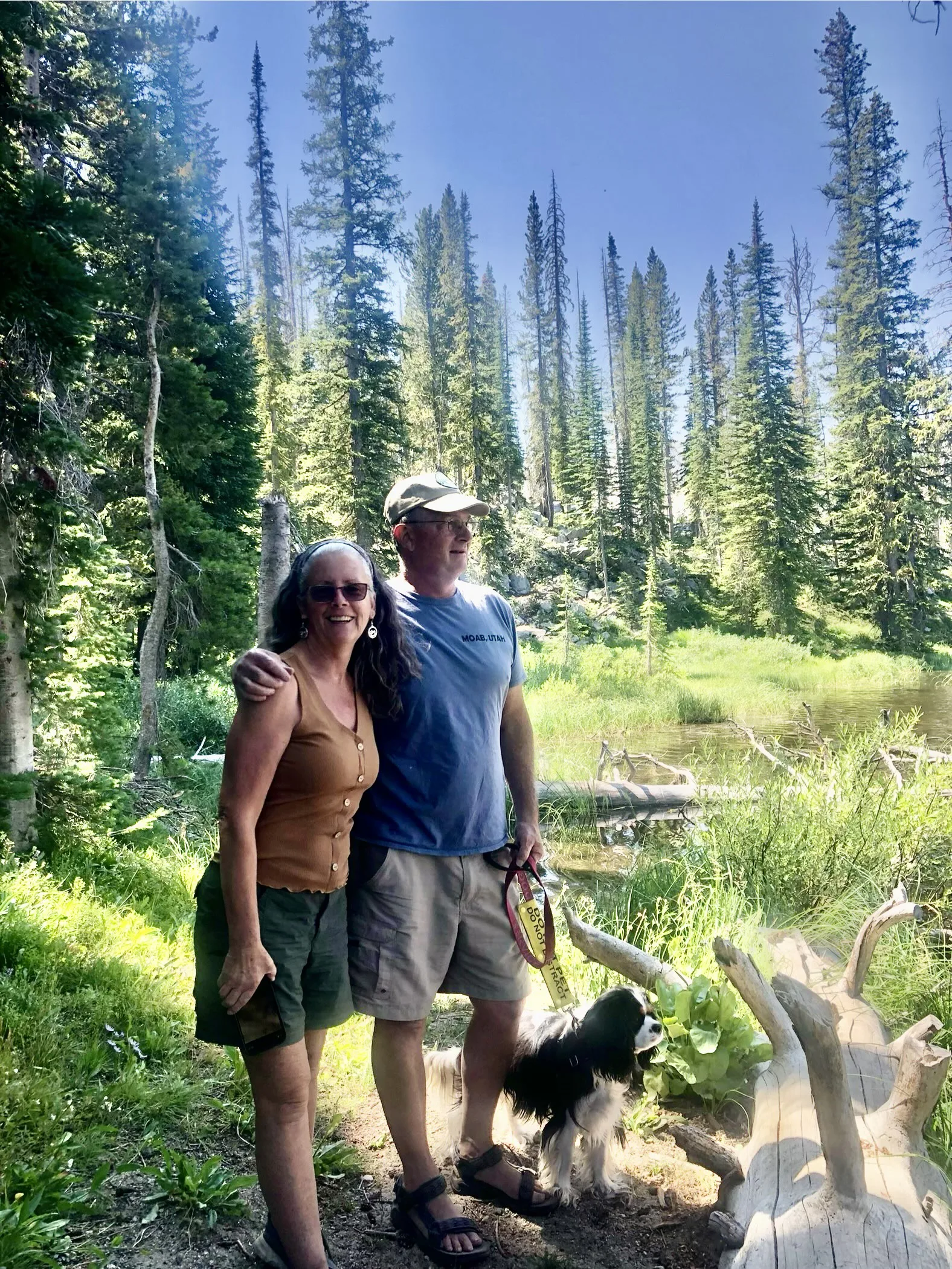
Liz and Roger Brisson enjoy overlanding in their Jeep towed vehicle and overnighting in dispersed camping areas.
Idaho is more than spuds! It’s one of our favorite states, and we’ve been in them all. There’s so much to do and see, no matter what your interests are. Idaho has unlimited watersports, fishing, backcountry hiking, and biking. Hot springs send steam across the roadways. Crystal-clear lakes and rivers inspire awe, along with cascading waterfalls. The state boasts national parks and forests, museums, and wineries.
We spent an entire summer immersing ourselves in Idaho, starting at the tip of the panhandle near Canada and meandering down to the Utah border. The landscape is so diverse, as is the state’s history and beauty. We traveled many scenic byways, followed historic trails, and explored old mining towns. My husband even went paragliding in Sun Valley. It is indeed the Gem State.
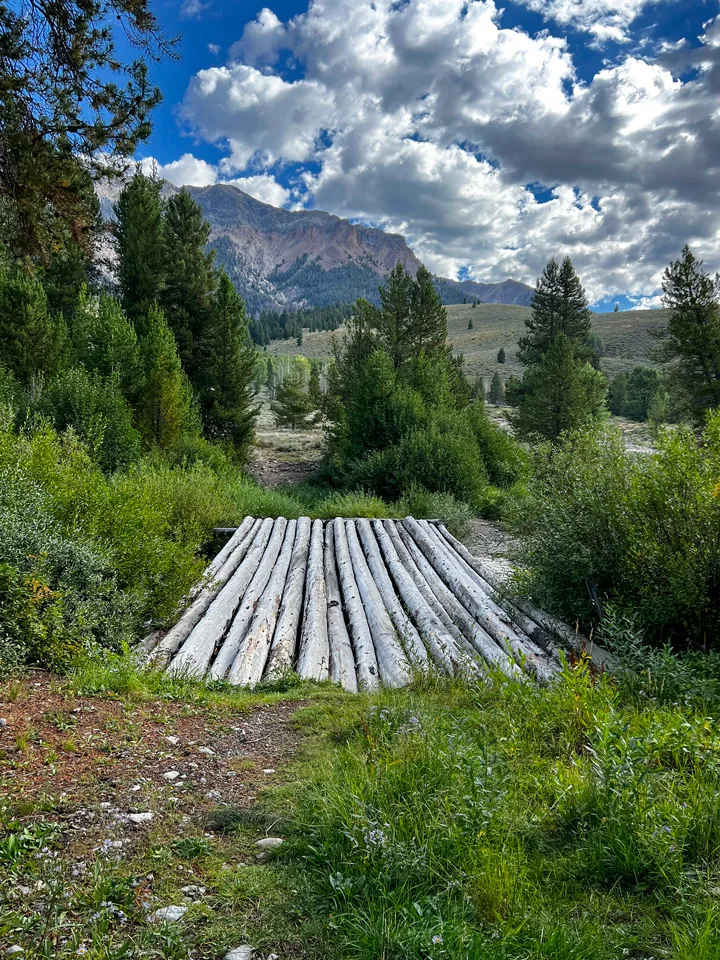
Liz and Roger Brisson especially enjoyed Ketchum, Idaho, including this spot near Billy’s Bridge.
What strikes me most is that public land makes up approximately two-thirds of the state. That’s more than any state in the lower 48. This means there is no shortage of places to boondock. Plus, there’s easy access to services for dumping and water for a small fee. When we travel, we like to find a place to use as our base camp for the motorhome. We tow a Jeep that’s set up for overlanding, and we typically go exploring within a 75-to-100-mile radius.
We especially enjoyed the Ketchum area. Our campsite faced the Boulder Mountains. Besides the spectacular views, there is a chance you’ll see mountain goats. But you’ll need binoculars. If you don’t have any, you can visit a viewing platform not far from the dispersed camping area that has high-powered observation binoculars. Interpretive signs there tell about the mountain goats and the history of Billy’s Bridge. This log bridge crosses the Big Wood River, which runs along the dispersed camping area.
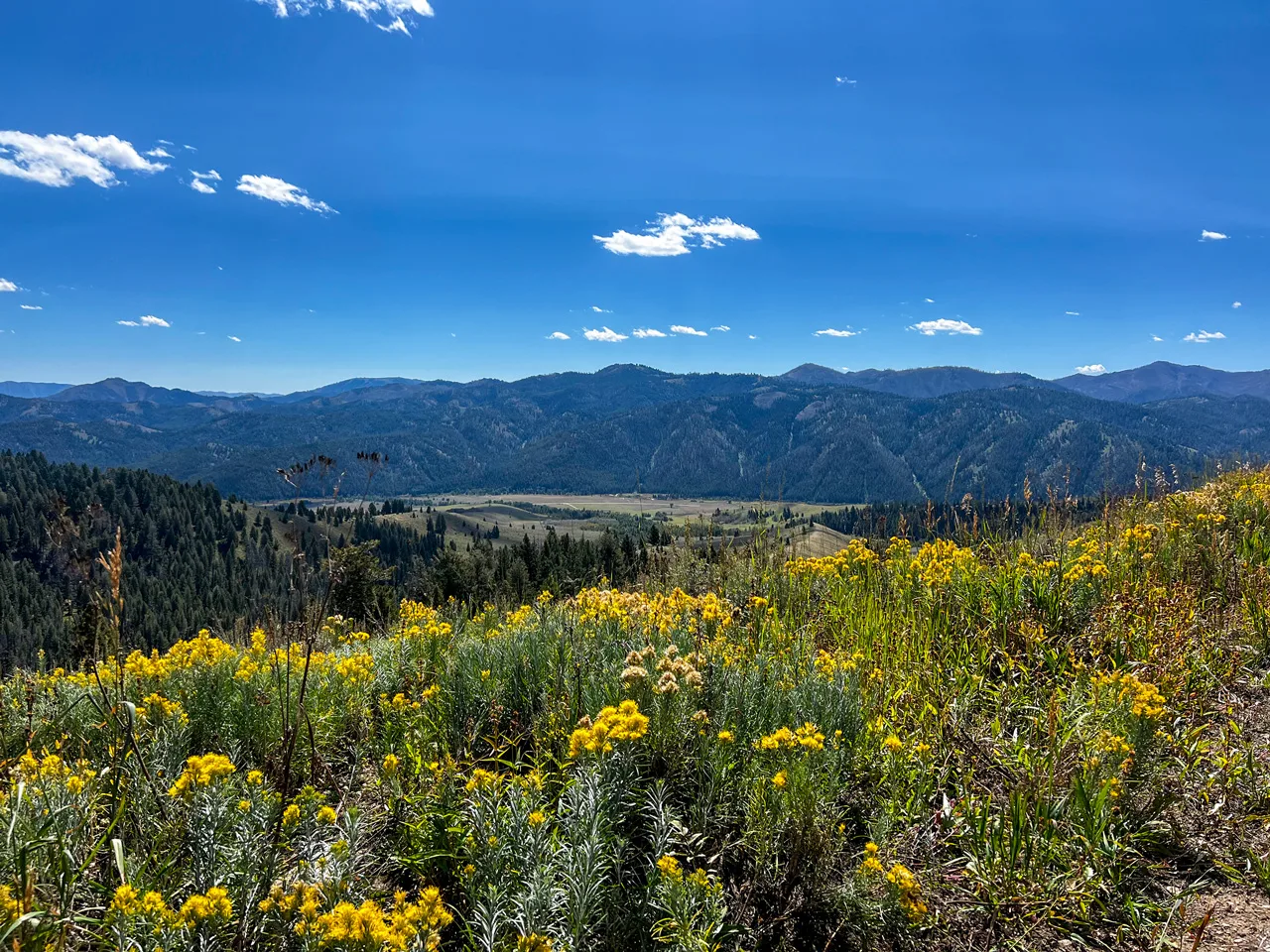
On the drive to Boulder City, Idaho, Liz and Roger Brisson were treated to unforgettable views such as this one.
If you are adventurous, nearby is Boulder Basin. You can pick up the trailhead toward Boulder City, a historic mining town hidden in the wild Idaho backcountry. We took our Jeep and followed the rugged terrain once used as a wagon road. The road is narrow and steep, with a chipped-rock surface, loose shale shelves, and steep drop-offs. It leads to water crossings, remnants of old buildings, and amazing views.
For us, Idaho lives up to its state motto, “Esto Perpetua” — “Be Eternal.” It definitely left an everlasting impression on us. To quote the Terminator character played by Arnold Schwarzenegger, who has a home in this area, “I’ll be back.”
“The AhVWanderers” grew up in New England and can’t pronounce our “Rs.” LOL! Due to Roger’s health, in 2020 we sold everything, including a 200-acre Vermont homestead that was our retirement dream. We started traveling the country in our motor-home, where a new retirement dream emerged. We loved this lifestyle so much we decided to become full-time RVers. We travel with Roger’s service dog, Thurston Howl the Furred, a Cavalier King Charles spaniel. We tow a Jeep named Ruff Riders and have fun getting into and exploring the backcountry.
Explore
The Roundabout Way
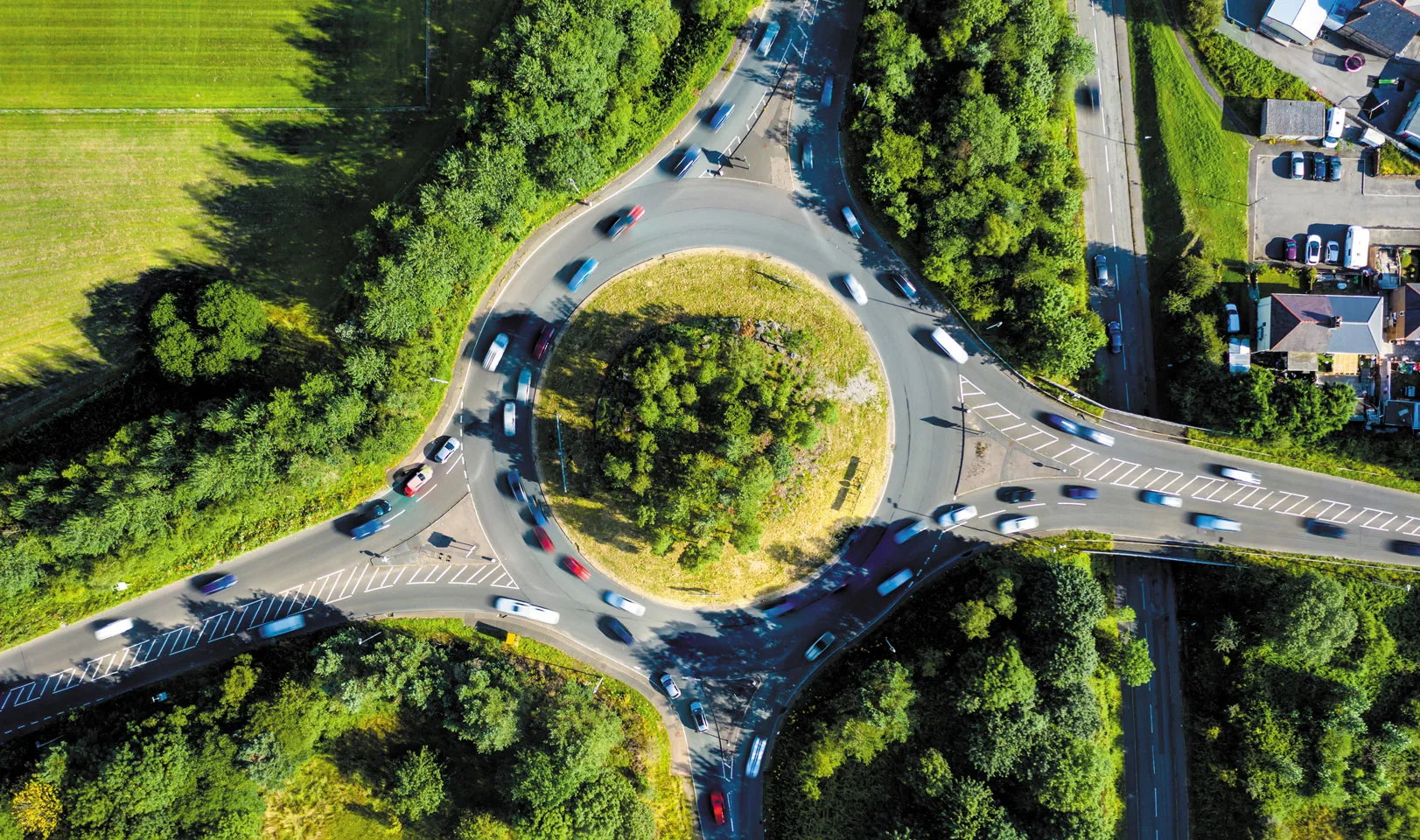
According to the U.S. Department of Transportation’s Federal Highway Administration, roundabouts keep traffic moving in a safe manner, especially when transitioning from high-speed to low-speed environments.
Love ’em or hate ’em, roundabouts are here to stay. Those quirky circular roads that travel around a central island, eliminating stoplights and conventional intersections, have confused some motorists and been embraced by others. Here’s why experts say they’re so useful.
According to the Federal Highway Administration, roundabouts can reduce fatalities and serious injuries by up to 82 percent at intersections. That’s because the channelized, curved approaches force drivers to slow down and yield to oncoming traffic. This configuration improves traffic flow and increases safety. In addition, they are said to decrease traffic delays and stops by up to 74 percent. And with less vehicle idling, roundabouts lower pollution levels. As for the economics, roundabouts cost less than traffic signals over time, as they involve no installation, power, or maintenance costs.
More than 10,000 roundabouts have been installed in the United States, and another 1,250 or so in Canada. Some cities have gone all out, including Carmel, Indiana, which boasts over 150 of them — more than any other U.S. city.
Most roundabouts can accommodate a variety of vehicles. But if you are driving or towing your RV and spot a sign near a roundabout that advises, “No Trucks,” steer clear of that one. When entering a roundabout, drive slowly and make a wide turn while navigating through. Watch your mirrors to ensure your wheels clear the curbs. Apply your experience maneuvering your RV in other driving scenarios, and you should be fine.
Regardless of what vehicle you’re driving, remember three basic roundabout tips: 1. Slow down. 2. Look around. 3. Be ready to yield.
Learn more about RVs and roundabouts from Mortons on the Move: bit.ly/3OefWNv. Or view a YouTube video tutorial from the Federal Highway Administration: bit.ly/3AIzJlg.
Stay safe.
Food
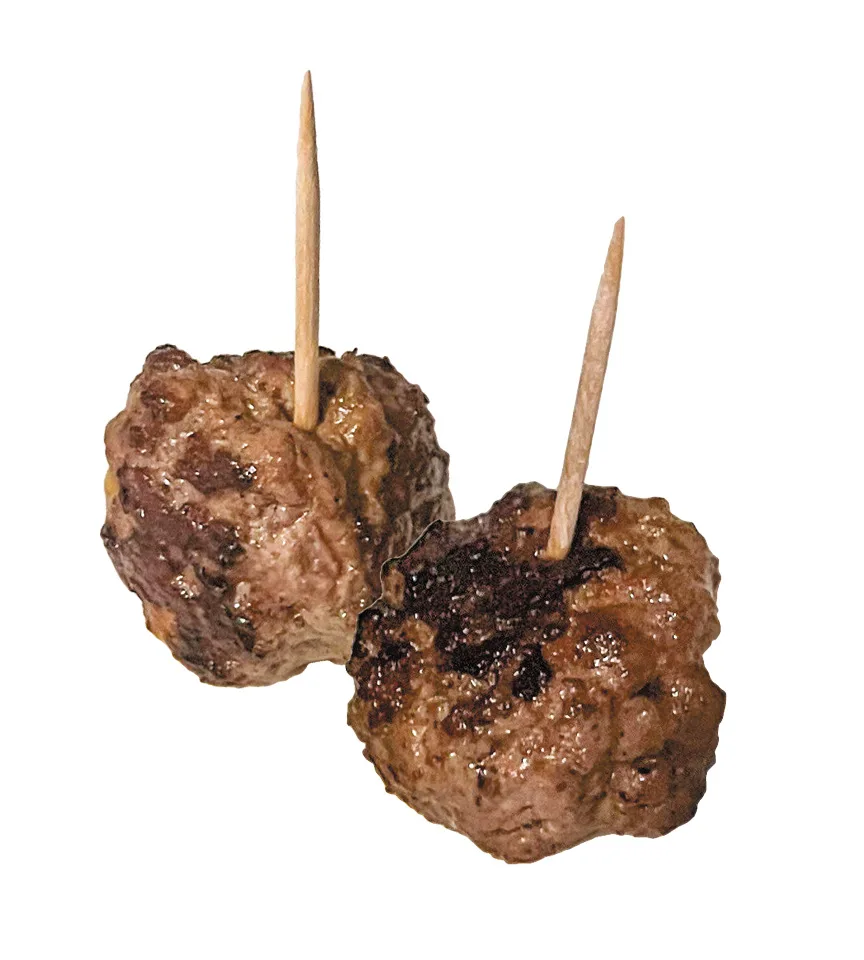
Round-a-Bout appetizers
Ralph’s Round-A-Bout Appetizers
By Ralph Bertermann, F187805
These appetizers are simple to prepare and can be frozen ahead or prepared the night before, ready to hit the griddle for happy hour with friends or when arriving at the campground. They do tend to splatter when cooking, so I prepare them on my 17-inch outside griddle, which stores easily in one of the RV compartments. I use my griddle both while camping and at home.
Prep time: 30 minutes
Cook time: 6 to 10 minutes
Yield: One pound of hamburger yields 14 Round-a-Bouts
Equipment: 1/8-cup measuring cup; griddle or grill
Ingredients
1 pound hamburger
½ teaspoon garlic powder
½ teaspoon pepper
1 teaspoon kosher salt
1 teaspoon paprika
1 teaspoon onion powder
3 tablespoons butter, cut into 1/6-tablespoon pieces
Worcestershire sauce
Shredded sharp cheddar cheese, or bacon bits
Olive oil if using griddle
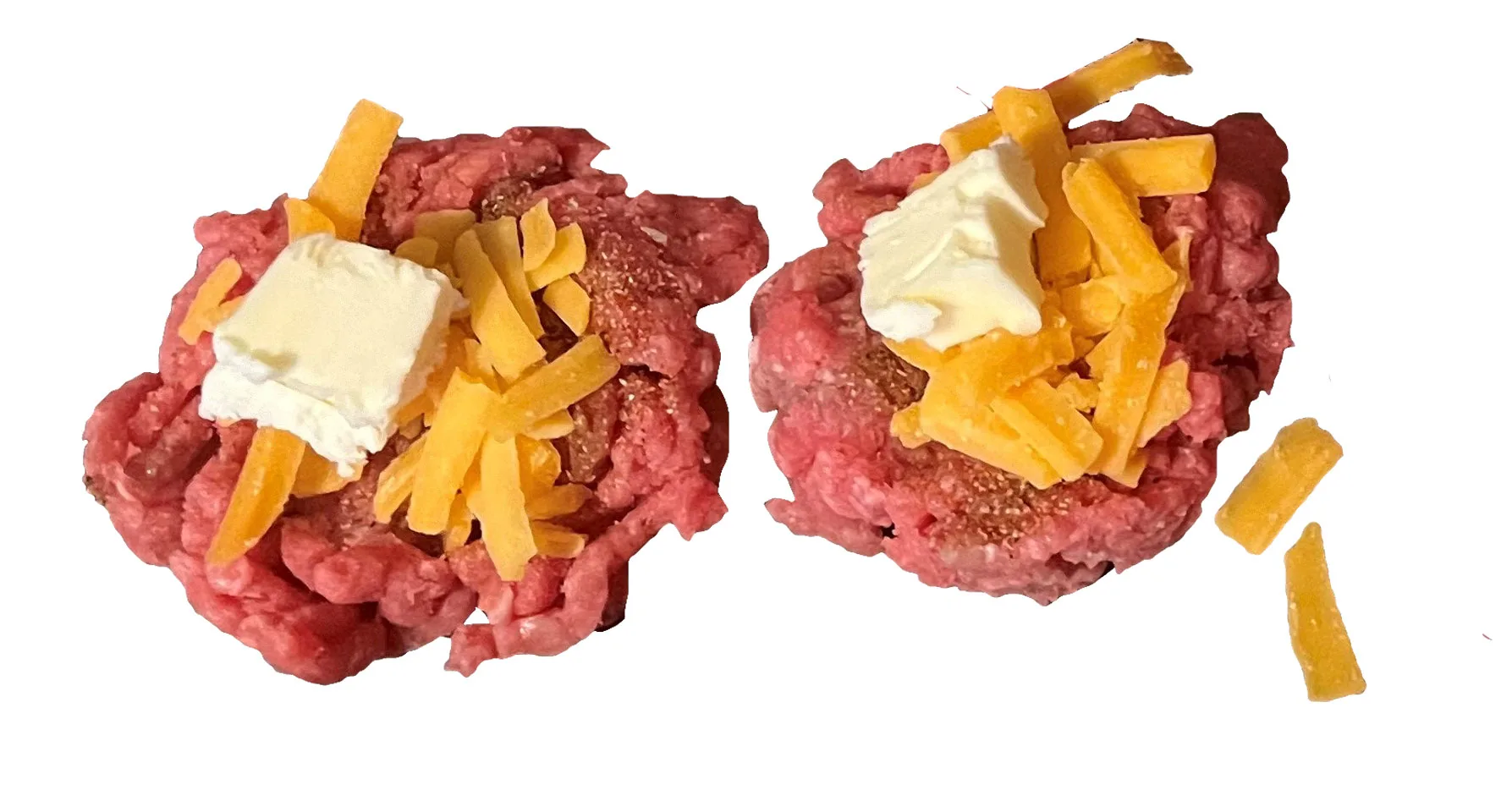
Round-a-Bout appetizers
Directions
- Combine and mix all dry ingredients. Set aside.
- Fill the 1/8-cup measuring cup with hamburger.
- Empty the cup onto a baking sheet and flatten with the measuring cup, making a small patty.
- Repeat until all the patties have been made.
- Lightly coat each patty with Worcestershire sauce.
- Take a pinch or two of the dry mixture and sprinkle it on each patty.
- Place 1 teaspoon of shredded cheese or bacon bits on each patty.
- Place 1/6-tablespoon of butter onto each patty.
- Gently fold the patty onto itself, making a small ball.
- Cook on a griddle or grill for 6 to 10 minutes or until the internal temperature of the patties reaches 160 degrees.