
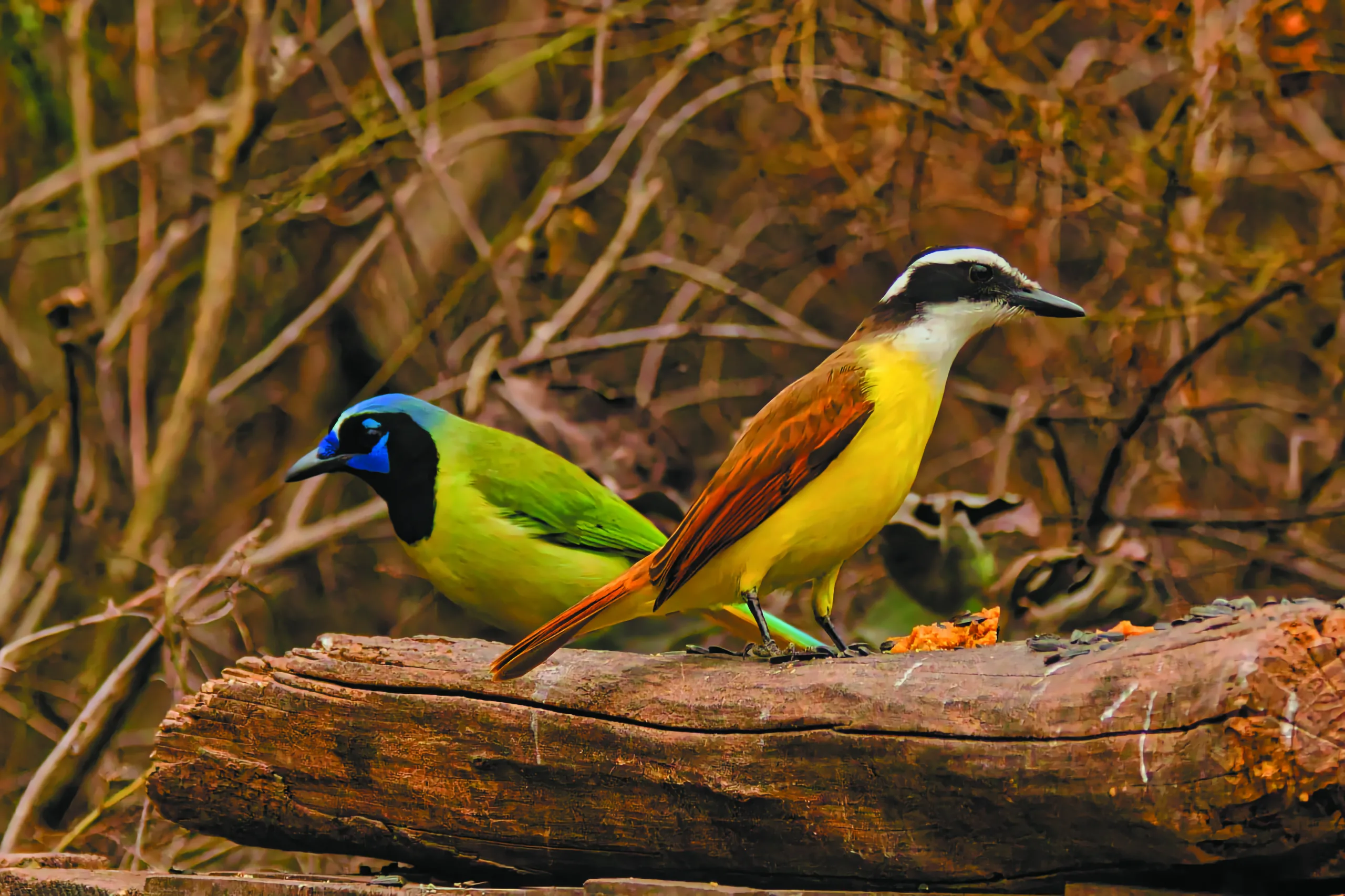
The southernmost tip of Texas boasts a rich array of ecosystems teeming with birds, butterflies, and other wildlife.
By George Moore, F460576
November-December 2025
The Lower Rio Grande Valley of Texas, also called the Rio Grande Valley (RGV), extends roughly from Brownsville to Rio Grande City. Winter Texans find the area from Mission to Brownsville especially appealing. The RGV’s mild climate and friendly residents attract between 50,000 and 100,000 Winter Texans each year.
Like snowbirds in Florida and Arizona, many Winter Texans quickly become involved in the activities their park or resort offers. With a variety of games, arts and crafts, fitness centers and classes, swimming pools, pickleball, tennis, and other sports, plus safe streets for walking and bike riding, most amenities are on-site. Some folks leave only to shop or dine out.
The National Butterfly Center is home to the Altamira oriole.
Beyond the cities, farms, and orchards in the RGV, efforts to restore and preserve the land in its natural state are ongoing. As such, many nature parks and preserves are spread throughout the valley. Birders from around the world are familiar with the RGV and its World Birding Center (WBC), a network of nine parks and preserves that extend from Roma to South Padre Island, Texas. They join several other parks and preserves.
Thanks to the mild climate, which attracts numerous birds year-round as well as in specific seasons, and the major migration routes that cross the valley, over 500 avian species have been recorded in this area. In addition to supporting the birds, these facilities work to protect and maintain the valley’s natural flora and fauna. Visitors can find the last remaining Tamaulipan Brushland, plus habitat for the endangered ocelot and other native wildlife.
The RGV’s nature parks entice Winter Texans and others to leave their RV parks or resorts. You don’t need to be a serious bird-watcher or naturalist to enjoy them. If you walk or bike, you’ll find miles of well-maintained trails through woodlands and wetlands, offering safe and relaxing opportunities for exploration. Instead of watching out for golf carts and cars, you can listen to birds sing and search for wildlife. Many parks also have ADA-approved and wheelchair-accessible trails.
Several of these parks make it easy to see and photograph the green jay, Altamira oriole, Inca dove, chachalaca, and long-billed thrasher, as well as hummingbirds and other species. They provide easy-to-access feeding stations with regular feeding schedules. Most of the sites have benches where visitors can relax while enjoying close-up views of the birds.
Some also feature historical sites. You may find an old cemetery, a steam pumphouse from the early 1900s, or a historical mansion.
Although I haven’t visited all the parks and preserves in the valley, this overview highlights some of my favorites.
Bentsen-Rio Grande Valley State Park provides habitat for the collared peccary, commonly known as the javelina.
Starting in the west is Bentsen-Rio Grande Valley State Park in Mission. This park covers 760 acres and features seven miles of trails. It also serves as the headquarters for the World Birding Center. The 3.5-mile park road is paved (but not open to cars), making it popular with bicyclists and walkers.
At both the park entrance and the green jay feeding areas, you can sit, relax, and enjoy close-up bird watching, sometimes with great photo opportunities. Often, a ranger or volunteer is stationed at the entrance feeders to answer questions and point out specific birds and other animals. Hummingbird feeders and a two-story hawk tower are located at the visitor center. The hummingbird feeders are maintained year-round; others are filled from late October through March. The tower is especially popular during the spring and fall migrations, when thousands of hawks pass over and through the park. In addition to the 360 species of birds that have been documented here, visitors can see a variety of butterflies, javelinas, bobcats, and other wildlife.
Just down the road is the National Butterfly Center, also in Mission. Although butterflies are the primary focus of this nonprofit park, it is also well-known for the variety of birds found here. Of the 300-plus butterfly species identified in the valley, more than 200 have been documented at this 100-acre preserve. To attract a variety of butterflies, logs with a special “banana brew” are placed along the trails. Butterflies are also drawn to the wildflowers and other native plants.
The park includes woodlands, savannah wildscapes, and cultivated gardens. Like birds, the butterflies fly freely and are most active when the temperature exceeds 70 degrees. My favorite is the Mexican bluewing, whose wings display a bright iridescent blue in the sunshine.
The National Butterfly Center attracts queen butterflies.
Besides butterflies, the park’s bird feeding station attracts green jays, Altamira and Audubon orioles, hummingbirds, and several other species; check with the center for scheduled times.
A short drive east of Mission in Hidalgo, the Old Hidalgo Pumphouse Museum and World Birding Center is popular with walkers, bikers, birders, and those interested in local history. An early 1900s steam-powered water pump at the site once supplied irrigation water for the expanding farms. Visitors can take a self-guided tour of the building and view the giant pumps and boilers. Outside, birders watch blue-gray gnatcatchers, great kiskadees, and a variety of waterfowl and songbirds on a walk around the pond. Walkers and bikers get their exercise on the five-mile hike and bike trail on the levee.
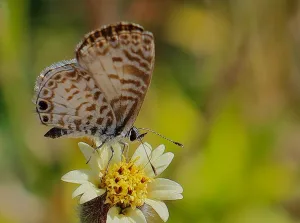
The Cassius blue also frequents the National Butterfly Center.
Continuing east, we arrive at one of the larger parks, the Santa Ana National Wildlife Refuge. Situated along the Rio Grande in Alamo, this 2,088-acre refuge has been called the jewel of the National Wildlife Refuge System. Because it lies along two migratory routes, nearly 500 bird species and 300 butterfly species have been documented here. The refuge provides over 14 miles of trails for hiking, biking, or exploring via tram along the paved road. Several ponds attract a diverse array of waterfowl. Feeding stations are situated near the visitor center. History buffs may enjoy the old cemetery deep within the park. The park also features an observation tower and a short canopy bridge.
The city of Weslaco boasts a six-acre urban preserve that has been restored to support native plants of the area. Valley Nature Center includes a one-mile walking trail, a pond, and year-round bird feeders. Visitors walk through the woods while being serenaded by a variety of resident and migratory birds. In addition to birds, you might also see cottontail rabbits, Texas tortoises, lizards, and a variety of butterflies. The 41-year-old center features interactive displays to help visitors learn about the diverse plants and animals of the RGV.
A few miles from the Valley Nature Center is 230-acre Estero Llano Grande State Park. This 230-acre park features the largest wetland environment in the World Birding Center network of facilities. Visitors encounter wetlands, ponds, woodlands, and thorn scrub along more than five miles of trails. An additional trail on the levee runs along Llano Grande Lake. A variety of forest birds, shorebirds, waders, and waterfowl call this refuge home. Bring binoculars to view them. In and around Alligator Lake, you may spot American alligators, possibly sunning on a rock just off the trail, as well as bobcats. Also look for herons, common pauraques, and white-tailed kites. The bird feeders are active during the winter months.
Continuing east from Weslaco, you reach the city of Brownsville and another World Birding Center site, Resaca de la Palma State Park. The 1,200-acre park includes eight miles of trails, four decks overlooking the resaca — a former channel of the Rio Grande (dry during drought), a water feature, and bird feeders during the winter and migration seasons. It has three primary habitats: wetlands; mature woodland dominated by ebony trees; and woodland and savannah areas filled with mesquites. Resaca de la Palma is a vibrant birding environment that attracts birders from across the United States and other countries. During the winter of 2023–24, I was fortunate to photograph two birds considered rare in the U.S.: a roadside hawk and a gray-collard becard. The park is also popular with walkers and bicyclists.
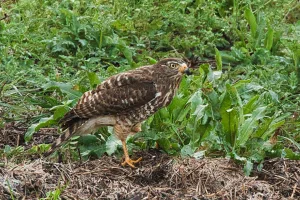
Known for its loud, persistent calls, the roadside hawk can be spotted at Resaca de La Palma State Park.
Three other parks in the region are worth mentioning:
Quinta Mazatlan is a 20-acre city park in McAllen. In addition to being a World Birding Center site, it features one of the largest Spanish Revival mansions in Texas. Bird feeders and natural amphitheater seating are located in a Tamaulipan Thornforest.
Sabal Palm Sanctuary is a 557-acre preserve near Brownsville. Three miles of walking trails traverse the Sabal Palm Forest, one of the rarest ecosystems in the U.S. A visitor center is located in the 1892 Rabb Plantation House on the grounds.
Many Winter Texans visit South Padre Island for the beach and seafood. While there, the South Padre Island Birding, Nature Center & Alligator Sanctuary is definitely worth a stop. The bayside preserve and wetlands at this 50-acre World Birding Center Site attract a wide variety of local and migratory birds. The center features over 3,300 feet of boardwalk through the wetlands and to the bay, along with five bird blinds. Visitors will also find a five-story observation tower, butterfly agarden, and gator pond. I recommend making a res.ervation for the very informative and comfortably paced guided bird walk.
The Rio Grande Valley in Texas is more than just a bustling place to shop, dine, and stay at an RV resort. It is also where short-term visitors and Winter Texans discover the wonders of nature in parks and preserves, including colorful birds unique to the region and butterflies in their natural habitat. These parks offer a peaceful, natural setting, reminiscent of when early settlers arrived in the valley. They provide a refuge from our daily routines.