
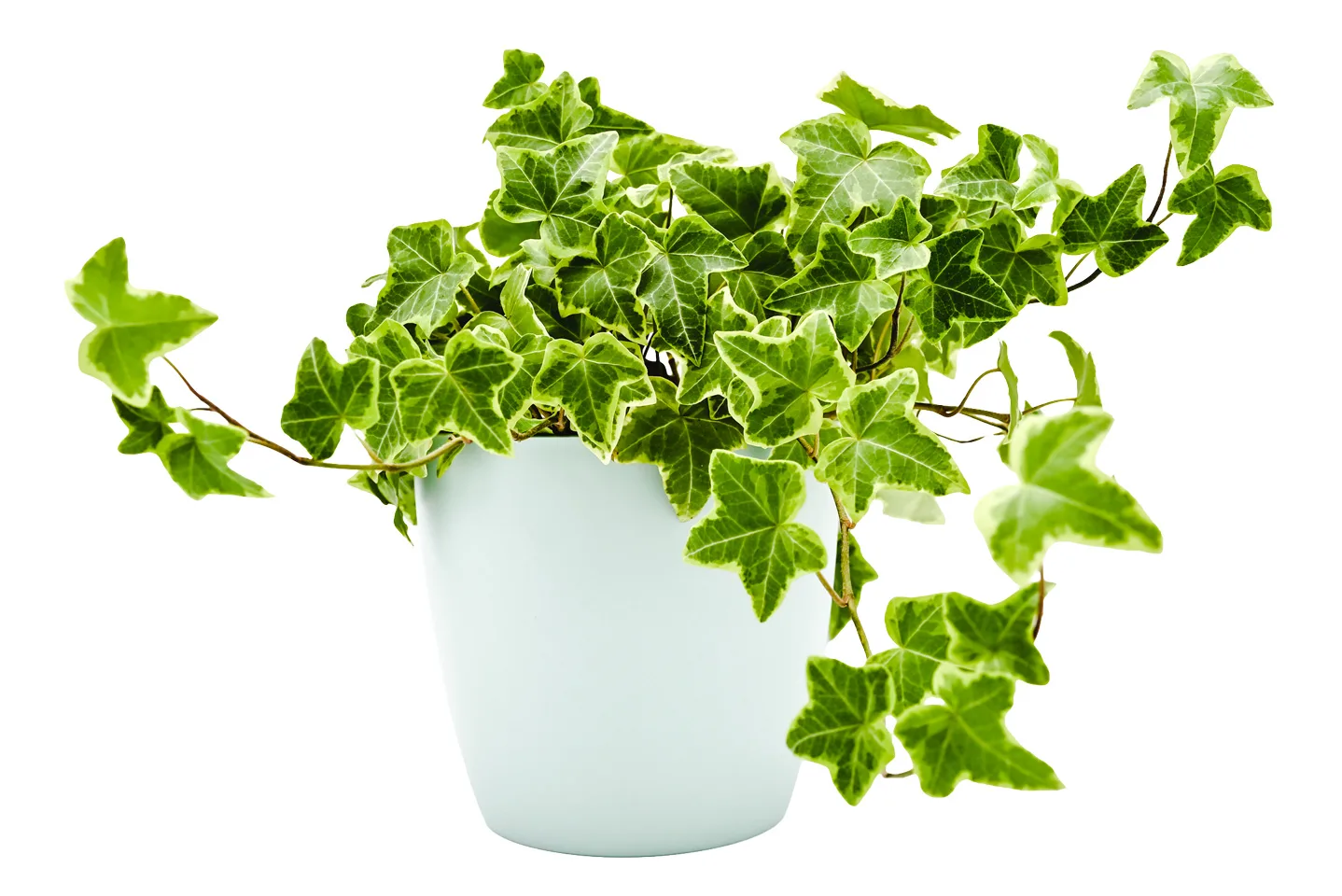
You can hit the road in your RV and still have a green thumb.
By Phillip Meeks
May-June 2026
According to the National Gardening Survey, an annual report conducted on behalf of the National Gardening Association, 84 percent of American households participated in some kind of lawn or gardening project in 2024. Respondents expected to increase their participation in food, flower, and houseplant gardening.
Families who spend a large chunk of the growing season traveling in an RV might consider gardening a mutually exclusive passion. It’s a reasonable assumption that, since successful gardens require attention, especially in spring and summer, being on the road for weeks or even months places that activity out of reach. Gardening, we could conclude, is something to do in your own, permanent space. It’s a static adventure, while the RV lifestyle is dynamic.
But the reality is that you don’t have to give up one of these pleasures for the other — you may have to adjust your conceptions of gardening a bit, but it’s entirely possible to grow on the go by making your “garden space” portable.
KNOW YOUR ZONES
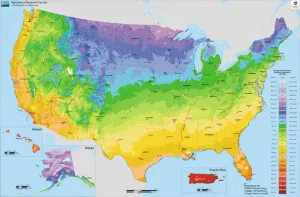
The USDA Plant Hardiness Zone Map suggests which perennials may thrive in a particular location.
A good starting point for any type of gardening, whether you’re growing in your hometown or three time zones away, is to acquaint yourself with the Plant Hardiness Zone (PHZ) where you intend to put seeds in the ground. The PHZ map is developed by the United States Department of Agriculture and is based on the average lowest winter temperatures for specific locations (planthardiness.ars.usda.gov).
While PHZs are especially helpful in the selection of perennial plants, trees, and shrubs, the first and last expected frost dates tied to each zone will be a good indicator of when to plant — and when to harvest — vegetable crops. For instance, you may be able to safely set out tomato transplants on May 5 in Zone 7a, where the last expected frost date falls at the end of April, but just a few miles away, in Zone 6b, a May 10 frost would destroy warm-season crops planted too early.
If you’ve gardened over the past decade, you may have your USDA Plant Hardiness Zone memorized, but it would behoove you to take a gander at the most recent map. In 2023, the zones were updated, and the new lines were drawn from a more robust collection of data than the PHZ map released in 2012. The old map was created from 30 years’ worth of data collected from 7,983 weather stations, while the latest one relied on 13,412 weather stations.
That makes a huge difference when determining how early and how late into the year you can grow your favorite vegetables.
LEGAL POINTS
Whenever you’re considering the transport of plant materials across state lines or national borders, it’s important to do your research. Contact the departments of agriculture for each state you’ll encounter on your journey. Depending on where you’re going, where you originate from, and what plants you wish to carry, an inspection or quarantine may be required. You may be asked to re-pot plants into sterilized soil. Some plant materials may be banned outright, depending on infestations active in the region.
Please don’t skip this part. It can be a confusing process, but a necessary one. You wouldn’t want to introduce a pest or disease that might impact commercial agriculture in the region.
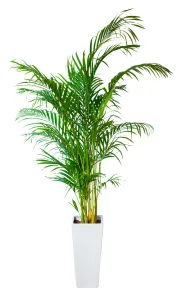
Bamboo Palm
PORTABLE PLANTING
Once you know what you can safely and legally carry, consider what to plant them in. Flowerpots, buckets, and grow bags are good RVing alternatives to dedicated and conventional garden space, and it’s a simple matter to travel with these portable gardens. Find a secure spot to stow them when you’re on the road, and once you reach your destination, back into the sunlight they go.
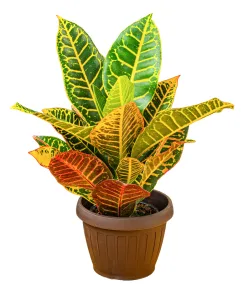
Croton
If you’re brand-new to container growing, you may opt to begin with houseplants. In fact, the National Gardening Survey found that 40 percent of Americans engaged in indoor houseplant gardening in 2025. There are good reasons to keep a couple of houseplants in your RV anyway. The energy-efficient design of modern RVs means that families are living with chemicals used in their production. According to a NASA-funded study, one plant per 100 square feet of living space will effectively scrub the air of pollutants that can irritate skin, ears, eyes, noses, and throats. Houseplants will also increase the humidity indoors, so if you travel during the winter months, they can lessen the occurrence of dry skin and sore throats. Peace lily, croton, snake plant, bamboo palm, Boston fern, and English ivy are examples of easy-to-maintain houseplants that have been shown to improve indoor air quality.
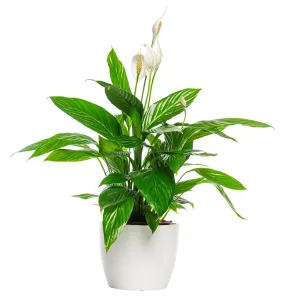
Peace Lily
Beyond indoor plants, numerous crops can perform well in containers. Even a one-gallon pot can support beets, carrots, Swiss chard, lettuce, mustard greens, onions, radishes, and cherry tomatoes. Increasing the container size to five gallons will expand the repertoire to include bush beans, cabbage, cucumbers, eggplant, kale, peppers, squash, and tomatoes. New plant varieties come along annually, and many of the cornerstones you already like to grow have miniature or “bush-type” versions.
A type of hydroponic growing developed by Dr. B.A. Kratky at the University of Hawaii makes it easy to raise plants in buckets or bins without the use of soil — or pumps (kratkymethodofhydroponics.com). Lettuce, spinach, and herbs can be grown successfully with a single fill-up of water and nutrients. Tomatoes, peppers, and cucumbers can also be grown by the Kratky method but require more careful monitoring.
LANDSCAPE UPKEEP
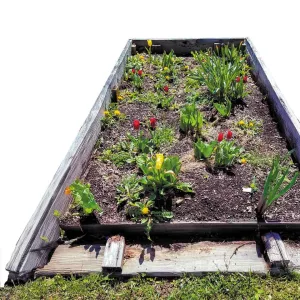
A neglected garden bed can give RVers an opportunity to dig into the soil.
Especially when you consider mom-and-pop RV parks, landscaping around the grounds may take a backseat to more pressing management concerns. If you see a neglected garden bed at the campground office, chances are good that the owner would be glad to turn upkeep over to a guest, especially if they already have a demonstrated knack for gardening. Nor would such a garden need to be strictly ornamental. Well-placed edible landscaping can be attractive. Think strawberries for ground cover, okra or peppers for color, blueberries or currants for specimen shrubs, and a trellised passionflower vine.
Another appealing use for abandoned landscape beds is as a pollinator garden. Favoring native plants that are utilized by local bees, butterflies, and birds will lessen the need for irrigation and pest management. However, be forewarned that beauty is in the eye of the beholder. What a naturalist deems as a beautiful, native wildflower, an unenlightened guest may consider a weed!
THINK COMMUNITY
A community garden plot that’s close enough to your RV site can be a godsend for a traveling gardener, and a big advantage is that site prep will often be handled by the coordinating organization. Some community gardens and allotments have long waiting lists, while others are less in demand.
One word of caution: Select plant species based on the duration of your stay or make plans to transfer the garden to someone local before your departure. Better yet, grow the garden alongside a scout troop, a senior group, or other locals from the beginning. A community garden plot that’s abandoned halfway through the growing season could make coordinators think twice about assigning space to a temporary resident in the future.
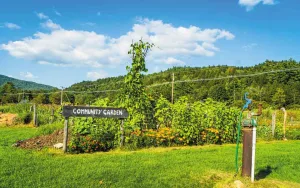
A community garden can help you keep your green thumb if you’ll be camped in an area for an extended time.
If you’ll only be living in the area for a season, choose plants based on their maturity dates. For instance, certain varieties of radish will be ready to harvest about three weeks after seeds are planted. Varieties of cherry tomatoes, carrots, cucumbers, eggplant, beans, peas, and lettuce will yield a harvest within as short a timeframe as two months. It just takes a little research to find those shorter season options in your seed catalogs.
Pea shoots, beet leaves, and sweet potato vines are edible, so if you have to exit before a full harvest, not all is wasted. You can still enjoy the fruits of your labor.
CONCLUSION
Yes, the RV lifestyle may preclude a family from tending a conventional backyard garden, as travel and growing seasons typically overlap. For those with a passion for growing vegetables, fruits, and ornamentals, though, it’s possible to make both activities mesh. It just means a little extra time on the front end to plot and plan. Growing on the go is entirely achievable.