
By Gary Bunzer, Technical Editor
June 2019
Fluid
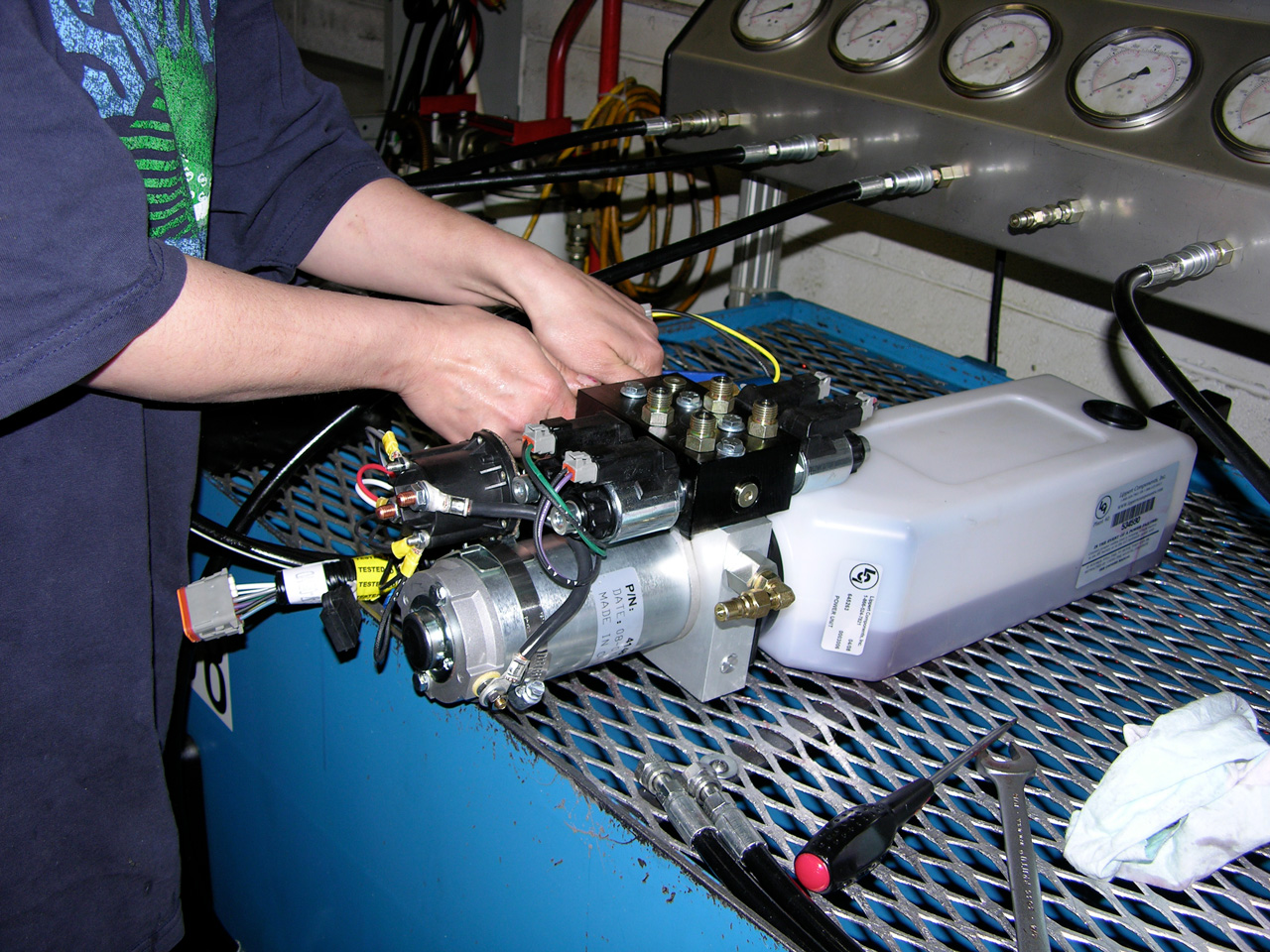
I have a 2019 Solitude fifth-wheel from Grand Design RV. It has a six-jack leveling system made by Lippert Components. One jack was leaking fluid, so the line connection was repaired to stop the leak. But, the hydraulic fluid tank is down about 1 1/2 quarts. What type of fluid should I add to the tank to restore the correct level? A brand name and type would be appreciated.
Michael Meades, F416116
Westminster, South Carolina
Lippert recommends Type “A” automatic transmission fluid such as Mercon V.
Here are a few more maintenance tips for you.
Each month, check that the fluid level in the reservoir is within ¼ inch of the fill spout lip while the jacks and slideouts are fully retracted. Important: Always top off the reservoir with the jacks and slideouts in the fully retracted position. Filling the reservoir when the jacks and slideouts are in the extended position will cause the reservoir to overflow when the jacks and slideouts are retracted.
Inspect and clean all the electrical connections before the first use of the season and prior to storing the unit. If corrosion is evident, clean it with a wire brush and apply a protectant such as DeoxIT to the connections. This is important, since the majority of electrical woes are caused by a faulty or fouled electrical connection.
Immediately remove all dirt and road debris from the jacks as needed. If the jacks are down for extended periods, spray all the exposed leveling jack rods with a silicone lubricant every three months. If the unit is located in a salty air environment, spray the rods every four to six weeks.
Electricity
I have a 1991 Coachmen RV Royal Leprechaun motorhome. It lost power to all the outlets. I’ve checked the breakers, fuses, and the reset button on the outlet in the bathroom. I don’t know what to do since I’m on oxygen and have two small doggies and an 11-year-old cat. It’s cold here in Colorado! I’m plugged into a friend’s house, and the problem is not her breakers.
Debbi
Loveland, Colorado
I wish I could help you in your time of distress, but your issue requires some specific electrical measurements and hands-on troubleshooting. It all begins at the electrical source where you plug in the RV.
However, here’s something you can do. Turn off the main breaker and then turn it back on, and reset the ground-fault circuit interrupter (GFCI) in the lavatory. If you still have no power in the motorhome, further troubleshooting will be needed, beginning with the receptacle you’re plugged into.
You’re probably using an electrical adapter of some type between the RV and the receptacle. That could be faulty. A technician will work backward to find the last place the electricity is present. Then each device downstream must be measured and checked. Without seeing this firsthand, it’s impossible for me to know for sure, however.
I suggest you contact a local service shop or a mobile technician. And don’t forget, it’s always possible to use the 12-volt-DC battery system along with the propane system for heat. Even without 120 volts AC, it’s still a self-contained RV. You can run the furnace on propane and battery power. Then schedule an appointment at a local RV service shop to troubleshoot the AC electrical system.
Refrigeration
Approximately five years ago, I replaced the refrigerator in my 2007 Alfa Gold motorhome with a Dometic RM1350 model. It was a huge job, and though it was the most expensive refrigerator on the market at the time, it has been a poor performer. Recently, I discovered a water leak and had an authorized service tech attempt to fix the problem. I need a water reservoir and new gaskets on both doors. Dometic no longer has the parts for this model, and their suggestion was to find used doors in a junkyard. Since my unit is relatively new and expensive to replace, I’d like to know if you can assist me in finding parts and gaskets for this model. The condensation inside the fridge creates a major problem. I’m open to any resolution.
Berg Berglund, F345343
Long Key, Florida
According to my notes, it may not be possible to replace just the door gaskets on that Dometic model. The “official” word is that each complete door must be replaced. In some cases, the original doors were warped to begin with. However, I have found references online that state it is indeed possible to replace the gaskets, if you can find the kit.
One source mentioned for the kit is Dyer’s RV. If Dometic no longer supports that model, Dyer’s might be your best bet for finding the parts you need. This web page shows what Dyer’s has in stock: https://bit.ly/2GfdHXc. You can contact them or continue an online search. You may just find a dealer who has new old stock (NOS) parts in inventory. I also know a “universal” gasket kit is available online as well. Perhaps that could be an alternative, although I’ve never used one of those kits.
Multimeter
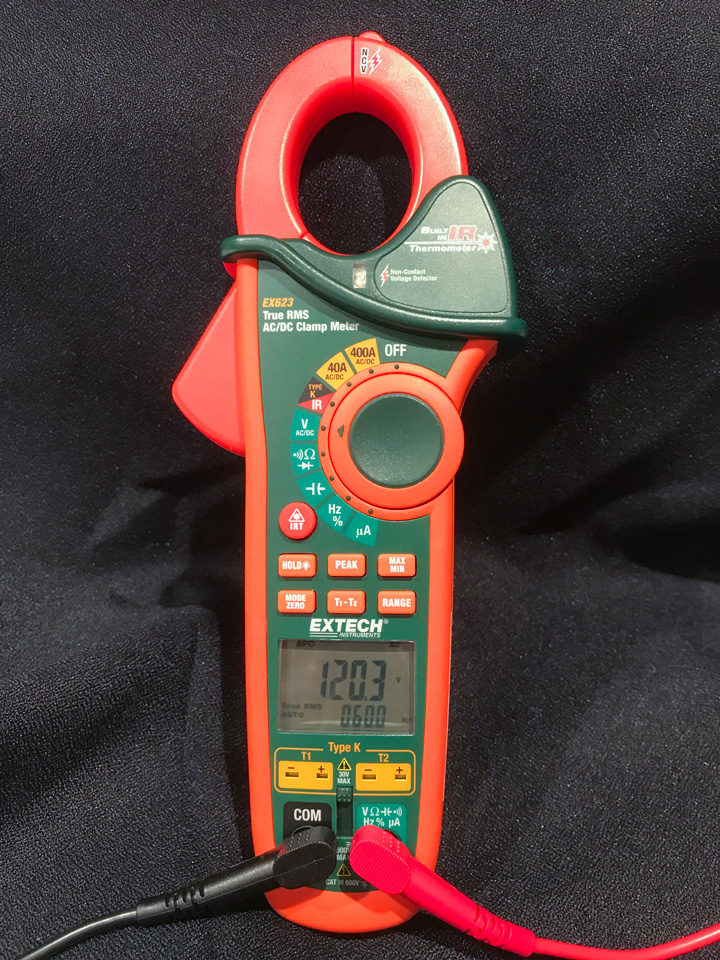
The Extech EX623 digital multimeter.
I want to buy a quality digital multimeter that also has the ability to measure amperage. Will you please give me a recommendation?
Dean Miller
Via email
As you probably know, I love talking about tools! My latest digital multimeter is the one I would recommend to any RVer: the Extech EX623. I also recommend it for professional RV service techs. It can perform just about every type of electrical test necessary for both the 12-volt-DC and 120-volt-AC systems found on RVs, plus more. The clamp-around portion measures current flow for both AC and DC without having to disconnect any wires. It measures true RMS voltage, resistance, and microamps (for appliance flame sensors) — even frequency measurements in hertz (necessary for generator troubleshooting). It features a noncontact voltage indicator as well as an infrared thermometer (great for measuring the temperature of the tires or furnace exhaust temps) and two Type K thermistors for measuring the temperature of heating, air conditioning, and refrigeration components. It’s basically every type of meter the savvy RVer would ever need, all in one device. You can find it on Amazon.com for under $200. I know I’ll be using mine for the remainder of my hands-on work.