
By Gary Bunzer, Technical Editor
June 2020
Water Heater Problem
I have a 2001 Fleetwood Bounder diesel-powered motorhome with an Atwood 6-gallon gas/electric water heater. The gas side works fine. The electric side quit working. What can I check before I must take it to a service center?
Geoff Turner, F335598
Derby, Connecticut
According to the water heater’s wiring diagram, a few components within that system direct the flow of 120-volt-AC electricity. A manual switch, a fixed thermostat, and a high-limit switch allow electricity to pass through and eventually reach the electric heating element. Prior to focusing on that circuit, you can check a few things.
First, be sure the receptacle that the motorhome is plugged into has 120-volt-AC electricity. Make sure the main circuit breakers and the breaker for the water heater are in the “on” position. Do you have AC electricity throughout the rest of the coach? What about when running the generator? I’m assuming the electrical portion of the water heater does not work on either shore power or generator. The water heater circuit should not be configured into the ground-fault circuit interrupter (GFCI), but check to make sure it is reset properly anyway.
Typically, the most common failure within that whole string of components (manual switch, fixed thermostat, and high-limit switch) is the heating element itself. For example, it is prone to failure if the water heater was started on electric with no water in the tank.
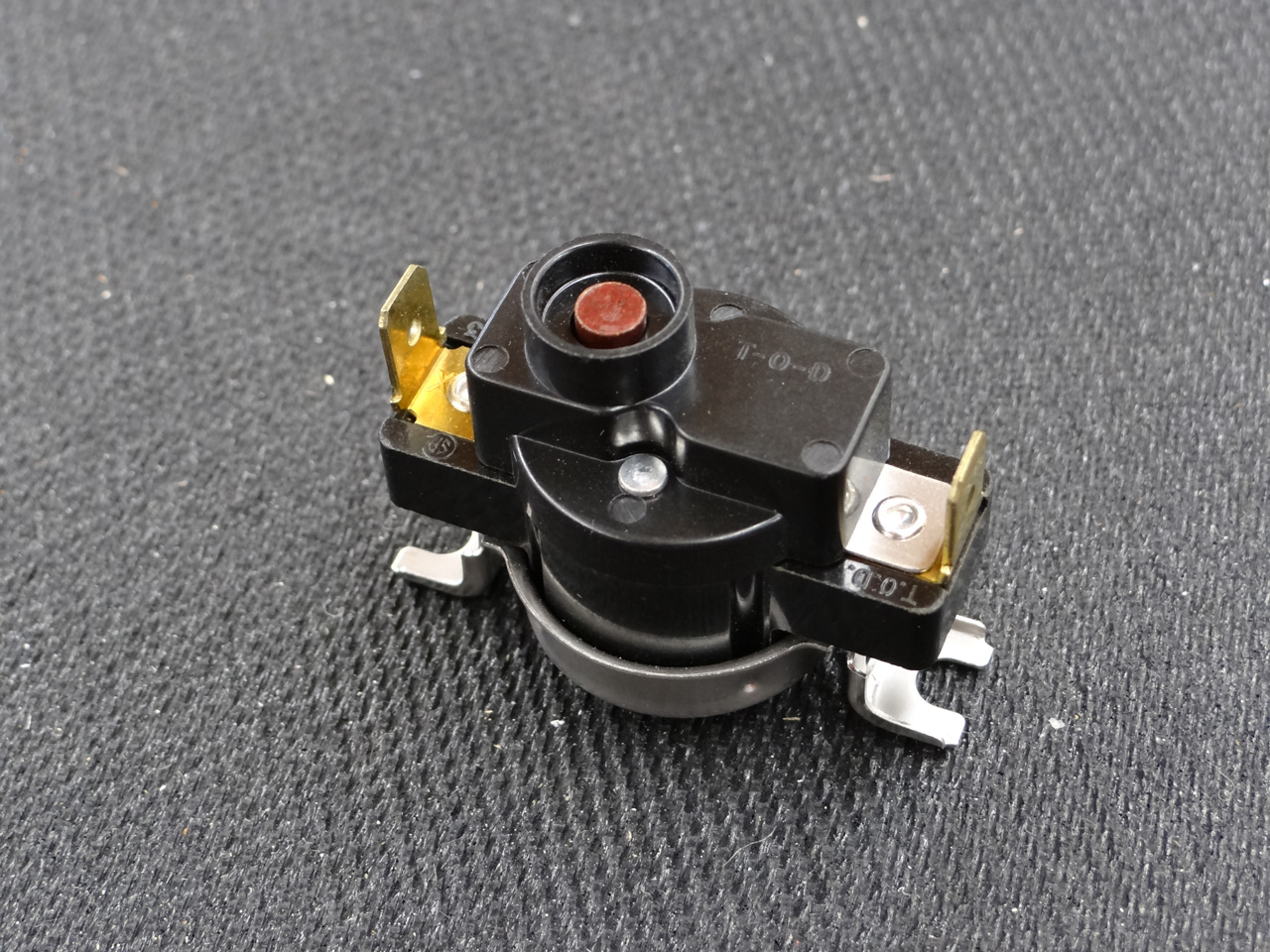
However, the limit switch on your particular model of Atwood heater may be equipped with a manual reset. It is located on the rear of the water heater under a protective cover. With the generator off, disconnect from shore power (or turn the main breakers off) and gain access to the back of the heater from inside the RV. Remove the cover and you’ll see the limit switch. If it has a red reset button, push it to reset. Then be sure the water heater is filled with water (by observing water flowing out of all the hot faucets), turn on the breakers, and energize the electrical portion of the water heater as normal. The heater then should operate on the 120-volt-AC element.
If it fails to heat the water and the problem is related to one of the other components in that circuit or at a wiring connection point, a trained RV service technician easily can diagnose and repair the connections and measure the resistance through the heating element to determine its condition. Likewise, a continuity test can be performed on the switch, the thermostat, and the limit switch to determine their condition, if need be. Barring a loose or corroded connection somewhere in the circuit, it’s relatively easy to verify each of the components.
Gaseous Grill Connect
I have a Winnebago Vista motorhome that is equipped with a propane quick-connect fitting for a portable grill. I have been told that since the propane is already regulated, I must remove the regulator on the portable grill, because you can’t regulate twice. Is this true? If so, it renders the grill pretty useless apart from the RV. Is there a way to get around this?
Jerry Noonan, F456773
Yuba City, California
It all depends on the requirements of your specific portable grill. Most portable grills are equipped with their own pressure regulator, but the operating pressure may vary among grill manufacturers.
The RV’s delivery line pressure is set to 11.0 inches of water column (0.4 psi). That’s about 6.36 ounces of pressure per square inch. Look in the grill’s literature and find the pressure required by the grill. If it’s less than what the RV’s propane system is set for, simply leave the regulator on the grill, and connect via the quick-disconnect fitting. You may have to acquire adapter fittings to make the connection.
It is indeed permissible to “regulate twice,” since this is what happens on the RV’s propane system anyway. The tank pressure on your Vista can fluctuate widely based on the temperature. And like all RVs, the Vista is equipped with a two-stage propane regulator. The first stage reduces the fluctuating tank pressure to approximately 10 psi. In the second stage, pressure is reduced to 11.0 inches of water column. With a barbecue grill perhaps needing less than that, you’re simply adding a third stage to the regulation, which is not a problem. Likewise, some RV appliances require less than the delivered 11.0 water column inches of pressure, and therefore have a third-stage regulator to reduce the pressure to what that particular appliance needs.
But, if the barbecue grill requires more than 11.0 water column inches of propane pressure, then it’s necessary to tap into the RV propane system before regulation, in between the service valve and the inlet to the motorhome’s existing regulator. Aftermarket adapter kits are available that make this connection possible. But it all boils down to what your specific grill needs. Hopefully, that info can be gleaned from the grill’s owners manual or by searching online.
Bleached Water Disposal
I have a 2017 Dodge Ram Type B conversion motorhome. I have a composting toilet, so there is no need for a black-water tank, but I do have a 40-gallon fresh-water tank. I have a small holding tank under the sink for dishwater. Typically, I drain the fresh-water tank into a dishpan and dump that water into the sewer system at the campground. But I had to sanitize my tank recently because of mold. I’m at a Florida RV resort. Is it okay for me to put the diluted bleach water into the sewer system at my campsite? If that’s not acceptable, is it okay to put diluted bleach water on the ground? I do not want to cause any problems for the resort’s sewage system, nor do I want to contaminate the water system by dumping anything on the ground.
Janlyn Neri, F469503
Manchester, Connecticut
Florida laws are quite interesting when it comes to gray water use. It is permissible for gray water to be used in your composting toilet, but most campgrounds and state parks (as in most other states) prohibit dumping it on the ground. Ironically, it is legal for boats to dump their gray water into the ocean or gulf. In some jurisdictions, it is illegal to dump even fresh water onto the ground, so kudos to you for taking the fresh water and gray water to the resort sewer system.
The diluted bleach water is another story. Bleach, even in a diluted state, has the potential to kill grasses, plants, and other vegetation. Campgrounds/RV resorts may have specific rules regarding diluted bleach water in their in-house systems, so I’d definitely obtain permission first. But dumping a limited quantity certainly would not cause serious or lasting harm to a campground septic system.
It is true that bleach introduced into the ecosystem of a small sewer environment can kill the good bacteria that help break down solids. Bleach can be quite impactful in an RV solid-waste holding tank, for instance. I don’t advise dumping any amount of bleach into the RV holding tank, especially if you’ve been using biodegradable additives containing the good bugs. But in the larger scheme of a legitimate sewer system at an RV resort, a small amount of diluted bleach water will have no negative effect. But ask the management first.
Since you’ve used bleach in your fresh-water tank, I’d suggest flushing the tank repeatedly through the fresh-water system until the bleach odor and taste are gone. Then, either use that treated gray water in the composting toilet,which is permissible in Florida, or dump it into the resort sewer (after getting permission).
I also suggest you take a look at a product from King’s Water Systems (www.kingswatersystems.com). King’s Aqua Pure eliminates the need to chlorinate the fresh-water system using bleach. It disinfects potable drinking water and deodorizes the holding tanks. It just might be something for you to consider.