
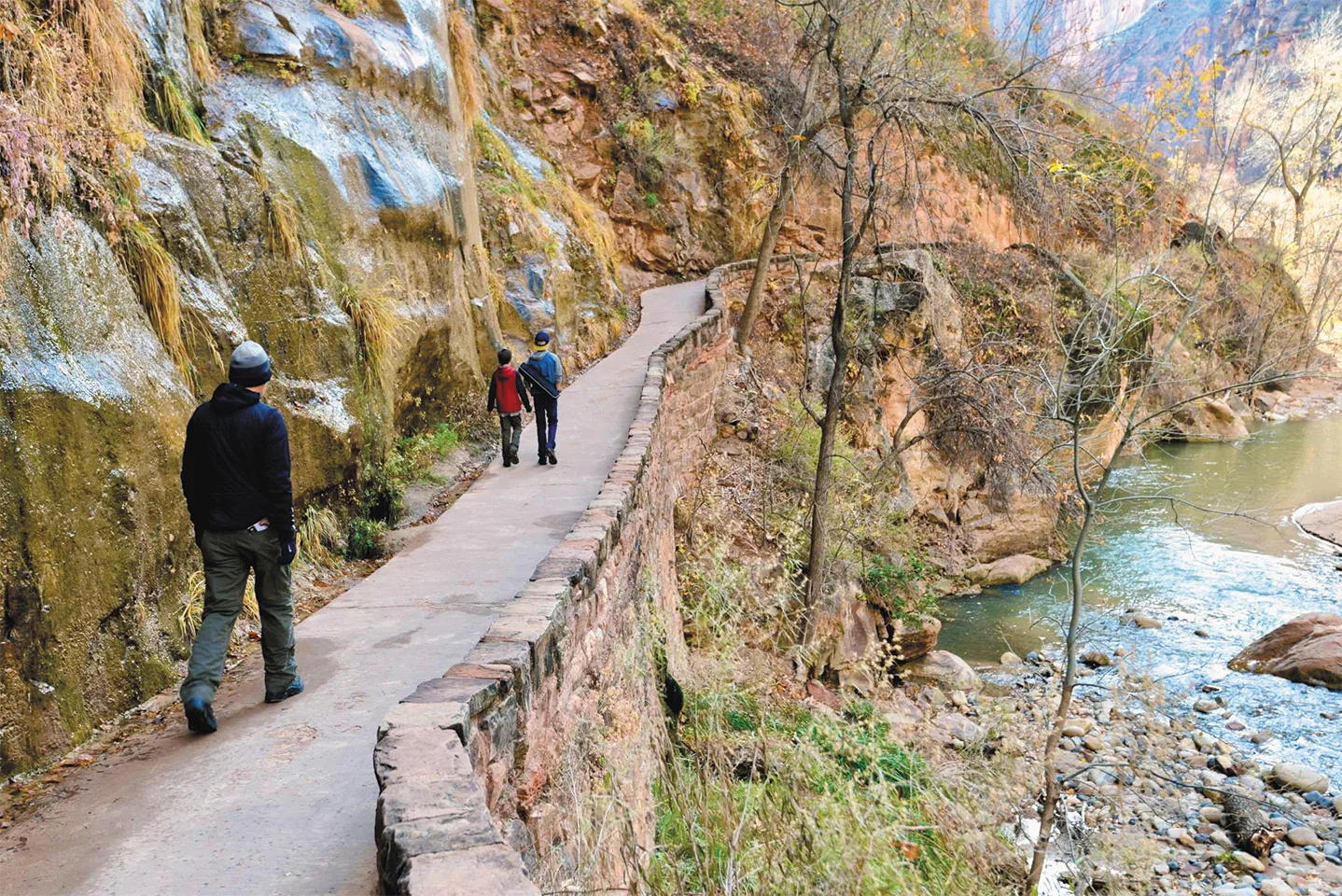
The world is your classroom when you travel by RV, offering learning opportunities for children everywhere you go.
By Angela Heisten
September/October 2024
Worldschooling is conducive to the RV lifestyle and blends travel, learning, and fun.
RV travel allows us to step away from the routines of home life to relax, explore, and spend time together. For families with kids, it’s also possible to sprinkle in some learning and turn any RV trip into an educational adventure — a concept known as worldschooling.
WHAT IS WORLDSCHOOLING?
Worldschooling is learning through direct interaction with the world. It is an educational approach that combines travel and learning, offering families firsthand experiences that tap into curiosity, creativity, and adventure.
Sometimes called roadschooling, it simply means using the world as a classroom. Traditional school classrooms help us learn about the world; with worldschooling, we also learn from the world: the people, places, and things in it. Examples of worldschooling include:
- Learning to tap a maple tree in Vermont.
- Visiting Civil War sites in Virginia to understand the legacies of those who battled.
- Sourcing ingredients and learning to cook shrimp and grits with a campground host in the Carolinas.
- Taking the National Park Service Junior Ranger Pledge after completing educational activities at Dinosaur National Monument.
- Visiting the bridge on the Cape May-Lewes Ferry to learn about navigation equipment.
- Calculating towing vehicle fuel efficiency at different elevations or across different types of terrain.
- Visiting with a ski patrol team in Colorado to learn how dogs become avalanche rescuers.
- Talking with your campground neighbor about what life was like when she was a kid.
- Listening to an audiobook about ancient Chacoans while driving to Chaco Culture National Historical Park.
- Drawing pictures and naming the moon phase each night from your campsites.
Worldschooling is as varied as the trips you take. The learning opportunities are endless.
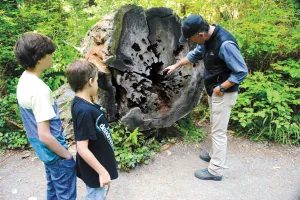
Worldschooling families share educational experiences wherever they roam.
BENEFITS OF WORLDSCHOOLING
Travel can help ease our stress, boost our creativity, feed our curiosity, and make us more tolerant. Worldschooling layers in additional benefits, including social, emotional, physical, and cognitive gains for kids. Worldschooling experiences can also help children gain confidence through self-discovery and risk-taking, perspective by solving problems, and grit from tackling personal challenges. And, by showing kids the wider world, you are planting seeds of inspiration and understanding that can last a lifetime.
WORLDSCHOOLING IS A MINDSET
Learning through travel is not a new concept; people have been doing that forever. The term worldschooling to represent travel plus education has been on the scene for about 20 years, gaining a boost in awareness during the pandemic as more people adapted to working and educating their kids remotely. Media stories have profiled worldschooling families who travel long-term, a lifestyle with unique financial and logistical considerations. Indeed, many families who live full-time in their RVs are worldschooling as their educational approach.
But you don’t have to travel full-time to worldschool. Worldschooling is a mindset. That means it’s completely portable, and you can apply it anytime, anywhere. Worldschooling can be done on a day outing, a weekend excursion, a vacation, or a longer road trip — truly anytime you walk out the door. It just requires a little curiosity, openness, and wonder.
RVs are the perfect vessels for worldschooling adventures. They put families out in the world, surrounded by learning opportunities. You can worldschool inside your rig, right outside your door, and farther afield. Once you open your family to the educational opportunities the world presents, you’ll see them everywhere — little to no planning required.
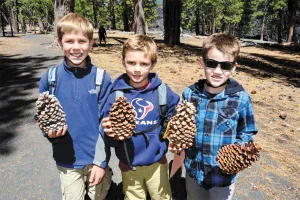
Exploring wooded areas can result in fun discoveries.
WORLDSCHOOLING IN YOUR RV
There are so many ways to worldschool right in your own RV. Here are some ideas to get you started, most of which can be adapted for kids of any age.
- Study maps and learn the geography of the locations you are visiting.
- Use field guides to read about local plants and animals. When you go out later, take binoculars and a notebook to draw what you see.
- Invite older kids to help plan your trip using guidebooks and online resources. Perhaps they can have a say in where you’ll go by researching cities, parks, campsites, and activities.
- After excursions, ask kids experience-based questions, such as: What changed your mind today? What problem did you see that you might like to help solve? Did you meet anyone who isn’t like you?
- Read, read, and read some more! You can read biographies or let kids choose their favorite fiction. Kindles and tablets are space saving, and audiobooks take up no space at all. Kids can read on their own, read aloud to a sibling, or everyone can read together as a family.
- Encourage kids to keep a journal. Journaling is a way to deepen how we think about the world around us and imprint our experiences.
- Watch documentaries together and talk about what you learned.
- Practice instruments that are portable enough to be brought along, or just listen to music together. Music is versatile, full of joy, and can be woven through every location you visit.
- Play board games and do puzzles. They help teach cooperation and teamwork — especially on a rainy day.
You can even embed world-schooling into chores by layering in kids’ natural curiosity and offering responsibilities that stretch their skills. Are they map reading or helping to plan your route? Talk about navigation tools, wind and weather conditions, and gas mileage. Can they help check mechanicals? Explain how those systems work: their parts, power requirements, and maintenance. You might include kids in meal planning, local shopping, and cooking, then take those tasks a step further by learning about local crops, growing seasons, and farming communities.
If you desire more structure or plan to use curricula in your educational approach, time at your RV also allows for online classes, packaged lessons, and desk work with books and other materials.
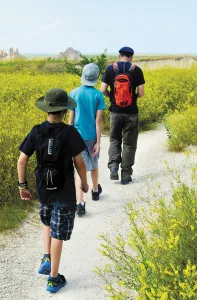
Hiking yields firsthand observations of local terrain.
WORLDSCHOOLING RIGHT OUTSIDE YOUR RV DOOR
You don’t have to go far to find learning opportunities. Worldschooling is simply paying attention and being curious about where you are.
- Learn about the world you can see from your RV windows. Is there a river or lake near your campground? You might study how that body of water connects to others and the water dynamics in play.
- Study local plants and animals. What kinds of trees are in your campground, and how do they stay healthy? What amphibians live in the stream behind your site?
- Use apps to identify the birdsong you hear when your family wakes up each morning.
- Research the agencies that govern nearby lands. Who sets boundaries and monitors them? Who keeps the area safe and provides rescue services in case of emergency?
- Learn about indigenous peoples to better understand and appreciate their history, culture, contributions, and resilience.
- Study astronomy. Visit International Dark Sky Places and stay up late to learn about constellations.
- Attend campground programs and ranger presentations. If you’re at a U.S. national park, Junior Ranger programs are perfect for worldschoolers! Or check out citizen science programs anywhere you go.
- Practice life skills. Older kids can do laundry or help track trip expenses. Younger kids can practice paying for their ice cream cone and bringing back the change.
- Hike or bike the local terrain, canoe at a lake, or go swimming in the campground pool. Physical education is easy when you’re camping!
- Meet your neighbors and make new friends. Find other worldschoolers and swap stories about what you’ve learned.
Also, just PLAY. Campgrounds are often filled with kids, and kids learn so much by playing together. Play is worldschooling, too.
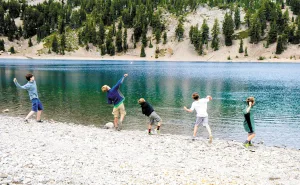
Skipping rocks is a fun skill to learn, practice, and try to perfect.
WORLDSCHOOLING FARTHER AFIELD
As you head farther afield, you can tailor worldschooling to your kids’ interests. The best learning happens when they do what they love and explore what matters to them. Here are some ideas for when you are out and about.
- Get out in nature. Use all your senses as you walk along a trail, skip rocks at a creek, or search for shells on a beach. See what you’ve been studying back at camp and make some new discoveries, too.
- Read about local conservation efforts and the nonprofits that protect wildlife. Maybe there’s a rescue center you can visit nearby.
- Study the demographics of places you visit. Who lives there? How is their culture similar and different from your own? Find out how communities gather and celebrate.
- Check out museums and do a scavenger hunt during your visit.
- Visit government buildings, community centers, and local businesses and learn what happens inside them. Explore historical sites and monuments, stopping to read the information plaques along the way.
- Identify a famous or historical figure from the surrounding region. Read their biography, see where they were born or lived, visit memorials, and discuss the impact they made.
- Let kids choose restaurants, cafes, or food trucks to grab a meal. What are the local specialties? Where are those caught or grown?
- Experience art: Check out street art, local fairs, and craft studios. Learn about the artists and practice some of their techniques in notebooks. Take a class from an expert.
- Explore local architecture and connect it to the history of the city.
- Take public transportation! It’s another helpful life skill and an insightful way to see how locals get around.
Tip: Ask locals where schools go on field trips. Those are great places for visitors to learn, too.
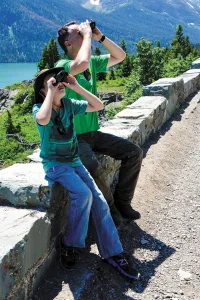
Worldschooling families use the world as their classroom.
WORLDSCHOOLING EVEN AS YOU ROLL
You can even worldschool between destinations. Read aloud about the history and culture of the places you pass through. Talk about the types of work people do in different regions and why they might have settled there. Play a guessing game about other vehicles: Who might be inside, and where are they going? If you see commercial vehicles, share ideas about what they might be carrying and how those items are gathered or made. Or, observe the everchanging nature around you, including rock formations, waterways, and wildflowers.
You also can make learning a game. Set goals for one kid or create a fun family competition. It’s easy to do spelling bees and math contests aloud. Maybe kids can learn geography, capitals, and state characteristics from spotting license plates. Or, keep it simple and read or listen to podcasts to pass the time.
RESOURCES AND SUPPLIES
Many printed and online resources are available to support worldschooling. You’ll find loads of classes and curriculum packages, libraries offering remote memberships, government websites, science videos, and even online games that reinforce learning. Social media groups are great for making personal connections and soliciting educational ideas.
To start, check out Worldschoolers and Roadschooling–Families Homeschooling on the Road on Facebook. Or, search “educational activities in (destination)” for ideas. Tourism boards are catching on and highlighting worldschooling attractions in their travel brochures, too.
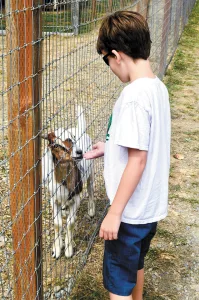
Meeting farm animals up close may be a new experience for city kids.
People often ask what they need to bring along to worldschool in their RV. Good news! You don’t need much. Learning together doesn’t require textbooks or formal lessons — the opportunities are all around you; no gear required. If you want to bring along a few items, journals, drawing pads, colored pencils, scissors, glue, dice, magnifying glasses, compasses, and small binoculars all fit nicely in RVs and daypacks.
Or, bring nothing at all and use the starter kits offered in the book Wonder Year: A Guide to Long-Term Family Travel and Worldschooling, which I coauthored. Because truly, you already have everything you need to guide your kids’ learning wherever you go. You love and want the best for them; with every question you ask and excursion you take, you model curiosity; and having chosen to go RVing together, you recognize the world is a very good teacher.
Angela Heisten is an author, travel blogger, and hobbyist photographer. She and her family called an Airstream home for two years as they traveled across North America, worldschooling along the way. Her award-winning book, Wonder Year: A Guide to Long-Term Family Travel and Worldschooling, was published in 2023 and is part inspiration and part how-to. With her two sons now grown, Angela is again full-timing in her RV with her husband, Mark, and dog, Timber. She writes about travel at wonderyear.com.