
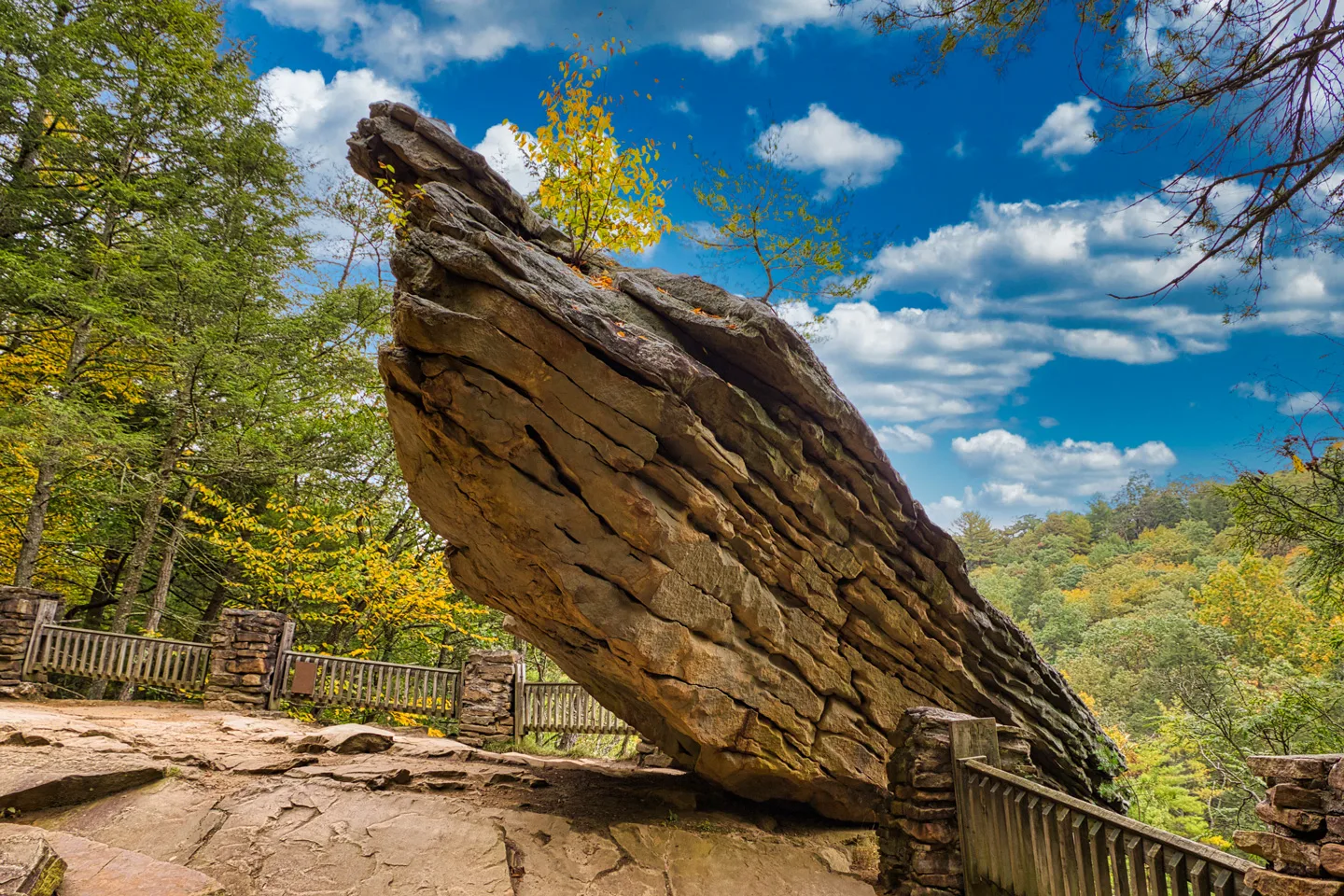
Pennsylvania’s Raystown Lake Region boasts a picturesque tapestry of natural wonders, while numerous museums reveal an intriguing array of history and culture.
By Kathleen Walls
September-October 2025
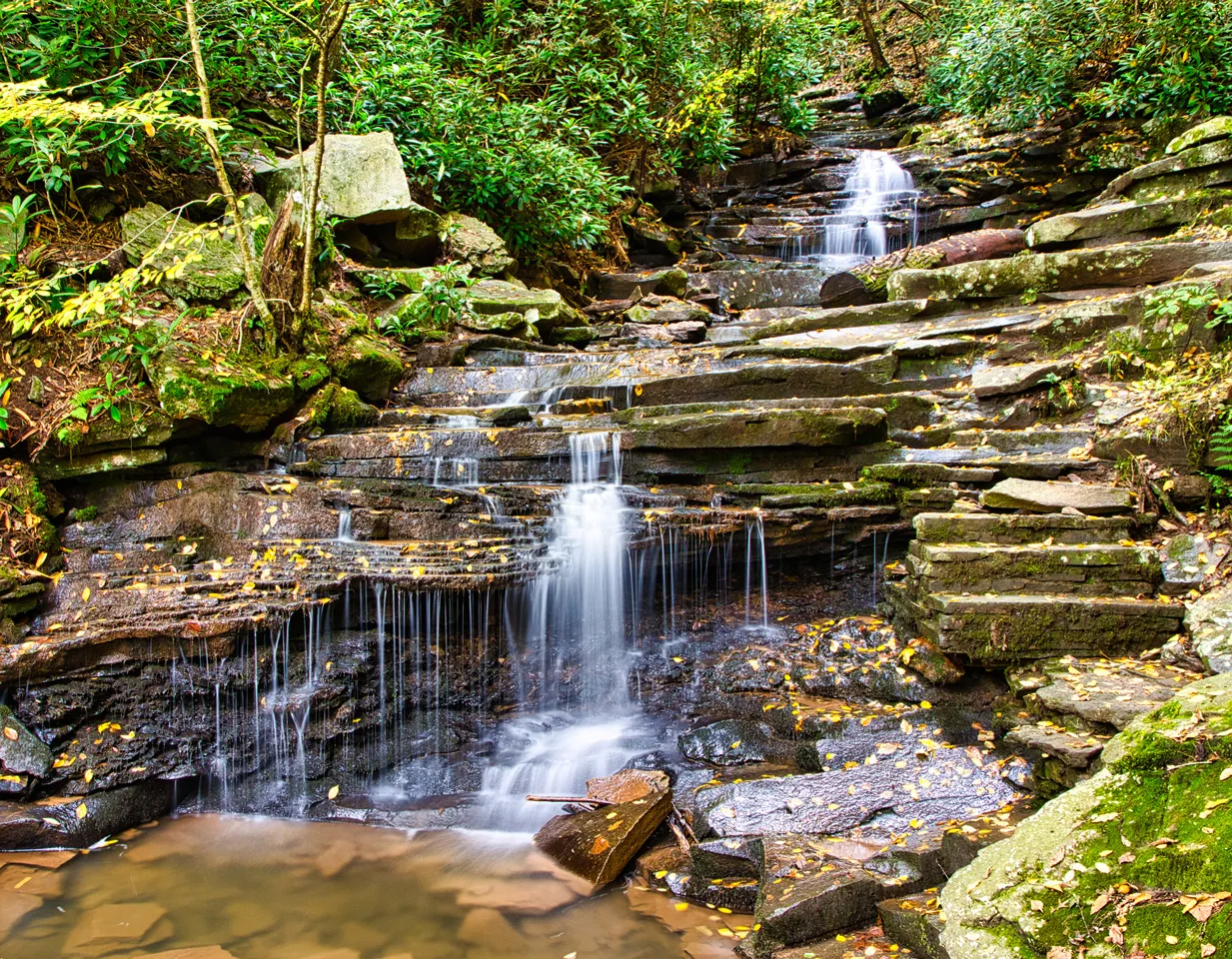
Natural attractions in Trough Creek State Park include Rainbow Falls.
The Raystown Lake Region has been called the crown jewel of central Pennsylvania. Lake Raystown, its centerpiece, is the largest lake that lies entirely within the state’s borders. The 32-mile-long waterway draws boaters, kayakers, anglers, and others. Forested areas beckon hikers and mountain bikers, and caverns await explorers. Plus, the area’s museums and historical attractions reveal centuries of human history and innovation.
Lake Raystown Resort offers a variety of accommodations, including RV camping. Waterfront sites and others include water and electrical hookups (30- or 50-amp service), along with wireless internet, cable hookups, a fire ring, and a picnic table. A dump site is located on the property, and a roving honey wagon provides service upon request. The resort is also pet friendly. This property offers lots to do, including WildRiver Waterpark; breakfast, dinner, and general sightseeing cruises aboard the Proud Mary Showboat; and several geocache sites, with more caches hidden throughout the Raystown region.

The Trough Creek State Park campground offers 24 RV sites with electricity, plus great views and chances to spot wildlife.
If you prefer a more rustic place to park your RV, Trough Creek State Park might fit the bill. It has 24 sites with electricity, but the only water comes from a central well and must be retrieved via a hand pump. The park does offer more privacy and larger sites than nearby facilities and provides better chances to spot wildlife as well. Great Trough Creek flows through Terrace Mountain and empties into Raystown Lake. Scenic hiking trails abound, including those that lead to Balanced Rock and Rainbow Falls.
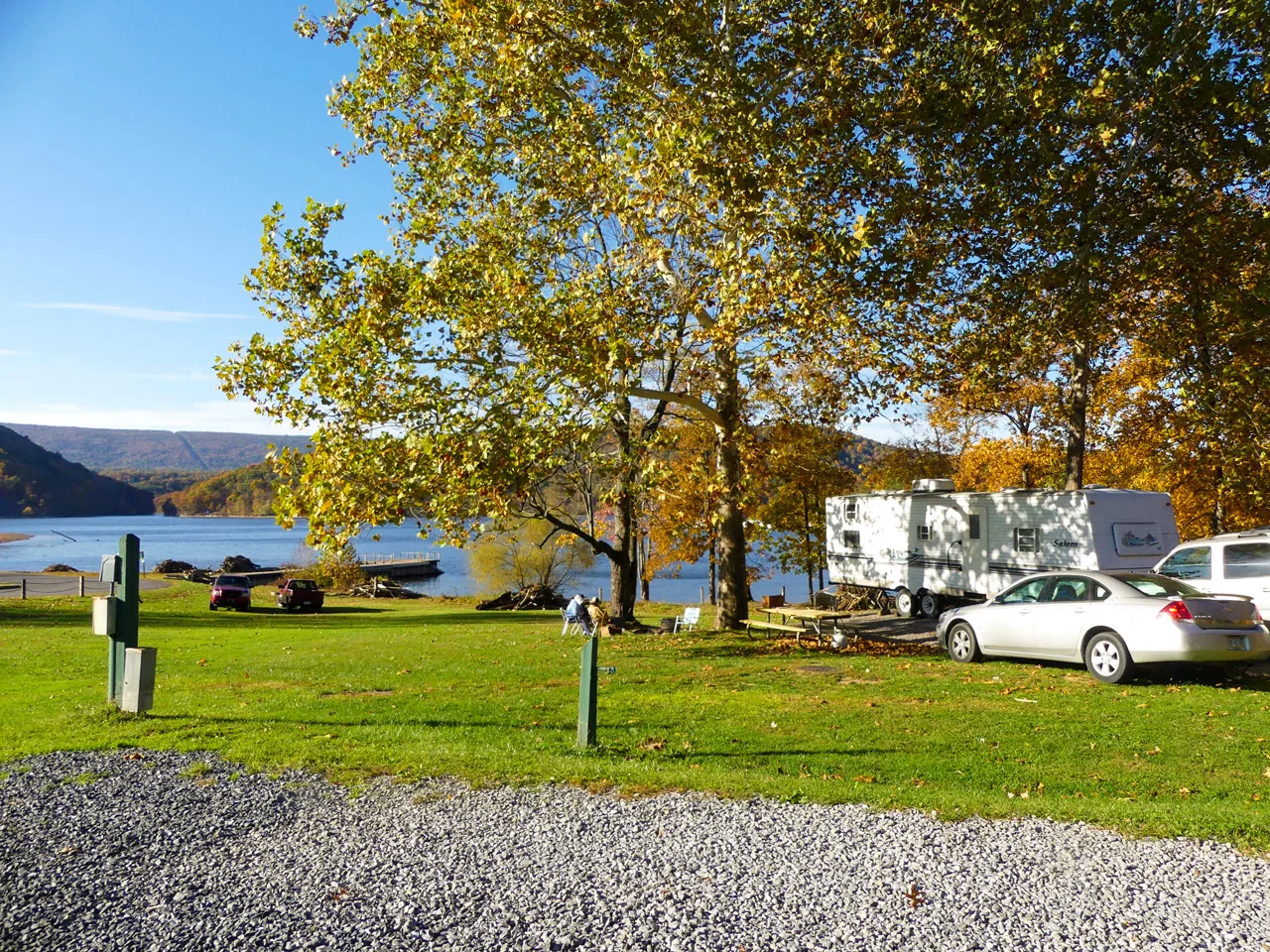
Some campsites in Trough Creek State Park campground offer water views.
Approximately 20 campgrounds are in the area; others include Honey Bear Campground at Raystown Lake, Newburg Campground, and Warrior Ridge Campground. (See raystown.org/places-to-stay/campgrounds for options.) No matter the location you choose as a base, the area offers some amazing places to see. Here is a sampling.
Isett Heritage Museum
This treasure chest in the town of Huntingdon spotlights the rural history of 19th- and 20th-century America, especially in central Pennsylvania and Huntingdon County. Melvin and Beulah Isett established the museum after collecting historical artifacts for decades — an estimated 40,000 items. Touring three vast buildings on the property, I could fill a book listing the amazing items they salvaged. (At press time, the museum was temporarily closed while its ownership was transitioning to nearby Juniata College.)
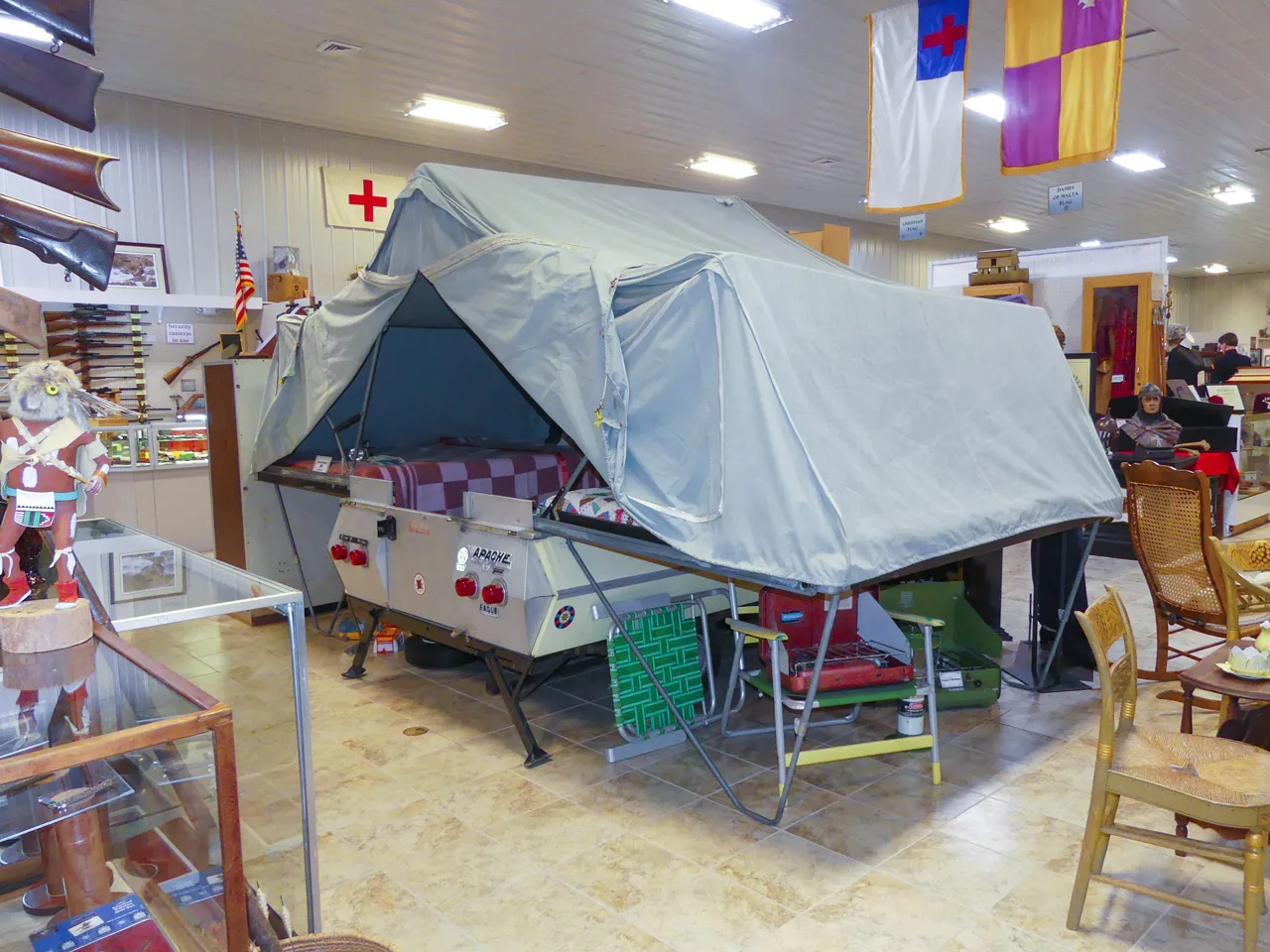
Isett Heritage Museum is home to an antique tent camper.
A washing-machine display contains about a dozen old-time washers, which range from wooden wash tubs — including one from 1900 — to later wringer types. A collection of musical artifacts features everything from posters and instruments — among them a guitar and baritone ukulele belonging to Grand Ole Opry star Grandpa Jones — to jukeboxes. Surprisingly, most of the artifacts still work. Lonnie, our tour guide, let me play a song on one jukebox. I hadn’t heard Fats Domino’s “I’m Walkin’” in ages.
Other highlights include an intricate model train, a miniature model of the city, and a large selection of antique vehicles. One of my favorites in the latter group was an Apache Eagle tent camper. Seasoned visitors will enjoy viewing and remembering many everyday objects from their youth.
East Broad Top Railroad

Enjoy bucolic views aboard the East Broad Top Railroad.
Step back 150 years at the oldest narrow-gauge railroad in the United States, located in Rockhill Furnace. I was treated to a deep dive into the story of the East Broad Top railway, which has been designated a National Historic Landmark.
When the railroad shut down in 1956, it was sold to the Kovalchick Salvage Company. But for some reason, the cars and equipment were not removed. Several groups tried to resuscitate East Broad Top over the years, with little success; however, their efforts ensured that the trains and shops remained on-site. In 2020, Friends of the EBT bought the operation.
Today, restoration of the shops is underway, returning them to their 1950s appearance. Restoration of the original steam engines is ongoing as well. As my tour group walked through the roundhouse and the original machine shop where the trains are repaired and stored, we saw vintage engines, railcars, and machinery. Viewing such a perfectly preserved era of history makes a visit worth the trip.
We took a ride on the 4½ miles of narrow rail that is operational once again. We sat in replica cars that felt like the originals as we journeyed past rolling hills and farmland. Much of the scenery looked as it might have back in the 1950s.
Rockhill Trolley
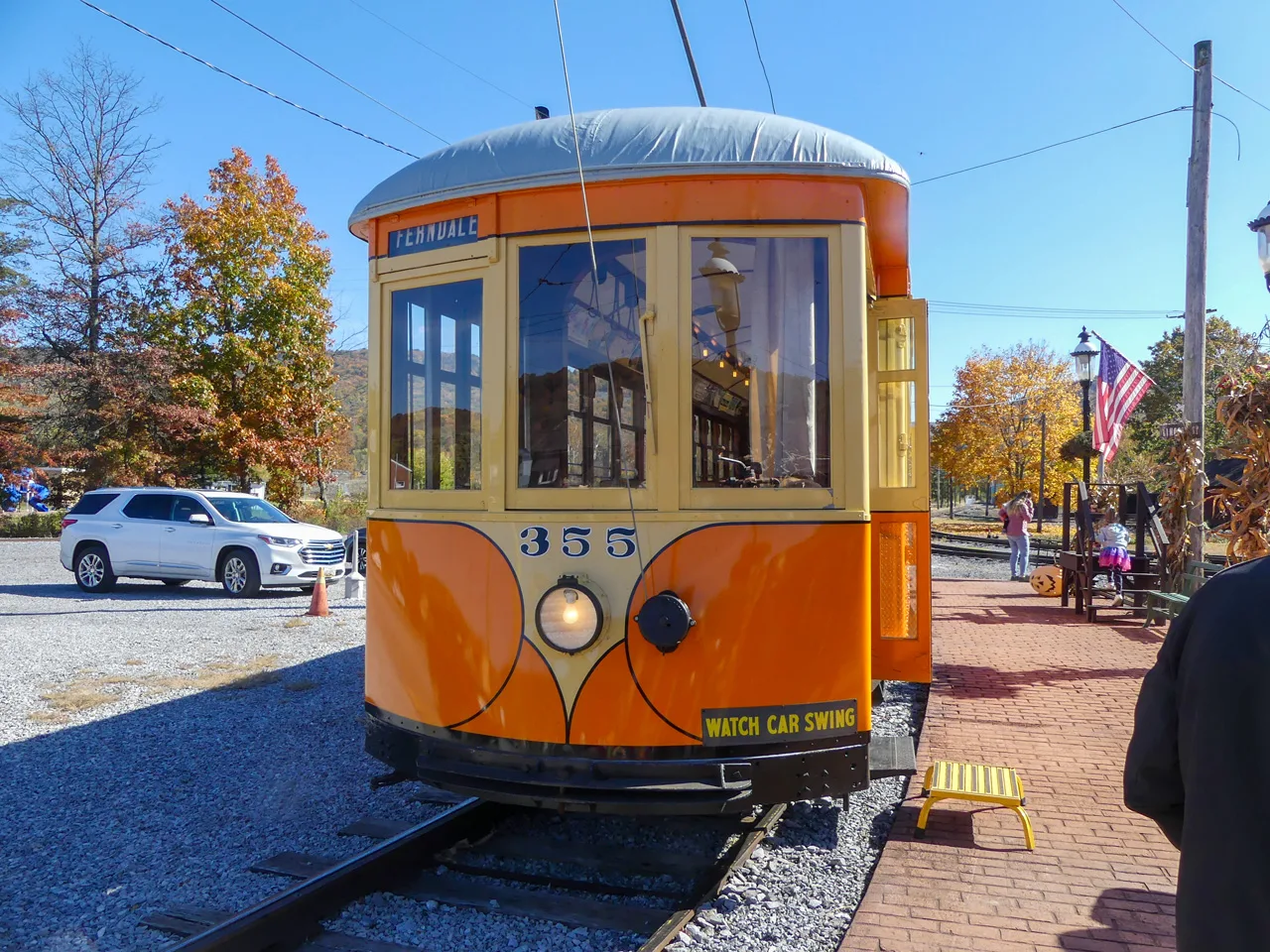
Ride a refurbished trolley at Rockhill Trolley Station.
Rockhill Trolley Station is across the street from East Broad Top. The facilities often collaborate on events, providing glimpses of how people got around in the days before everyone had a car in their driveway. We enjoyed a leisurely round trip along Blacklog Creek to Blacklog Narrows aboard Car #355, a 1925-era trolley. A second set of controls has been added to the car to allow the conductor to operate it from the opposite end during the return trip. In addition, the seating material, wooden frames, and original cherry woodwork in the interior have been refurbished, along with steel siding, wiring, and more.
The track passes the ruins of the Rockhill Iron Furnace. We stopped at the Rockhill Trolley Museum and saw all the other trolleys in the museum’s car barn, each with its own story. Visitors can also operate a real trolley car if they choose.
Swigart Antique Auto Museum
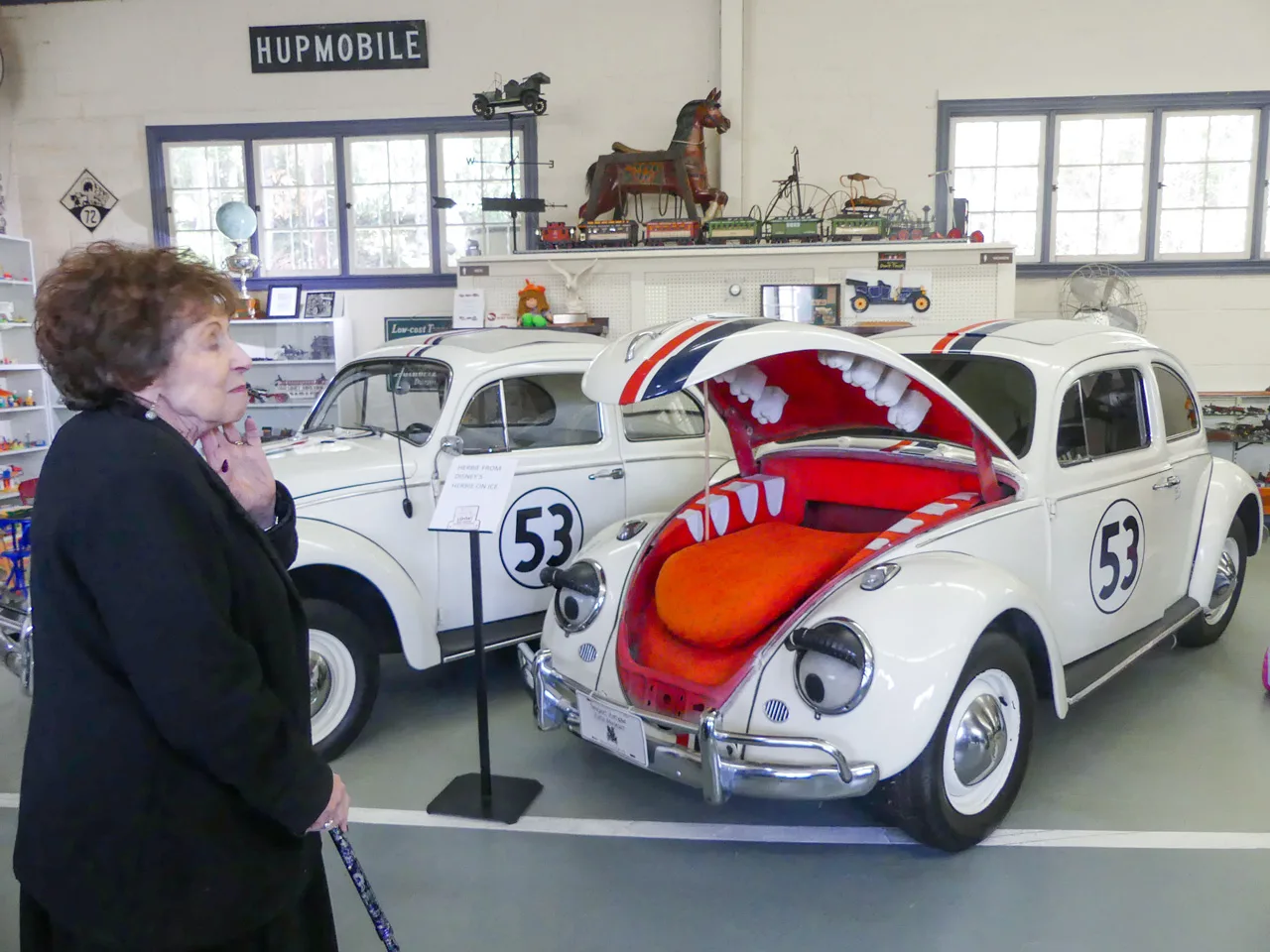
The Swigart Antique Auto Museum is home to Herbie No. 9, “The Love Bug.”
We experienced automotive history at America’s oldest antique automobile museum, Swigart Automobile Museum, in Huntingdon. Pat Swigart led us through displays of “automobilia” and other treasures, including cars and carriages that date back to 1876. One of the rarest is a 1908 Studebaker Electric Carry All, which traveled through tunnels connecting the old Senate office buildings to the U.S. Capitol in Washington, D.C. The auto carried 12 passengers and could be driven from either end. The Studebaker Company built only two of these vehicles, nicknamed “Tommy” and “Peggy,” which were used until 1916 when a monorail system was installed. Tommy has been fully restored to his former senatorial glory for Swigart Museum visitors to admire.
The museum contains many more remarkable autos. One of the most expensive is a 1916 Scripps-Booth Town Car, which was designed for tennis and squash champion Eleonora Sears.
Movie fans can inspect some well-known autos. Remember the DeLorean DMC-12 from the movie Back to the Future? The collection also includes Herbie No. 9, “The Love Bug”; the 1960s vehicle is one of a variety of Volkswagen Beetles that appeared in Disney films. Then there are the 1948-vintage #1013 Tucker and a 1947 “Tin Goose” prototype from the movie Tucker: The Man and His Dream.
Lincoln Caverns And Whisper Rocks
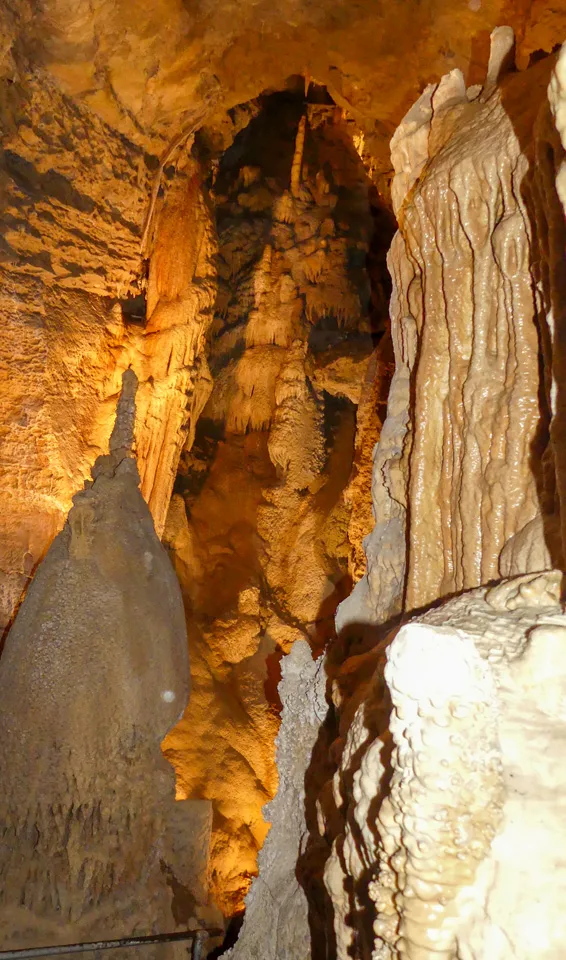
Whisper Rocks (right) and nearby Lincoln Caverns treat visitors to scenes filled with incredible underground formations.
In May 1930, a road crew building U.S. Route 22 discovered a cavern, which had never been explored. A year later, a family who farmed on the land opened it as an attraction called Hi-Way-May Caverns.
Unfortunately, they couldn’t make a go of the business, and it was sold to Myron Dunlavy Sr. Myron eventually changed the name to Lincoln Caverns, after his favorite president, Abraham Lincoln. Myron Dunlavy Jr., an avid caver, discovered nearby Whisper Rocks in September 1941.
Zack, our tour guide, led us up a steep hill to Whisper Rocks, just a few hundred feet from Lincoln Caverns. Both caves are filled with mineral and limestone formations that took millions of years to develop. One type of rock formation is named “cave bacon” for its resemblance to the food. The caverns also contain a frozen waterfall and dozens of other amazing formations, many of which resemble human figures.
In Lincoln Caverns, our guide showed us the original room through which visitors entered. It was considered too dangerous after the highway was built, so a new entrance was cut out. Part of the cave was lost during construction as well, so as a safety measure, an iron brace was installed across the ceiling.
Small passageways and openings exist throughout both caves. Many have not been explored fully. Walking in the caves is easy; the climb to Whisper Rocks is more strenuous.
Jack’s Narrows
The Juniata River cuts a gap in Jack’s Mountain to form Jack’s Narrows, the deepest gorge in Pennsylvania. This natural wonder is named for Captain Jack Armstrong, an 18th-century fur trader and pioneer who had a long history with the local Delaware Indians and was ultimately murdered in 1744. He is credited with playing a significant role in the history of Huntingdon County. A public launch area grants access to the Juniata River, with a picnic area nearby. It’s a convenient spot to launch a kayak or canoe.
Standing Stone Trail, an 85-mile hiking trail, passes near Jack’s Narrows and is accessible just a short distance away. There’s a pull-off and parking place from which to view the Thousand Steps section of the trail. The employees who built it had to walk to the quarrying areas atop the mountain.
Clifton Theater
After all the outdoor adventures, let’s visit a historic theater said to have ghostly residents. It initially opened as the Huntingdon Opera House in 1884 and was rebuilt after it burned down in 1901. Numerous other changes occurred through the years. When rebranded as the Gamble Theatre, it showed 5-cent silent movies. The upgraded Clifton Theatre featured a pipe organ. The theater currently operates as the Clifton 5, with five movie screens.
One purported spirit is rumored to be a young boy; another is Marsha, a local actress. Theater two is said to be the most active for ghostly encounters.
RVers seeking a destination for spring, summer, or fall travel may want to put the Raystown Lake Region on the list. Enjoy an old- fashioned lake vacation, take in Pennsylvania’s natural beauty, and ride the rails of history.
Info
Raystown Lake Region
raystown.org
Restaurant Options
Huntingdon offers a variety of dining choices, including these:
Boxer’s Café is housed in a circa 1865 building. Touches of the original drugstore remain in the wood bar, tile floor, and stained glass. The small café/bar offers a diverse menu.
Lil New York serves a fusion of Greek and Latin cuisine.
Muddy Run Tavern, another repurposed building, was once a furniture store. The extensive menu includes soups, salads, subs, and entrees.
Standing Stone Coffee Company is a small-batch coffee roastery and café.
Sweethearts Confectionery offers one-of-a-kind cupcakes and cakes.
Three Twelve Kitchen & Cocktails is the fine dining place in Huntingdon. The menu is extensive, including scratch-made entrees and cocktails.