
January-February 2026
SPACE
NEW MEXICO’S VERY LARGE ARRAY
By Josephine Matyas, F468364
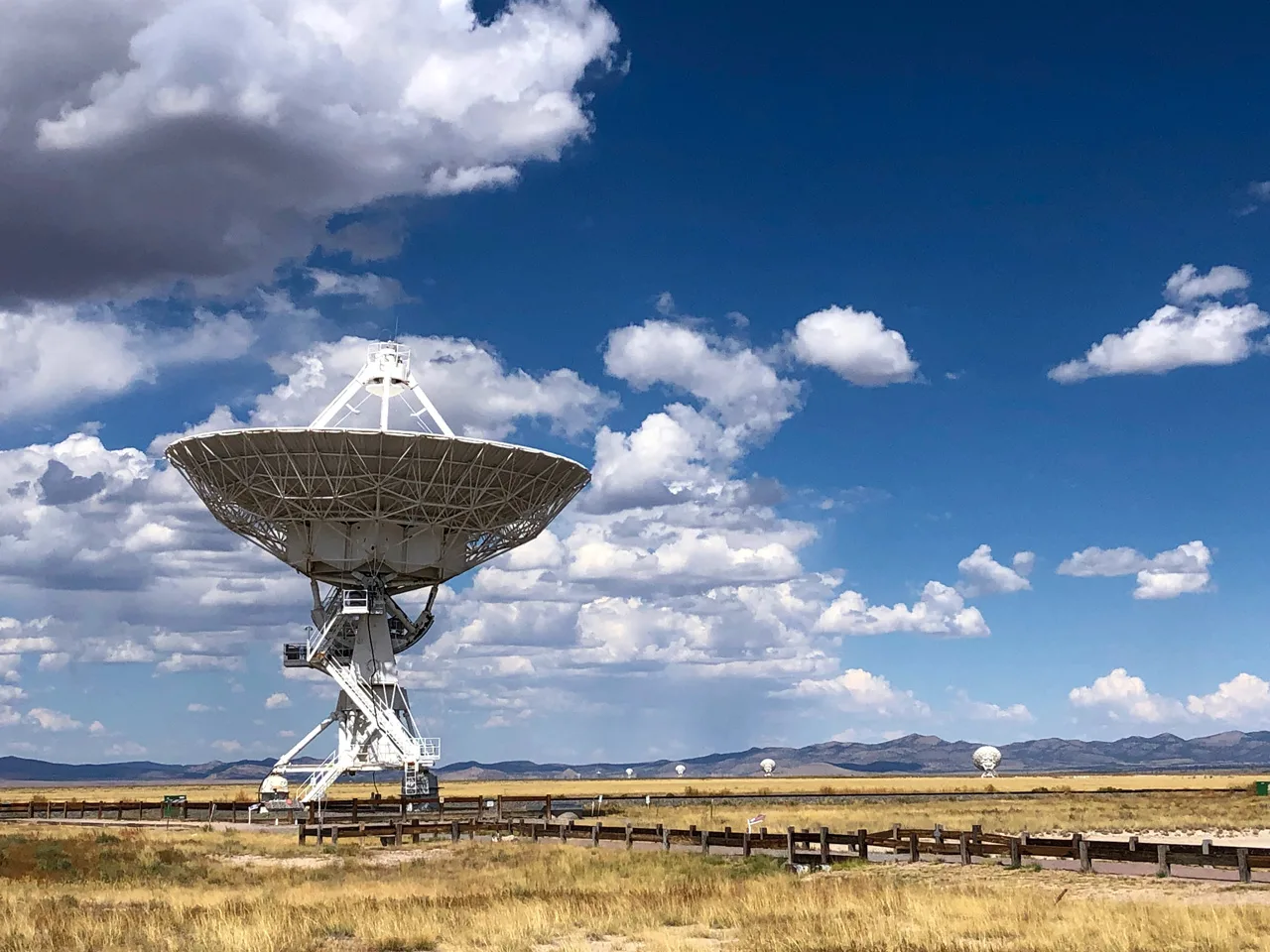
Astronomy and science geeks, as well as film fans, will find the Karl G. Jansky Very Large Array (VLA) in central New Mexico an irresistible draw. It’s in a remote part of the state, with clear skies and low light pollution — perfect for watching 26,000 light years away into our galaxy, night and day, for astronomers worldwide.
The Very Large Array has been called “the hardest-working telescope on Earth.” It’s composed of 27 massive dish-shaped antennas (plus a spare) that scoop up invisible radio waves from space. Each antenna measures 82 feet across, weighs 230 tons, and is repositioned every four months. It’s impossible to build a single antenna dish large enough to “see” the enormity of space, but the connected array of the VLA’s large antennas function together as one giant telescope with an eye more than 22 miles in diameter!
A sensitive receiver combines the collected waves and sends them to a supercomputer, where they are mathematically merged into one powerful telescope. The data is used by astronomers to construct a timeline of the universe, both past and future. This central computer ingests data equivalent to 2.3 billion tweets, or posts, per second. This powerful scientific device has sat at the forefront of astronomical science since 1980.
So, what does this giant eye see as it collects signals from all over the sky? The dusty birthplace of stars and planets, collisions between distant galaxies, supernova explosions, and the outbursts around supermassive black holes. It’s a valuable tool to help scientists map the universe.
What can an RV visitor experience at the actual VLA site? Start by viewing an interesting introductory movie (which includes facts about the on-site filming of the hit movie Contact, starring Jodie Foster). Take a self-guided walking tour around and below the enormous parabolic antennas, with lots of exhibit signs to explain the what-where-why of giant radio telescopes.
The very large array is a two-hour drive from Albuquerque, 50 miles west of Socorro. Dry camping options nearby include Datil Well Recreation Area and Water Canyon Recreation Area. Full-hookup camping is available at Eagle Guest Ranch in Datil, Western Motel in Magdalena, and Casey’s RV Park in Socorro.
IF YOU GO
Very Large Array
public.nrao.edu/visit/very-large-array
PHOTOGRAPHY
7 TIPS FOR WINTER PHOTOS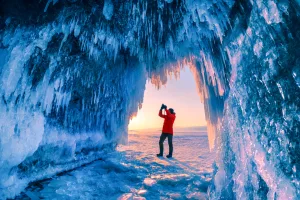
There’s nothing like the crisp images of a wintry landscape. Whether you use a cellphone or traditional camera, these suggestions may help you enhance your shots.
- Early morning and late afternoon are the best times to photograph winter scenes. Low sun prolongs shadows and creates interesting shapes — the intersecting lines of a fence projected on snow, for example.
- A painted barn, an emerald-blue sky, or snow-covered branches with berries will add pop to a white panorama.
- People and pets. Include them to add a sense of place, scale, and interest. Just make sure they don’t detract from the overall composition.
- Texture and detail. Search for close-ups: an icicle, a lonely branch, cracks in the ice, or a frozen puddle.
- Renowned photographer Ansel Adams said that he could achieve a greater sense of “color” when shooting in black and white. Try it.
- Snowstorms and blowing snow can add mood and reveal winter’s true character. (Be careful if you venture out.)
- No snow? “Snow” problem! Frosty mornings, rainy days, overcast skies, and blowing wind can help you create some memorably moody images as well.
SUPERSIZED READING
THE LAST LAIRD OF SAPELO
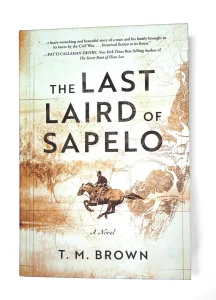 Do you enjoy historical fiction? Will you be attending Family RV Association’s 112th International Convention in Perry, Georgia, this March? If you answered “Yes” to both, plan to meet T.M. Brown, FRVA’s featured “Supersized Book Club” author. He’ll be sharing insights about The Last Laird of Sapelo, his latest novel.
Filled with historical detail and based on true events, Brown’s book tells the story of Randolph Spalding, the youngest son of Thomas Spalding, Georgia’s most well-known antebellum-era coastal planter and political figure. Set in coastal Georgia between 1851 and 1861, the novel follows Randolph as he inherits his father’s famed holdings on Sapelo Island and moves through the social circles of Charleston, Savannah, and Milledgeville.
As war breaks out following the attack on Fort Sumter, and the Union’s naval blockade threatens the entire southern coast, Randolph is reluctantly drawn into duty as a militia commander. In the ensuing months, he faces a storm of life-altering events that threaten his family’s legacy, as well as his own conscience.
Brown, an Atlanta native, draws inspiration from his Southern heritage. In addition to The Last Laird of Sapelo, he has written a trio of novels collectively called the Shiloh Mystery Series.
FRVA’s Supersized Book Club will meet on Saturday, March 21, during the Perry convention. For the best experience, attendees are encouraged to read the featured book ahead of time. Sign up at join.frva.com/ga26bookclub and purchase the book from Amazon or another bookseller. Prepare to chat with fellow attendees and learn more about the history, the characters, and the island that inspired this story. Stay for the Q&A and book signing. There is no additional fee for the program itself.