
Portable Generator Considerations
“Choosing a Generator” by Mark Quasius in the July 2018 issue of Family RVing (page 30) had some nifty information. I’d like to add three additional important points, especially regarding the adoption of portable generators.
Although our motorhome has a 7-kilowatt gen set on board, we often use our little Honda EU2000i in dry-camping situations when external electrical power is required but the demand is light; i.e., battery charging, running small fans, etc. This helps keep things quiet(er), saves fuel, and reduces the duty time on the larger gen set. So, primarily regarding portable generators, I offer the following:
1. With most (all?) portable generators, the unit’s capacity (usually in the model name) is an optimistic figure used for marketing. For example, the Honda EU2200i generator, with an “AC Output” listed at 2,200 watts of power, actually is specified as “2200W max, 1800W rated.”
Yamaha also uses the max and rated (of watts output) terminology to define maximum versus continuous duty rating of output. The takeaway here is this: When comparing your power requirements with generator models, be sure to dig deep enough to know the actual continuous duty rating of each; then, add in your fudge factor for altitude/temperature to ensure a safe margin of performance capability.
2. Be aware that certain newer electrical transfer switches on RVs will “evaluate” the quality of electrical service being presented to it for approval. One test is for the electrical system’s “bonding” of the neutral/ground legs. At least on our little generator, and I suspect most portables, this bonding is absent, thereby causing the RV system to reject the portable generator’s offerings. I found out in the Nebraska National Forest, at night, in the rain! The potential generator buyer needs to know this little hiccup potential. The takeaway here is to ask yourself whether your RV system checks for bonding and other faults prior to accepting the electrical service. If so, does XYZ portable generator offer bonding, or will you have to build your own simple bonding device?
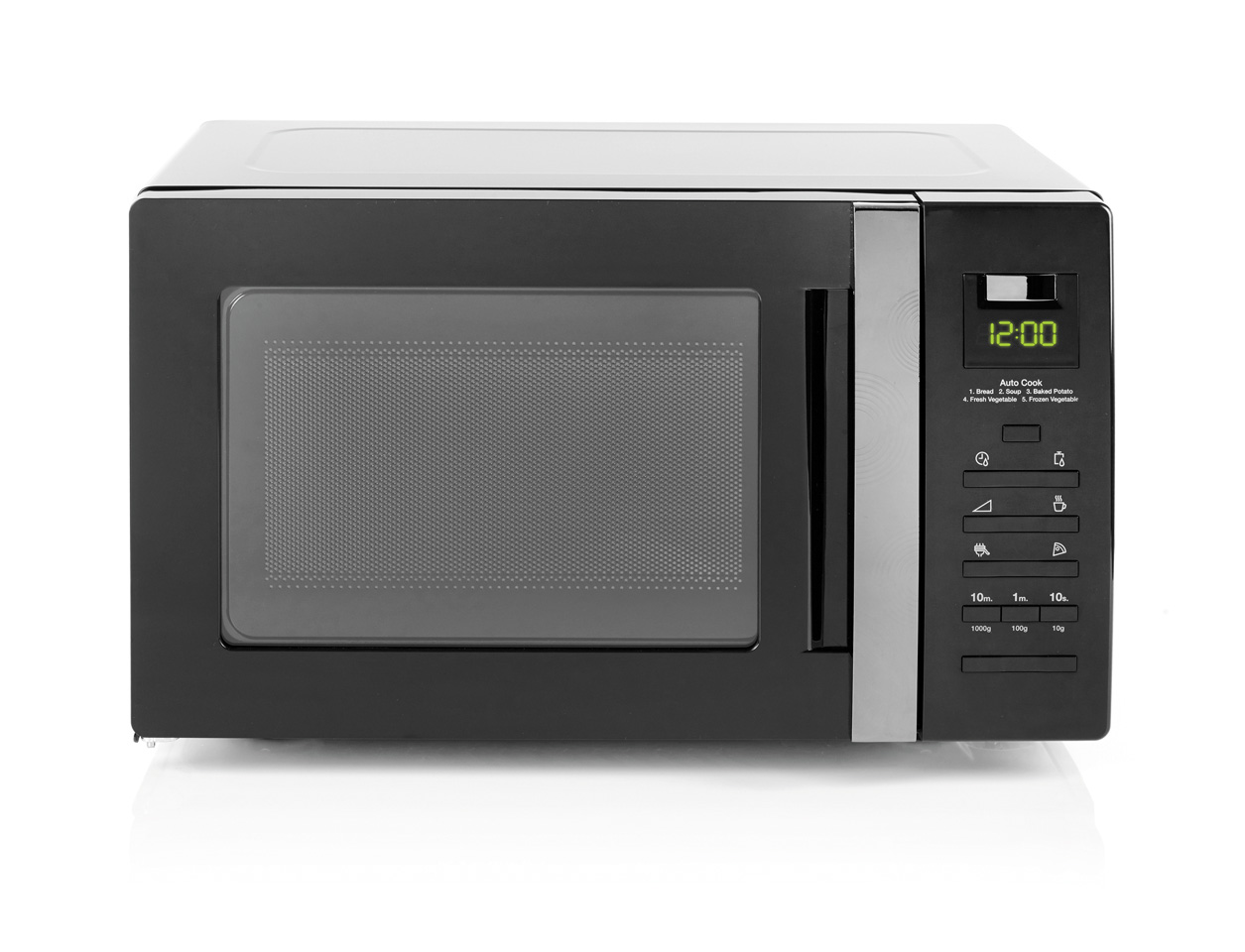
3. Of the 13 items listed under the “Typical Electrical Load Requirements” (page 32), I find it interesting that use of a microwave oven was omitted from the list and the discussion. Most RVs manufactured in the past 10 years have microwaves. Because their display panels illuminate when the shore power is used (pedestal or gen set), it becomes a setup for failure while using a small, portable generator. Someone may unknowingly try to heat up some coffee, and various forms of pandemonium will ensue. Although a smaller generator might be able to handle a microwave oven, it could be running at its maximum rating when someone decides a fresh piece of toast would go great with that warmed-up coffee.
Walt Embree, F452520
Redding, California
Technical editor’s note: Mr. Embree’s concern regarding the bonding of the neutral and ground conductors in a portable generator is paramount. The National Electrical Code (NEC) requires a single-point bond between neutral and ground at the service entrance of a typical residential house. In an RV application, that bonding is restricted to the onboard power source itself — inverter and generator. Since portable generators are not officially “recommended” for RV use, some small construction-grade portable units may not have an internally bonded neutral and ground connection. (Readers may be familiar with the term “floating neutral.”) All permanently mounted RV generators DO have this internal bond. Since RVs are not wired in the same manner as residential homes, an external bond for the portable generator is possible, which will satisfy not only the NEC but also the built-in technology of modern RV electrical management systems, including surge protectors and ground fault circuit interrupters (GFCI).
Since RVs can take advantage of as many as three different AC power sources (but only one at a time), the internal requirements for the RV AC electrical system, per the NEC, calls for an isolated neutral conductor within its internal AC system — totally insulated and separate from the safety ground conductor. An RV obviously cannot rely on a buried ground rod as a house does, so the frame of the RV serves as the common grounding/bonding point. The isolated neutral conductors found in every RV are never connected or grounded to the RV frame. Instead, the RV relies on the bonding of the neutral/ground at its chosen power source.
To build a simple neutral/ground bonding plug for any portable generator lacking the internal connection, obtain a common three-wire, 15- or 20-amp male plug cap from any big-box store. Connect a short section of 10-gauge copper wire between the neutral (silver) terminal and the ground (green) terminal inside the plug cap. Do not connect anything to the hot (brass) terminal. Then simply insert the plug cap into one of the portable generator’s applicable external receptacles. Voila! The neutral and ground conductors are now bonded at the portable AC power source.
Discount Varies
Regarding the letter from Randy Lehnhoff in the June 2018 issue about FMCA’s OfficeMax/Office Depot discount (“A Real Deal,” page 14): Based on that letter, I picked up a combo ink box of XL ink for my Canon printer. At the checkout I presented my FMCA discount card and was disappointed when the $60 price was still $60. So, be aware that apparently not all inks are discountable. Their computer services aren’t, either, as I discovered. But some services related to publishing, bookbinding, etc., are indeed covered.
Joel Ashley, F384437
Clackamas, Oregon
Flushing Cleansing Wipes
The RV Doctor’s answer to Ann McHazlett in the September 2018 issue (“No-Flush Please,” page 17) concerning flushing disposable cleansing wipes and then running them through the macerator would have been more complete with the following information. Disposable cleansing wipes are simply a nonwoven fabric (which is the problem) saturated with witch hazel. The simple solution is to make your own cleansing wipes by buying a bottle of witch hazel and using it with the appropriate RV toilet paper. It’s also much cheaper than using the commercial wipes.
Jerry Glazman, F367600
Benson, Arizona
Beaver Motorhome Help
Dave Atherton, an FMCA member and retired diesel mechanic who helps fellow Beaver motorhome owners, diagnosed our coach’s stuck waste gate at the 2017 Rocky Mountain Area Rally in Farmington, New Mexico. He also emailed us troubleshooting suggestions.
Recently we were headed to Utah to visit friends, and they recommended Payson Diesel in Payson, Utah. They are located at 838 N. Main in Payson, 84651; 801-465-4979. Ron Hatfield is the manager, and we worked with a mechanic named Brody.
Brody surveyed the issue, looked over Dave Atherton’s report, and hooked up his computer. He determined the boost pressure sensor was defective. He had the part in stock, and we were back on the road in under an hour for less than $200. This solved our loss of power and overheating issues. Hallelujah!
Payson Diesel is immediately off the exit in Payson and hidden behind some white hay shelters, but well worth finding. We highly recommend Dave Atherton and Payson Diesel. We had been having to turn off our air conditioner and run the heater to keep from overheating. It was not much fun.
Steve Glaser, F462784
Tipp City, Ohio
Bakersfield Repair
On July 9, 2018, I had just pulled into our camping space at Bakersfield RV Resort in Bakersfield, California, and my motorhome’s “check engine” light came on. I contacted Jim Burke Ford and Lincoln in Bakersfield and was able to get an appointment the next morning. I dropped my 2015 Winnebago Sightseer (with a Ford chassis) off at around 9:30 a.m., and at about 11:30 a.m., my motorhome was ready to be picked up. It had a bad coil on a cylinder and was repaired under warranty. Great service!
Joe Pifer, F462547