

Vehicle inspections, driving tactics, and other tips to help reduce the chances of an overheated engine in motorhomes and trailer-towing vehicles.
By Steve Froese, F276276
August 2018
Today’s diesel-pusher motorhomes have horsepower to spare, even when climbing long, steep grades. However, owners of older pushers, gas-powered motorhomes, and trailer-towing vehicles sometimes see engine temperatures soar, especially when driving uphill on sweltering summer days. It’s wise, therefore, to consider ways to minimize engine overheating.
We’ll start with the vehicle inspection.
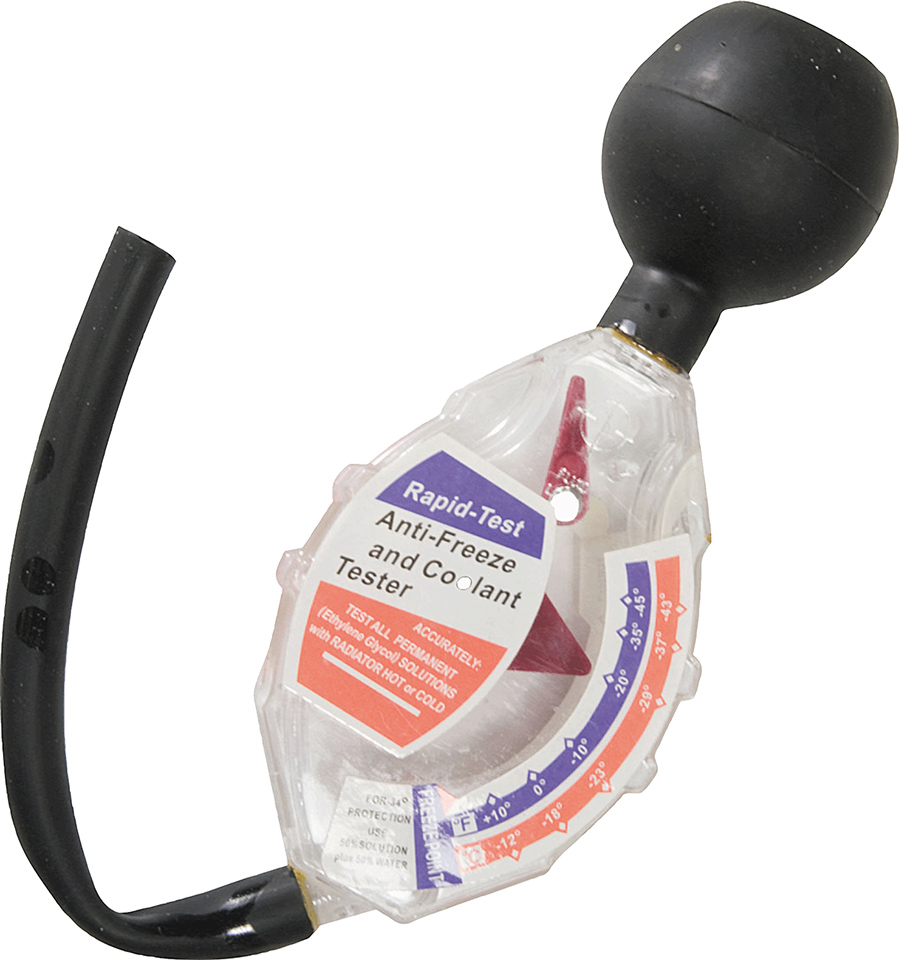
An ethylene glycol tester can ensure that the ethylene glycol mix is at 50 percent.
Coolant Level and Concentration
Ensure that the radiator, expansion tank, and any other coolant reservoirs are filled to the appropriate level. Also make sure the ethylene glycol mix is at 50 percent concentration. If you don’t have an ethylene glycol tester, purchase one. They are inexpensive, easy to use, and handy for regularly monitoring coolant.
Visually inspect the coolant for discoloration or debris. Two types of coolant may be used in diesel engines: low-silicate coolant with supplemental coolant additives, or SCA (explained in the next section), and extended life coolant. Always use the coolant type specified by the chassis manufacturer; never mix brands or types; and verify coolant/SCA compatibility. Bargain brands of SCAs are available, so stick with those branded as ASTM-compliant. Do not use high-silicate antifreeze formulated for gasoline engines.
Supplemental Coolant Additives (SCA)
If you use low-silicate diesel coolant, testing and maintaining the correct SCA concentration is imperative for maintaining engine health and longevity. It helps to prevent cylinder cavitation and corrosion. SCA is available as a stand-alone additive, or it can be incorporated into engine coolant, as mentioned above. Whatever the source of SCA in your system, be sure to maintain the correct levels. You can purchase test strips for this purpose, or you may choose to have your servicing dealer look after it. Check the levels, or have them checked, every four to six months. Levels that are too low will not provide sufficient protection; too high a concentration can result in a buildup of particles, which can become loose or flake off the water-jacket walls. The particles are abrasive and can damage the water pump or clog certain parts of the cooling system, such as the heater core.
The cooling system should be professionally serviced regularly, including a radiator flush. Doing so prolongs the life of the system and its components, such as the radiator, heater core, hoses, cooling pipes, water pump, and gaskets. During servicing, the coolant should be checked to ensure it’s not dirty or corrosive. If low silicate for diesel coolant is present, the SCA level should be examined. Self-inspection, along with regular professional servicing, will help reduce overheating.
Leaks
Start the vehicle engine and check for coolant leaks, particularly around hoses, components (such as the radiator, water pump, and thermostat housing), and gaskets. Once the engine has warmed, make sure the operating temperature is within the manufacturer’s recommended range. Larger-diameter hoses, in particular, can leak when cold. Be sure to check the coolant level in the radiator or overflow reservoir as mentioned above.
Wash the Charge-Air Cooler (CAC) and Radiator
Failure of air to circulate properly through the CAC (which is mounted in front or on top of the radiator) and the radiator is a common cause of engine overheating. Carefully wash them once a year, or whenever they appear to be dirty or blocked. Be careful when washing them, since the fins are fragile and easily bent.
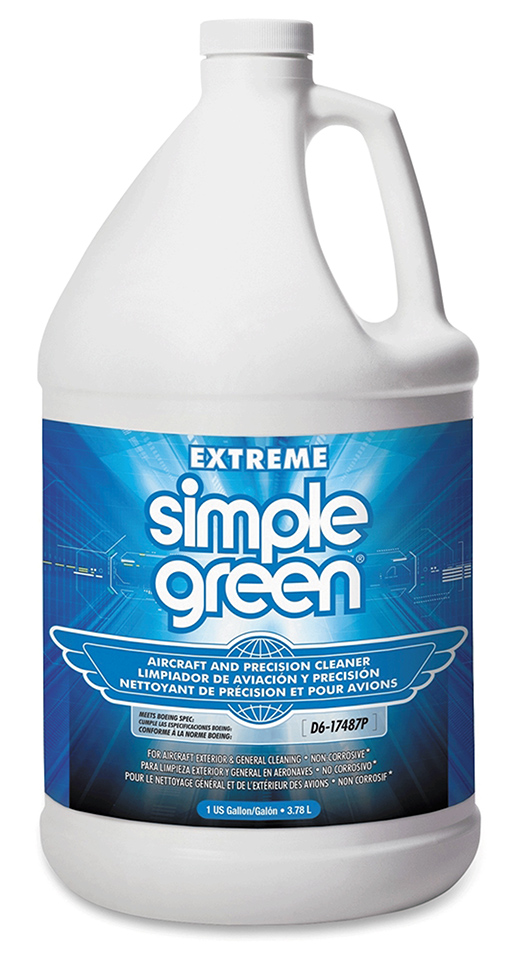
Extreme Simple Green can be used to wash the charge-air cooler and radiator.
You can use a standard garden hose and a dishwashing detergent or a radiator/engine cleaning spray — I recommend Extreme Simple Green — available at auto parts stores. Be sure to use a cleanser that is safe for aluminum components. It’s likely more dirt will be around the perimeter of the CAC/radiator, since the fan flings the debris toward the outside. Ensure the perimeter is as clean as the center. For stubborn debris such as grease, warm the engine, wet the area, and then spray with Extreme Simple Green. Let the soap sit for a few minutes and then rinse it all off. Repeat as required. If possible, wash the radiator and CAC from both the front and back. For sandwiched configurations, do your best to clean the area between the CAC and the radiator.
Belts and Hoses
Visually inspect all coolant hoses and engine belts for possible defects. Replace any that show visible wear or damage. Give serpentine belts a slight twist so you can inspect the back side. If any of the white cording is visible, replace the belt, as this is a strong indication of wear. Worn belts will start to slip, which will reduce coolant flow and alternator and air conditioner performance. It is a good idea to carry extra engine belts, hoses, and filters, as well as the tools required to replace them.
Cooling Fan
With the engine off, visually inspect the cooling fan for damage and clearance from surrounding objects. If possible, spin the fan by hand to check for resistance or binding. Start the engine, stay clear of the fan and engine components, and look and listen for anything that might indicate contact between the fan and another object, such as the radiator shroud.
Make sure the fan properly engages when the engine is running and cooling is needed. The way the cooling fan engages depends on the method for driving the fan (engine mechanical, electric, or hydraulic). On many vehicles, the fan rotates at idle unless cooling is called for, at which point it engages at full speed to force air through the radiator. If you have a hydraulic fan, check the hoses and hydraulic fan motor for leaks or damage.
In addition to vehicle and cooling components, the human factor plays a key role in keeping a vehicle from overheating. Following are some things the driver can do.
Use of Dash Heater
Refrain from using the dash air conditioner while climbing a long or steep hill, as it puts a significant load on the engine. Instead, turn the dash heater on full if the engine starts to overheat. This can make the cab uncomfortable for a short time, especially in hot weather. (Use of the roof air conditioner is a good option.) However, this configuration creates an additional radiator that can reduce coolant temperature.
Driving Hours
When very hot weather is in the forecast, try to plan your driving so you are on the road early in the morning or in the evening.
Overloading
Keep your vehicle within the manufacturer’s recommended weight ratings. This is especially relevant to trailer towing. Make sure the trailer is not overloaded and that the tow vehicle has enough towing capacity for the trailer. In other words, make sure not to exceed the gross vehicle weight rating (GVWR) or the towing capacity. Note that the towing capacity may be exceeded before the GVWR is. For a detailed explanation of RV weight ratings, how to weigh an RV, and how to apply such information, see “Weighing Your RV” (Family Motor Coaching, July 2014, page 40).
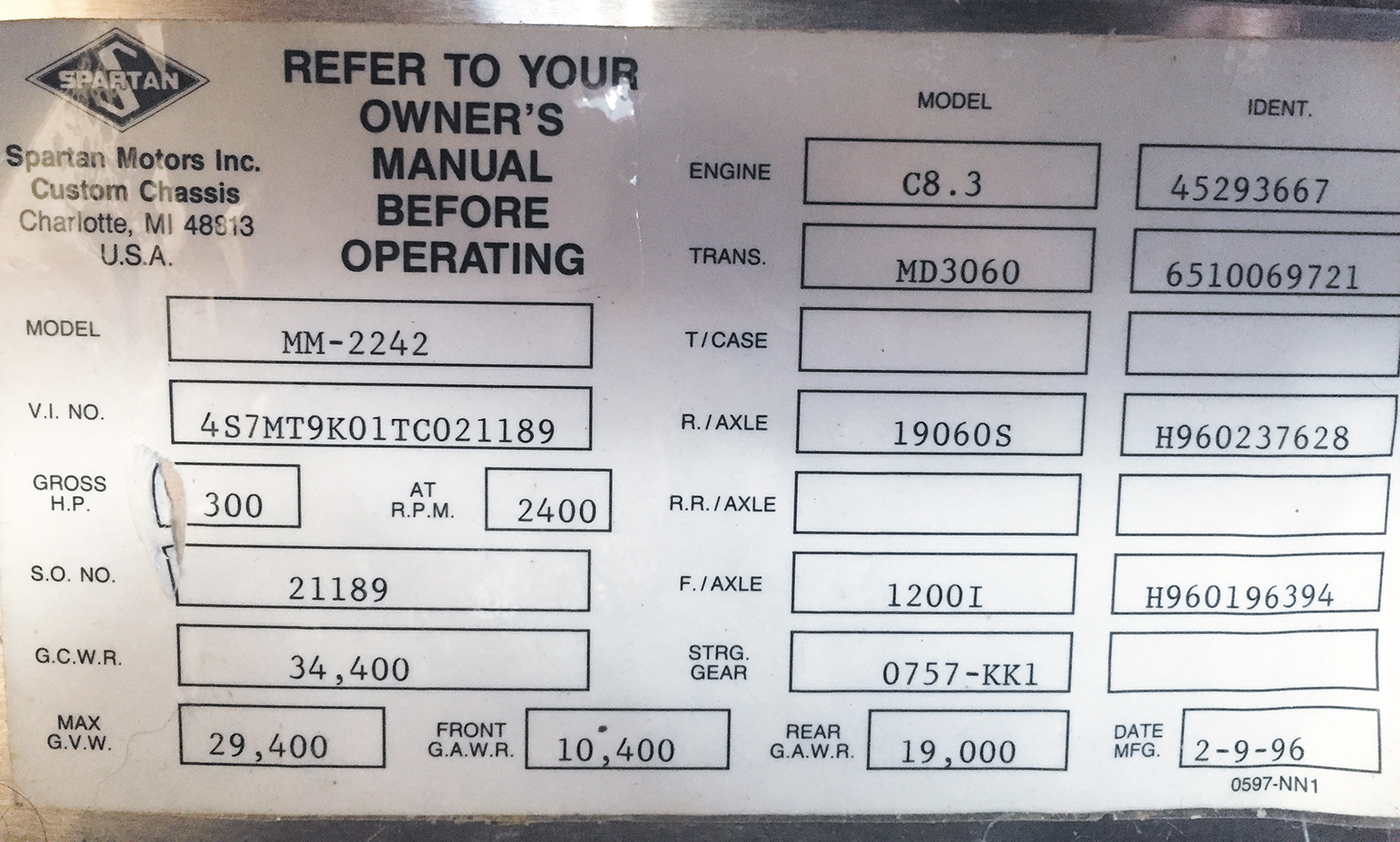
Keeping your RV within the manufacturer’s specified weight ratings is a safety issue and a factor that can prevent engine overheating. The maximum gross vehicle weight of this motorhome is listed as 29,400 pounds, and the gross combination weight rating (the maximum weight of the loaded motorhome and the vehicle it tows) is 34,400 pounds.
Once you know the weight of your RV, compare it to the GVWR and towing capacities to determine the safe loading range. In some cases, there is not much leeway between cargo carrying capacity and the net weight of the RV itself. Obviously, a heavier vehicle, even if it is not overweight, can affect the ability of a cooling system to do its job. Pulling a trailer that is heavier than the towing capacity of the vehicle doing the towing is likely to result in overheating, even if the GVWR has not been exceeded.
Use of Transmission Gearing
Many of us have heard the saying “go up the hill in the same gear you go down.” This is extremely important, both in terms of safe braking when descending the hill, as well as engine cooling while going up. When climbing a hill, always keep rpm toward the upper end of the engine’s rpm range, and choose the appropriate gear to do so. Maximizing engine rpm will ensure the water pump rotates faster, resulting in higher coolant flow rate; in most cases, the cooling fan also will turn faster.
Do not rely on the automatic transmission to select the right gear. You will sacrifice speed, but you shouldn’t be in a hurry when you’re traveling in an RV. If your speed drops below the speed limit, don’t worry about it. Just move as far to the right as you can. Do not continue driving if the engine temperature starts to get dangerously high. Pull over and rev your engine in neutral until the temperature drops.
Other ways to avoid overheating include reducing the amount of cargo you carry onboard during a hill climb. And, if you are towing a vehicle, consider disconnecting it on long hill climbs and have your partner drive it uphill separately.
Following these tips, along with properly maintaining, inspecting, and repairing your RV, will minimize the chances of engine overheating and help keep your home on wheels rolling.