
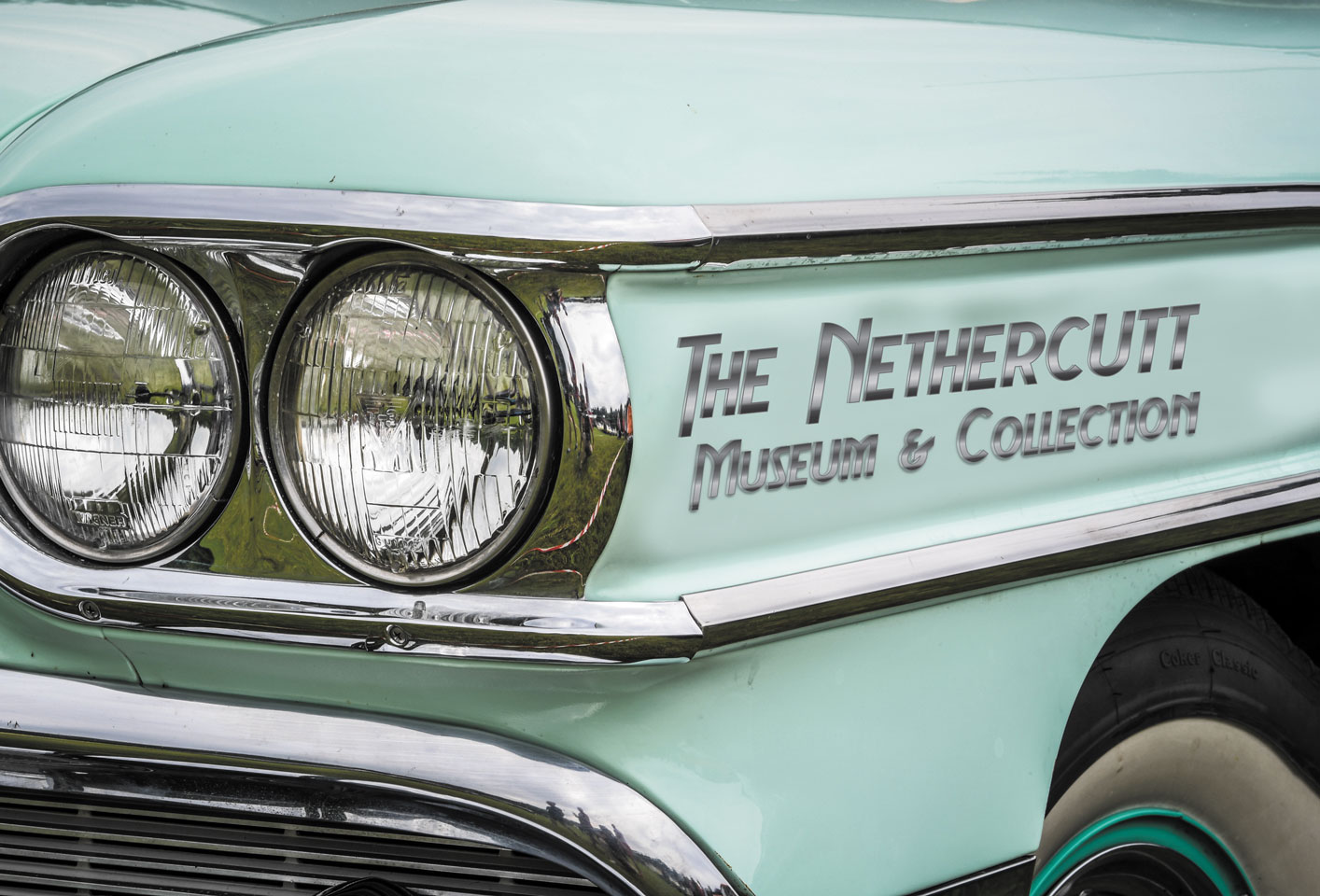
Some of the finest cars ever built are displayed at this Southern California address.
By Richard Bauman
December 2018
The large, pale yellow building looks out of place in a neighborhood of older houses, factories, and small businesses. But inside is a nirvana for classic car enthusiasts: more than 130 exceptional cars, from the early days of motoring right up to the 1980s, are on display, all expertly restored to their original splendor.
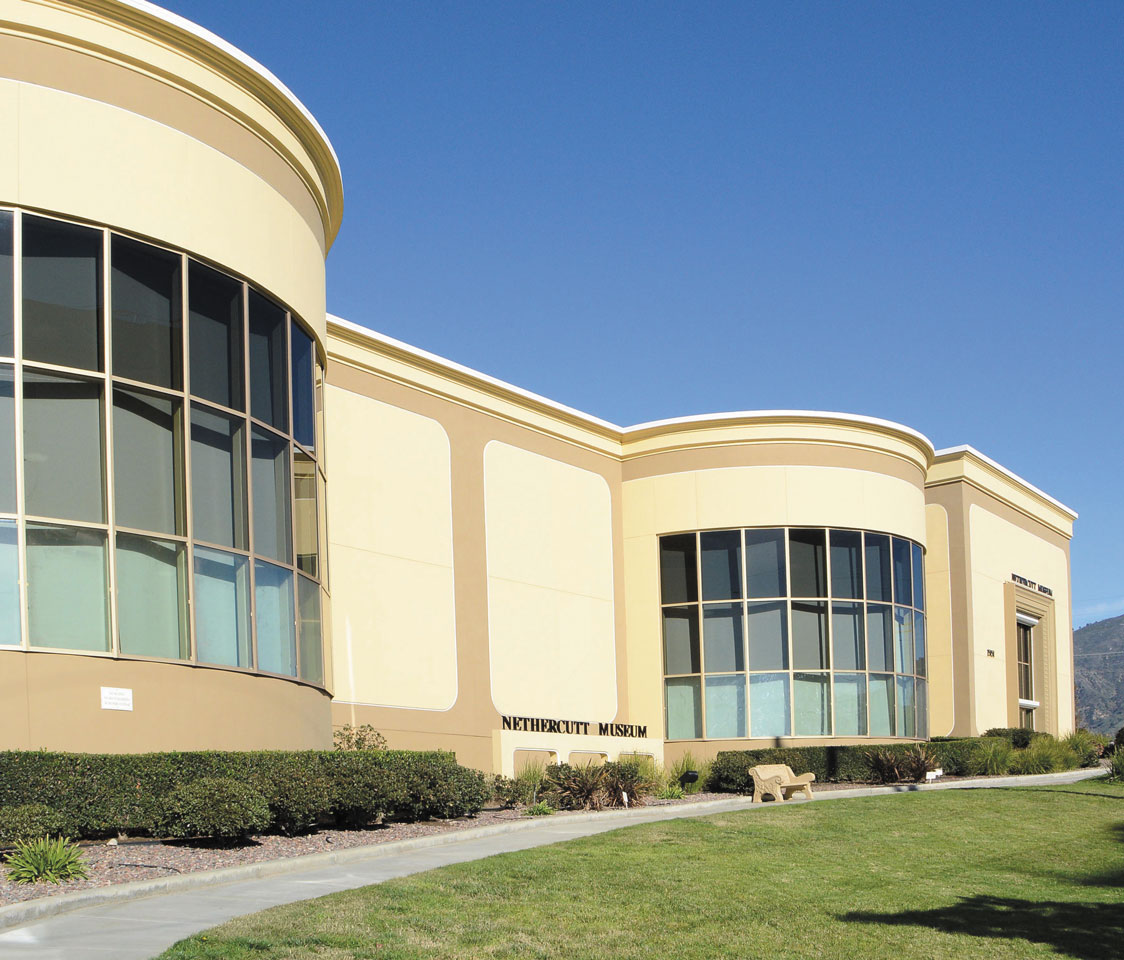
All cars in the Nethercutt Museum are maintained in running order.
The Nethercutt Museum is in Sylmar, California, a northern Los Angeles suburb. It is rich in auto history, for sure, but there’s more to this palace for cars than just cars. Behind the museum is a 1937 Canadian Pacific Royal Hudson locomotive coupled with a single custom-built, and elegant, 1912 Pullman railcar. And across the street is the Nethercutt Collection, an impressive array of art, antique furniture, extraordinary musical instruments, and more outstanding autos.
When you swing open the museum’s glass entrance door, you immediately know you’re in a special place. At least a couple of classic cars will greet you. During my last visit to the Nethercutt, a lustrous, silver and blue 1937 Talbot-Lago Type 150 was parked there, along with a sleek, maroon 1931 Bugatti Type 51, with its swooping fenders and airflow lines. Whatever you see, it will be just a teaser and a tipoff for what awaits you.
This place has a low-tech approach. Simple; no frills; just antique and rare automobiles. The museum has about 200 in its collection, but not all are shown at the same time.
Some cars are from well-known and prestigious carmakers, and others are from manufacturers that arrived and soon faded. Ever hear of the Diana? Me, neither, until I saw the museum’s 1928 Diana “Light Straight 8 Sedan Deluxe” built by the Moon Motor Car Company of St. Louis, Missouri. On the chrome-plated radiator cowl is a bronze cameo badge with the profile of a woman and the name Diana above it. It wasn’t an inexpensive machine. In 1928 a new Diana cost $2,195; that’s about $32,000 in 2018 dollars.
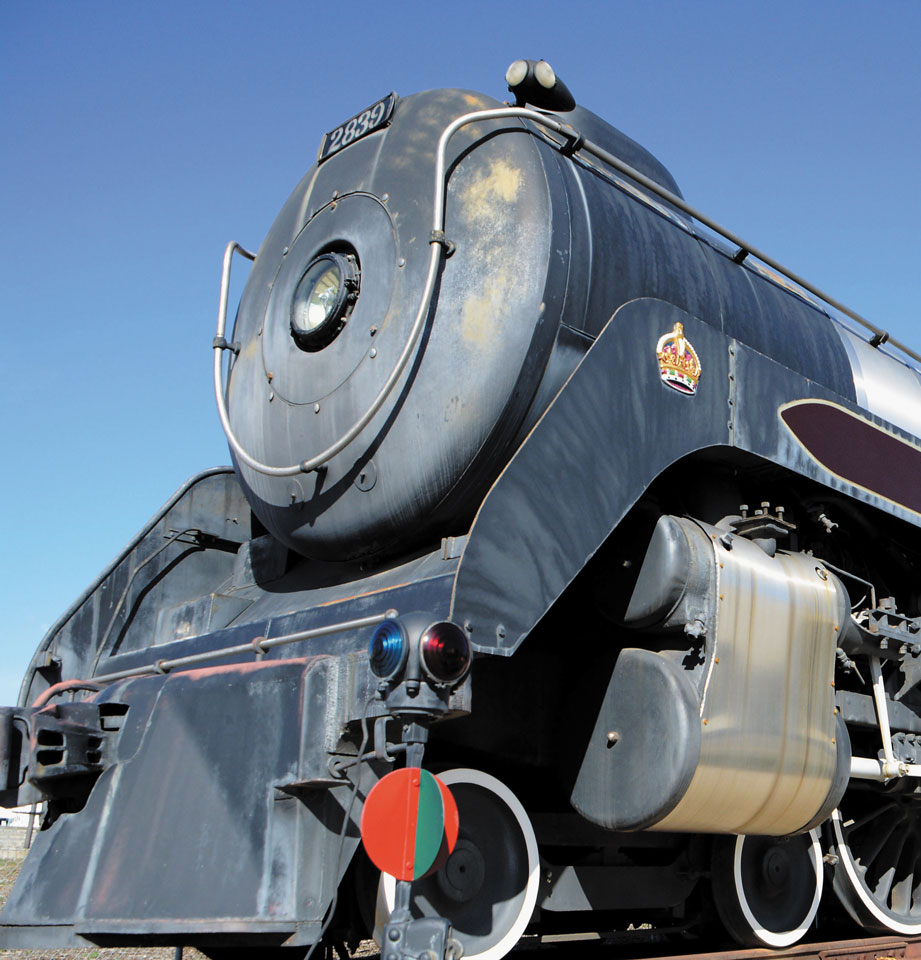
Behind the museum is a 1937 Canadian Pacific Royal Hudson locomotive.
Along with the Diana in the first row of cars are a couple of Pierce-Arrow sedans of various years; a 1933 Franklin with its 12-cylinder air-cooled engine; and a 1937 V-12-powered Lincoln, to name just a few. One wall opposite the cars features display cases with dazzling hood ornaments, automobile badges, specialty shifters, clocks and watches, and other early motoring and nonmotoring accessories.
All of the Nethercutt’s cars are licensed for road use and are driven regularly. Many have personalized license plates. For example, one Pierce-Arrow’s plate is “PA V12,” while a Franklin’s plate reads “NO H2O” (its engine is air-cooled, not water-cooled), and a 1937 Lincoln’s tag is “FYNE CAR.”
Some cars are regularly taken to classic car shows and Concours d’Elegance (a French term that means a “competition of elegance”). They usually come back with an award.
A Cosmetic Start
J.B. Nethercutt (1913-2004) and his aunt, Merle Nethercutt Norman, founded Merle Norman Cosmetics in the 1930s. He later bought out his aunt and her husband and other shareholders and enlarged the company.
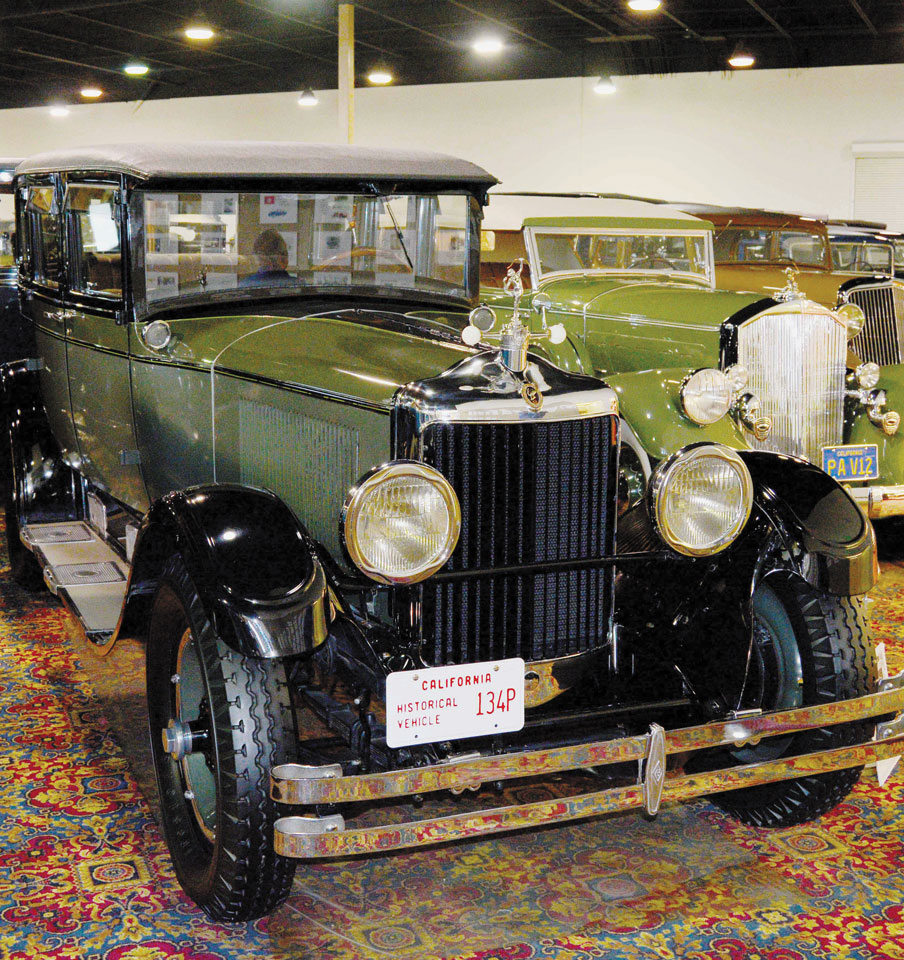
This 1928 Diana was made by the Moon Motor Car Company of St. Louis, Missouri.
Mr. Nethercutt was equally well known for his car collection. It started in 1956 when J.B. and his wife, Dorothy, bought two antique cars: a 1936 Duesenberg convertible and a 1930 DuPont town car. Both cars had seen better days. Mr. Nethercutt decided he would restore the DuPont himself. With naïve optimism, he plunged into the project, thinking it would take just a couple of weeks to complete. Eighteen months and $65,000 later, the car was finished.
How good of a job did he do? At the Pebble Beach Concours d’Elegance, one of the world’s leading classic car contests, it took Best in Show.
The Nethercutts continued to collect classic cars, and in 1971 they began sharing them with the public in the building they named San Sylmar. It’s a multistory edifice next to a Merle Norman shop and headquarters. Their collection of cars, antiques, and musical instruments occupied the lower floors, and the Nethercutts lived on the upper level. Later, they built the museum across the street to display even more cars.
The museum houses numerous rare cars, but perhaps the rarest, at least from the relatively modern era, is the white bullet-nosed car with the license plate California Historical Vehicle 6776: a 1948 Tucker Model 48 sedan.
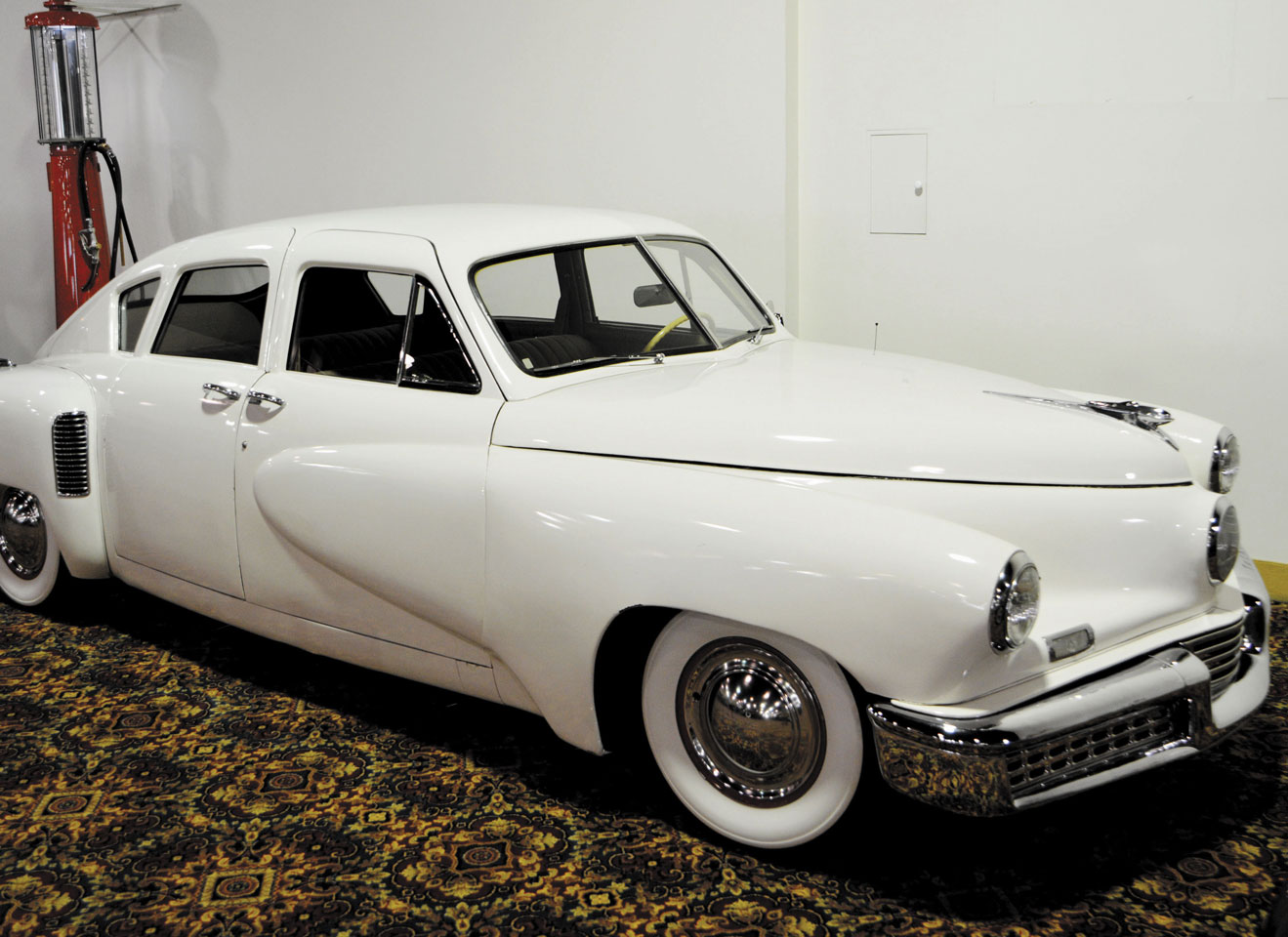
A 1948 Tucker boasts a smooth line between the doors and roof, just as cars do today.
The Tucker automobile was Preston Tucker’s attempt to revolutionize American autos. It numerous innovations: a padded dashboard, a low center of gravity, and a center headlight that swiveled when the car turned right or left. Not to be overlooked are plush interiors and doors that fed into the roofline. While the latter design feature is common today, it was new in 1948.
Only 51 Tuckers had been built when the company closed on March 3, 1949. Forty-eight of them have survived. The Nethercutt’s car is number 40.
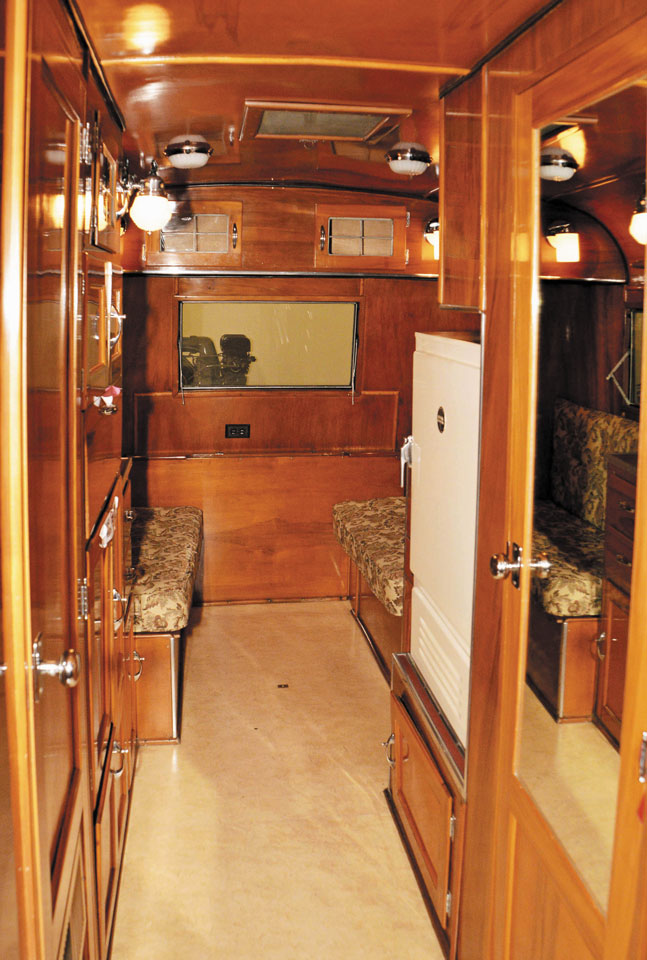
The largest Travelodge featured an inlaid linoleum floor and copper window screens.
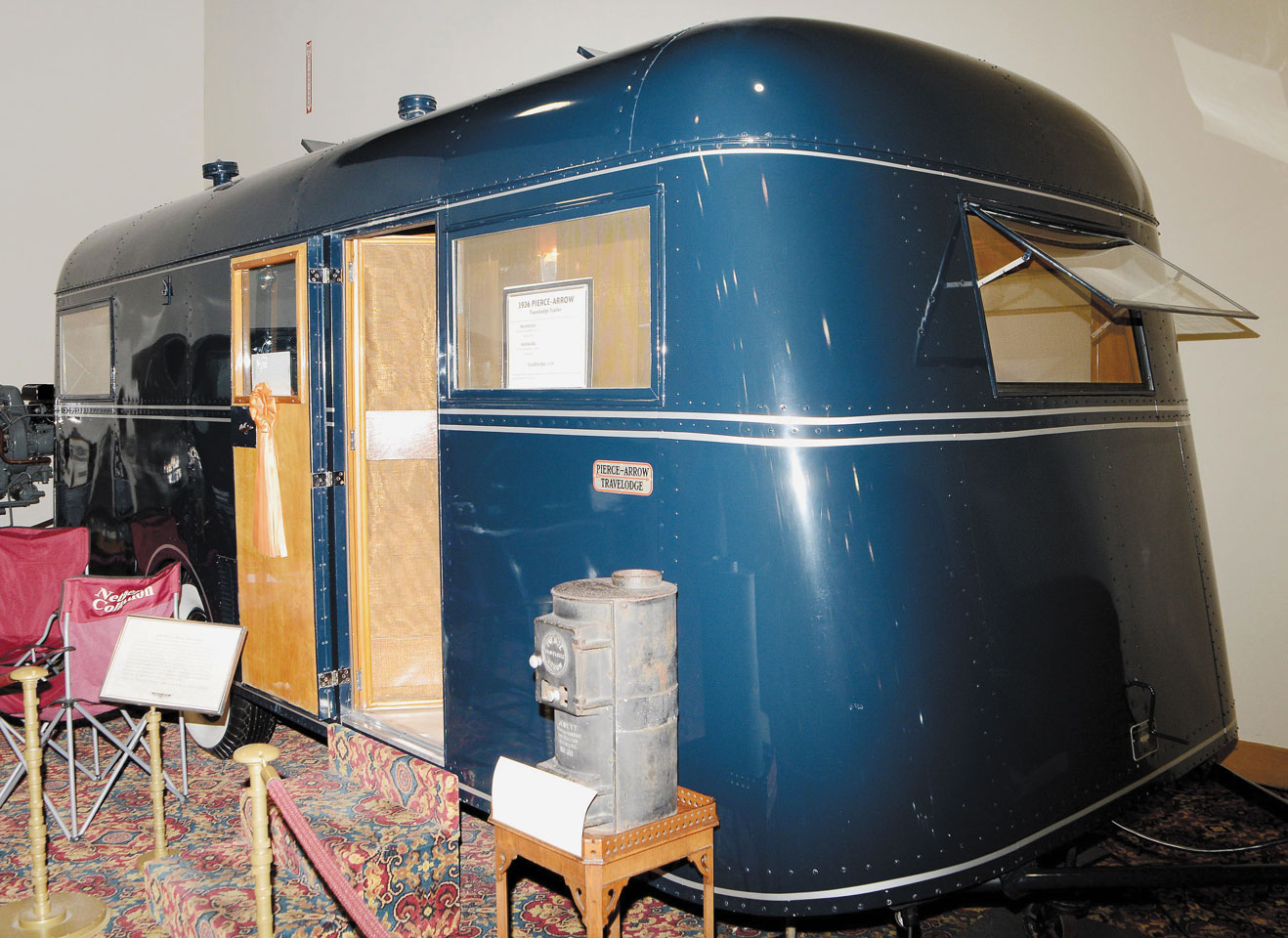
At 19 feet long, the Model A was the largest of the Travelodges; the Model B was 16 feet and the Model C 13 feet.
Pierce-Arrow automobiles were built from 1901 to 1938 in Buffalo, New York, and the Nethercutt has numerous examples of these luxury cars. But there’s also a different kind of Pierce-Arrow vehicle at the museum: a Travelodge Model A. This elegant travel trailer was built and sold in 1936.
The Travelodge has a painted aluminum exterior and an elegantly finished wood interior. Only 19 feet long, it nonetheless could sleep four and was outfitted with an icebox, a bathroom, and a kitchen stove and sink. A heater and a built-in radio came along to boot. It sold for $1,282 (about $23,000 today) and was declared the ultimate in travel comfort. Only 105 Travelodge Model A travel travel trailers had been built when the company went out of business in 1938.
If Rolls-Royce automobiles are your favorites, the collection will thrill your soul. Some people consider these elegant, high-fender vehicles the epitome of automobile luxury. The entire south wall is lined with Rolls after Rolls, from the early 1900s into the 1960s.
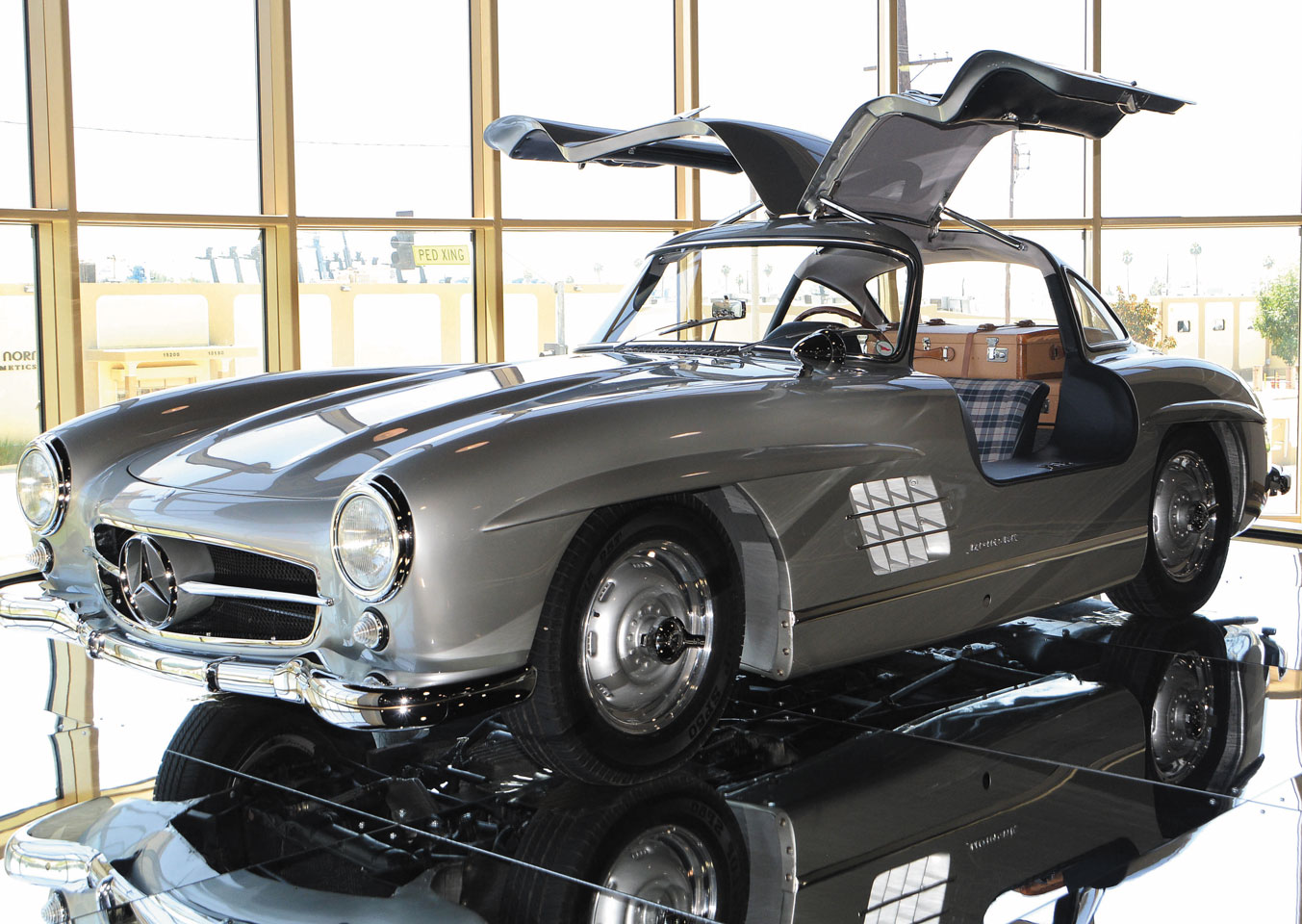
The 1954 Mercedes-Benz 300SL coupe was the fastest production car in the world when introduced.
The design of most older cars betrays their age or the era wherein they were built. But some cars surpass the decades between introduction and today. The 1954 Mercedes-Benz 300SL is such a car. Especially sleek for its time, with its long nose, gull-wing doors, and blended tail and fenders, this coupe is still outstanding-looking. When introduced it was the fastest production car in the world. Even today it seems as though it’s moving when still.
The Nethercutt’s silver 300SL is often in a special display area, a semicircular alcove with a mirrored floor, bathed in sunlight streaming through more than 30 windows.
The Collection
The boxy, multistoried, windowless building across the street from the museum looks like a factory or storage facility. But its blandness belies its contents: the Nethercutt Collection. There, docents guide visitors from exhibit to exhibit, floor to floor, while revealing the history and significance of the cars, musical instruments, and art pieces.
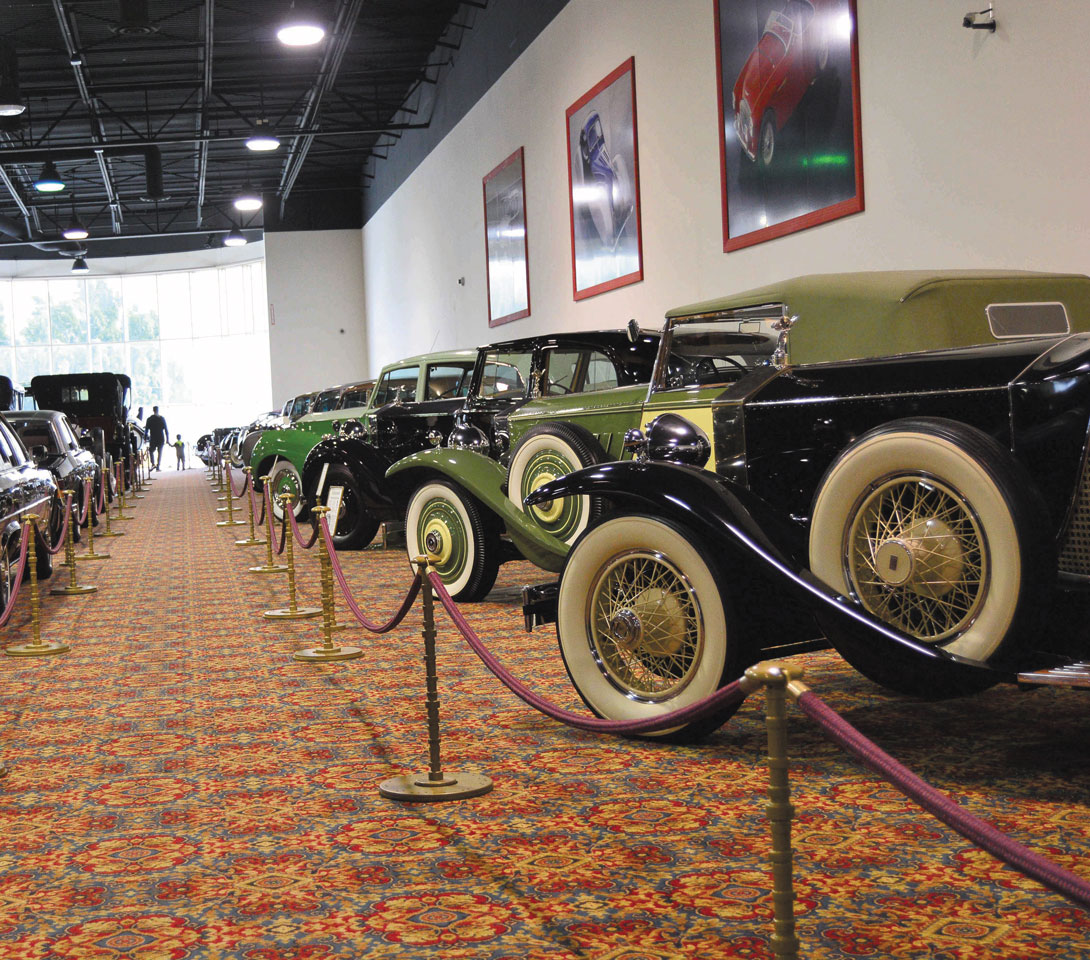
An entire row of Rolls-Royces captures visitors’ admiration.
The two-hour tour begins at the Grand Salon, which evokes the ambiance of luxury automobile showrooms of the 1930s. About a dozen gleaming luxury cars await — including Rolls-Royces, Duesenbergs, and Delahayes — and they are positioned between the room’s three-story marble columns. The lights from crystal chandeliers reflect like stars on the smooth, black marble floor and gleaming automobiles.
A circular staircase leads to the mezzanine level, where you can admire the Nethercutt collection of art; jewelry; 18th- and 19th-century French furniture; dolls; timepieces; and rare hood ornaments made from delicate, brushed Lalique crystal.
The final stop is the fourth floor, which harbors the mechanical musical instruments collection. These range from tiny musical pocket watches to midsize nickelodeons and gigantic electro-pneumatic “orchestrions.” The latter are mechanical marvels, pianos on steroids, which produce amazing sounds. The 1926 Hupfield Excelsior Pan Orchestra, for example, features built-in accordions, violins, drums, and piano; it can easily produce a patriotic march or a gentle lullaby.
The celebrity instrument of the fourth floor is the 1926 Hope-Jones Unit Wurlitzer, featuring more than 5,000 pipes. It is the largest Wurlitzer theater organ on the West Coast. When it is played, you can literally feel the music push through your being. Several organ concerts are scheduled at the Collection each year.
You don’t have to be an antique-auto enthusiast to enjoy visiting the Nethercutt Museum and the Collection. The artwork, jewelry, musical instruments, and overall elegance make visiting worthwhile.
More Details
The Nethercutt Museum and Collection is open Tuesday through Saturday from 9:00 a.m. to 4:30 p.m. The Nethercutt Collection tours are offered Thursday, Friday, and Saturday. Tours are offered once a day on Thursday and Friday and twice a day on Saturday. Admission and tours are free, but you must call ahead for tour reservations.
Both facilities have wheelchair access, and photography is permitted. Parking is free in the museum parking lot, and it has ample room for RVs.
Please note that the museum does not have a website; you must call to obtain more information and tour reservations.
Nethercutt Museum and Collection
15151 Bledsoe St.
Sylmar, CA 91342
(818) 364-6464