

Correction: 2019 Lincoln Nautilus Can Be Flat Towed
The 2019 Lincoln Nautilus, when equipped with a 2.7-liter engine, can be towed four wheels down behind a motorhome. The vehicle was not included in the “2019 Towing Lineup” (January 2019, page 36). Before flat towing, refer to the “manual park release” procedure in the owners manual. The Nautilus, which comes with an automatic transmission, can be flat towed when equipped with all-wheel drive (curb weight of 4,529 pounds) or front-wheel drive (curb weight of 4,341 pounds). The vehicle length is 190 inches. Do not exceed 65 mph when flat towing.
Shining Some Light On The Subject
Regarding the “dollar bill test” used to check for leaks in a refrigerator door (“RV Doctor,” February 2019, page 16): We had a cooling problem with the refrigerator in our 2007 Monaco Dynasty motorhome. After three trips to a Monaco service center, they did the dollar bill test (closing the refrigerator door on a dollar bill to see whether it pulls out easily) and said that the rubber gasket on the refrigerator door was doing its job.
The next trip we made to California, one evening after dark, I decided to turn on a flashlight and place it in the refrigerator. I taped it so light was pointing to the top of the fridge, and closed the door. Suddenly we could see light from the flashlight on the ceiling. The refrigerator door and gasket were warped.
We took our motorhome back to Monaco and showed them the “Flashlight Test.” They replaced our refrigerator that day.
Lloyd Hughes, F245449
Surrey, British Columbia
GMC Museum Piece
The members of the GMC motorhome community were dismayed to read the article “From Junker to Museum Piece” (February 2019, page 50), but can understand the Princes’ profound disappointment after chasing their version of the motorhome dream.
Regardless of its enhancements or the amount of money spent, the Princes’ RV is a 1977 special-interest vehicle. A vehicle that requires special knowledge and tools that RV generalists do not typically possess. It is not on the truck-based chassis they usually service or upfit.
I hope that the RV/MH Hall of Fame will concentrate on the positive aspects of this coach, and not the drivability problems caused by the extensive modifications, which appear to have been made without consulting the people who restored the chassis. GMC motorhome owners usually enjoy a smooth ride and enjoyable drive. The Princes’ experience was both uncommon and unfortunate.
The GMC owners chapters in FMCA have a combined total of more than 1,300 member families who regularly drive and enjoy their front-wheel-drive GMC motorhomes. GMC motorhome information is curated by a dedicated group of enthusiasts and supported by dedicated specialists throughout the country who are able to service and repair the coaches. The GMC Motorhomes International chapter is a key source of information about GMC motorhomes. The vibrant national group works in association with regional GMC chapters who have frequent rallies and meetings to enjoy fellowship and share technical details.
More than four decades after production of the GMC motorhome ceased, it’s still a sought-after model because of its superior drivability and riding comfort. To this day it is the only motorhome designed, built, and tested by a major automobile manufacturer. It was produced by General Motors from 1973 to 1978, with total production run of 12,921 units. There are estimates that today, approximately 6,000 are still around. Nearly half of them are still out there after 40 years!
One reason for this spectacular longevity is that top-notch handling and ride were design goals for the GMC engineers. Two videos that clearly demonstrate the superior ride and performance are available at www.gmcmi.com/commercials-and-videos. Another reason is that GMCs are a stunning piece of design that has been featured as Hot Wheels toys; as a Barbie doll vehicle (her most popular motorhome is a GMC); and in Hollywood movies. A GMC remains an iconic shape and is what many people think of when motorhomes are mentioned.
In March, more than 250 enthusiasts will drive their GMCs to converge at Tallahassee, Florida, for one of our chapter’s two annual conventions. There will be fun and good fellowship. Technical sessions will be offered for those so inclined. I invite you to ask one of us who makes memories in our vintage coaches, and to join us and our chapters!
Dolph Santorine, F423648
President, GMC Motorhomes International Chapter
Wheeling, West Virginia
Spotlighting Habitat For Humanity
My wife and I are Habitat For Humanity (HFH) construction safety trainers. We, along with the other safety trainers, many of whom are RV Care-A-Vanners, take the HFH construction safety message to affiliates around the country and conduct safety training sessions. We were very pleased to read the article about the FMCA: Habitat For Humanity® chapter in the January issue of Family RVing magazine (page 102) and appreciate the spotlight on their activities.
We were especially glad to see the picture of several of the chapter workers at a site, all wearing hard hats. This is a big item in the safety message — the wearing of hard hats at all times on the worksite, along with eye protection all the time as well. Kudos to Bob Weithofer and the FMCA: Habitat For Humanity® chapter, and especially all those folks wearing hard hats in the picture. We hope that everyone in the chapter wears them all the time.
We have been members of FMCA for some years now, but never affiliated with a chapter, doing most of our activity through the RV Care-A-Vanners and their builds, and the HFH construction safety effort. We will certainly consider also joining FMCA’s Habitat chapter as well.
Alan & Shelley Davis, F433644
Shepherdsville, Kentucky
Mulligatawny Origins
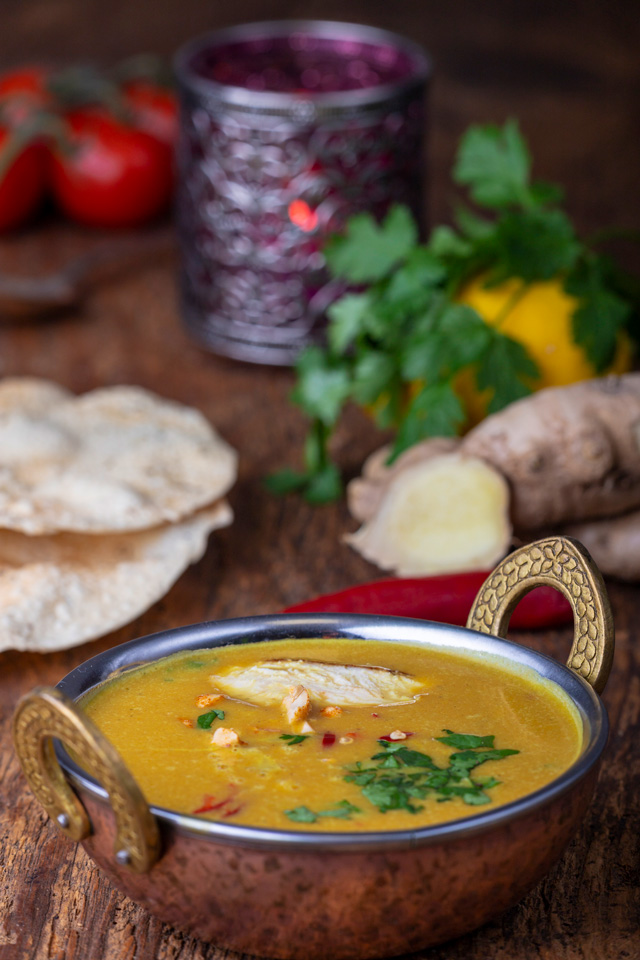
Mulligatawny was a British import to India.
The “Cooking On The Go” column in January 2019, “Winter Warm-You-Ups” (page 90) contained a recipe for mulligatawny soup on page 91. The introductory information, while not technically inaccurate, is misleading due to the inference of its lack of sufficient detail. (By the way, also, there is no “e” in mulligatawny.)
Traditional Indian cuisines do not include soup. Mulligatawny soup was developed by Indian chefs during the British Raj specifically to appease the British desire for soup. From there the British took the recipe home, but the inference that it is an Indian dish is misleading. It was a British import customized in India and then returned to the UK.
John Richards, F365753
West Richland, Washington
Janet Groene’s reply: Mr. Richards, thank you so much for your comments about mulligatawny. It’s a fun recipe, isn’t it?
Yes, I knew about how Indian chefs had to come up with something to satisfy the British liking for soup, even in a hot climate. I lived in the Bahamas for long periods when it was under the Union Jack and found it interesting that menus included soup despite the heat and humidity. Throughout the British Caribbean, there was always soup. Remember the story about the Queen visiting Noel Coward in Jamaica and all he had to offer her was canned tomato soup? There’ll always be an England! I wish you happy “Family RVing” and RV eating!
Editor’s note: John Richards shared his authentic Jamaican recipes for Jerk Chicken and Jamaican Peas and Rice with Janet. His recipes follow:
Authentic Jamaican Jerk Chicken
Cooked using a wood pellet grill, regular grill, or oven. This is the best way to make authentic Jamaican jerk chicken without a real Jamaican pimento and sweetwood jerk grill setup. Sweetwood is the bay laurel on which bay leaves grow. Allspice comes from the pimento tree, not to be confused with pimientos, which are small sweet peppers. The small allspice berries are picked green and dried to hard peppercorn-like appearance.
This recipe serves 4 to 12 or more, depending on appetite. Scale up or down depending on the number of people being served. Leftovers refrigerate or freeze well.
Use 1 or 2 chickens weighing 3 or 4 pounds each, depending on your need. Break down into quarters or breast/wing/thigh/leg portions, keeping the skin on. You may also use chicken thighs for equal-sized portions that cook evenly.
Jerk Marinade/Sauce
2 to 6 Scotch bonnet peppers (or 6 habanero peppers, or a double amount of small Jalapenos).
Use rubber gloves to halve peppers, and remove the seeds and most of the looser membranes. If you are averse to spicy food, start with only one or two peppers and test your preference.
2 tablespoons ground thyme
2 tablespoons ground allspice
8 cloves garlic
1 medium onion
1 large bunch green onions, including the green parts, chopped fine
¼ cup brown sugar
1 teaspoon sea salt or Himalayan Pink Salt
2 teaspoons freshly ground black pepper
1 tablespoon soy sauce
Juice of one lime
1 shot of regular dark rum (not flavored or spiced)*
Optional marinade ingredients (recommended)
Grated zest of the lime
¼ teaspoon each of ground ginger, cinnamon, and cloves (1/2 teaspoon if you are feeling adventurous), and possibly ¼ teaspoon ground nutmeg.
*Some people use fruit juice, such as orange, pineapple, or mango, instead of rum and/or lime, but either way there will not be any alcohol left after cooking.
Place all marinade/jerk ingredients in a blender (or a good food processor) and blend until smooth. This is a “wet rub” marinade; do not dilute it.
Place the chicken pieces in a large bowl, pour on the jerk marinade, and rub well into the chicken. Use rubber gloves or you might regret it later. Place the chicken and marinade in plastic zip-top bags or covered containers and let it rest in the refrigerator at least four hours or up to two days. Turn the chicken occasionally to ensure even distribution.
After you put the chicken in to cook, boil any leftover marinade in a small saucepan for at least 5 minutes and keep hot if you want extra for basting, serving, or dipping. Add a little beer if necessary for your desired consistency. If you prefer, you can make some fresh marinade to use for the jerk sauce.
Cooking
Set aside 2 to 3 tablespoons of whole allspice berries if using a grill. For the pellet grill, they should preferably be lightly cracked, but not ground. For use with a regular grill, soak the whole berries as noted.
Wood pellet grill (such as a Traeger): Prepare your grill by emptying the pellet hopper all the way down to the auger. Use lightly flavored pellets such as apple or cherry — a mix of 25 percent mesquite to 75 percent cherry, or the Traeger blend. Gradually start to refill the hopper, lightly sprinkling the cracked allspice berries in with the pellets immediately above the hopper. This will give as close to authentic pimento wood smoke flavor as you can get. Do not sprinkle in the allspice berries too heavily as they must have time to completely burn with the pellets. Aim for about 30 minutes of pellet burn time with the allspice.
Fire up the pellet grill as usual. After you close the lid, set the temperature for 350 degrees. Wait until the temperature gets to 160; by this time the allspice berries will be working through the auger and provide smoke as the temperature rises. Remove the chicken pieces from the marinade and place directly on the grill, skin side up. Do not wipe or rinse off any of the jerk marinade.
Cook until done, turning at least once. Use an instant-read digital thermometer probe if possible. This will take approximately 40 to 45 minutes for quarters or thighs after reaching 350 degrees (less for portioned wings, legs, and breasts). Keep an eye on it. You could use 325 degrees and cook longer, but don’t let breasts get dry. Baste once or twice with a little of the remaining marinade.
Regular grill: Soak the whole allspice berries in warm water for an hour. For charcoal, you can sprinkle the soaked allspice berries right on the hot coals. For propane, put them in a smoker tray if you have one, or make one from aluminum foil and place it on the metal drip shield plates. Use medium heat at first and keep the chicken moving and turning to prevent burning until it’s done.
Oven: Cook covered in pans or trays in a single layer, low and slow. Uncover and raise the temperature to 375-400 degrees for the last 10 minutes to brown. Cooking in the oven does not render the fat off like a grill, so use a rack or even lightly crumpled aluminum foil to raise the chicken off the bottom of the pan. Oven cooking will not impart the smoke flavor, so using the allspice berries is out; do not put regular smoke flavoring in the marinade.
Serving
After the chicken is done, traditionally you would chop the chicken into smaller pieces for serving and easier eating with the fingers, but this is not necessary. Serve with salad, Jamaican peas and rice (see recipe), or whatever you choose. Plain artisan-style bread goes well, too.
Notes
Every Jamaican cook has his or her own jerk recipe. Everything listed here except the optional items are generally regarded as basic Jamaican jerk ingredients. You can make it your own by making changes. Some people take out the essential Jamaican recipe’s thyme and add fruit juice, cayenne pepper, etc., but not me!
This is also good for smoking/slow roasting pork for jerk pork. It is also said to be good for marinating and frying whole fish.
Jamaican Peas (Beans) And Rice
This recipe is an accompaniment to Authentic Jamaican Jerk Chicken. It yields about 6 cups, depending on the type of rice used. Scale up or down for the appropriate number of servings.
1 cup dry red kidney beans
4 cups unsweetened coconut milk (not coconut cream) OR 2 cups coconut milk plus 2 cups plain water, depending on how much you like the slight coconut flavor.
3 cloves garlic, finely chopped or pressed
8 finely chopped whole green onions
3 6-inch sprigs fresh whole thyme, equivalent fresh leaves, or 1 teaspoon dried thyme leaves
3 cups uncooked white rice
1 whole Scotch bonnet pepper (use Habanero if Scotch bonnet is not available), left whole.
2 ½ cups water
1 teaspoon salt (Kosher or sea salt preferred)
1 tablespoon white sugar (you could omit this or use brown sugar according to your personal taste).
Rinse and soak the beans overnight using enough water to cover them by at least an inch. Drain and combine with the coconut milk in a medium saucepan. Bring to a boil and simmer, covered, until just tender but not mushy — about 1 hour. Add remaining ingredients, return to a boil, and simmer, covered, until the rice absorbs all the liquid — about 15 to 20 minutes. Do not allow ingredients to stick or burn.
If the rice is not cooked and tender before the liquid is absorbed, just add a little water.
Remove the whole pepper and the thyme stems and serve.
This is a staple in Jamaica and throughout the Caribbean. It goes great with jerk chicken or pork, fish, and other spicy Jamaican or Caribbean dishes.