
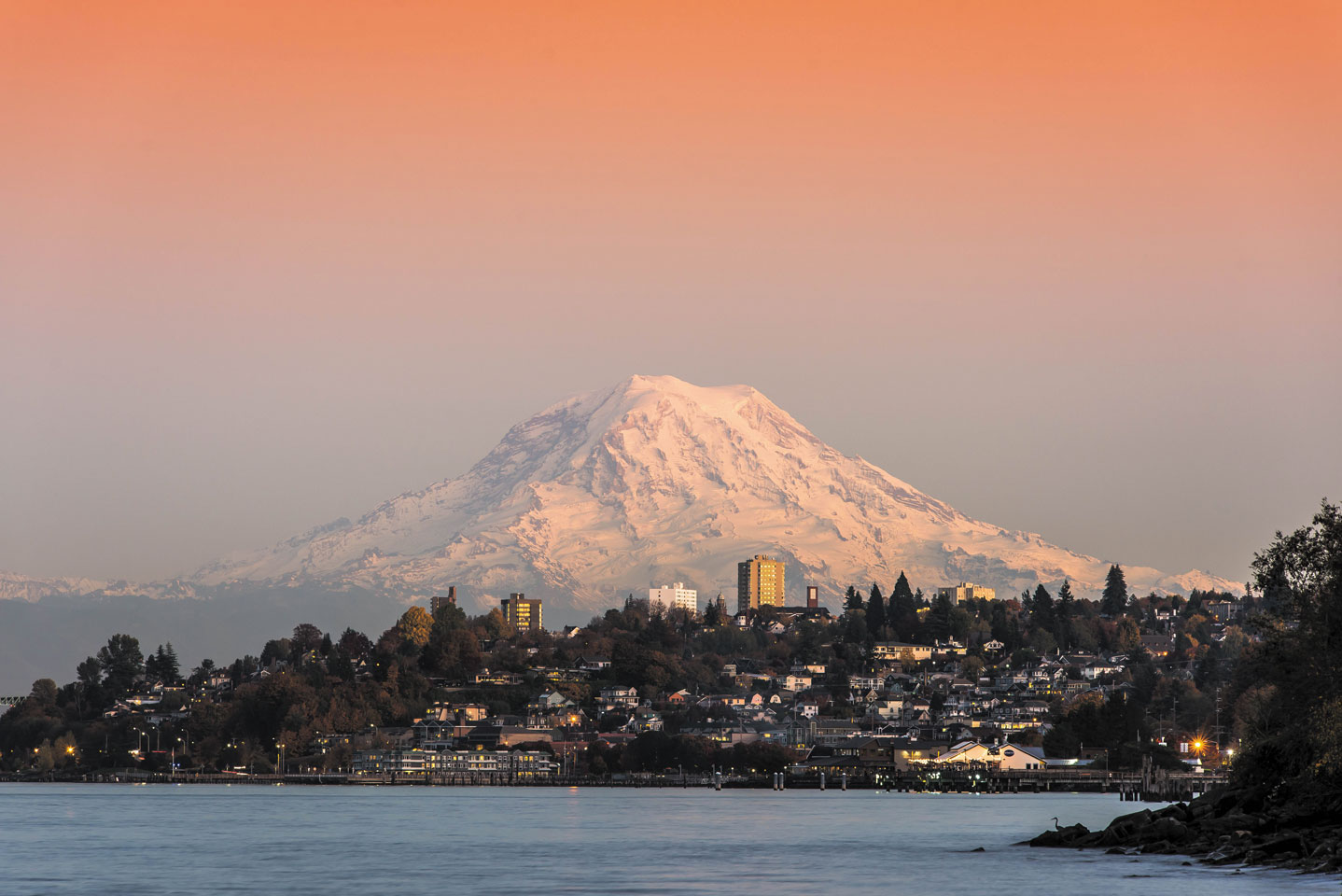
Washington’s South Puget Sound sets the stage for waterfront attractions and outstanding museums.
By Anna Lee Braunstein
September 2019
Tacoma, Washington, has been called “a dusty old jewel in the south Puget Sound” by songwriter Neko Case. But that was almost 20 years ago. Today the dust is off, and the shine is on. Tacoma’s more famous brother 30 miles north, Seattle, is costly and crowded, so now Tacoma is having its day. Its location along Puget Sound and its natural attractions and museums give it great beauty. The city is a first-rate destination for RVers.
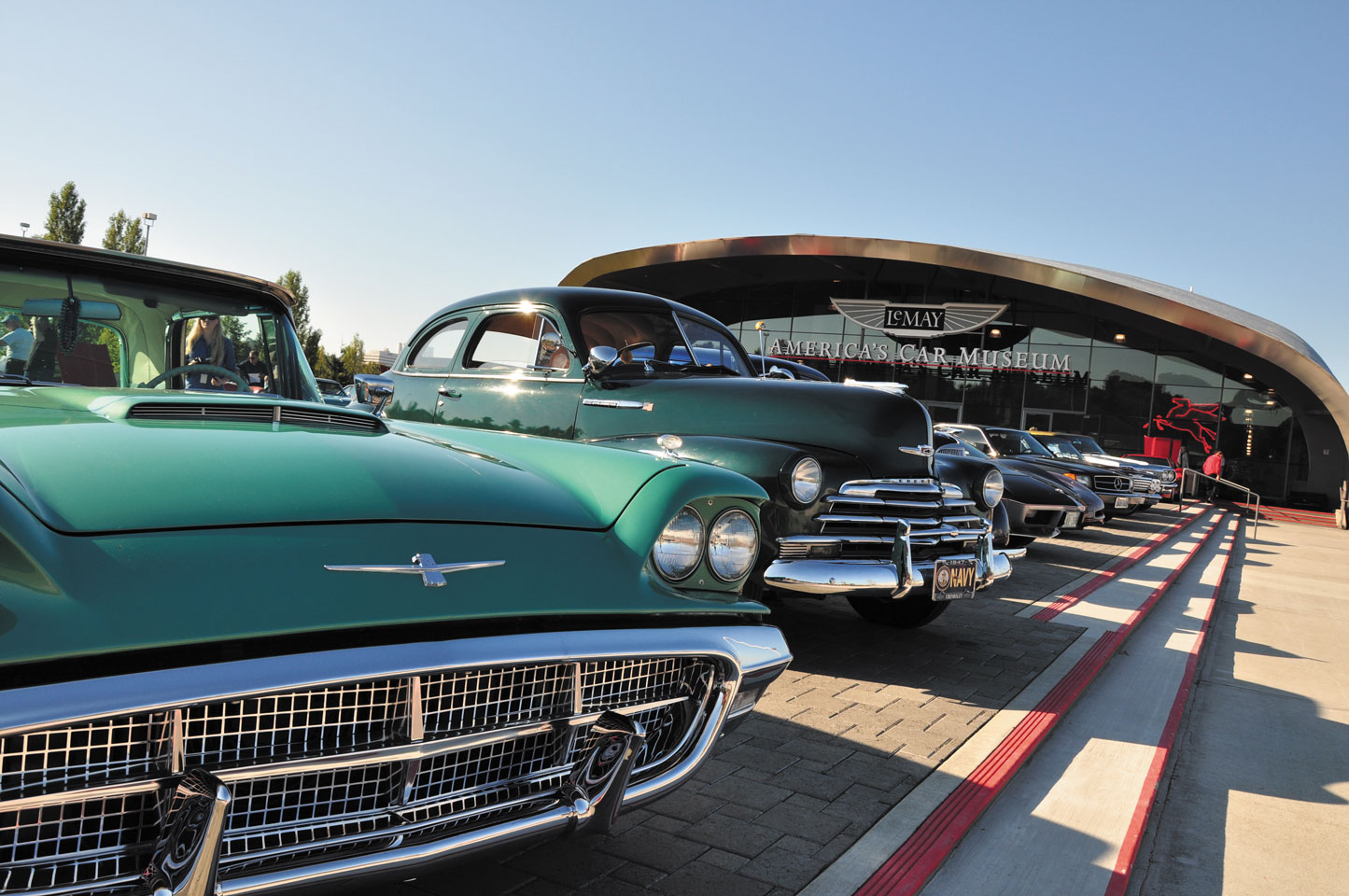
This “cruise-in” includes just a few of the many amazing autos displayed at LeMay — America’s Car Museum.
Use a towed or tow vehicle to get into the city, and you’ll find visitor incentives. The Tacoma Museum Pass offers discounts to six museums, five of which are detailed in this article (the sixth is a children’s museum). The Mountain City Sea Attraction Pass provides discounted access to attractions that span from Mount Rainier to the Tacoma waterfront. Link Light Rail provides free transportation to stops in the city; plus, parking in the garage at the Link’s Tacoma Dome Station is free. Get a local map and visitor guide, also free, from the Travel Tacoma folks (800-272-2662; www.traveltacoma.com).
Parks Outside
Tacoma is lovely on cool and cloudy days, and not to be missed on sunny days. A walk, drive, or bicycle ride along the 3-mile waterfront on Puget Sound’s Commencement Bay offers a variety of places to stop and enjoy the views.
Puget Sound water is generally too cold for swimming and not wavy enough for much surfing, but that doesn’t mean you can’t visit a beach or rent a kayak or paddleboard. In addition, several highly rated restaurants are along the waterfront, many specializing in fish caught fresh right out of the sound.
Monuments along the waterfront pay respect to the history of the area. Chinese Reconciliation Park is part apology and part tribute to peace today. Anti-Chinese sentiment was very strong throughout the American West at the end of the 19th century. Tacoma was no exception. In 1885, hundreds of Chinese were forced to flee town before their homes were burned to the ground.
The main features of the park are the Chinese pavilion, Fuzhou Ting, a gift from Fuzhou, China, Tacoma’s sister city, as well as an ornate bridge overlooking the bay.
From this park, a walking path leads northward onto Ruston Way, a paved area along Commencement Bay. This pedestrian-only zone shows a quirky sense of humor. The famous Waterwalk Tile Mosaics include large murals of water creatures. Whimsical waterfowl “fly” above.
Also along the waterside trail is a life-size bronze sculpture honoring Tacoma’s fallen firefighters, and nearby is a small remnant of the World Trade Center. Walk around the 1929 Fireboat No. 1, a National Historic Landmark, now dry-docked for posterity.
Point Defiance, a peninsula jutting into Puget Sound, is a destination for all ages. Its name dates to the 1840s when nautical surveyor Charles Wilkes wrote that “the Narrows, if strongly fortified, would bid defiance to any attack.” Fortunately, no attacks occurred, but the name Point Defiance stuck.
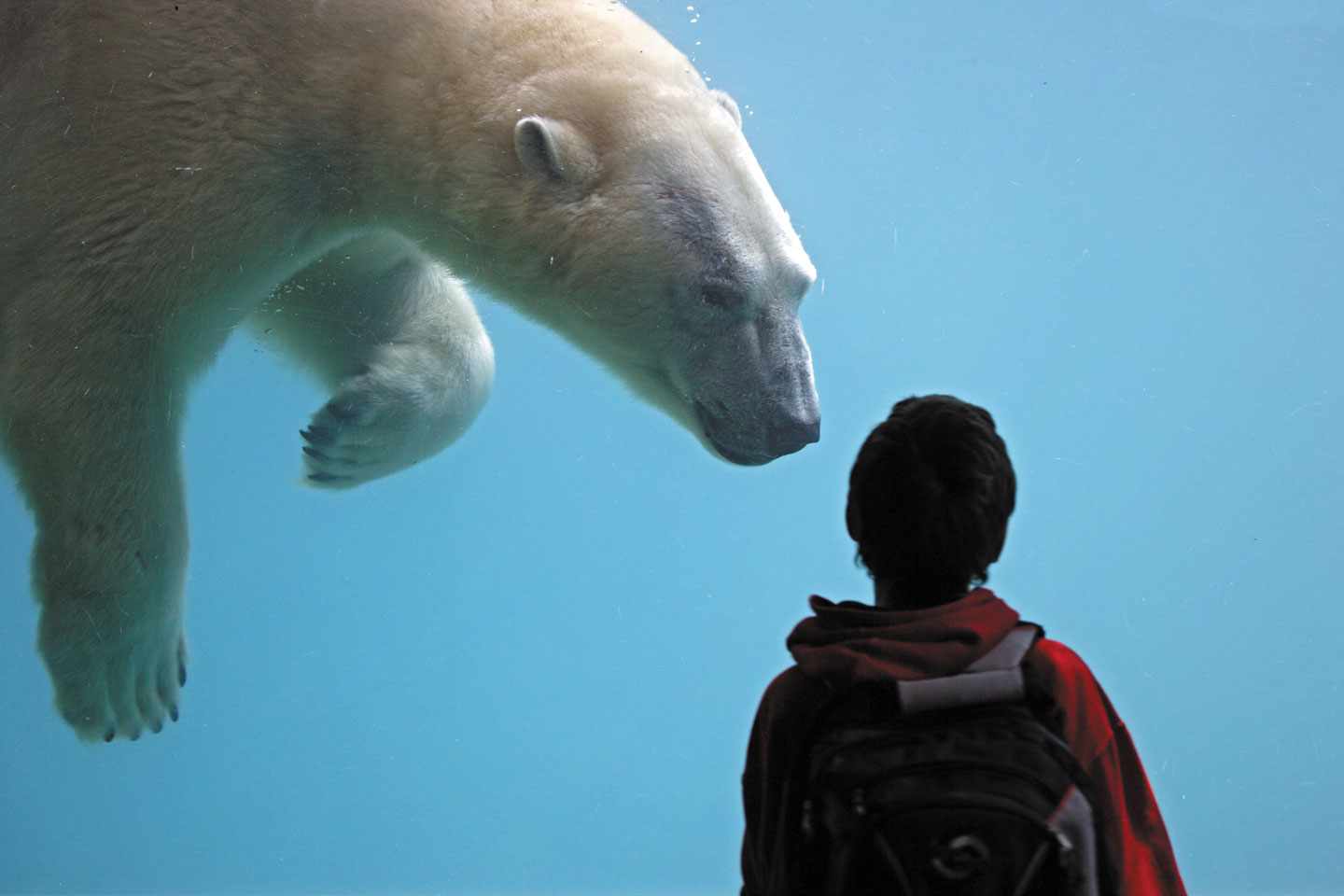
A polar bear and a human are separated only by glass at the Point Defiance Zoo & Aquarium. The collection is among several points of interest at Point Defiance Park.
The Point Defiance Zoo & Aquarium bids visitors to spend a day or keep coming back for new adventures. Habitats range from the Arctic to the Antarctic, yet the place is small enough for visitors to get well acquainted with the animals. In the Pacific Seas Aquarium, which opened in 2018, you can touch creatures in the tanks, dive with sharks, and ride a camel. A variety of talks and opportunities to watch the animals being fed are scheduled throughout the day.
Point Defiance also has miles of wooded trails, paved and gravel, that wind through colorful gardens. The trails present amazing views and provide a great workout. Visitors can learn about birds, slugs, plants, and more on ranger-led walks and talks. A newer area at Point Defiance is dedicated to native son Frank Herbert, writer of the Dune series of science fiction books. A new addition is Wilson Way, a 605-foot-long pedestrian overpass that connects the Ruston Way Waterfront to Point Defiance Park, forming a 7-mile woods-to-waterfront trail. From Wilson Way, you can take the stairs down to the waterfront, or a series of slides reminiscent of the Chutes and Ladders board game.
In a region with frequent rain and fertile soil, visitors can expect to see lush plant life. Gardens at Point Defiance Park include a native garden with a waterfall, plus areas dedicated specifically to irises, rhododendrons, herbs, roses, and other floral beauties. The Japanese Garden, with its pagoda, was built in 1914. Its teahouse recently was redesigned to exemplify a more authentic Japanese style.
Yet another point of interest at Point Defiance is a reminder of area history. In 1883 Hudson’s Bay Company set up a trading center south of present-day Tacoma called Fort Nisqually. This non-military enterprise was a hub for commerce among natives and settlers around the region. After the 49th parallel was established as the border between the United States and Canada, the fort lost its economic value, and it closed in 1869.
Preservationists eventually saved the last two remaining buildings and moved them to Point Defiance Park. Other structures known to be at the fort were reconstructed. Today the compound functions as Fort Nisqually Living History Museum. After you visit the welcome center, begin a tour of the grounds. In some places, docents dressed in period clothing demonstrate tasks such as blacksmithing. Hands-on activities and special events enhance understanding of 19th-century life.
Besides huge Point Defiance Park, the city has many other parks. Try the Victorian-style W.W. Seymour Botanical Conservatory, located in Wright Park. The conservatory was built in 1908. Exotic plants from the Americas, Africa, Asia, and dozens of tropical islands are on display. All four seasons are celebrated with grand floral exhibits. Wright Park also has huge trees that are identified with the dates they were planted — some as early as the late 1800s.
For a pleasant stroll, take a walk around Snake Lake at The Tacoma Nature Center. You might chance upon woodpeckers, jays, and towhees. Residents of the lake include turtles and frogs. Keep an eye out for a fox or a garter snake.
To learn more about Tacoma’s parks, go to www.metroparkstacoma.org.
Museums Inside
Hand-created artistry is Tacoma’s other call to fame. In the early 1990s, Tacoma native Dale Chihuly, known around the world for his glass sculptures and other works, and Phil Phibbs, retired president of the University of Puget Sound, Chihuly’s alma mater, conceived the idea of a glass museum. It coincided with the city’s need to revitalize its waterfront area and took root.
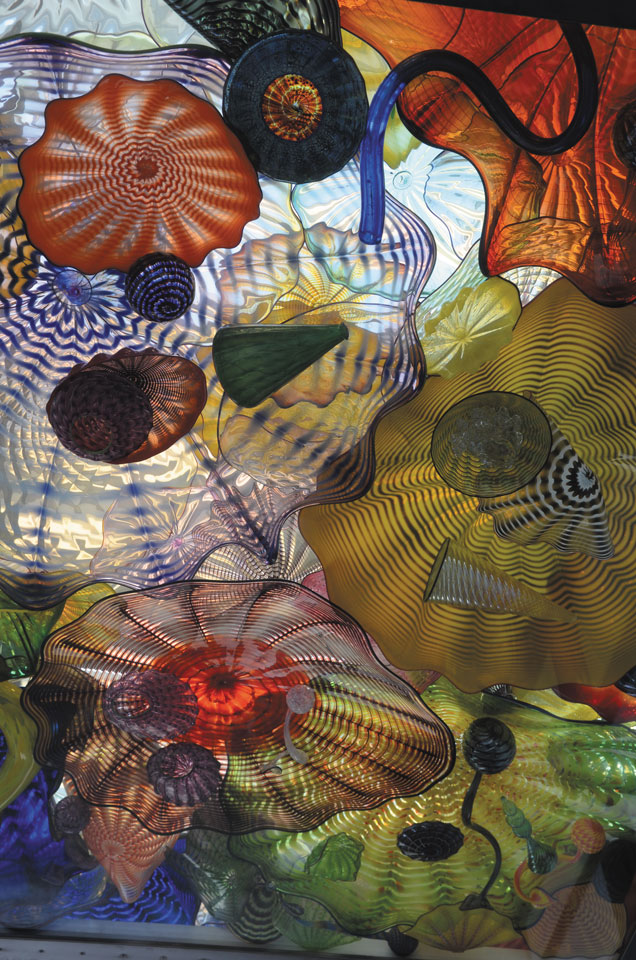
The ceiling of the Seaform Pavilion, located on the Chihuly Bridge of Glass, contains more than 2,000 glass objects.
The $48 million Museum of Glass opened in 2002. It houses works by makers of glass art and various other media, and includes several works by Chihuly. Directly inside the museum’s pointy dome is the auditorium for the Hot Shop, where visitors sit and observe artists working with the beautiful molten substance. It’s like watching a ballet enhanced with bright, shiny color. Outside the museum, the Main Plaza showcases art with Martin Blank’s Fluent Steps and Howard Ben Tre’s Water Forest, each merging water and glass. Farther along is the amazing Chihuly Bridge of Glass, which connects the museum to the city center. Stroll along the 500-foot bridge to view its three distinct installations. Look up, right, and left, as you are surrounded by 2,500 multicolor glass sculptures of flowers, stems, vases, bowls, and so much intense color.
At the end of the bridge is the former Union Station, now a U.S. district courthouse. Its massive interior inspired Chihuly to make larger pieces — much larger. The Monarch Window overlooks the Bridge of Glass with a spectacular view of Mount Rainier.
Details about the many pieces of glass art around the city can be gleaned by using a free mobile app called STQRY, available for iOS and Android. Use it as you walk about the downtown district.
An opportunity to learn about Tacoma history exists at the Washington State History Museum. A walk through the Great Hall of Washington History starts 13,500 years ago with the native peoples’ culture, and continues through the natural history and human development of the area. The History Lab includes hands-on opportunities for would-be history detectives.
The museum boasts the largest permanent model railroad exhibit in the state, which gets all decked out each Christmas season as the Model Train Festival arrives. Throughout the year, on the first Saturday of each month, the Puget Sound Model Railroad Engineers arrive and let visitors watch them work and ask questions.
The Tacoma Art Museum, called TAM, emphasizes art of the Northwest. So, the world’s largest retrospective of Dale Chihuly is on public display there, along with work by other glass artists. Studio art jewelry, primarily by Northwest artists, gleams and glitters. A new exhibit wing opened in 2019, making TAM the second largest collector of studio art glass in the United States (the Corning Museum of Glass in New York is the first), with works by Chihuly, Paul Marioni, Debora Moore, and other studio glass artists.
Tacoma is a water-focused city. Boats are everywhere. The Foss Waterway Seaport Museum shows and tells the story of water here from the early Puyallup natives to today. Exhibits include canoes, vintage scuba gear, fishing boats, and steam ferries. Volunteers in the Heritage Boat Shop continue the art of nautical construction.
While boats are vital in local transportation, let’s not forget the car. Harold “Lucky” LeMay, a car devotee, began collecting them in the 1960s. He amassed what the 1997 Guinness Book of World Records called the world’s “Largest Antique & Vintage Vehicle Collection.”
It is so big, it’s in two locations. Each has stayed intact since Harold’s passing in 2000. The first place to visit is the LeMay Collections at Marymount, which opened in 1991 on the beautiful grounds of a historical former military school for boys. It has more than 1,500 vehicles, including trucks, buses, and motorcycles, plus related memorabilia.
The other location opened in 2012: LeMay — America’s Car Museum. It is located near Wright Park and the Tacoma Dome. In addition to historical, beautiful cars, the museum invites visitors to see a likeness of Lucky’s Garage; watch auto-related films inside State Farm Theater; check out a NASCAR exhibit and a salute to Route 66; and more. Once a month, from May through August, visitors can ride around a track in a car from the collection.
Between all the art glass, the cars, and the Puget Sound views, Tacoma has plenty to see — inside and out! Add it to your Western itinerary.
Further Info
Travel Tacoma & Pierce County
1516 Commerce St.
Tacoma, WA 98402
(800) 272-2662
(253) 284-3254
www.traveltacoma.com
Area Campgrounds
This is not a complete list, so check your campground app or directory, or FMCA’s RV Marketplace listings at FMCA.com and in the January directory issue of Family RVing.
Dash Point State Park
5700 S.W. Dash Point Road
Federal Way, WA 98023
(253) 661-4955
Reservations: (888) 226-7688
www.parks.state.wa.us/496/Dash-Point
Riverview RV Park
1033 E. Main St.
Puyallup, WA 98372
(253) 445-2697
www.riverviewcourtrvpark.com
Saltwater State Park
25205 Eighth Place S.
Des Moines, WA 98198
(253) 661-4956
Reservations: (888) 226-7688
www.parks.state.wa.us/578/saltwater
Seattle/Tacoma KOA
5801 S. 212th St.
Kent, WA 98032
(253) 872-8652
Reservations: (800) 562-1892
www.koa.com/campgrounds/seattle
South Prairie Creek RV Park
606 State Route 162 E.
South Prairie, WA 98385
(360) 897-8465
www.southprairiecreekrvpark.com
Washington State Fair
110 Ninth Ave. S.W.
Puyallup, WA 98371
(253) 845-1771
www.thefair.com/plan-your-trip/rv-parking