
Ammonia Affliction
We’re planning to buy a Type C motorhome and travel with our small dogs. If we leave them in the RV and there is an ammonia leak, could the dogs be harmed?
Frank Sanchez
Via email
The short answer is yes. Ammonia leaking from an absorption refrigerator is unhealthy for both pets and people. When ammonia enters the body via breathing, it reacts with water in the body to create ammonium hydroxide. It is very corrosive and damages cells in the body, virtually on contact. Prolonged exposure can cause olfactory fatigue or simple adaptation, making its presence difficult to detect. In other words, we can become acclimated to the odor to the point of not even smelling it over time. Asphyxiation can occur in a poorly ventilated RV, for example.
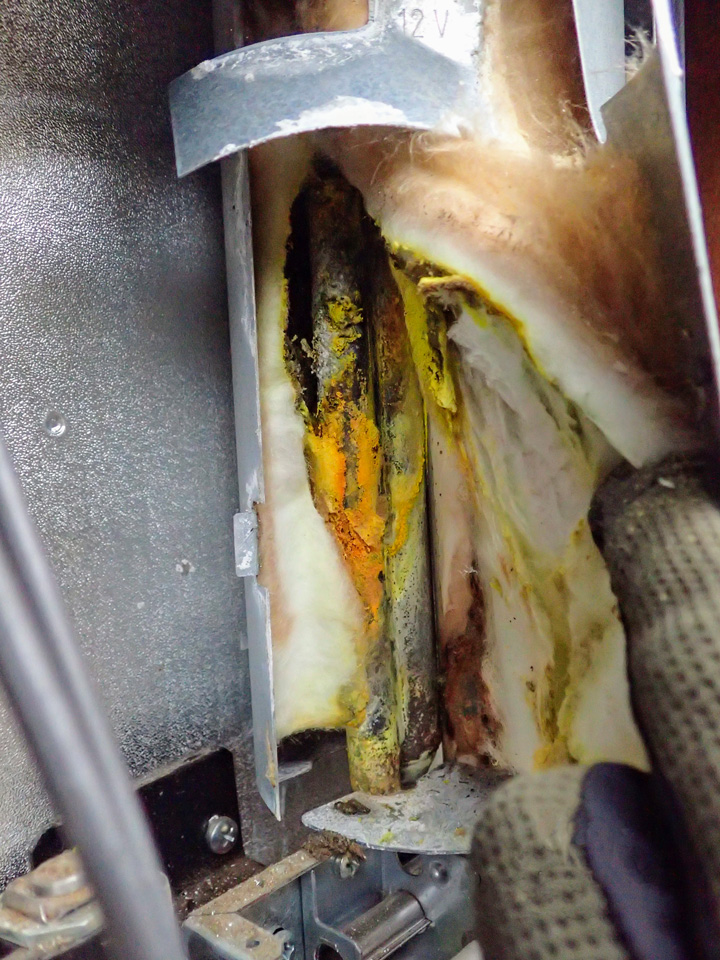
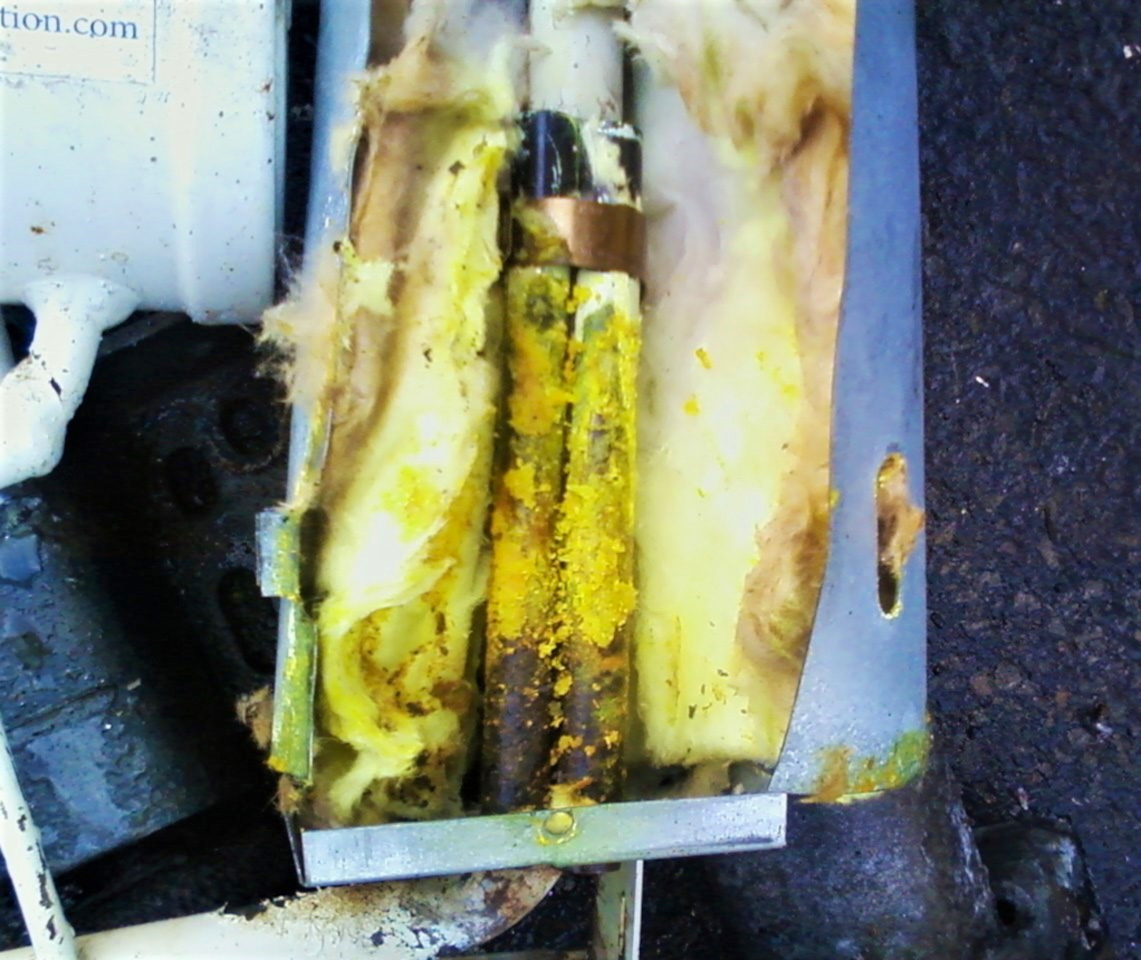
A strong ammonia odor and the presence of a yellow residue indicate an ammonia leak in the exposed tubing of a refrigerator cooling unit.
Now all that said, it is highly unlikely the cooling unit on any absorption refrigerator in an RV will suffer a breach. More robust construction of some cooling cores can even prevent moisture-induced rust from forming in the first place. It certainly should not be a concern when choosing a new RV of any type.
Regular annual maintenance practices — including a detailed inspection, cleaning, and service by a certified RV technician — can alert you to operational issues with the refrigerator. Once each month during use, it’s a good idea to open the access panel on the outside of the RV and simply look for yellow-like residue as shown in the accompanying photos. Use a flashlight to scan up the back of the cooling unit as far as you can see.
It’s likely your nose would first detect a cooling unit breach. If ever you detect the odor of ammonia, even without the presence of the yellow residue, immediately turn off the refrigerator, open all the windows and doors to let the RV vent and breathe, and stay out of the RV for at least four hours. Even the smallest whiff of ammonia indicates a faulty cooling unit, and that mandates a replacement (or perhaps a new refrigerator altogether). Keep in mind, a leak is more likely to appear in a section of the tubing buried inside the insulating foam pack, and will not readily be visible.
A modern absorption refrigerator cooling unit can be replaced if faulty, but if it’s an older unit, it might be wiser to replace the entire refrigerator, though only you can decide that. Today’s new units are more advanced and have much better insulation than, say, 10 to 15 years ago. In my opinion, the chance of a cooling unit breach is minuscule. But do not forget the importance of regular maintenance. Remember, if you see that telltale yellow residue or smell the odor of ammonia at all, the cooling unit has failed.
Inverter Interruption
Two electrical outlets are dedicated to our TVs in the front and rear of our motorhome. We suddenly lost power to those outlets. I thought it was a fuse, so I checked everywhere and I could not find fuses that were burned out or a breaker that interrupted the circuit. I then ran an extension cord to other receptacles and we were able to watch TV. Although inconvenient, it worked.
Now these two particular plugs have shore power and also are hooked up to an inverter so we can watch TV while we dry camp. They are the only two plugs in the RV that are connected to the inverter. When I push the inverter button, I can watch the TV. Once I turn off the inverter, there is no power to the receptacle. I am trying to determine whether a relay switch or something else controls the power to those two particular receptacles, yet does not interfere with any other receptacle or any other appliance in the motorhome.
Gerald Rutch, F354381
Lancaster, California
From your description of the symptoms, it appears your inverter contains its own transfer switch that is failing to switch back to shore power. It is quite common when there are only a couple of receptacles powered by the inverter. To be 100 percent sure, I’d need the brand and model number of your inverter.
Before contacting a pro technician, I’d give the inverter a couple of gentle smacks with a rubber mallet. I realize that doesn’t sound very professional, but if the inverter suddenly switches back to shore power, you can relay that info to the shop. If the contacts in the transfer switch are sticking now, chances are they will stick again, so the rubber mallet trick is only designed to determine; it’s not a cure. Do not open the inverter. In some cases, that can void the warranty (if still in effect). But that information can certainly help the diagnosing tech.
Measuring Trailer Miles
The owners manual of my fifth-wheel suggests that every so many miles I check and adjust the electric brakes, pack the bearings, and do some maintenance. But I use two different vehicles to tow the RV, and I can’t accurately tell how many miles it has traveled. I’ve seen big-rig trucks and semi-trailers outfitted with a device that counts miles, but do they make one for travel trailers and fifth-wheels? Just want to be diligent.
Ulli Booth
Gainesville, Georgia
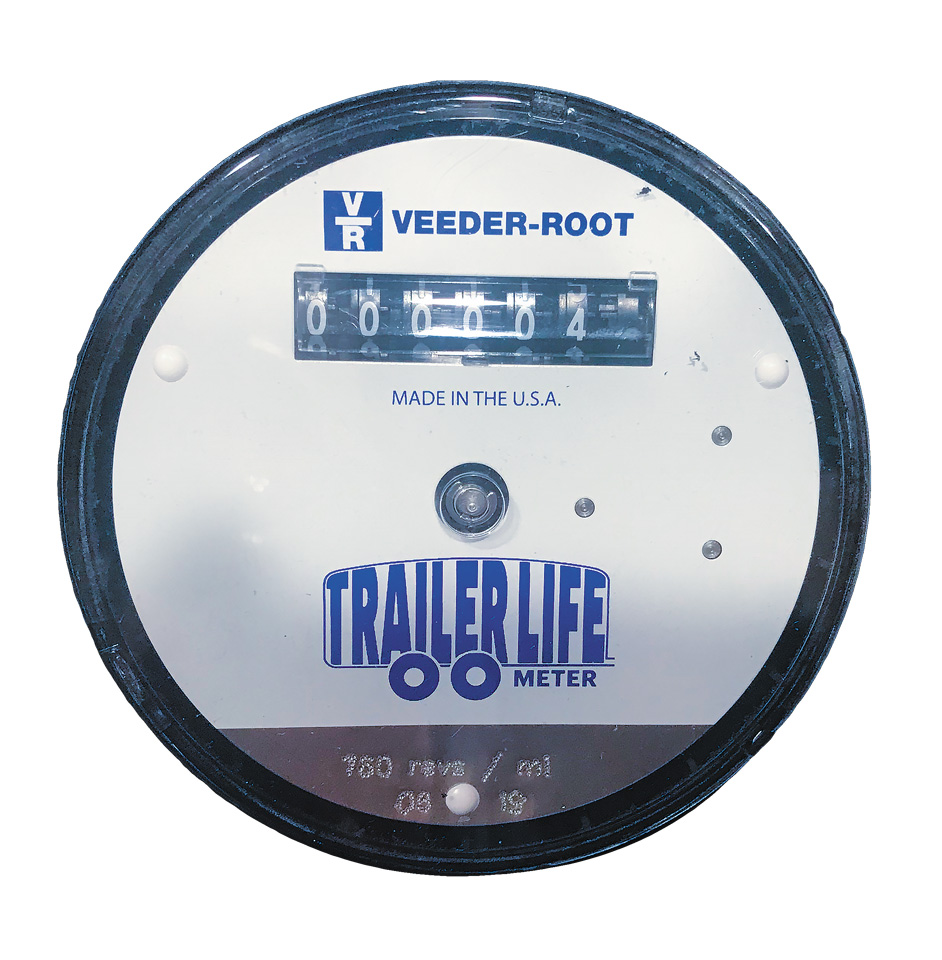
The Trailer Life Meter measures the miles traveled by a towable RV.
You are in luck. I just ran across a product manufactured by Veeder-Root. The Trailer Life Meter is a “hubodometer” that mounts directly to one of the trailer’s wheel assemblies. By using a fixed ratio determined by the size of the tire, it counts revolutions and measures miles traveled. It even counts mileage when backing up. It displays the mileage in six digits. It’s lightweight, so it will not affect the balance of that wheel and tire.
I am testing the product now and will report back after next spring’s travel season. But from the design and application, it appears to be the very thing you are seeking. Some RV distributors are stocking the Trailer Life Meter, so check with your local RV accessory store or visit www.trailerlifemeter.com.