
Know the warning signs so you can take quick action that may save a life.
By Randy Davis, F471978
August 2020
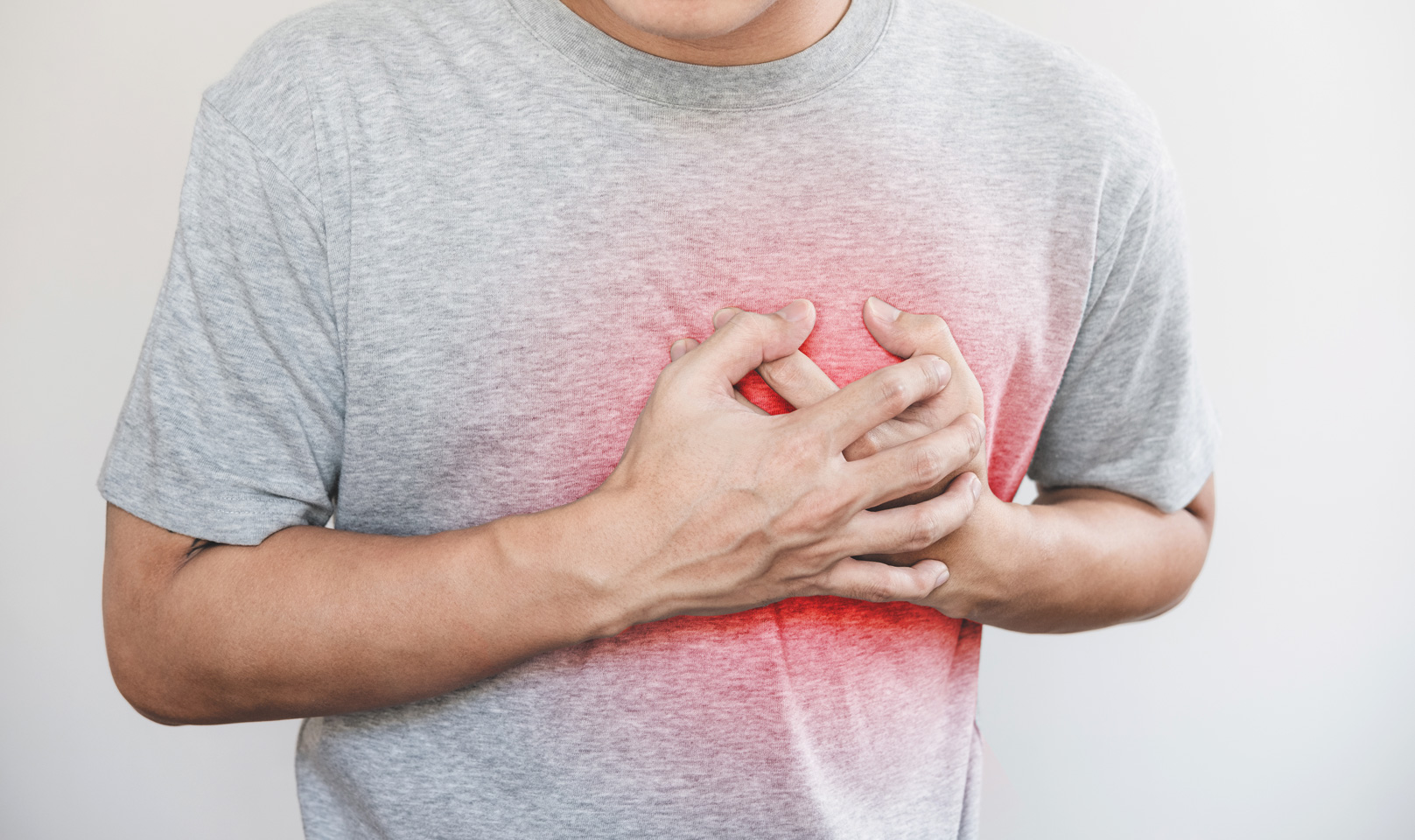
You are driving down the road or just sitting outside your RV when you feel a pressure in your chest that does not go away. This could be a heart attack that may rapidly lead to a life-or-death situation. You must recognize that this is serious and know what to do. And it’s why you should know your location at all times. You can’t get help if help can’t find you.
Many people confuse a heart attack with cardiac arrest and think of them as the same thing. Cardiac arrest is when your heart is unable to pump blood throughout the body. The victim is unconscious, not breathing, and has no pulse. You must start CPR immediately.
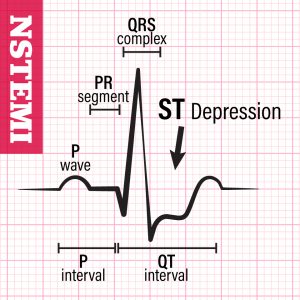
EKG waveforms associated with a less serious NSTEMI heart attack , in which coronary artery blockages are partial or temporary.
A heart attack is a result of a blockage or clot in one or more arteries that supply oxygen and nutrients to the heart muscle. A heart attack is not cardiac arrest, although it could lead to cardiac arrest. The important thing is that when there is a blockage in an artery, the muscle tissue it supplies will die. Let me repeat that. When you are having a heart attack, heart muscle is dying! The longer you wait to restore circulation, the more heart muscle will die. Time is muscle!
Symptoms. Classic symptoms include sudden onset of chest discomfort that does not go away with rest. It may feel like a dull pain or pressure. The pain or pressure may radiate to an arm, back, neck, or jaw. It may be accompanied by shortness of breath, cold sweat, weakness, anxiety, nausea, and pale or gray skin. The patient looks bad. Women, elderly people, or those with diabetes (or combinations thereof) may not exhibit classic symptoms. Instead, they may have a sudden onset of just weakness or shortness of breath. Symptoms may start when a person is at rest without any exertion.
A person with these symptoms who is not allergic to aspirin should be given one 325 mg aspirin or two to four baby aspirin and should rest. It must be aspirin — not Tylenol (acetaminophen), Advil (ibuprofen), or other pain relievers. Keep yourself and the victim calm, call for Emergency Medical Services (EMS), and be prepared to start CPR if needed.
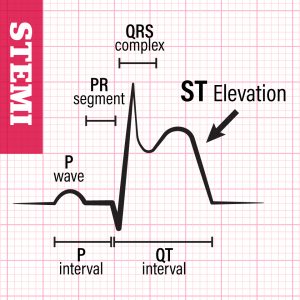
These EKG waveforms indicate a serious STEMI heart attack, in which a heart artery is totally blocked.
When EMS arrives, the crew will obtain vital signs and a multilead electrocardiogram (EKG). If you hear a paramedic say that a STEMI is noted on the EKG, that indicates a serious heart attack. A STEMI is an ST elevation in the EKG pattern, indicating a complete blockage of a major heart artery.
In such a case, the victim should be taken to a hospital with a staffed catheterization lab. There, a balloon will be inserted into the blocked artery to open it, and a stent — serving as a little scaffold — can be inserted to hold the artery open. This is the treatment recommended by the American Heart Association. Not all hospitals have this capability. The responding EMS personnel should know whether a local hospital does.
In short, when symptoms begin, get checked out. Do not delay, because that will allow more heart muscle to die. If it is indigestion, that will be revealed. If it is a heart attack, you will live.
Have a safe day!
Randall J. (Randy) Davis is a nationally registered paramedic licensed in Missouri and Kentucky. His EMS career has spanned more than 40 years, first as an EMT in 1979, then as a paramedic beginning in 1981. He has presented numerous life-support classes for the American Heart Association, the American Academy of Pediatrics, and other nationally accredited education programs.