
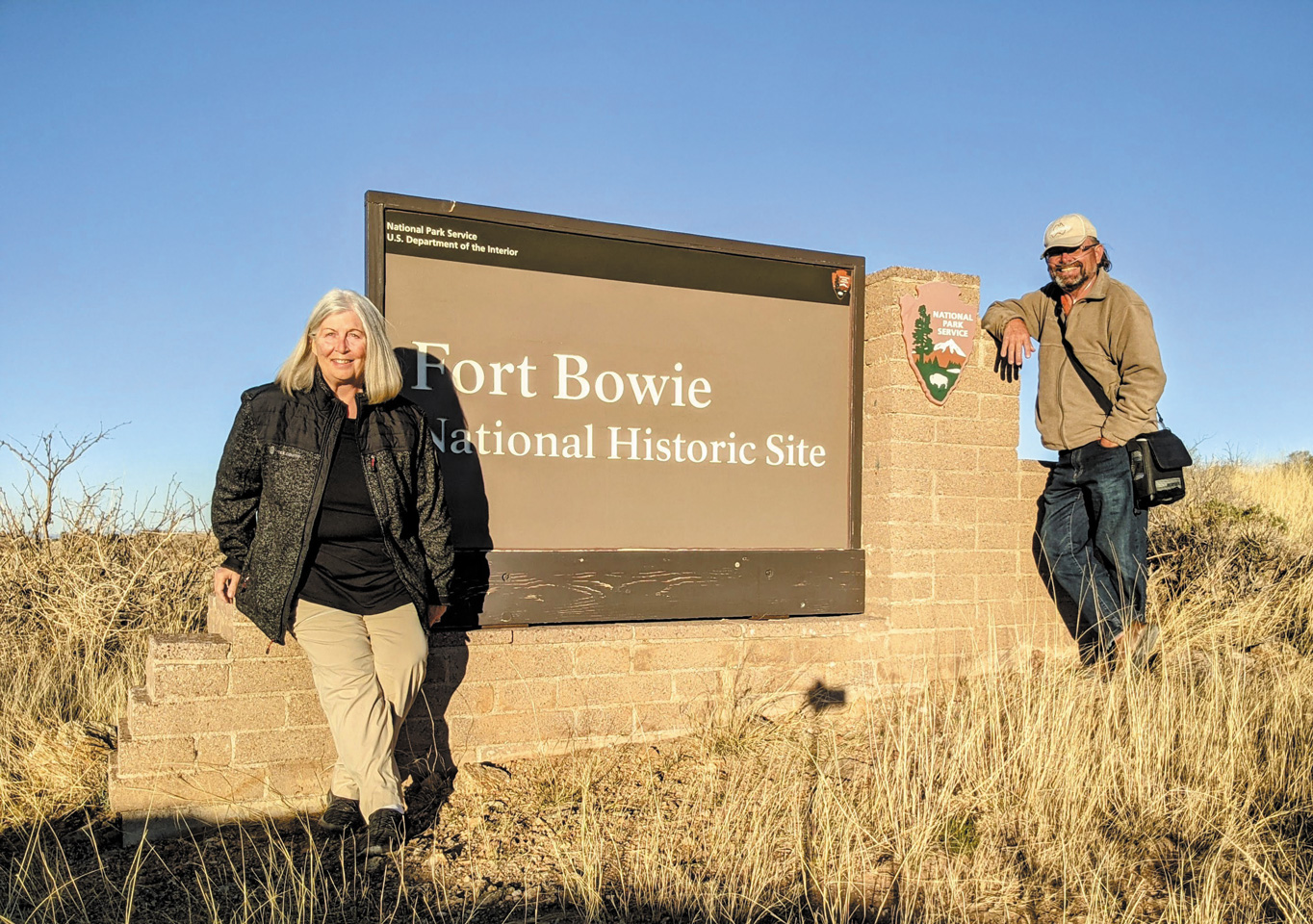
Planning a trip to some of the United States’ National Park Service facilities? An FMCA member with a passion for visiting these national treasures offers ideas to consider.
By Pat Jennette, F505807
July 2022
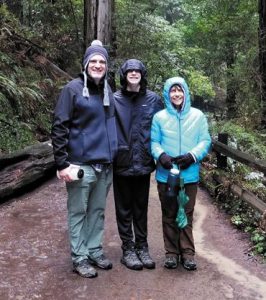
The Day-Moore Family
(Tom, Elliot, & Jennifer)
Muir Woods National Monument
RVers Jeanine Ging and Brian Wargo from Pennsylvania are teachers with a mission to visit as many national parks as possible with their children. Their daughter, Meadow, is named after Big Meadows in Virginia’s Shenandoah National Park. Their son, Theodore, is named after North Dakota’s Theodore Roosevelt National Park, since they share the same birthday. Planning a vacation means checking off places on their national park list.
Jennifer Moore and her family from California, members of the National Park Travelers Club, combined a trip to national park sites in San Francisco with a Christmas vacation.
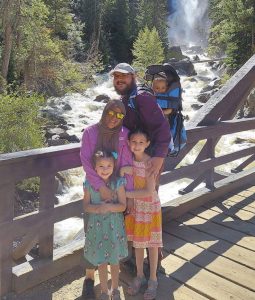
The Clayton Family
(late wife Samiah, husband Zebulin, & kids)
Retracing Zebulin’s childhood trips.
Missouri resident Zebulin Clayton and his family were inspired to visit national parks because his father took him and his brother on extensive road trips to the parks when Zebulin was a young boy.
As full-time RVers and national park aficionados, we share our passion for them with our family by including parks in our travels. Recent trips with our daughter, Andrea von Halle; her husband, Tony; and their sons, Cameron and Dylan, have included Grand Canyon, Zion, and Bryce national parks. You may have a similar reason to visit the national parks with your family.
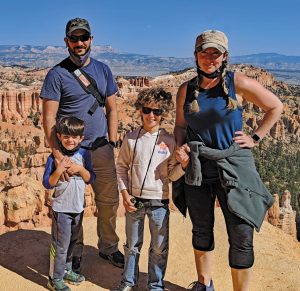
The von Halle Family
(Tony, Andrea, Cameron, & Dylan)
Bryce Canyon National Park
With 423 total National Park Service (NPS) sites in the United States and surrounding territories, numerous opportunities exist to flex the minds and muscles of everyone in the family.
Two National Park Service websites, www.nps.gov and www.findyourpark.com, offer excellent resources for planning a national park experience. When visiting NPS.gov, click the “Find a Park” tab, then choose the state. Each state displays a map and a list of every park site in that state. Both websites provide links to each national park that include information about what to see and do, where to stay in the park or nearby, how much time it takes to see places within the park, and more.
The official National Park Service app is another useful tool that provides many ways to explore each park. Some of the parks offer audio or pictorial tours. Others have driving maps, while others provide photos. The app is free and available for iOS and Android devices.
Is there a region or state you and your family would like to explore, or a special park you’ve always wanted to visit? Once you’ve narrowed down your choices, note the types of parks available. Perhaps you have an interest in geology, animals, history, or culture. Maybe the family enjoys outdoor adventures such as hiking or kayaking. Make planning a fun activity by sharing ideas with the family and talking over options. Be sure to include something for each person’s age and interest level.
Planning is particularly important for a trip to the national parks, especially when traveling with children. Given the parks’ unique offerings, geographical locations, and schedules of activities, consider the ages of children traveling, as well as their endurance levels and attention spans. Research and plan each place on the itinerary in advance so you know how much time to allot.
Build enthusiasm with the family for the trip! Many board games and card games feature the parks and can help everyone in the family get acquainted with the sites. Some of our favorites that we play with our grandchildren and families are Trekkin’ the National Parks, National Park Jenga, and the national park version of Scrabble. There are also national park trivia card games and park versions of Yahtzee and Monopoly. We find word puzzles and trivia games focused on the parks online, as well as many of the online Junior Ranger booklets and activities, which we simply download and print to keep our grandsons occupied while we’re en route.
Whether you visit one park or multiple sites, consider getting a National Park Pass. The pass provides admission to all the parks for you and your entire family. Check out the pass options available on the NPS site if you don’t have one yet. If you have a fourth grader or one going into fourth grade this coming year, know that they are eligible to receive a free pass to the national parks for themselves and their entire family for the year. Visit www.everykidoutdoors.gov for more information.
Due to the increasing popularity of the parks, some now require reservations. At the time of this writing, the NPS had announced that eight parks will require reservations in 2022. These include Acadia, Arches, Glacier, Hāleakala, Rocky Mountain, Shenandoah, Yosemite, and Zion. Zion also now requires a permit to hike the popular Angel’s Landing trail. Muir Woods National Monument, an NPS property, also requires reservations. Knowing this information in advance will avoid disappointment. It’s also worth mentioning that parks are more crowded during the holidays and peak travel seasons, so plan accordingly.
If you’re considering bringing your furry friends along, note that pets are not permitted on park trails or within the park confines. A limited number of parks offer kennel services. If you bring your pet along for the trip, consider arrangements for pet sitting or boarding at a local kennel.
As with any RV trip, planning the best routes for RVing; watching weather forecasts; and seeking out resources for camping, fuel, and groceries will help to ensure a safe and enjoyable journey.
The FMCA North American Road Atlas & Travel Guide is our favorite resource (www.shopfmca.com). It includes an extensive section on national parks, too. We especially like how the atlas pinpoints where to buy fuel or where to stay overnight at Wal-Mart and Cracker Barrel locations, among others. The FMCA atlas, coupled with our phone’s GPS system, is a must-have tool for our RV travels.
Where will you stay? This depends on your camping or RVing style, the size of your RV, and your budget. Be aware that many of the parks have length limits for RVs and may or may not offer electric, water, and sewage hookups. Others may offer only tent camping. If staying in a national park isn’t possible because of your RV size, lack of utilities, or other reasons, the FMCA atlas has already done some of the homework for you by highlighting FMCA commercial-member campgrounds and other parks on each state’s map. Check the local chamber of commerce or visitors bureau, too, for additional options. These resources often suggest other places to visit in the area, where to eat, and where to shop. As with any trip, it’s worth the time to check online reviews, too.
When it comes to visiting the parks, plan driving and touring routes in advance. Some have winding roads with sharp turns that do not accommodate RVs, while others have rough grades that aren’t too kind on vehicles. Be sure to check for road closures as well. Parks schedule their maintenance and repair projects around the weather, potentially causing detours or closures. Park websites often highlight this information and issue updates or alerts.
Some parks have concessionaires, while many others, especially smaller units, do not. Prepare to bring enough food and drinks for everyone in the family before entering or exploring a park. Nothing is more frustrating than being on the road with hungry family members. Some parks can be fairly remote with long drives in between points. Make sure to fill up the fuel tank, too.
Take advantage of the visitors centers before heading into the park. You can learn about park highlights, hear ranger talks, research hiking trails, and more. Most visitors centers have excellent displays and sometimes films to watch in advance in order to get acquainted with the park. Pick up a park map and ask for the Junior Ranger book.
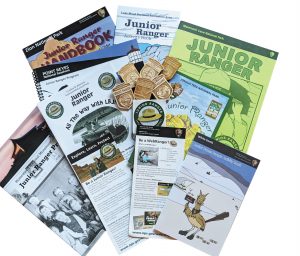
The NPS Junior Ranger Program offers a plethora of fun park-themed activities for youngsters.
The Kids in Parks Program, also known as the Junior Ranger Program (www.nps.gov/kids/become-a-junior-ranger.htm) is fun for the whole family. Everyone can explore the park and learn together. Upon completion of the booklet, return it to the visitors center to receive the Junior Ranger badge. It’s a motivator for youngsters to keep learning more.
Another fun activity is to bring or buy a passport book from the visitors center store and put the official park stamp in its appropriate region to remember the trip later. The passport book program is overseen by Eastern National (www.easternnational.org), a nonprofit organization that helps travelers document their visits to the parks. The National Park Traveler’s Club (www.parkstamps.org) is a great place to explore all the parks and their stamps, and to gain access to loads of resources through their forums and website. It’s only $10 a year to join.
Above all, don’t forget to take pictures and videos of the interesting sites and animal encounters you experience, and keep notes about the trip. Afterward, it’s fun to revisit the places you explored as a family and talk about the experiences for years to come!
Pat Jennette is the editor for the National Park Travelers Club’s quarterly newsletter. She and her husband, John, are bronze-level members of the club and they have visited 132 of the 423 U.S. national park units to date.