

What’s the best part about grandparenting? Spending time with the grandchildren, of course! An RV couple shares their experience with grandparenting on the road, some travel tips, and a list of family-friendly places to check out.
By Josephine Matyas, F468364
July 2022
In our household, the early arrival of our granddaughter, Athena — now 5 years old — brought with it a host of complicated medical needs. These needs involved being close to a hospital and packing emergency equipment for feeding and breathing. In the first few years, taking Miss Athena along in our camper van for overnights was not prudent.
Fast-forward a couple of years. When Athena turned 4, we looked at each other and said, “Why not? Let’s find a way to make this happen.” My husband and I were trained in the necessary medical procedures and felt the regular care we provided at home could be adapted to our Type B Roadtrek. Life would move on — just in a much smaller space!
Stepping outside our original boundaries opened a delightful new camping experience: one where grandparents pack the little ones into the RV and off they all go. Our case involved a few extra steps and equipment, but the joy of traveling with our grandchild has been worth every bit of extra preparation.
Planning
Behind every successful RV adventure is some planning, and nowhere is that more useful than when you have little ones along who may have more energy to burn — and a shorter attention span — than the adults.
Our best tip is to be realistic about everyone’s needs and limitations. Choose a suitable length of time for a trip. For the first time out, a trial run of a night or two may be in order. Be honest with yourself about what works and what doesn’t — and file that knowledge away for future outings. Longer trips will depend on your comfort level with each other, the kids’ interest level, and their sense of well-being when away from home.
Plan driving distances that won’t wear out the driver or test the patience of the kids. It’s supposed to be fun, right? Whatever distance and driving time you map out, make sure you talk about this with everyone first. Discovering that a five-hour drive is on the itinerary when 30 minutes was expected is a shortcut to a meltdown.
Plan breaks during the drive. Maps and Google are your friends when it comes to finding swimming spots, playground climbers, parks, and sports fields along the route.
Include grandkids in the planning whenever possible; this could be as simple as asking what they would like to do. And while you’re having that chat, communicate what can be expected in terms of travel times, sleeping arrangements, meals and snacks, bathroom and shower facilities, and access to electronics and Wi-Fi. This is also a good time to lay out the ways they’ll be expected to help with daily tasks such as shopping, meal preparation, and cleanup.
Finally, consider traveling outside of the high-demand summer months. The shoulder seasons are less crowded, open up campsite possibilities, and offer unparalleled opportunities to explore nature.
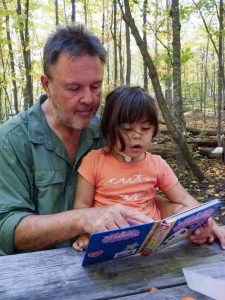
When packing for a trip, bringing books along for the adventure is a great way to keep little ones occupied.
Packing
You’re probably already doing this, but make sure your RV is cleaned and ready to go — stocked with supplies, fuel, propane, and fresh water. Athena loves to help with cleaning, and it has been as simple as giving her a wet cloth to wipe down the cabinets.
In addition to all your usual camping supplies, you’ll want to pack a variety of things to distract and engage your grandkids. I always create a small “surprise box” with a few emergency things to placate an impatient 5-year-old if things start to go south. For this, check out the dollar store or a craft supply shop.
Here are some items we always pack:
*Collapsible camp chairs.
*Life jackets if boating is part of the plan.
*Hammocks.
*Slip-on rubber shoes, such as Crocs.
*Kid-friendly digital camera to document the adventure.
*Spill-proof refillable cups.
*Flashlight, glow sticks, and sparklers (with adult supervision).
*Binoculars and star maps.
*Paper maps, highlighter pens, and a blank scrapbook.
*Sand buckets and shovels.
*Kites.
*Card games (Crazy Eights is a household favorite).
*Art supplies such as markers, crayons, stickers, kid-friendly scissors, and glue.
*Lots and lots of books, including sticker books.
*Purchase firewood when you reach the campground.
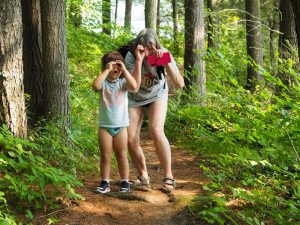
If you forget the binoculars, never fear; pretend ones work just as well for spotting birds during a hike.
Playing
Even though it’s play, we’re always trying to think one step ahead of Athena to keep her from meandering into boredom. I find that she shares many of our interests; could this be because we’ve been fostering them on our trips? I’m thrilled she loves nature and is keen to learn new words such as moss, birchbark, woodpecker, and wetland. And despite her physical challenges, she is always the first one to suggest a hike. We always make it a game to hunt for the trail markers, which Athena calls “clues.”
Try some of these fun activities:
*Beach and water playtime can include building sandcastles or going for a swim.
*Hike the park’s trails.
*Get to an open field or beachfront and run like the wind with a kite in the air!
*Encourage your grandkids to take photos during the RV trip.
*Plan a nightly campfire. Marshmallows or s’mores, anyone?
*Create a trip scrapbook. Collect destination brochures along the way to cut and paste as part of the scrapbook. Kids can glue, trace, and color page after page.
*Dollar store finds can include small wooden birdhouses that can be painted and decorated. Athena’s favorite is a “Fairy Mailbox” she created to send written messages back-and-forth to her Fairy.
*Rainy days are the perfect time for board and card games, word games, reading, and hide-and-find games.
*Most campgrounds have a play structure. Find it and enjoy hours of play.
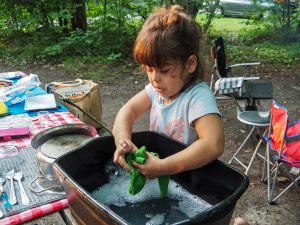
The more tasks Athena is involved in, her grandparents say, the more empowered and engaged she becomes.
Places
There are amazing multigenerational camping destinations across the United States and Canada. Hop onto some of the wonderful online RV forums (try the “FMCA RVs & Camping – On the Road with FMCA” Facebook group) and ask for suggestions. One thing RVers love to do is share their knowledge and experiences. Here’s a sampler of some of our favorite kid-friendly camping experiences:
Assateague Island National Seashore along the Maryland and Virginia border is known for its sweeping dunes and long beaches, and as a place where kids can be on the lookout for the park’s wild ponies. The park also has a Junior Ranger program where children can learn about the unique coastal environment, follow activities, and earn a badge and certificate.
Hunting Island State Park in the low country near Beaufort, South Carolina, is known for its five miles of beaches, saltwater lagoon, and climbable historic lighthouse (currently closed for safety reasons and awaiting repairs). There’s a fishing pier; a nature center with live reptiles on display; and a dozen hiking trails, including the Pond Overlook Trail, with chances to spy alligators, herons, and egrets.
Manatee Springs State Park on Florida’s Gulf Coast has a long boardwalk that winds through the cypress forest to viewing stations where manatees can be spotted in the cooler months. The park has almost nine miles of nature trails and connects to the paved, bike-friendly Nature Coast State Trail.
Mesa Verde National Park in Colorado protects the remains of thousands of cliff dwellings and stone structures once home to the Ancestral Puebloans. Kids love to hike along the trails and mesa tops, stargaze at night, follow activities to earn a Junior Ranger badge, and scramble up ladders on a guided tour of Cliff Palace (North America’s largest cliff dwelling).
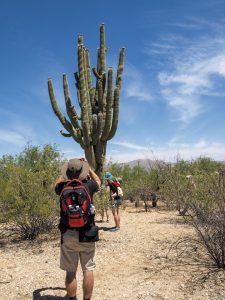
Arizona’s Saguaro National Park, with its dramatic cacti, is an exciting destination for all ages.
Saguaro National Park near Tucson, Arizona, is a cactus-filled desert and home to forests of towering saguaro cacti — the signature icon of the Southwest. The park’s Signal Hill Trail has the area’s largest collection of petroglyphs, also known as ancient rock art, which could provide inspiration for young campers to re-create in their trip scrapbooks. While you’re in the area, check out Tucson’s excellent Arizona-Sonora Desert Museum, which will wow all ages with a hummingbird aviary; a free-flight bird aviary; and animals such as bobcats, bighorn sheep, javelinas, and prairie dogs in their natural settings.
Saguenay-St. Lawrence Marine Park in Québec’s North Shore region is known for the mix of fresh water that spills from the Saguenay River into the salty St. Lawrence River, creating the ideal plankton-rich conditions for whales to feed. Boat tours are a heart-pulsing way to spot the backs, blows, and occasional breaches of the protected whales, including blue, beluga, and minke whales. Nearby, the municipality of Tadoussac has a full listing of campgrounds.
The Trans-Canada route along Lake Superior in Ontario is peppered with excellent parks — including Pancake Bay Provincial Park, Lake Superior Provincial Park, and Pukaskwa National Park. They offer countless opportunities to hike, swim, build sandcastles, and learn about the culture of Canada’s Indigenous people. The short trail at Agawa Bay, within Lake Superior Provincial Park, leads to sacred rock pictographs where generations of Ojibwe recorded their dreams and spirits in red ochre paintings.
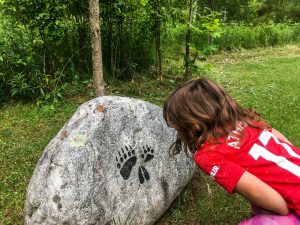
Clues are painted on rocks for hikers to follow along a short trail at Thousand Islands National Park, near Mallorytown, Ontario.
Head north and stop to let the kids take photos at the gigantic Wawa Goose, near the town of Wawa. Then continue north to overnight at Pukaskwa National Park, where the Bimose Kinoomagewnan circular trail, dedicated to the Seven Grandfather Teachings, is marked with signs explaining the lessons of the Anishinaabe elders: love, honesty, respect, wisdom, truth, humility, and bravery.
Dinosaur Provincial Park in Alberta’s Red Deer Valley is known for its abundance of dinosaur fossils. Kids can climb the hoodoos, take a look at the fossil display, and join a program — like the family-friendly Dino Stomp, Dino Story Time, or Fossil Safari walk — to get them learning about the past and present of the unique badlands ecosystem. If everyone is up to a day trip, the world-class Royal Tyrrell Museum near Drumheller is chock-a-block with dinosaur activities and exhibits, including gigantic skeletons, fossil casting, and a simulated outdoor dinosaur dig.
Following the four Ps — planning, packing, playing, places — always gives us the firm footing to make every trip with our little one a success. Keep these tips in mind, add a few of your own, and you’ll be well on your way to creating priceless memories.