
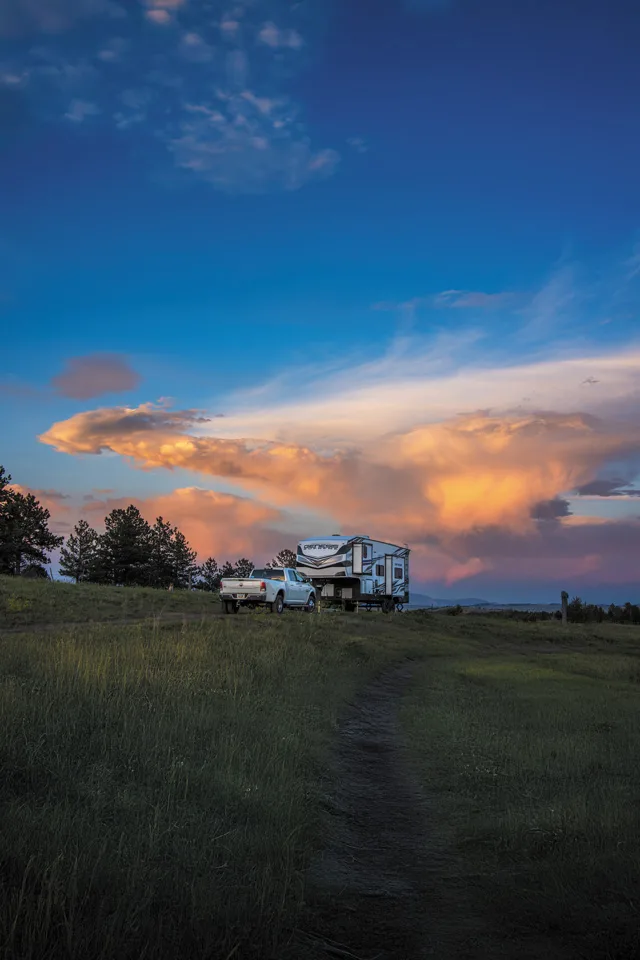
Answers to many questions RVers might have about dry camping away from crowds and commercial establishments.
By Emily Fagan, F547779
September-October 2025
For us, the greatest thrill of “boondocking” — camping without water, electric, or sewer hookups, often on public land — is finding a campsite off the beaten path that is more beautiful, private, and close to nature than any campground or RV park could ever hope to be. In our 20 years of RVing, we have spent 3,881 nights boondocking. We have listened to a herd of elk bugling as they ran past our rig, watched birds chase each other outside our windows, and played host to countless deer! We’ve camped on bluffs with extraordinary views, bathed in rushing mountain streams, and witnessed sunrises and sunsets that only our eyes were fortunate enough to see. We love boondocking for these special moments, and we wouldn’t go RVing any other way.
What Does It Take To Boondock?
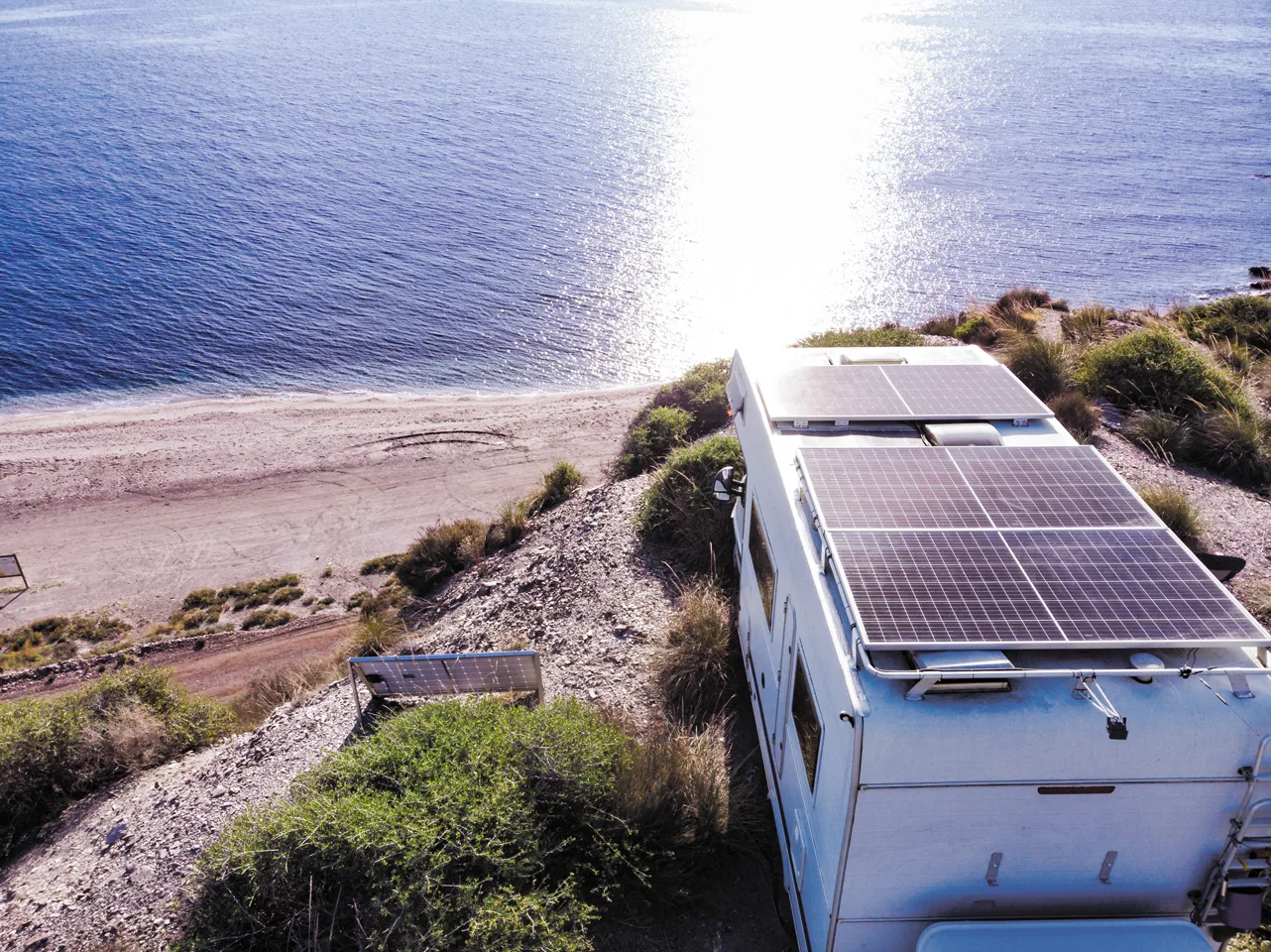
Solar panels can help to extend your stay when boondocking.
Just a few key ingredients are needed to boondock happily: a big sense of adventure, a little patience, and a degree of comfort when it comes to staying in your RV without hookups. Above all, you must be confident that you will be okay alone in the boonies overnight. The first time we boondocked — without another RV in sight — we joked as we went to bed: “If no one bangs on our door tonight and we are still alive tomorrow morning, then this boondocking thing is okay.” When we opened our RV door the next morning, we were greeted by a group of cows staring at us. We were hooked!
Do You Need To Upgrade Your RV?
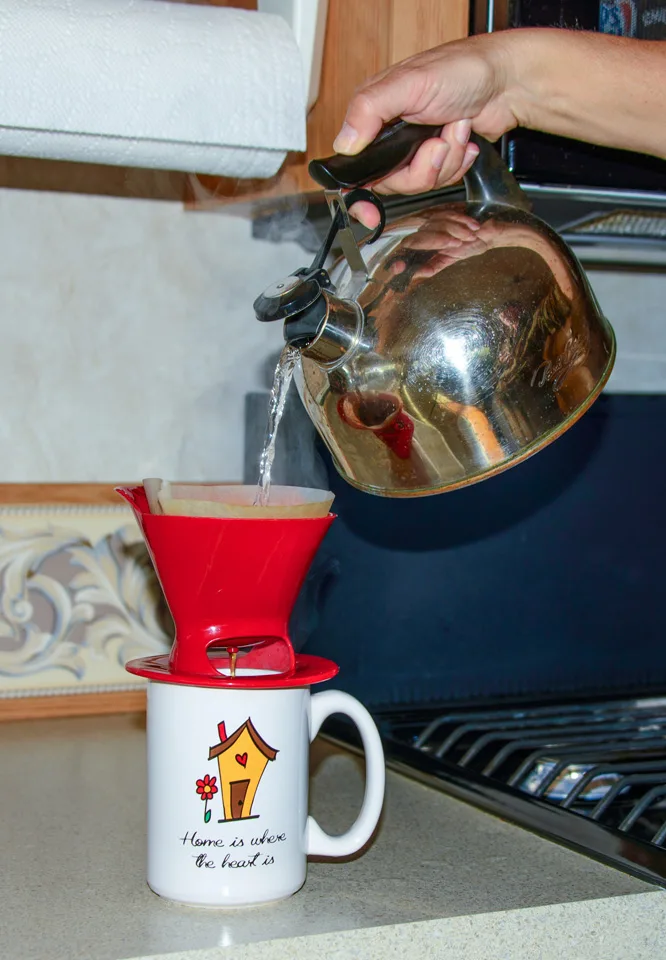
One way to conserve electricity is to make pour-over coffee instead of using a coffee maker.
You can have a blast in a dispersed campsite for a night or two without doing anything special to your RV. Simply conserve your water and electricity and hold off on using power-hungry appliances (microwave, hair dryer, etc.) until you return to civilization. We recommend that you try boondocking a few times before you make any big investments in solar power, a composting toilet, or other upgrades.
If you fall in love with boondocking and want to do it for extended periods of time, you will need a good solar power setup. Many articles, websites, and books have been written on the topic, so I’ll just describe a low-end and a high-end setup here.
We started with 130 watts of solar power and a 10-amp solar charge controller, two Group 24 12-volt batteries (140 amp-hour capacity), and several 150- to 300-watt portable inverters. This was enough for us to live conservatively during the summer months.
When the shorter days and stormy skies of winter took over, we needed a bigger system. For the next 12 years, we had 490 watts of solar panels, a 60-amp MPPT charge controller, four 6-volt lead-acid batteries (440-amp-hour total capacity), and a 1,200-watt pure sine wave inverter (eventually upgraded to 2,000 watts). We rarely thought about our power consumption. In recent years, we’ve met lots of people with systems as much as six times that size, but our current rig has only 600 watts of solar panels and a 1,500-watt pure sine wave inverter, and we’re comfortable.
You can find many ways to conserve electricity while boondocking. At night, turn off lights that aren’t being used. Jettison the electric coffee maker and make “pour over” coffee instead; pour boiling water over coffee grounds in a cone-type filter. Melitta is one popular brand of filter. If your solar power system is small, charge the laptops and phones in the towing or towed vehicle while driving around sightseeing. A portable generator is a good backup, but we hauled one around for years and rarely used it.
Fresh-Water And Wastewater Tanks
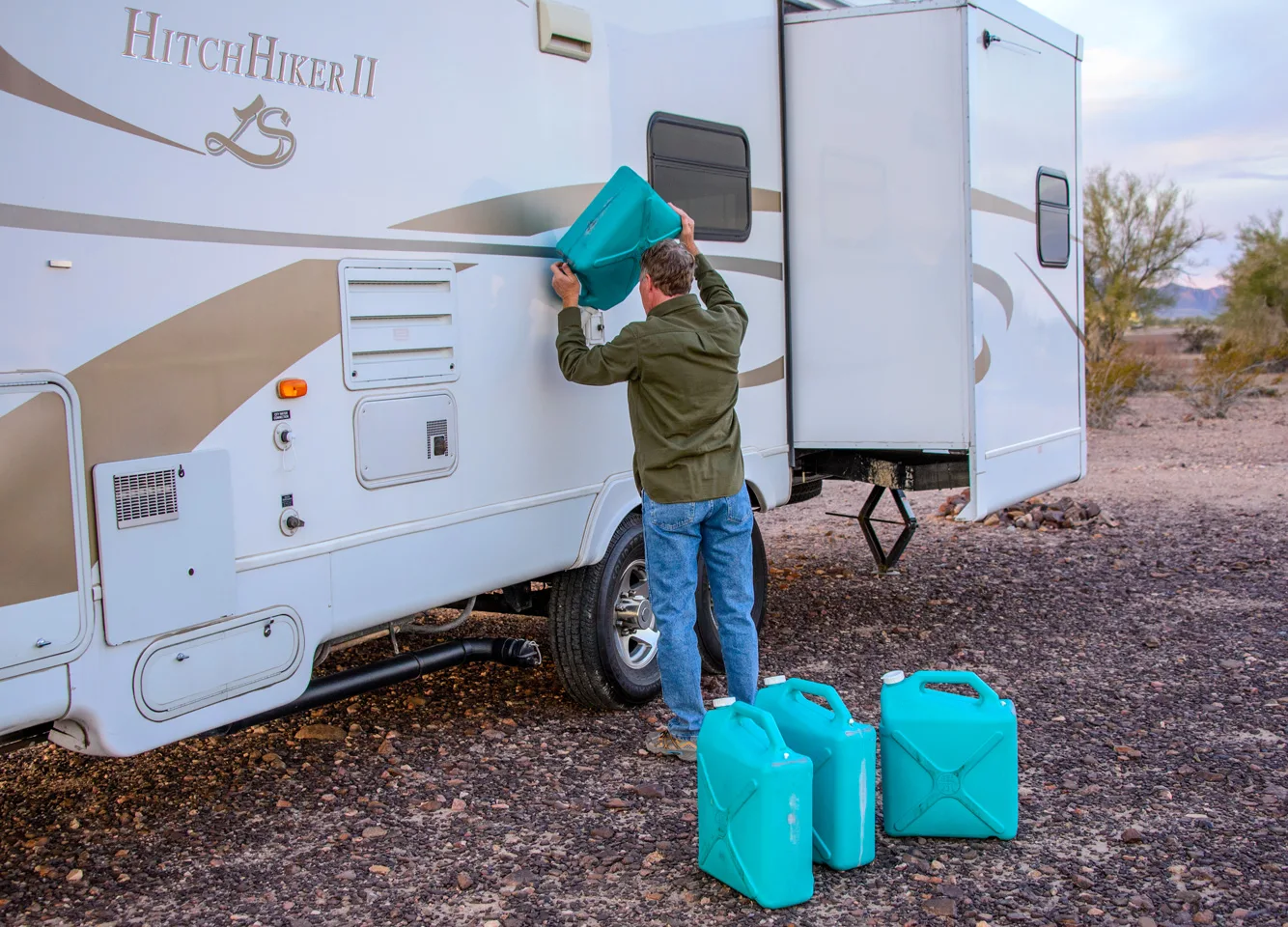
One boondocking tip is to carry extra jugs of water to fill the fresh-water tank.
RV dump stations are common, and sanidumps.com maintains a comprehensive list of them. In a pinch, dump at an RV park that allows it or stay the night! Wear disposable rubber gloves and empty the black tank before the gray tank so the rush of gray water can help rinse the sewer hose. When finished, hose down the area so it’s clean for the next RVer.
Before attaching the hose to fill the fresh-water tank, spray the spigot with household bleach. An in-line water filter helps reduce contaminants that might be in the water, especially if you drink from the fresh-water tank. We carry 10 one-gallon drinking water bottles that we fill at supermarket water refill stations. We also carry four 6-gallon water jugs in the bed of our truck so we can top off the trailer’s fresh-water tank after we’ve stayed somewhere for a few days.
Some people love their composting toilet and consider that an essential upgrade. We’ve never had one and don’t mind our regular visits to RV dump stations.
Water Conservation
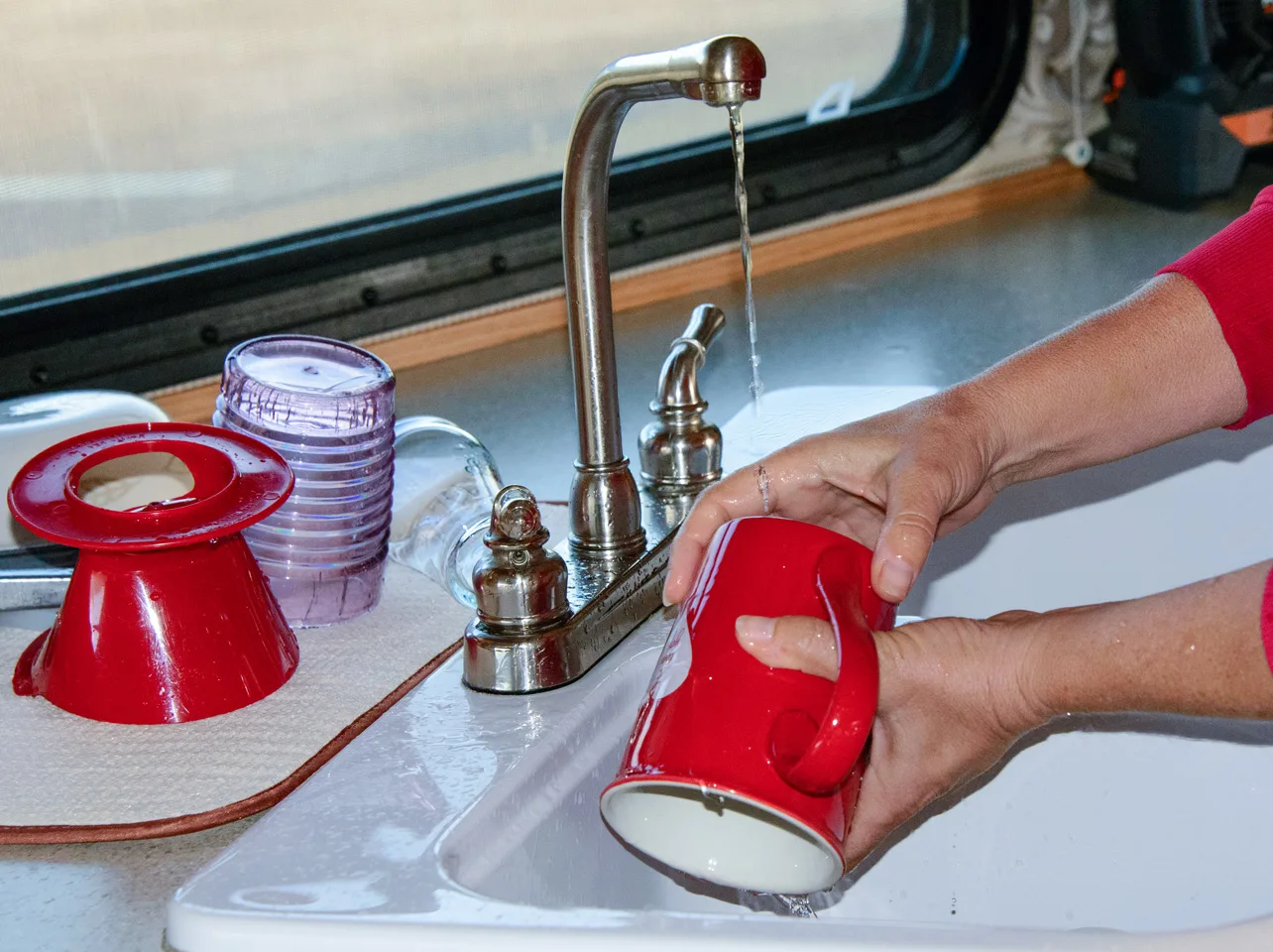
Using a trickle of water when possible instead of having the faucet on full blast helps to converse.
Conserving water is easy. The shower uses the most water, and it helps to master the art of the one- or two-gallon shower. If the hot water has to run for a while before it warms up, capture it in a pan to heat on the stove for washing dishes later. Turn off the water while lathering up and shaving, both in the shower and at the bathroom vanity. If the kitchen sink is large, wash dishes in a smaller bowl in the sink. For rinsing, use a fine trickle of water instead of running the water full force.
Propane
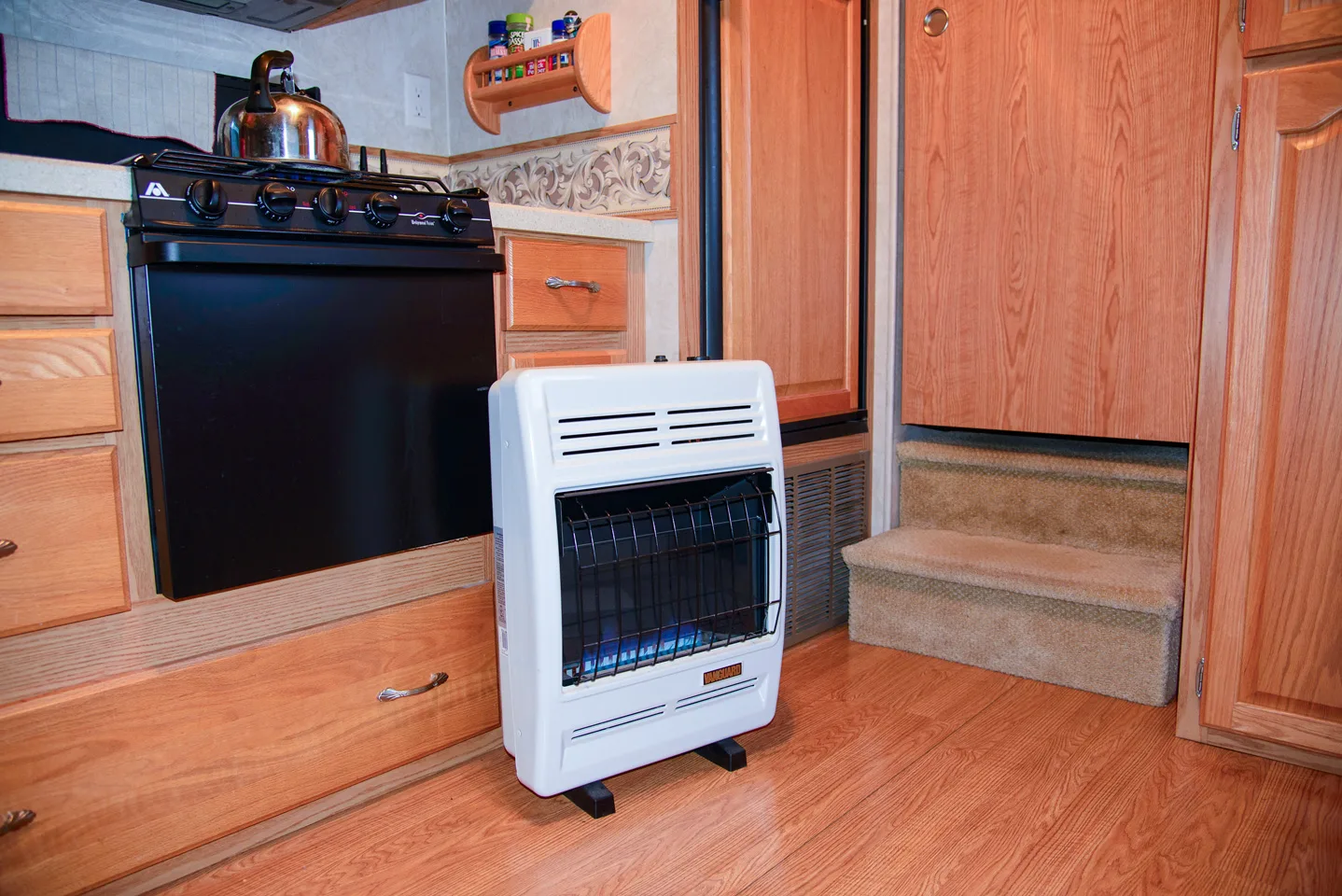
A vent-free propane heater can be handy when boondocking during cold weather.
In the absence of shore power, propane powers many of the biggest appliances in an RV, if it is so equipped. The refrigerator, water heater, and furnace typically run on propane. For winter camping, it is easy to install a vent-free propane heater, which uses considerably less propane than an RV furnace. (If using this type of heater, make sure that your RV is properly ventilated and you have a working carbon monoxide alarm on board.) Rather than running the water heater all day, turn it on once a day right before showering. Many RVs now come with a 12-volt refrigerator, which shifts the burden of that appliance from the propane tanks to the solar and battery system. Tankless instant water heaters that run on propane are also common; however, turning the water on and off frequently may use more water if it initially runs cold each time.
Communications
Most cellphone providers offer dedicated data-only plans on mobile hot spots. We have units from both Verizon and AT&T. These devices use cellphone towers to access the internet and broadcast a private Wi-Fi signal inside the RV. This is more secure than a public Wi-Fi signal, and sometimes the antenna on the mobile hot spot is superior to that on a phone or tablet. Frequently, we get a better signal on one carrier than the other, which is why we have two. We have met folks with three or more devices, collectively providing 500GB of data or more per month! Starlink satellite internet is another option, although it can’t be used while driving and takes some time to set up. (Editor’s note: Family RV Association’s Tech Connect+ pack-age offers member-only discounts on hot spot and cellphone plans. Visit frva.com/techconnect-learn-more for details.)
Safety
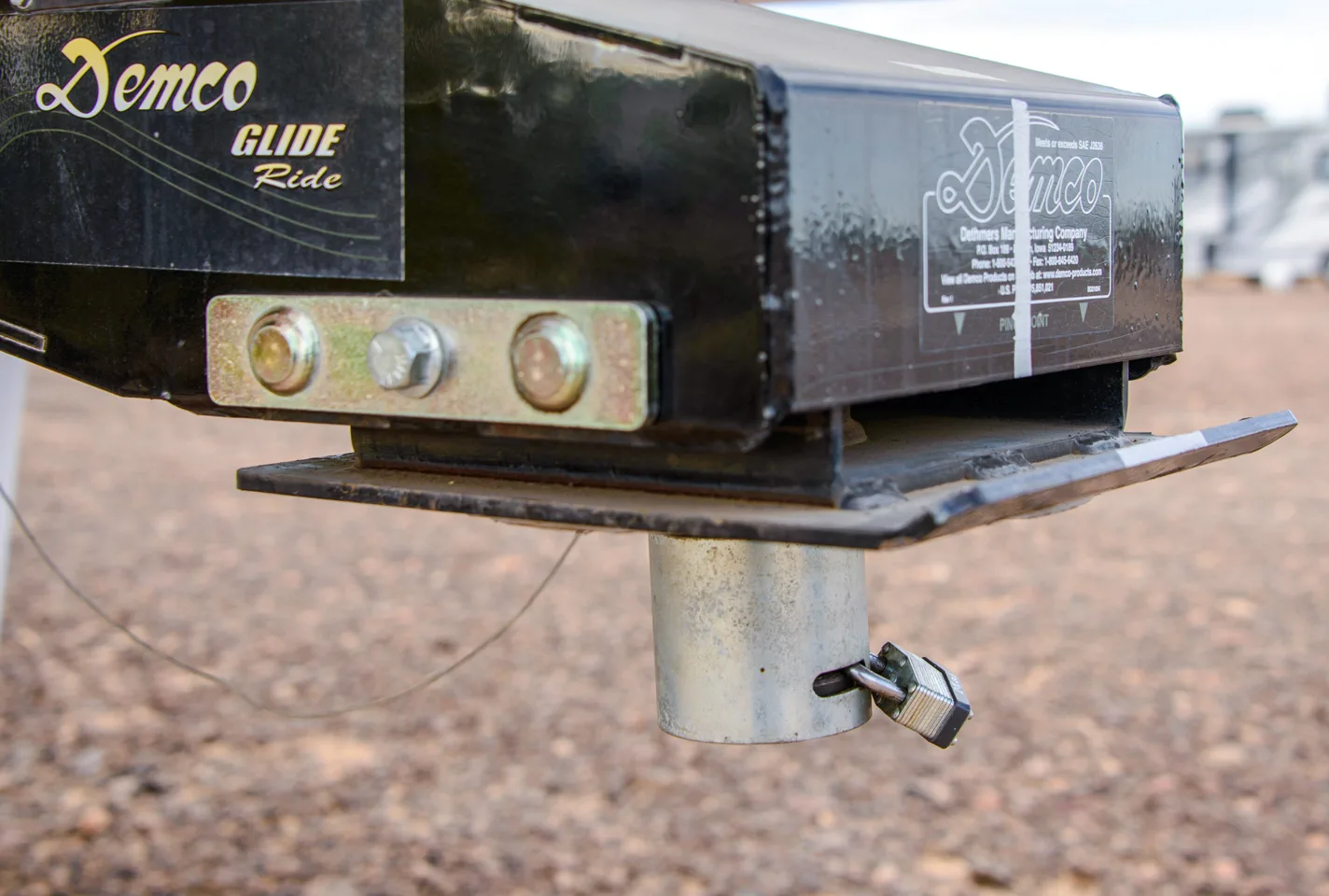
The authors lock their fifth-wheel hitch when they leave the vehicle, to prevent someone from hooking up to it and towing it away.
It is wise to take the same safety precautions when boondocking asat home to avoid trouble. We lock our door at night and when we leave for the day. We lock the fifth-wheel king pin so the trailer can’t be towed away while we’re gone. We lock our bicycles to the trailer or onto the bike rack on the back of the trailer, and depending on where we are, we put away our grill and camp chairs when we leave for the day. We also use cable locks to secure everything in the bed of our truck when we’re in town.
Where To Camp
The biggest challenge — and greatest thrill — of boondocking is figuring out where to stay. There is nothing like “discovering” a gorgeous spot to call home for a few days. Many apps and websites list the GPS coordinates of boondocking campsites, complete with photos, reviews, and even names for each place! Campendium.com is one of the more popular ones, and there are dozens of others.
If the ideal spot doesn’t present itself right away, we look for a “starter” place to park and then seek out something better in the ensuing days. This method has led us to some of our most memorable campsites. For us, boondocking and sightseeing overlap. We’re always on the lookout for intrigu-ing forest service roads that might lead to a stunning campsite.
Leave No Trace
We always leave our campsite cleaner than we found it, picking up trash and dismantling campfire rings so the area feels “virgin” to the next camper. Too often, campfire rings are filled with trash, and it’s awful to have to burn someone else’s garbage at the beginning of your stay. Most public land agencies limit campers to a 14-day stay, but we usually are on our way again after less than 10 because of the lure of the open road!
Just Do It!
If you’re curious about boondocking, give it a try. We hope you love it as much as we do!