
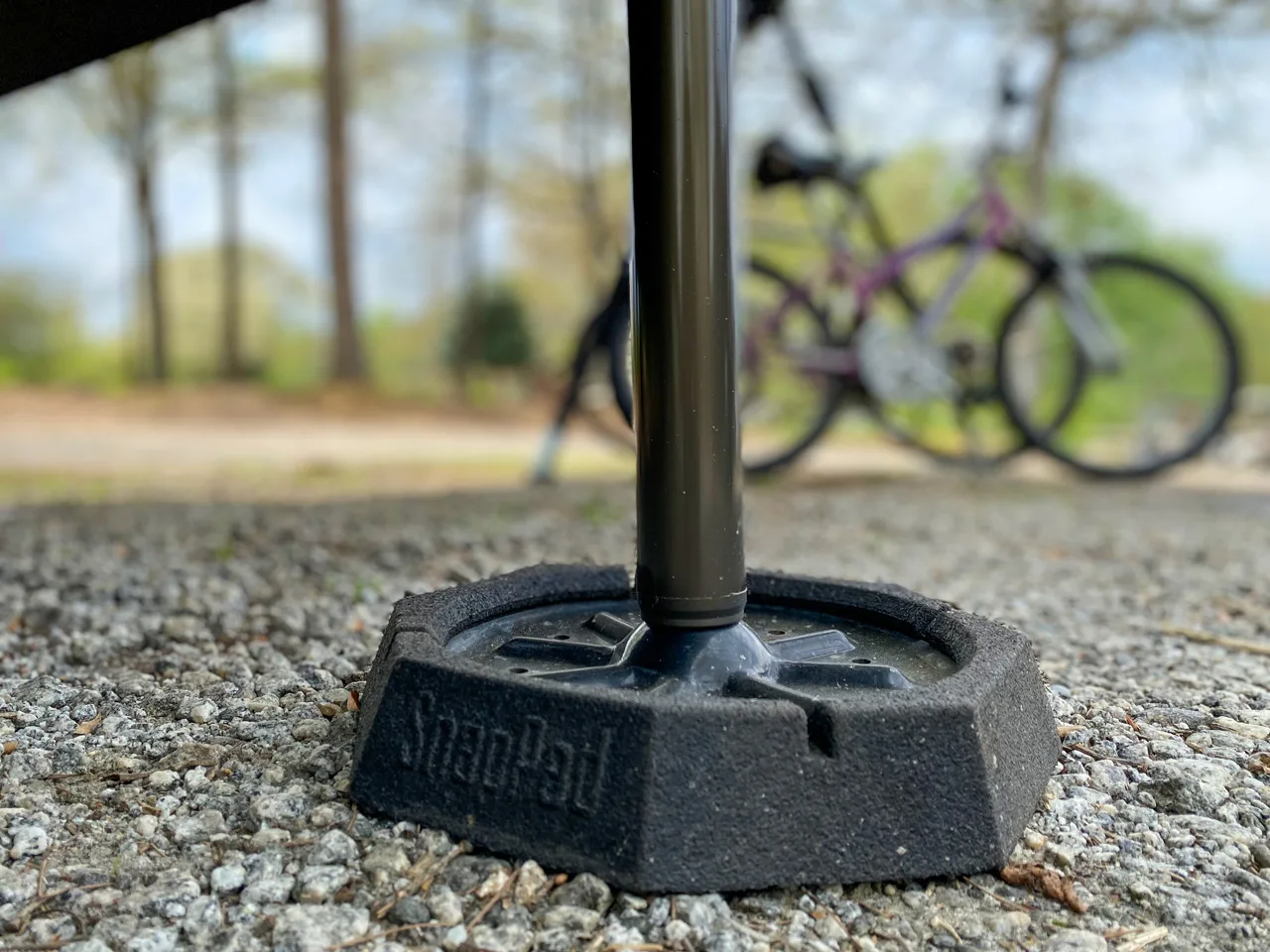
RV SnapPad permanent leveling jack pads simplify leveling and save storage space.
By Chris Dougherty
September-October 2025
Whether on a motorhome, travel trailer, or fifth wheel, automatic leveling systems make setup easier and RVing more pleasurable. As a result, the days of carrying multiple board feet of lumber to drive the RV onto while attempting to level it have passed for many RVers. However, because leveling jack feet can sink into the ground or damage pavement when deployed, some folks still carry wood to place under the levelers.
This is especially tricky if you have a motorhome that has a single hydraulic jack in the front, like my old Monaco did. Putting wood or pads under that jack required getting on the ground and making use of the RVer’s universal pushing and grabbing tool, also known as an awning rod, to position the pad properly under the jack.
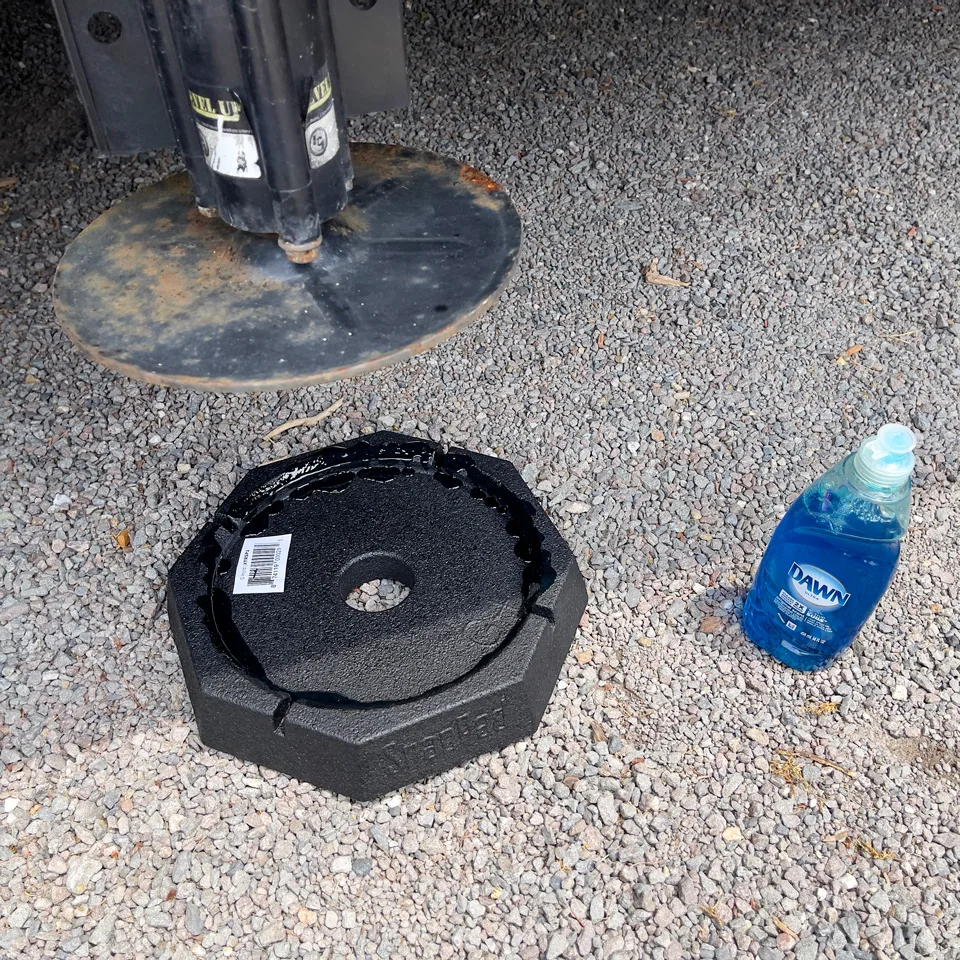
To install, place a SnapPad under the jack foot and add a bead of dish soap on the top lip for lubrication.
But now, thanks to the RV SnapPad — an invention that this author believes is a “better mousetrap” — the days of retrieving, placing, and storing wood blocks or plastic pads also are gone.
Made of recycled tires, the RV SnapPad is a completely rubber pad that snaps onto the leveling jack foot on most popular models. It not only protects the jack pad but also significantly increases its surface area, or the part that contacts the ground. Increasing the size of the jack pad lessens the chance of it sinking, especially on softer ground, as it spreads out the load of the jack and vehicle over a wider area. It also reduces the chance of the jack foot marking up hot asphalt.
To calculate the added surface area, company representatives used a cross section of an engineer’s drawing and did a mathematical comparison for a 10-inch PowerGear landing foot. See the accompanying sidebar for the calculation.
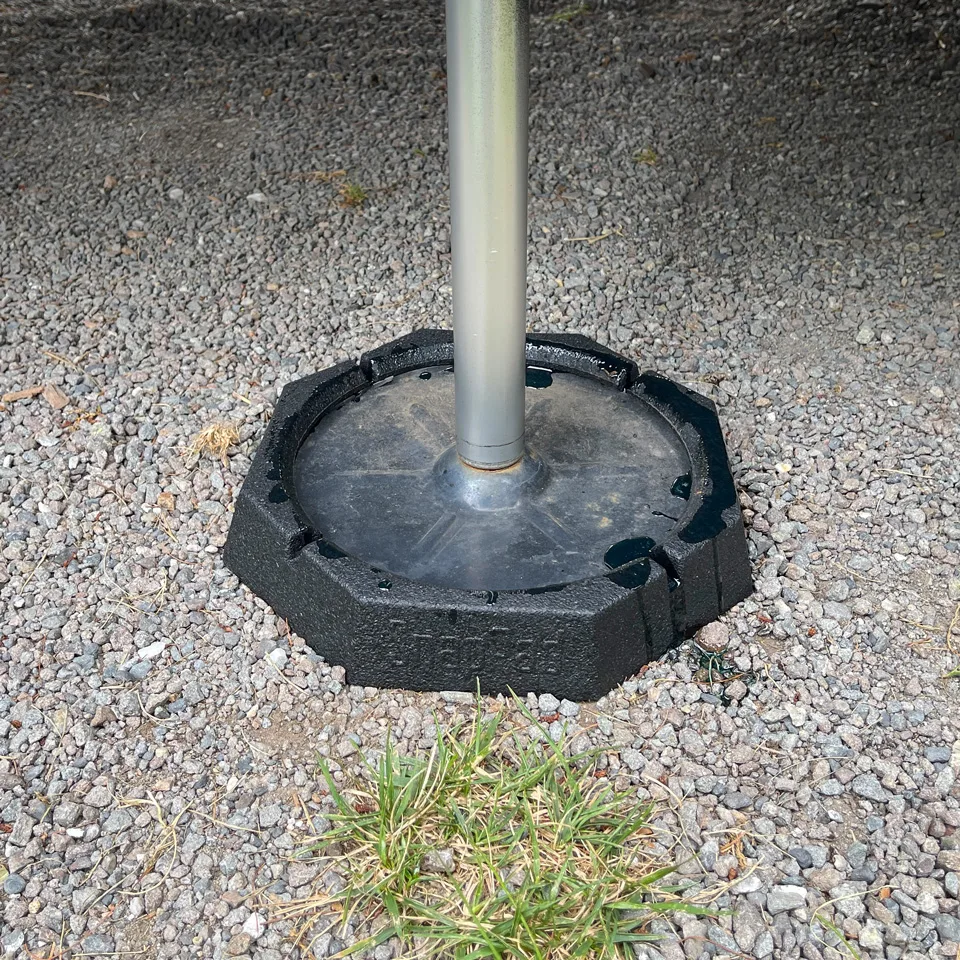
Once the SnapPad is centered and seated squarely onto the jack foot, lower the jack until it snaps into the pad. This may require the full weight of the RV.
So, not only does the SnapPad protect the jack foot, in the sidebar example, it increases the ground contact surface area by over 315 percent. It also increases the grip of the jack pad on smooth surfaces.
In conjunction with “RVing Today TV,” we installed a six-pack of RV SnapPads on a 2015 Keystone Montana fifth wheel equipped with a Lippert Level Up six-point hydraulic leveling system.
Installing the SnapPads is a relatively straightforward process, but we do recommend watching the online videos on the company’s website before you start. Lubrication of the pad and foot is required for installation; we used Dawn dishwashing liquid, which worked perfectly.
Note that the pads should be installed only while parked on hard, level ground. If the ground is soft, or the jack foot doesn’t meet squarely with the pad, it may not snap on correctly. For this project, we had a gravel site, and to make the installation work, we had to scrape away some of the gravel to get to level dirt underneath. A concrete or paved surface is ideal.
The process is pretty basic. If you’re working with a trailer, keep it hooked to the towing vehicle. Retract the jacks and clean them as well as you can. You can touch up the paint on the jack pads first if desired; allow them to dry thoroughly before proceeding.
Place a SnapPad under the jack and put a large bead of soap on top of the lip. Start lowering the jack; stop to adjust the SnapPad so that it squarely seats onto the jack. Once it’s perfectly centered, lower the jack until it snaps into the pad. This may require most of the weight of the RV. It took us a couple of tries with the first one to get it right, but installing the rest was, well, a snap.
According to company representatives, SnapPads have been lab-tested in extreme temperature conditions — from 120 degrees Fahrenheit to minus 40 degrees. Shake tests have shown that the pads stay on even when subjected to up to 50 Gs, which is pretty impressive. Over the six months of our test, we put about 2,000 miles on the trailer with plenty of jack use and no issues at all.
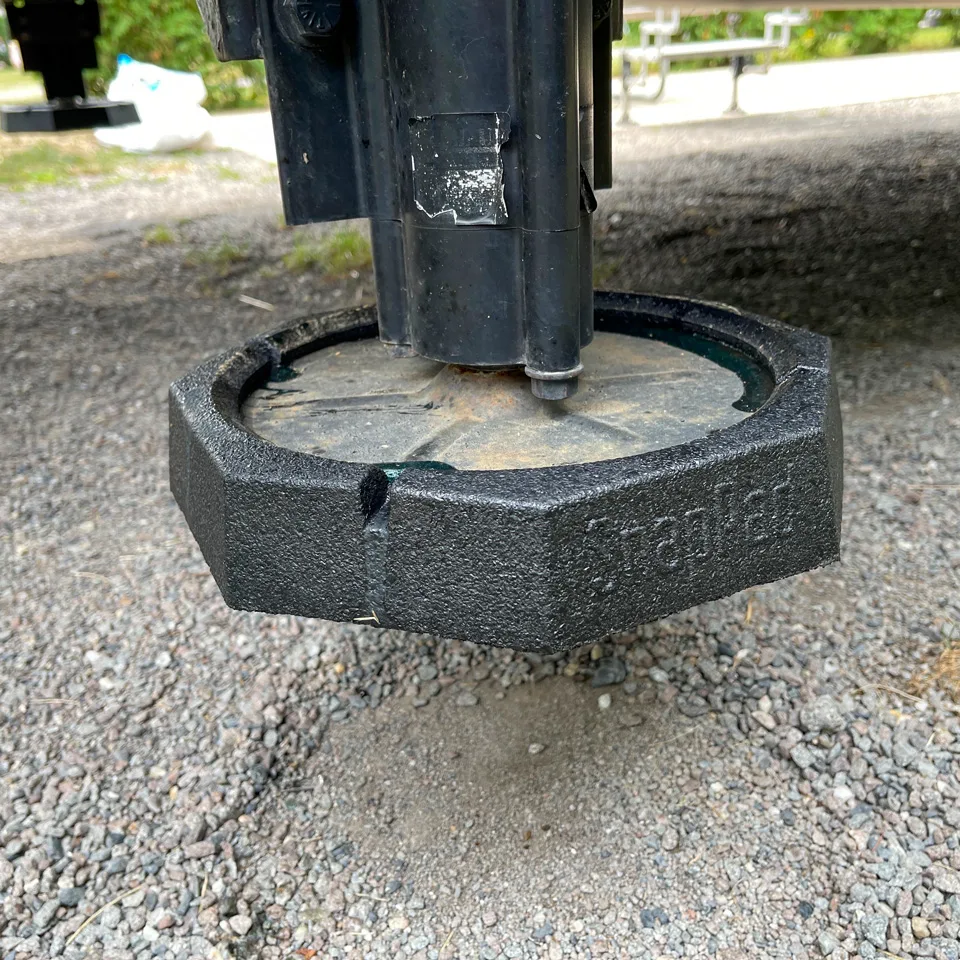
SnapPads have been tested and found to stay on even when subjected to 50 Gs of force.
I have spoken with some RVers who have lost a SnapPad. This usually results from the jack hitting something, such as a rock. It could also occur from removing the pads and then reinstalling them, which causes the tab to weaken. Removal of the pads potentially destroys them, and it voids the two-year warranty, or the optional five-year extended warranty. Strong physical contact with the ground while traveling also could cause a pad to fall off, so company instructions recommend checking the SnapPads if your RV bottoms out for some reason.
Rubber fails over time, especially when exposed to the elements and ultraviolet light. I would expect these to have a nice lifespan but not to last forever. Each one has a built-in drainage channel to help remove excess water that might gather on top of the jack pads when parked in rain or snow. Company information notes that to enhance the life of the leveling system, owners can combine SnapPads with a layer of water-repellent sealer, such as Flex Seal brand, on each jack foot.
Another advantage of installing the SnapPads is that sometimes a little extra height is needed for the hydraulic jacks, and these will give you around an inch of lift over the bare jack feet. If even more height is needed, light plastic blocks such as Linx Levelers are an option, as are StakPads. StakPad is a newer product from the maker of SnapPad and provides up to 2 inches of additional lift. The 12-inch-square StakPad also comes reinforced with rubber on the top and bottom to add grip and durability. The cost for one StakPad is $54.95.
SnapPads come in sizes to fit most leveling and stabilizer jacks and are available in kits with the number of pads required for your RV. The cost depends on the application and the quantity of jacks. Suggested retail prices range from $89.95 for an Xtra 2-Pack (for motorhomes and fifth wheels with 9-inch-round LCI jacks) to $349.95 for an EQ Grand Lux 6-Pack (for 10-inch-octagon or 12-inch-round EQ systems jacks). SnapPads also can be purchased as singles if needed. They are available from RV dealers and camping supply stores, or directly from the company.
Based on my experience with the product, SnapPads make camp setup easier and safer and increase jack stability. Isn’t that what building a better mousetrap is all about?
More Info
rvsnappad.com
(866) 923-9538
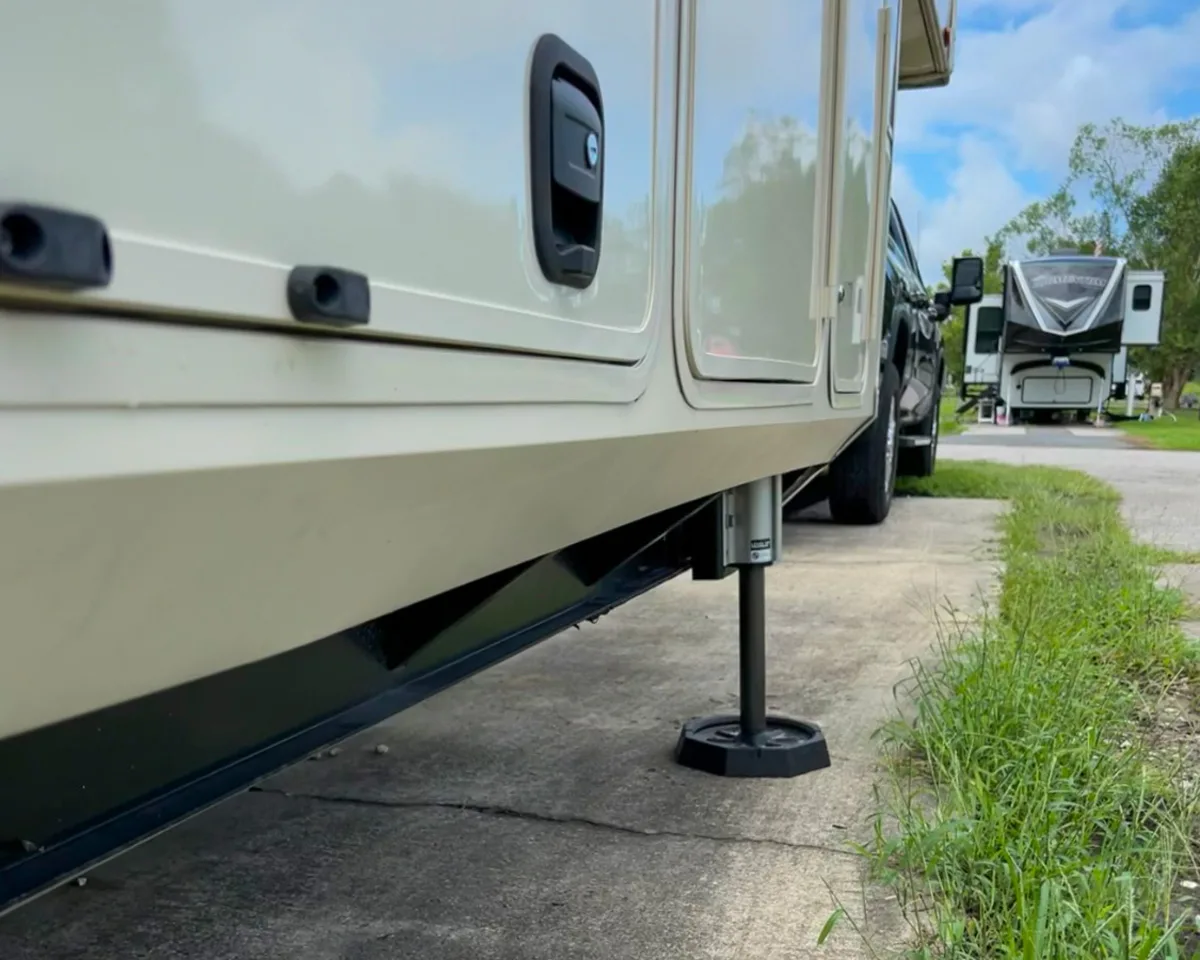
SnapPad increases the surface area of the jack foot, lessening the chance of it sinking or marring surfaces.
Additional Surface Area On A PowerGear 10-Inch Foot
Foot surface area
Outside diameter = 57.47 square inches
Inside diameter = 23.22 square inches
Total area that contacts the ground = 34.25 square inches
Prime surface area octagon: 13.25 inches – bolt hole access = 142.3 square inches
Surface area increase: 142.3 – 34.25 = 108.05 square inches
Compare that to the original surface area that contacts the ground
108.05 / 34.25 = 3.1547 x 100 = 315.5%