
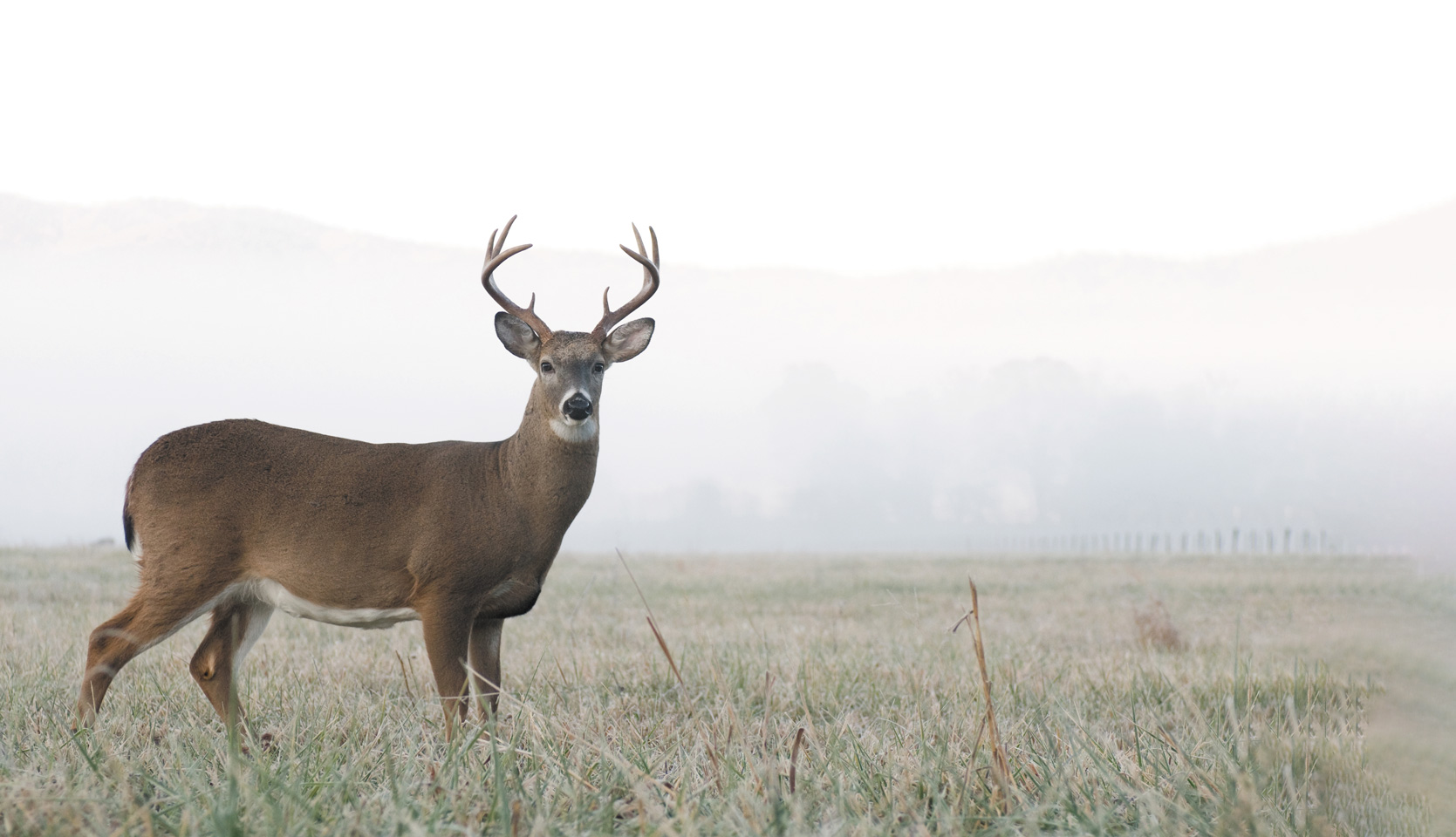
Having a close encounter with a deer can enhance any camping experience.
By Knolan Benfield
January 2021
Setting up camp in a state or national park brings with it a host of benefits, not the least of which is the possibility of seeing a wide range of wildlife in their natural habitat. While most wild animals are best viewed from a distance or from the safety of a vehicle, a chance encounter with a deer can be exhilarating, as well as something that can be done safely at a relatively close range. Even deer can pose a danger to humans, though, so caution should be exercised.
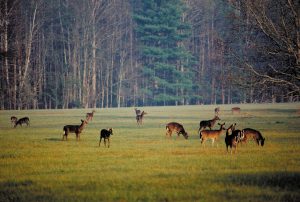
Deer typically emerge from the woods near dusk and feed until after dawn.
How is it that some people seem to see scores of deer in a park, while others see only a few or none at all? Some of it is just plain luck, being in the right place at the right time. But armed with a few facts and a little common sense, nature’s doors can be swung wide open, and encountering a deer can happen without having to backpack deep into the wilds or hike through a thick forest. Here are a few facts and tips that can increase your chances and make deer spotting a highlight of your camping experience.
Deer Facts 101
By definition, the deer species includes everything from elk and moose to caribou and reindeer. However, the three most common species of deer in the United States that an RVer is likely to encounter are mule deer, which are found in the western parts of the country; blacktail deer, which roam in the Pacific Northwest; and whitetail or Virginia deer, more formally known as Odocoileus virginianus. The whitetail is at home on a range from Canada to Mexico, including almost all of the United States except for California and some dry areas of the West.
Whitetail deer vary in size depending on the region. However, they are smaller than most people think. Blacktail deer are similar, but with a darker coat and large black tails. Mule deer are stockier, weigh more, and are taller and longer. They get their name from their large mule-like ears.
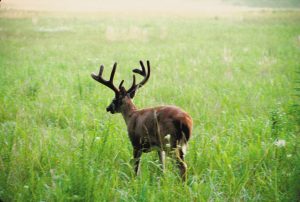
A buck’s velvet-covered antlers.
An estimated 30 million whitetail deer roam the lower 48 states. Deer may live to the ripe old age of 14. Wolves and mountain lions are a serious threat to deer in some areas. Black bears, coyotes, and bobcats pose a threat only to a fawn or a sick or older deer. However, the biggest threat to deer are humans. Hunting and collisions with vehicles are two of the greatest causes of death among whitetail deer.
Deer that live near parks also are subject to another danger: human food. A deer can digest grass, tree roots, acorns, and apples, but human food scraps can form an indigestible ball in their stomach and slowly kill them.
Food For Thought
Deer are mainly forest edge dwellers, and an hour or so before sunset, they come out of the forest to feed in the fields. They return to the forest about two hours after sunrise. However, on heavily overcast days you may find them feeding in fields throughout the day. Strong winds and thunderstorms drive them deep into the woods.
Uncommonly Good Senses
Deer have an incredible sense of smell, as much as 1,000 times more acute than a human’s. Long before danger is seen or heard, they literally can sniff out a problem. In fact, during the day they nap on the top of ridges, where air currents sweep up toward them and carry early warning signs of danger. Their hearing isn’t necessarily superior to that of a human, but their ears are always turning to check for sounds of danger. As for eyesight, they pay almost no attention to anything stationary —including a person. If you’re standing still, a deer may walk to within a few feet of you.
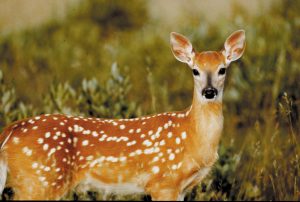
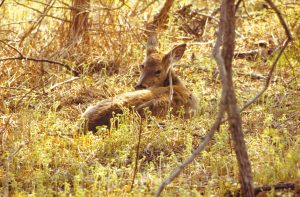
Although a fawn may appear to be alone, its mother is never far away.
Close Encounters
Deer feed facing into the wind, so if you are on foot, you may find yourself quite close when they are eating, despite their arsenal of senses. Keep a low profile, stay downwind, and, if possible, behind cover. They are less likely to notice you if you have approached them from behind or from the side. When a deer lowers its head for a bite of grass, take a slow, silent step closer. When its head comes up, freeze until it takes another bite. How close is too close? Fifty yards is close enough. If the animal alters what it is doing, then you’ve exceeded the minimum distance.
Deer, like most wildlife, are best observed closely from a “blind,” and you already own one — your car or RV. You actually can get quite close to deer in a “mobile blind,” because the smell of the vehicle hides the human scent.
Hightailing It Out Of There
If you are spotted and spook the deer, it will raise its tail straight up and take off running — hence the term “hightailing it out of there.” An alarmed deer doesn’t run far, but it does run fast, up to 30 mph. It also can clear an 8-foot obstacle from a standing start, and a 15-foot broad jump is nothing unusual. I’ve seen startled deer run and jump 6 feet off the ground with their legs stretched straight out from their body. If you’re the reason the deer ran, just stand very still; it may circle back around to where it was before all the excitement began.
Seasonal Signs
Close-up glimpses of the creatures are ideal from an RV or other “mobile blind.”
The time of year also plays a part in your chances of having a deer encounter. Whitetail deer are year-round residents of their range. If food is plentiful, they need only about a square-mile dining room. However, in winter, with most vegetation dead or snow-covered, deer expand their foraging grounds, or even resort to munching on bark and twigs. The animal’s winter coat has hollow, air-filled hair, which offers such good insulation that snow won’t melt on its back.
In the spring, your chances of seeing a fawn increase. Fawns are born between April and June, and moms move their little ones a little deeper into the forest for a bit of added safety. By mid-June, they return to the edge of the fields. This is a delightful time to deer-watch. The first time a doe gives birth, she has a single fawn. It weighs around 5 pounds. Two and sometimes three fawns are the normal number of offspring after the first year.
Fawns can walk sort of — just 10 minutes after birth, and a month-old fawn can outrun a person. The doe typically leaves her newborn in a safe site and then moves about a hundred yards away to forage. She is far enough away to not draw attention to her baby, but close enough to keep an eye on it. The fawn’s spots make it nearly invisible in the leaves. Mothers can be quite protective of their young, so it’s best to give fawns a wide berth.
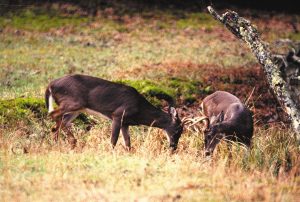
During the autumn months, bucks display aggressive behavior toward one another.
In the fall, a buck’s antlers are full size, and he prances through the fields, challenging any and all who dare step in his way as he searches for a mate. Fall is rutting season, and a buck may charge at anything. Definitely time to watch from your rolling blind.
So, keep your eyes open and the next time you visit a park, maybe you will be the one who sees so many deer.