
From Dodge City to Coolidge, a surprising array of natural and historical attractions await.
By Kathleen Walls, F522187
September/October 2024
Although it may not be known as a hot spot for vacationers, the southwest corner of Kansas makes a perfect retreat for camping and exploring. The area offers something for everyone — that is, unless you enjoy crowded theme parks, heavy traffic, and camping close to your neighbor.
FROM TOWN TO TOWN
Visiting Boot Hill Museum in Dodge City is like stepping back into the Old West. The museum is filled with interactive exhibits and true stories about the town’s early years. Visitors learn a lot about Wyatt Earp, who was a Dodge City lawman and the model for hero Marshall Matt Dillon in “Gunsmoke,” TV’s longest-running prime-time Western. Although some suggest otherwise, the show’s Miss Kitty may have been patterned after Dora Hand, a real-life saloon singer in Dodge City. The street is filled with old Western structures: Long Branch Saloon, an old jail, the 19th-century home of a Dodge family, and many other buildings you would expect to find in a town at the time.
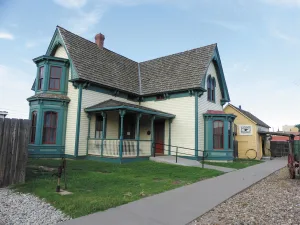
Boot Hill Museum’s preserved buildings include a 19th-century home.
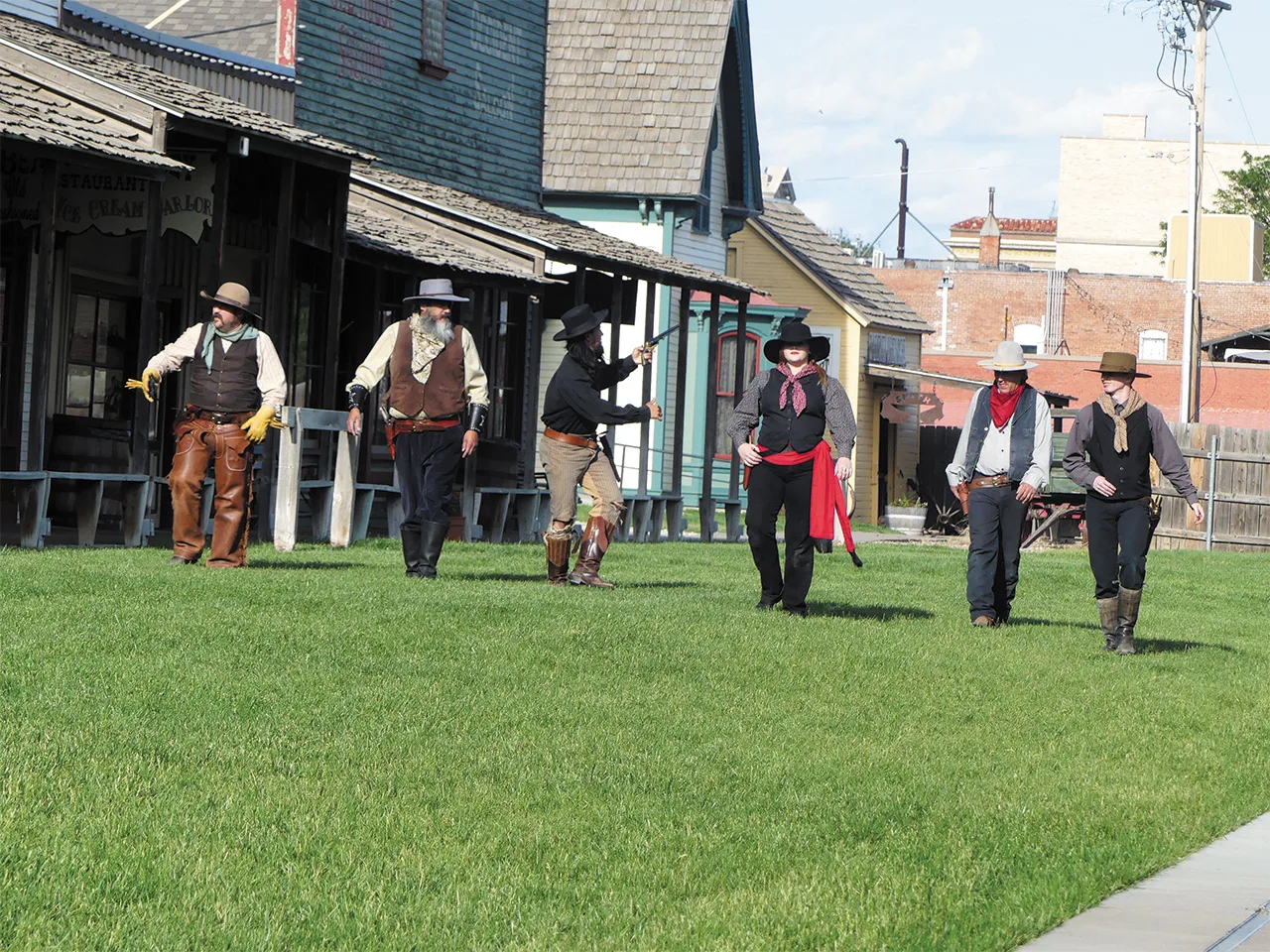
The museum stages realistic gunfights. In the one we saw, a group of cowboys and cowgirls arrive in town after a cattle drive. The marshal and his deputy meet them and inform them that no guns are allowed in Dodge City. A gunfight ensues anyway, and most participants become casualties. It was less realistic when all those involved got back up and spoke to the audience afterward.
After the gunfight, we dined and attended the Long Branch Variety Show. Miss Kitty and her girls perform along with “Chalkley Beeson,” an early owner of the real Long Branch Saloon, and other Dodge City characters. Miss Kitty’s interaction with the audience makes the show hilarious.
Before you get out of Dodge, stop at Boot Hill Distillery, built on top of a hill that was the former site of Boot Hill Cemetery. After the bodies were relocated to the municipal cemetery, a school stood on the site until 1927, when it was razed to construct a government office building. The distillery is housed in there today. On a tour, you can learn about its history, hear ghost stories, and enjoy some of its special spirits.
Note the cowboy statue in front of the distillery, created by dentist/sculptor O.H. Simpson in 1929 as a tribute to the cowboys who helped create Dodge City. The statue’s inscription reads, “On the ashes of my campfire, this city is built.”
About 35 minutes southeast of Dodge City, you’ll find one of the weirdest folk-art exhibits in the world at M.T. Liggett Art Environment in Mullinville. M.T. Liggett turned old farm machines, car parts, road signs, and pretty much anything he could find into art, which is displayed along the road. Liggett was anti-everything. Viewing his many political pieces, it was obvious he hated all politicians.
St. Jacob’s Well, located within the Little Basin in the Big Basin Prairie Preserve Wildlife Area, where early pioneers stopped, reputedly has never gone dry. Legend says it’s bottomless. Other stories suggest it’s inhabited by a ghostly cowboy and blind fish that can snatch you into its depths. In fact, it’s a water-filled sinkhole just south of Minneola, Kansas. Scientists verified it’s really a 60-foot-deep spring. If you visit, be aware it requires a descent down a steep hill.
Finney County Historical Museum in Garden City is known for having one of the world’s largest hairballs. Much of the area’s social, cultural, and natural history is detailed here in various exhibits. One display titled “C.J. ‘Buffalo’ Jones: Last of the Plainsmen” spotlights the city’s most flamboyant founding father, who once claimed to have killed more buffalo “than any other man ever did.”
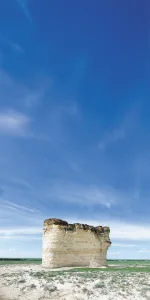
Monument Rocks, a chalk formation rich with fossils, is designated as Kansas’ first National Natural Monument.
Then he did a complete turnabout and became a conservationist of sorts. He attempted to start a buffalo-breeding business by crossing cattle with buffalo to produce what he called “cattalo” — livestock that would be able to survive on the high plains. Unfortunately, the cattalo, like the crossbred mule, was sterile. He then started a buffalo herd in Yellowstone. We may have him to thank that buffalo are not extinct. President Theodore Roosevelt named him Yellowstone’s first game warden. “Buffalo Bill” Cody once dubbed him “King of the Cowboys.”
Buildings on the museum grounds include the Pleasant Valley One-Room Schoolhouse, the historic 1884 Fulton House, and an adjoining small zoo.
Southwest Kansas boasts two of the 8 Wonders of Kansas. One is Monument Rocks in Gove County, a natural phenomenon you wouldn’t expect on the Kansas plains. We were driving along the flatlands on U.S. 83 about 20 miles south of Oakley when suddenly a collection of gigantic monoliths loomed in front of us. Geologists say they formed about 80 million years ago during the Cretaceous Period. These plains were then covered by a vast sea, which trapped and preserved animal remains. Over time, this area became rich with fossils. Monument Rocks is paired with Castle Rock, a chalk spire in eastern Gove County also known for its rich array of fossils.
Another of Kansas’ eight wonders is the Big Well in Greensburg. Measuring 109 feet deep and 32 feet in diameter, it’s known as the world’s largest hand-dug well. It was created in 1888 to encourage settlers to come to Greensburg and served as the town’s water supply until 1932. In 1939, it became a tourist attraction. Today it’s enclosed in the Big Well Museum & Visitor Information Center. You can still walk down to the base of the well. Also displayed is the world’s largest pallasite meteorite, which weighs 1,000 pounds.
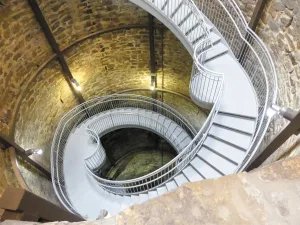
In Greensburg, steps descend to the Big Well, today housed in a museum and visitor center.
The museum tells the story of a tornado that leveled 95 percent of the town in 2007. The residents rebuilt using the most sustainable material possible. Today Greensburg is known for having the most LEED (Leadership in Energy and Environmental Design) buildings per capita in the country. The city’s entire electric supply is generated by wind energy.
Tiny Coolidge, population 93, had a big part in the classic movie National Lampoon’s Vacation, according to Lori Lennen, town mayor and owner of Cousin Eddie’s Visitor Center and Antique Shop. Coolidge was the home of Cousin Eddie in the movie. The town also contains the Trail City Bed & Breakfast, which once operated as a saloon and gambling hall, and some cute log cabins.
CAMPING
Among many RVing choices in southwest Kansas, two in particular impressed me.
Historic Lake Scott State Park has been named by National Geographic as one of the United States’ 50 must-see state parks. It has 50 sites with electricity and water hookups; four have sewage hookups, and many are pull-throughs. The campground surrounds Lake Scott, a 100-acre basin fed by a natural spring. Offerings include canoe and kayak rentals, a swimming beach, and nature trails. (ksoutdoors.com/State-Parks/Locations/Historic-Lake-Scott)
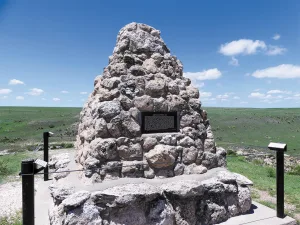
At Punished Woman’s Fork, a monument marks the site of the state’s last Indian battle.
Historic structures in the park include the Steele home, built by the area’s first white settlers and preserved much as it appeared 100 years ago. Another is the centuries-old El Cuartelejo Pueblo Ruins, the northernmost Native American pueblo in North America. Just south of the park is Punished Woman’s Fork, site of the last Indian Wars battle in Kansas.
Syracuse Sand Dunes Park is home to the largest sand dunes park in Kansas and one of the largest in the Midwest. The 1,300 acres of dunes are a place to take your four-wheeler or ATV out into an amazing, unmarked desert-like playground and ride where you wish. There are no trails or street markers — just open dunes to coast over, or climb on foot.

Syracuse Sand Dunes Park offers four-wheeling and ATV adventures, as well as camping.
The RV park is located around a lake and next to the Arkansas River. It’s somewhat separated from the dunes, so no one will come crashing over your RV, but they are close enough to enable you to drive your vehicle into them. There are 24 campsites: 10 on the river and 14 on 40-acre Sam’s Pond, which is stocked with fish. All sites have electric and water hookups; seven are pull-throughs. Besides fishing at the pond, other watery pursuits are kayaking or canoeing on the river.
An interesting fact: When you are standing in the park looking at the narrow Arkansas River, you are seeing what was once the northern border of the Independent Republic of Texas. A monument in the park tells the story. (syracusesanddunespark.com)
Within the 120-mile drive between Dodge City and Coolidge, I discovered Kansas is more than high plains. It’s a fascinating adventure.
FOOD DISCOVERIES
There are some interesting eateries along the route. Here are some places I loved.
Garden City: Cabana Mexican Grill; Paleteria Tarahumara, featuring homemade ice cream; Pho Hoa One Restaurant for Vietnamese cuisine; Pinky’s Grilled Cheestro; Hidden Trail Brewing, a family-friendly brewery.
Greensburg: Crazy Mule.
Syracuse: Black Bison Pub.
Wichita: Doo Dah Diner; Sabor Latin Bar and Grille.
— Kathleen Walls
MORE INFO
Kansas Tourism
travelks.com
(785) 296-2009
Department of Wildlife & Parks
ksoutdoors.com/state-parks
(620) 672-5911