

Final installment of a series of articles offering information for folks just starting their RV journey.
By Steve Froese, F276276
September-October 2024
This month, we continue our series on RVing for the beginner. Now that you have started your journey, let’s delve into some of the finer points of RV life.
First, it is important to be aware of local laws pertaining to RV travel. Always check into state, provincial, municipal, and federal laws that apply to areas where you’ll be traveling. This may seem trivial, but laws vary by location for trailer brake requirements (mostly pertaining to tow dollies and towed vehicles), passengers riding in trailers, weight and length limits for vehicle combinations, and so on. Most of these laws are straightforward, and generally common sense, so it’s just a matter of educating yourself on laws related to your specific RV setup. Don’t let a traffic stop or vehicle impoundment ruin your introduction to RV travel.
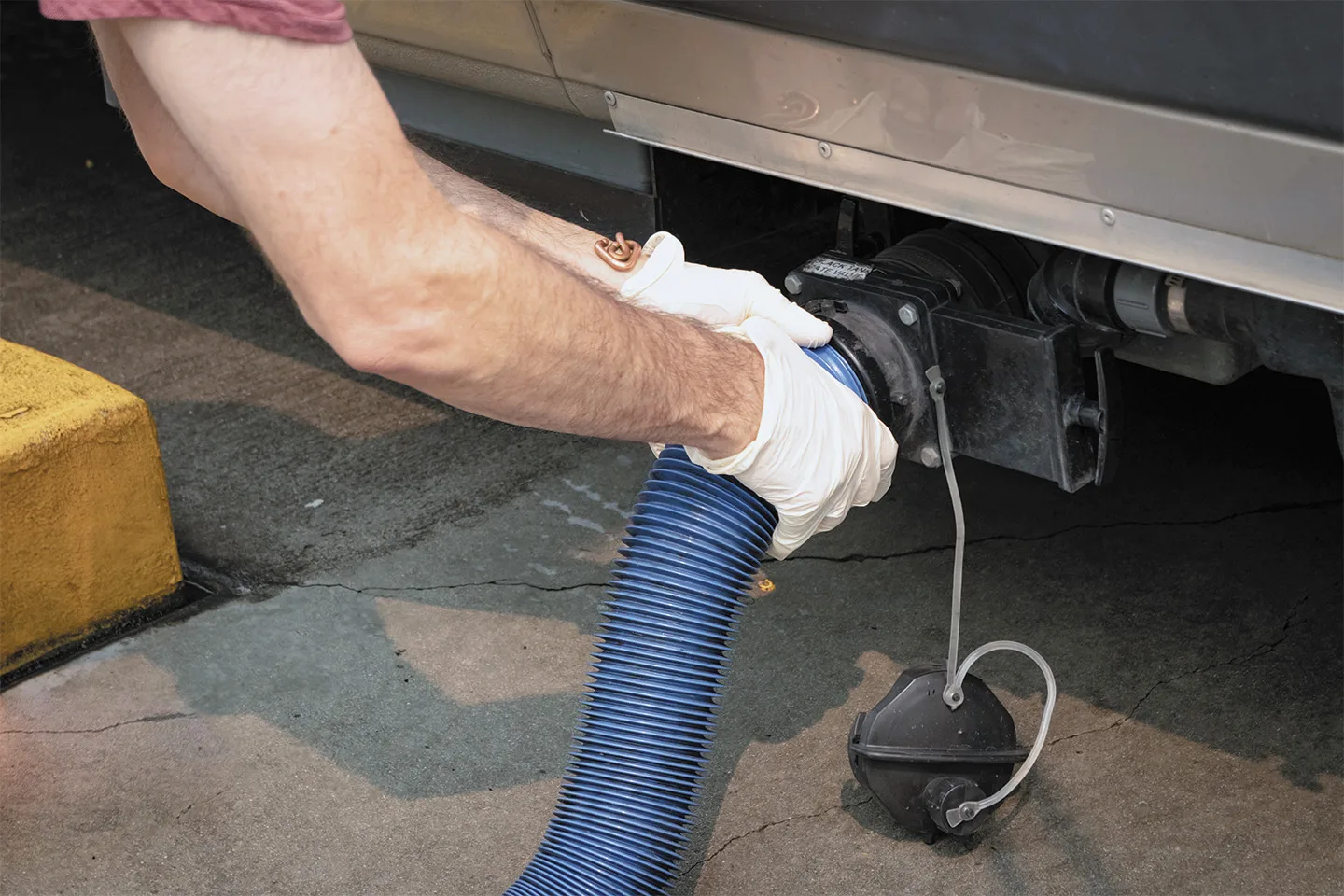
To avoid leaky connections and unwelcome mishaps, it’s important for RV owners to learn how to properly attach sewer hoses.
Not only do you need to keep law enforcement officials content, but also your fellow RV travelers. Many written and unwritten rules and etiquette guidelines should be followed. Failure to do so can result in angry neighbors or even outright eviction from RV parks. I will touch upon the common ones here, but always read the rules and regulations for each park you visit. They should be prominently displayed. Ignorance will be no excuse. Always be respectful, whether you are traveling down the road, pulling into a rest area, or staying overnight (be it at a private or public campground, RV park, state or federal park, forest service area, or just along the side of a river).
Consider making a reservation, especially in peak travel seasons. While it may be tempting to “go where the wind takes you,” it may be difficult to find accommodations during busy periods. This can result in driving much longer than you are comfortable with and could result in less than desirable overnight parking conditions.
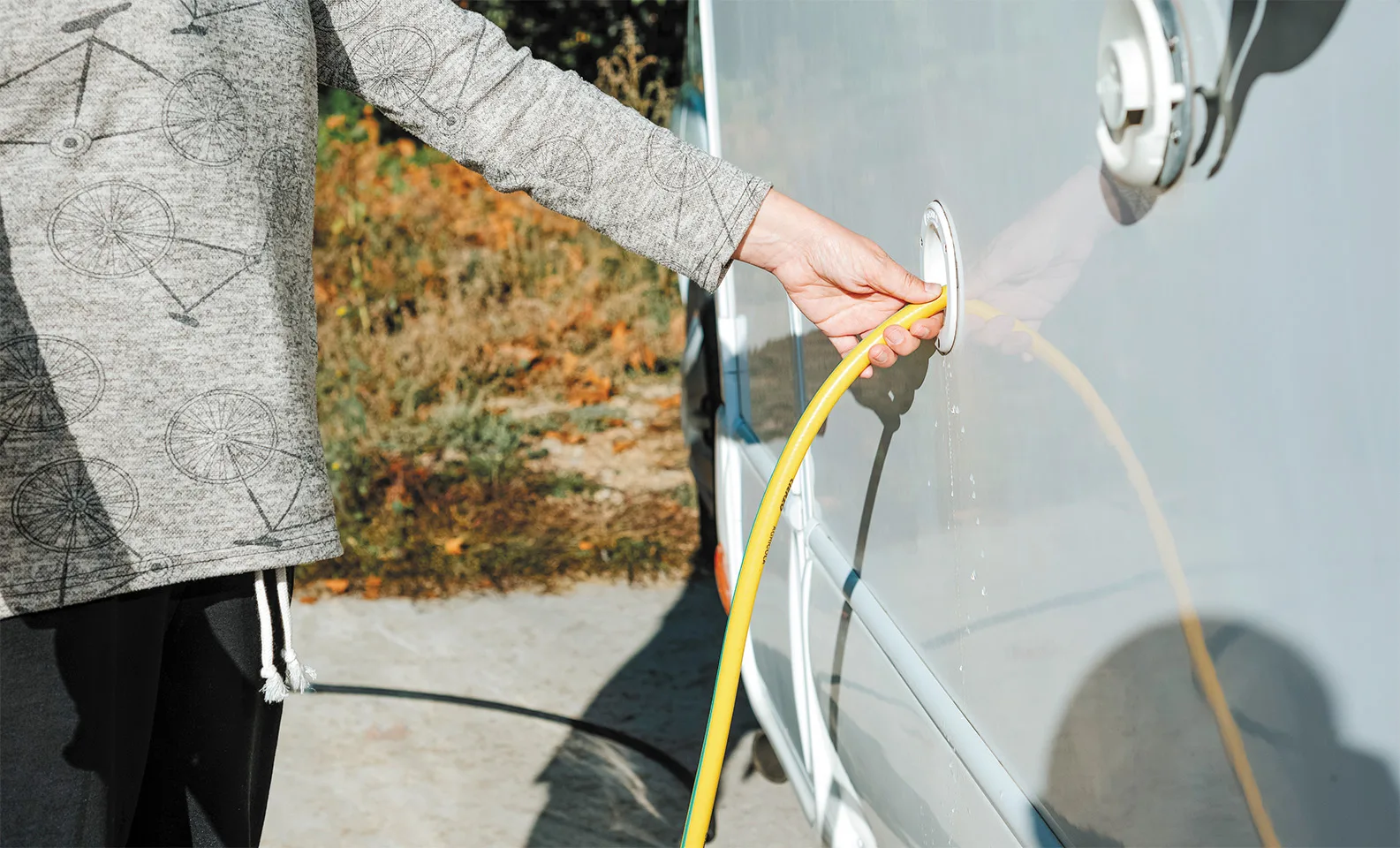
RV owners need to know how to fill the fresh water tank and to connect a water hose to the city water connection.
If you pull into a campground after hours, be sure to check in the next morning. Don’t try to pull in late at night and then leave very early without paying. RV parks and campgrounds rely on campground fees to survive, and some of them are small and family owned. This rule is rarely broken, but I include it here, as it bears considering.
If you pull into a campground late at night (generally after 10:00 p.m.), be courteous of your neighbors and be as quiet as possible while setting up camp.
Never dump gray or black water onto the ground. If the campsite has sewer hookups, ensure the connections are secure before opening the holding tank valves. As noted, if there are no sewer hookups, do not dump onto the ground. The park may have a central dump station you can use when you are leaving. It is also a good idea to not let your tanks get too full lest you fail to find a place to dump them right away.
Make sure all sewer and water connections are tight. Check for leaks on both sewer and fresh-water hookups, and tighten or repair any leaky connections. Some states require sewer hoses to be elevated off the ground. Hose supports can be purchased for this purpose.
Never run your generator in a park unless it is specifically permitted. If there are no electrical hookups at your site, you will have to use your onboard 12-volt system, which means no 120-volt appliances, such as air conditioners. Bear these last two points in mind when booking camping sites. If you need sewer and water, make sure the park and the specific site you are reserving provides them.
Keep your pets leashed at all times, except in cases where there is a dedicated off-leash area. Do not leave pets outside your RV when you are not there. Also, make sure they are relatively well behaved. Guests may be evicted if their dogs exhibit excessive barking. Aggressive dogs can also result in owner eviction. Some parks prohibit certain dog breeds such as pit bulls. If you are planning to travel with your fur babies, ensure you know the rules regarding pets for each park you are visiting. For new RVers, some conditioning of pets may be required, although most will adapt to the lifestyle quickly, as they want nothing more than to be with their family.
Speaking of family, do not allow any members of your family to cross through occupied RV sites, even if it means a significant shortcut. Although often unwritten, this is a hard-and-fast rule that is frequently broken by new RVers or those not familiar with this etiquette principle. It is okay to traverse unoccupied campsites, but never trespass on occupied sites.
All of us enjoy the great outdoors, but please fully extinguish any campfires, turn off the music, and move the socializing inside the RV after 10:00 p.m. Most neighbors will not appreciate audible socializing in the evening. Also note that quiet hours vary by park, so make yourself aware of specific quiet times for the place where you’re staying. This is another thing that can get you evicted quickly. Conversely, if you are the victim of noisy neighbors or other bad behavior, don’t hesitate to report it at your earliest convenience, as you have a right to enjoy peace and quiet, and the rules apply to everyone.
Make yourself aware of all the campground rules, which will include fire regulations; bike, skateboard, and motor-vehicle policies; and perhaps even things such as drone use. Adhere to all regulations, whether you agree with them or not.
Most importantly, get to know your camping neighbors. Part of the joy of the RV lifestyle is meeting new people from across the country, and, in fact, you will likely find travelers from all over the world!
There are also etiquette rules that apply when stopping briefly at a rest area or roadside pullout:
Occupy only a single parking space. Do not extend awnings or slide rooms, and do not put personal property outside the RV, such as tables, chairs, fire pits, etc.
Do not overstay the time limit. Many rest areas allow an 8-hour maximum stay. Do not exceed this.
Do not drop your trailer or leave your motorhome and head out for an excursion somewhere else.
Before leaving a campsite for a day of traveling, make sure to dis-connect and stow all cords and hoses and retract awnings, slide rooms, and TV antennas (the latter one is often overlooked). Add some water to the fresh-water tank so you have enough in case you don’t have hookups for a few days. If weight is not an issue, consider filling your fresh tank, but you can save a lot of weight and achieve increased fuel economy if you don’t fill it all the way. Empty your holding tanks if possible. This will ensure you are prepared if you must dry camp for a few days.
I hope this series has been helpful to you, whether you are a new RVer or a seasoned traveler. I haven’t covered everything here, as RVing, like other things, involves a lifetime of learning, but the important basics are here. As always, feel free to reach out to me at techtalk@fmca.com with your questions and comments. See you on the open road!
Send your troubleshooting questions to Steve Froese at techtalk@fmca.com. The volume of correspondence may preclude personal replies. Not all responses will apply in every instance. Some situations may require a visual inspection and hands-on testing. If you choose to follow any procedures outlined in this column, first satisfy yourself that neither personal nor product safety will be jeopardized. If you feel uncomfortable about a procedure, stop and make an appointment with an RV service facility.
You may also want to consult the FMCA Forums (https://community.fmca.com) to see whether your question has already been addressed or, if not, to post it.
Recalls
Looking for the latest RV-related recall information? Visit FamilyRVingmag.com for a list of the most recent recalls issued by RV and component manufacturers. Or, to search for recalls, investigations, and complaints by vehicle year, make, model, and VIN, visit nhtsa.gov/recalls. NHTSA’s Vehicle Safety Hotline is (888) 327-4236.