
In New Iberia, Louisiana, Acadian culture permeates the city’s history, cuisine, and architecture.
By Kathleen Walls
July/August 2025
If you’ve been itching to visit a real part of Acadian Louisiana, New Iberia is the place to go. It’s located on Bayou Teche, in the heart of Acadiana. Founded in 1779 by the Spanish, the town was named after the Iberian Peninsula in their home country. Throughout the years, French, Spanish, Native American, and African American communities have called it home. This diversity is reflected in the city’s museums, architecture, food, and festivals. Some of its famous residents include author James Lee Burke, painter George Rodrigue, and musician Bunk Johnson.
The boardwalk at Cypremort Point State Park enables close-up views of wildlife.
Cypremort Point State Park is a sportsman’s paradise, boasting a half-mile stretch of man-made beach where families can enjoy fishing, boating, and swimming. An 8-foot-wide boardwalk stretches through the swamp for a quarter mile, providing close-up views of native plant life; nutria, muskrats, deer, and alligators; and native Louisiana birds. I spotted a few turtles and some wading birds during my visit. The drive to the park took me through miles of green sugarcane stalks waving in the breeze. The park’s campground contains 22 pull-through sites with full hookups, making it a perfect home base for your RV. Several cabins are perched next to a small canal that leads into the marsh. Shelters and picnic tables are situated on the beach side.
For those into kayaking and canoeing, this quiet town offers an opportunity to explore Bayou Teche from the water. The 135-mile Bayou Teche National Water and Paddle Trail, a world-class route that flows from Port Barre to Patterson, has an access point in New Iberia.
Downtown, Bayou Teche Museum gives an overview of Acadian history, augmented with colorful paintings by the late George Rodrigue, renowned “Blue Dog” painter and New Iberia resident. The museum explains how the Bayou Teche derived its name from Native American myths. According to Chitimacha legend, a venomous snake measuring more than 10 miles long plagued the tribe’s people. When the warriors finally fought to kill it, the reptile turned and twisted in its dying moments, digging a bed that filled with water — creating Bayou Teche.
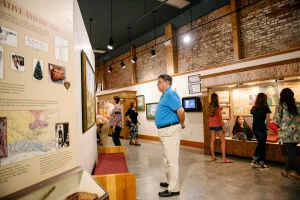
The Bayou Teche Museum spotlights Acadiana.
The museum provides guided and self-guided tours. Exhibits include an exploration of “swamp pop,” a musical genre rooted in south Louisiana, along with a spotlight on jazz trumpeter Bunk Johnson. James Lee Burke, a writer best known for his Dave Robicheaux crime novels, is also featured — complete with a realistic-looking “Dave’s Bait Shop.” A simulated elevator ride down into a salt mine is another attraction.
George Rodrigue Park, located on Main Street downtown in the National Register Historic District, pays additional tribute to the artist. The park is located near the historic Evangeline Theater, whose façade has been restored to its 1940sart-deco character.
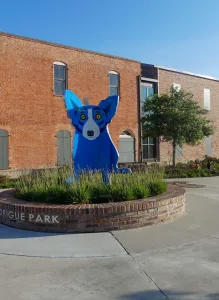
New Iberia resident George Rodrigue gained fame for his “Blue Dog” paintings.
Shadows-on-the-Teche, also on Main Street, is an antebellum mansion considered one of the most beautiful homes in New Iberia. The former plantation was built for David and Mary Weeks — wealthy sugarcane planters — and constructed by enslaved laborers. Construction began in 1831, and David died shortly before the home was completed in 1834. Mary and their six children moved in, and Mary managed the home and plantation. Most of the enslaved people lived at the plantation a short distance away, but 24 men, women, and children worked at the Shadows.
Mary later married Judge John Moore, a prominent secessionist and one of the drafters of Louisiana’s Ordinance of Secession. Union troops used the Shadows as their local headquarters during the Civil War. Mary; her sister-in-law, Hannah Jane Conrad; and three enslaved house servants remained in the home.
The Shadows stayed in the family until 1958, when Mary and David’s great-grandson, William Weeks Hall, donated the property to the National Trust for Historic Preservation. Today, visitors learn about the Weeks family and the hundreds of enslaved people who worked there through the generations.
Along with sugarcane, rice is one of the most common crops in Louisiana. Conrad Rice Mill is America’s oldest operating rice mill and is open for tours. Start at the Konriko Factory Store nextto the mill, which is also the place to buy delicious Cajun foods. I sampled some Konriko Wild Pecan Brown Rice. P.A. Conrad, who founded the Conrad Rice Mill and Planting Company in 1912, chose “KONRIKO” for the trademark name: It incorporates “Kon” for Conrad, “RI” for rice, and “KO” for company.
Elaine, my guide, showed me the mill and explained the process. Even though it was not operating on the day I visited, I was amazed that the machinery was still in use. Visitors can also view a video about rice growing.
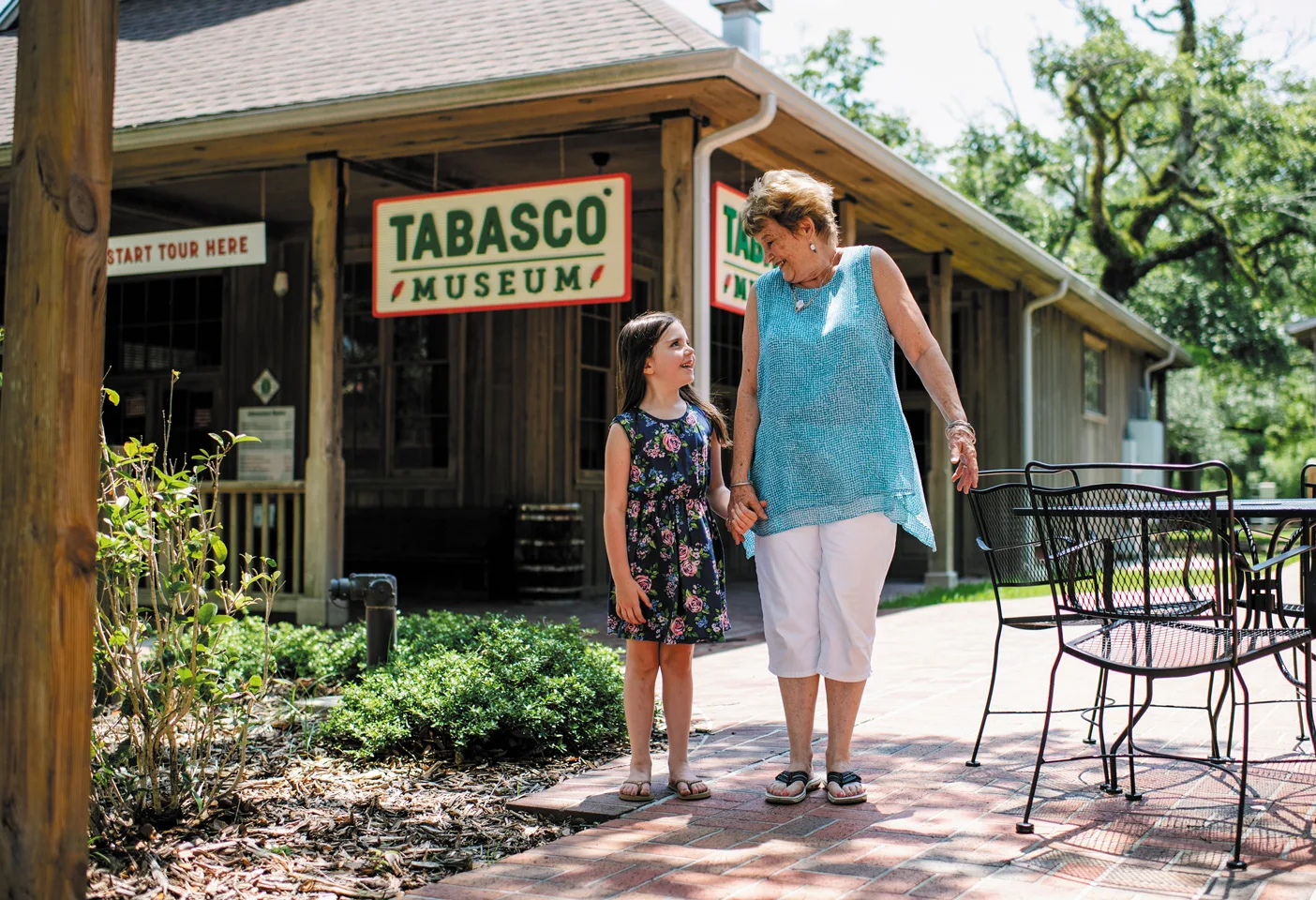
Louisiana’s spicy cuisine is celebrated at the Tabasco Brand Factory Tour & Museum on Avery Island. Family patriarch Edmund McIlhenny grew his first commercial pepper crop in 1868; the following year, he filled cologne-type shaker bottles with the pepper sauce he had concocted. Tabasco sauce quickly became a culinary favorite and is now found on restaurant tables around the world.
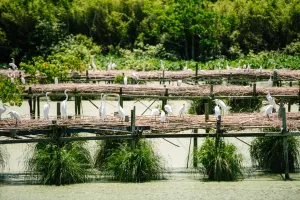
Egrets roost at the Bird City sanctuary, located in Jungle Gardens.
Visitors can opt for the Avery Island Fan Experience, which includes a self-guided tour of the Tabasco Brand Museum, pepper greenhouse, barrel warehouse, a salt mine diorama, and Tabasco Restaurant 1868, among other stops. The restaurant serves Cajun cuisine and items seasoned with Tabasco sauce.
Avery Island also features Jungle Gardens, a 170-acre semitropical garden that can be explored via a three-mile driving tour. The route passes the remains of an unusual rookery known as Bird City. Edward “Ned” McIlhenny, son of the inventor of Tabasco sauce, founded it in the 1890s to protect egrets and other wild birds that were being hunted for their feathers. To this day, descendants of the original birds often return, along with numerous species of wildlife. The garden is home to one of the oldest timber bamboo groves in America, boasting 64 varieties. The driving tour includes a bus and RV route, which has a height restriction of 12 feet 8 inches; walking is also permitted. Jungle Gardens admission is included with the Tabasco tour.
Near the town of Jeanerette, the historic Albania Mansion stands along the banks of Bayou Teche. The Greek Revival mansion includes nine bedrooms and 9½ baths and was built between 1837 and 1842. It hosted artist John James Audubon while he created his “Birds of America” sketches and appeared in a film titled In the Electric Mist, based on James Lee Burke’s book. Upon entering, visitors are greeted by a gorgeous, curved staircase and crystal chandeliers. The home appears ready to host the area’s elite for a 19th-century ball. Outside, you may encounter an aviary for peafowl and ornamental pheasants, hidden gardens, and a bamboo retreat.
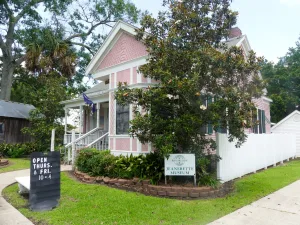
The Jeanerette Museum focuses on 200 years of area history.
The Jeanerette Bicentennial Park & Museum offers another look into the past. The museum, set up in a 1902 cypress-wood home, offers an in-depth look at farming and area history. In the main hall, the walls are lined with patterns handcrafted from cypress. The A. Moresi Foundry used these patterns in the 1800s to create cast-iron parts for sugar mills, salt mines, rice mills, sawmills, and steamboats. A video explains the growing and production of sugar.
Food is a big part of Cajun culture, so New Iberia boasts a plentiful mix of restaurants. A breakfast tradition is Victor’s Cafeteria. It’s touted as the place where writer James Lee Burke’s fictional detective often dined. The décor alone is worth a visit. Countless plaques, stuffed ducks and fish, and pictures adorn the walls, including a plaque that states, “Dave Robicheaux eats here.” Beneath it is a letter Burke addressed to Victor’s owners, Catherine and Victor: “Who is this Dave Robicheaux? Well, Cher, let me tell you . . . ”
Another of my favorites is Bon Creole, where I enjoyed a po’boy sandwich, huge and overflowing with tasty fried shrimp. Others include Calabria Italian Restaurant, which offers Italian dishes with an Acadian twist, and Jane’s Seafood and Chinese Restaurant, serving boiled and fried seafood and Chinese fare.
Many events take place in town during the year. They include Books Along the Teche Literary Festival, Mardi Gras, El Festival Espanol De Nueva Iberia (New Iberia Spanish Festival), Louisiana Sugar Cane Festival, Lao New Year, Delcambre Shrimp Festival, World Championship Gumbo Cookoff, and the City of New Iberia Plein Air Competition.
A trip to New Iberia is a deep dive into Cajun culture. Explore and enjoy!
MORE INFO
Iberia Parish Convention & Visitors Bureau
iberiatravel.com