
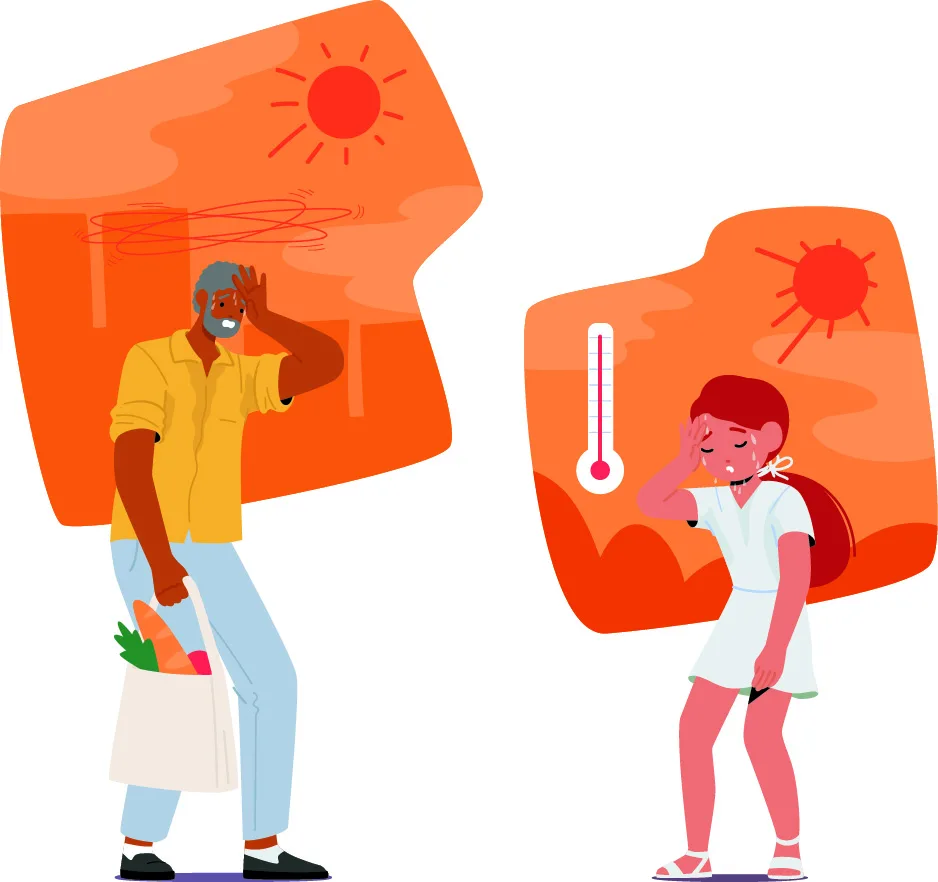
During extreme periods of hot and humid weather, the body’s ability to cool itself can be challenged. Recognize the symptoms of heat-related illness – and act fast.
By Randall Davis, F471978
July-August 2025
When summer arrives, it brings with it the possibility of hyperthermia (hyper = too much; thermia = temperature). Actually, any hot and humid environment can induce this condition. There are three main levels of hyperthermia: heat cramps; then heat exhaustion; and, finally, heat stroke. (Some medical sources also cite heat rash as the preliminary sign.)
The very young and the elderly are most susceptible to the effects of heat. Medical conditions such as cardiovascular disease, kidney disease, diabetes, and pregnancy can also make a person more vulnerable. In addition, certain medications can exacerbate heat effects; they include beta-blockers, which slow the heart rate (these medications usually have “lol” at the end of their name); diuretics (fluid meds); anticholinergics such as diphenhydramine (Benadryl); scopolamine patches used to treat nausea and vomiting; amitriptyline (Elavil) or other antidepressants; and drugs used to treat overactive bladder. Check with your medical provider or pharmacists if you are taking these meds.
Heat cramps are just what the name implies. The muscle cramps are caused by sweating, which reduces electrolytes in the body. They are accompanied by nausea. The patient with heat-induced muscle cramps should be removed from the hot environment and given sports drinks, or water if that is all that is available. Place an ice pack on the cramping muscle. Move the patient to a cooler environment, or at least cool them off with a mist of water. If not corrected, this condition could progress to the next stage of hyperthermia — heat exhaustion.
Heat exhaustion brings profuse sweating; nausea; headache; and, just like the name implies, severe fatigue. The patient may be lethargic or dizzy. You may notice their skin is cool, pale, or clammy. Without treatment, their symptoms will soon develop into heat stroke, a potentially deadly condition described below.
To treat a patient who is exhibiting signs of heat exhaustion, immediately remove them from the hot environment. Take off unnecessary clothing to expose as much skin as possible. Fan the person and apply cool, not cold, water to the skin; this is best done by misting them using a spray bottle. If misting is not possible, place cool towels around the neck, under the armpits, and in the groin area. Give them cold liquids such as sports drinks or water (sorry; no alcoholic beverages). If the patient does not improve soon, contact emergency medical services or get them to a hospital right away.
If heat stroke develops, recognize that it is a life-threatening emergency. At this stage, the patient’s core temperature is very high. They may have stopped sweating, which makes matters worse, as sweat is essential for cooling the body. They may exhibit the same signs and symptoms as heat exhaustion but also may have passed out temporarily or still be unconscious. The patient may be combative or exhibit other mental or behavioral changes as well.
If the person is unconscious, and you are alone with them, roll them onto their side and start cooling measures right away. Contact emergency medical services. If you have assistance, immediately place the victim in cool water up to their neck and pour water on their head. As they start to feel better and become more aware, stop the severe cooling, as you may take it too far and make them too cold, potentially causing hypothermia. Once the patient is fully awake, give them sports drinks, and get them out of the heat!
Prevention. The best way to deal with heat emergencies is to prevent them! Stay cool and drink plenty of water and sports drinks in very hot weather. My wife and I keep premeasured packets of pediatric electrolyte in our motorhome; it can be mixed in water bottles to help with heat emergencies. Dress appropriately in loose, lightweight fabrics. Avoid dark-colored clothing. Reduce your activity in hot weather. If you or someone else starts to feel the effects of heat, begin the cooling process immediately.
Have a safe day.
Randall (Randy) J. Davis is a licensed paramedic and has provided emergency patient care for over 40 years. He has also managed the St. Louis Community College EMS training programs and retired from the St. Francois County (Missouri) Ambulance District as education coordinator. He is an EMS educator and has presented numerous basic and advanced life support classes for the American Heart Association and other nationally accredited emergency medical education programs.