
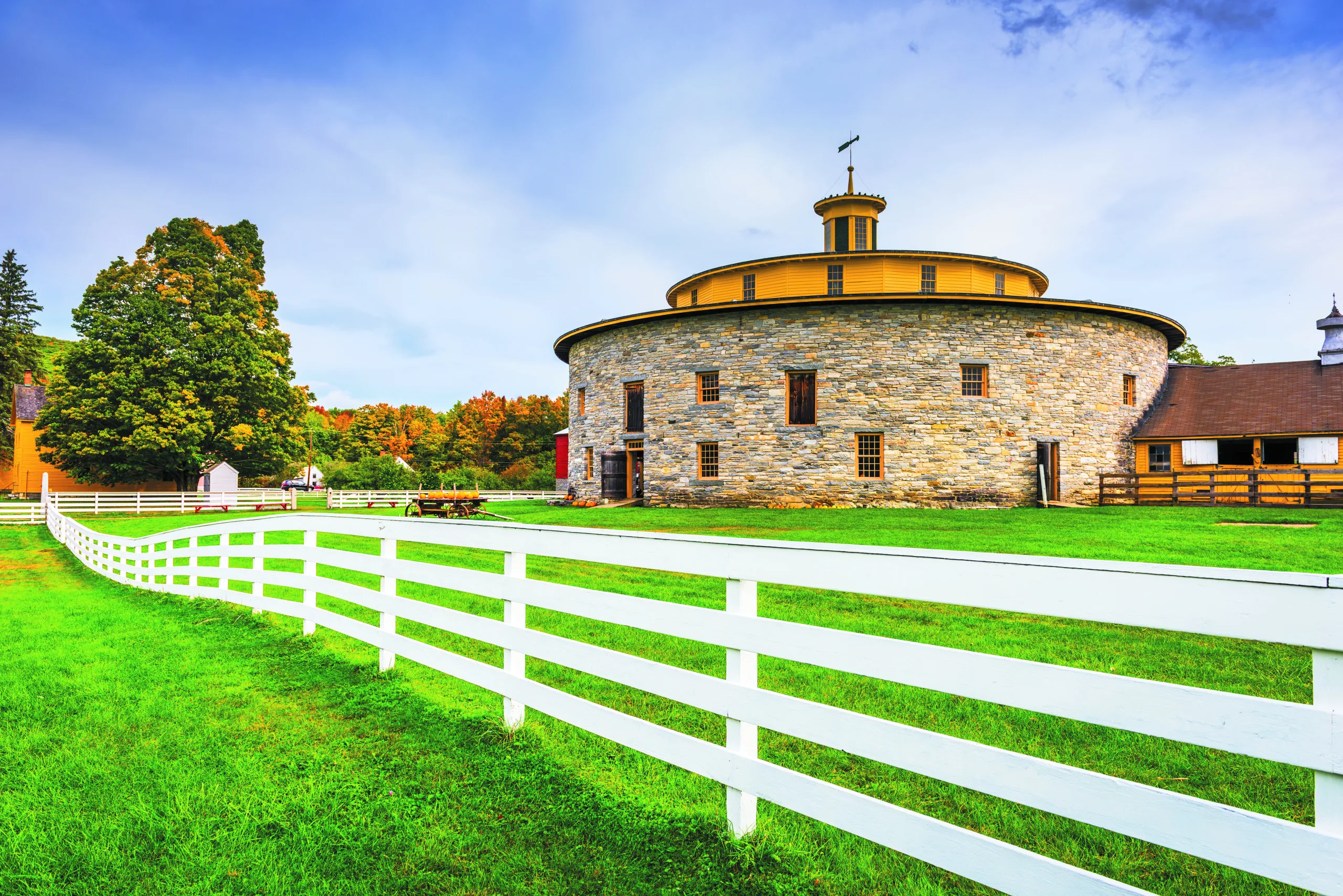
A visit to Hancock Shaker Village in western Massachusetts offers a glimpse into the lives of those who lived and worked in this religious-based community.
By Ann Bush
May-June 2026
Moved by a passion for religious freedom, a small group of Shakers left Manchester, England, in 1774 seeking freedom to live, work, and practice their faith. Others followed, eventually creating 19 Shaker villages in various New England and midwestern states such as Kentucky, Ohio, and Indiana.
Tenacious, feisty, and determined, a few settled in Pittsfield, Massachusetts. By 1780, many local community members converted, often donating their farms. Hancock Shaker Village was founded in 1790, dedicated to creating a sustainable community through hard work. Drawing people of all ages and skills, the village grew to more than 300 members who managed 3,000 acres at its peak in the 1840s.
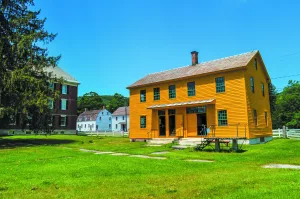
The Brethren’s Shop
Slowly, because of the Shakers’ strict celibacy rules, the community waned until one lone “Sister” remained. Sometime in the 1960s, with the help of local residents, a nonprofit organization was created to operate the village as a living history museum open to the public.
Designated a National Historic Landmark District, the village contains over 20 authentic Shaker buildings complete with original Shaker furniture and artifacts portrayed in rotating exhibits.
During my visit in the spring of 2024, the village was celebrating the 250th anniversary of the arrival of the first Shakers to the colonies. My plan for a quick two-hour activity turned into a full morning spent strolling through amazing barns, workshops, gardens, and living quarters, ending with a nice late lunch at the Woodlife Kitchen.
THE SHAKERS
“A place for everything, and everything in its place” sums up the Shaker lifestyle. Immigrating from a world of ornate, gaudy churches; layers of stylish, uncomfortable clothing; and strict societal levels, the Shakers envisioned a completely different lifestyle than what they left behind.
The National Park Service describes the Shaker style as “characterized by simplicity, utility, and craftsmanship.” The Shaker sense of order and neatness is reflected in the orderly lines and lack of ornamentation in their works.
The Millennial Laws, published in 1821, set standards for how each Shaker community should be constructed and managed. The Shaker environment was meant to create an Eden paradise on earth by using only natural materials. Each location was carefully chosen in a site of great natural beauty for worship and rejoicing. Buildings were constructed in a linear arrangement with walkways, roads, and fields pleasing to the eye. Restrictions on color and form ensured simplicity, therefore eliminating internal competition. The Shaker style is based on their religious desire to put God first, with no distractions.
ROUND STONE BARN
Playing a major role in agriculture, Shaker communities included a variety of barns for all types of animals. However, the Hancock Shaker Village Round Stone Barn, built in 1826, is one of a kind. Not only is the barn aesthetically beautiful, but it’s an engineering marvel, drawing visitors from around the world to study its design. It is the only circular barn the Shakers built.
Set on a sloping hill, the building can be entered from the ground at three levels. Wagons brought feed hay in through the top level, depositing it into a central haymow on the floor below, where the cows were kept. The wagons would be moved around the circular route and exit through the same door they were brought in.
After the cattle were removed from the building, workers would sweep the manure through trap doors in the floor, where it dropped into a cellar below. From there, a wagon was loaded with the manure and taken to the nearby gardens. This barn primarily housed dairy cows and horses. Other nearby barns sheltered goats, sheep, and pigs. During my visit, I spied a mama pig outside with her piglets, getting a taste of their new world. Just outside, Billy the goat and Dodge the ram were “cutting” the grass. Not far away, a huge garden was bursting with vegetables — all managed by volunteers.
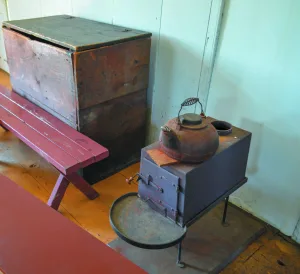
Iron stoves like this one heated rooms throughout the village.
IRONWORK
All items necessary for daily life were built by the Shakers in workshops painted bright yellow. Their skills and excellent craftsmanship coursed through each dwelling.
Ironwork was evident everywhere, from door handles to hinges to kitchen pots and hooks. The simple but effective coal stove found in almost every room became an icon for Shakers. Throughout the village, beautiful examples of simple, yet elegant ironwork truly held the village together.
BRICK DWELLING
One of the most interesting and beautiful buildings in the village is the place where they slept, ate, and worshipped — the five-story Brick Dwelling.
Built in 1830, the red-brick structure includes a cellar level used for food preparation and storage. Simple dishes featuring fresh garden produce were cooked by Sisters who specialized in preparing delicious meals every day. The community dining room, on the ground floor, contained long rectangular tables lined with the Shakers’ famous ladder-back chairs. Each place setting was the same. Food was set on the table in large bowls, and everyone received the same amount. The Shakers ate all their meals in silence to prevent idleness and ensure a swift return to their workstations.
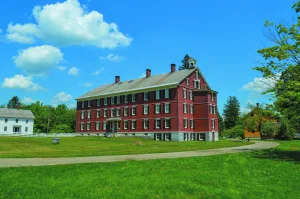
The 1830 Brick Dwelling
Near the back of the dining area is an open area where chairs on hooks line the walls. This is where they worshipped, sang, and read scripture. It was the only time the group gathered for fellowship and did not work. I missed the guided tour of the worship room but heard that it was an eye-opener.
The second and third floors included frugally designed sleeping rooms. Two or more people were assigned to each. Along the walls, wooden pegs secured baskets, hats, clothing, and chairs. The building was split in half from north to south; Sisters slept on the west side and Brethren stayed in the east portion.
THE MOVERS
Shaker communities were not only flourishing religious institutions but successful business entities known for their engineering talents, craftsmanship, music, agriculture, artistic style, and commerce. Visitors can tour many of the village workshops, but here are a few you should not miss.
Dairy Production Center
Butter and cheese were among the Shakers’ most prolific goods sold, known throughout the United States for many years. Built in the 1790s, the butter production center was located near the Round Stone Barn for easy access to milk. The assembly-line setup from fresh milk containers to the finished products included a cold storage building that was considered high-tech at the time, featuring Shaker-designed machinery.
Textiles
In a loft on top of the dairy house, the Sisters worked on large looms to create everything from blankets and clothing to kitchen linens and aprons. The bonnets and cloaks they produced were necessary to stay warm during the cold New England winters, and soon became popular with those outside the community as well.
Originally, the Shakers’ bonnets were made from braided straw and known as “chip hats.” Their palm-leaf-and-straw bonnets were sold for nearly 50 years. As fashions evolved, so did the bonnets, and silk-covered cardboard eventually replaced the straw. For many who work in gardens and on farms, straw hats remain popular, and they have become a fashion item elsewhere. The simple Shaker-style men’s hat is still made and sold today.
Iron stoves inside a Shake Village home.
Produce and seeds
The Shakers’ number-one task was to grow their own food. They canned and also sold surplus produce in open markets. Saving seeds for the next growing season soon became a second business venture when the Shakers created the seed packet — small envelopes of seeds with written planting instructions on the package. The Shaker Seed Company was founded and imitated by a few companies that are still in business today.
Basket weaving
Using local natural resources was a hallmark of Shaker communities. Their box-shaped baskets were created in various sizes, colored by natural dyes, and paired with tops that fit perfectly. Shaker goods were always designed with an exact purpose in mind; many were used in daily farm and kitchen activities. The weavers also made seats for their famous ladder-back chairs.
Furniture
The Shakers crafted all of the furniture used in their villages. Their invention of the circular saw in 1910 transformed furniture production throughout the globe. The Shakers built each piece for a particular function; it was designed to fit a predetermined place in the room. For example, a chest fit snugly into a niche. Twin bed posts were short, because anything longer would waste good wood.
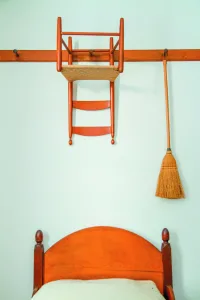
Wall pegs keep items orderly in a Shaker sleeping quarter.
Perhaps the Shakers’ most popular furniture design is the ladderback chair. A chair made at the Mount Lebanon Shaker Village in New York received a medal at the 1876 Philadelphia Centennial Exhibition for its strength and modest beauty. Soon afterward, a patent was acquired and mass production followed. The Shakers also acquired a patent for a ball-and-socket tilter for the base of chair legs, which is still found in many chairs today.
Other interesting buildings at Hancock Shaker Village include the cold storage cellar; the Country Store, where goods are sold to the public; and a centuries-old apple orchard.
A reimagined Visitor Center & Center for Shaker Studies is expected to open in the summer of 2026. According to the village website, the “renovated structure will enable dramatic enhancements to the visitor experience through creative orientation, expanded program offerings, close encounters with elements of the museum’s extensive Shaker collection, and impressive views of the picturesque vistas unique to the site.”
MORE INFO
Hancock Shaker Village
1843 W. Housatonic St.
Pittsfield, MA 01201
(413) 443-0188
hancockshakervillage.org
Admission is $20 for adults ($18 for seniors, active and retired U.S. military, and others); $8 for youth ages 13-17; and free to children 12 and under.