|
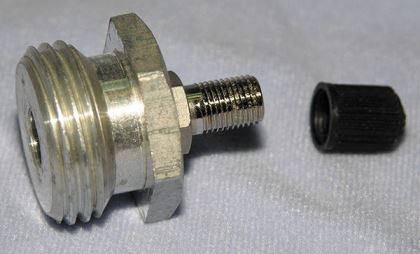
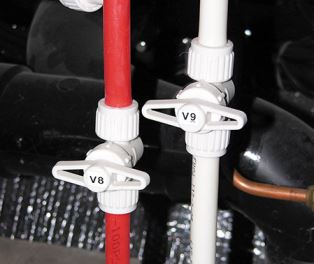
Dear RV Doctor: Bob Wynn Chances are those visible tubes are for the hot and cold low-point drains, though the actual valves may be located elsewhere. (Check the owners manual.) Low-point drains are utilized when winterizing the RV or before periods of nonuse/storage. It’s much easier to evacuate all the water using the drains, and running the water pump to help void the coach of any remaining water. The fresh-water tank itself has its own dedicated drain valve. That’s probably the other valve you see. Evidently, RV antifreeze is still in that tank. You’ll need to flush it out prior to using the coach come spring. As you are aware, there are two methods of winterizing: the dry method and the wet method. For the dry method, using clean, oil-free compressed air and a blowout plug, the majority of the water on the distribution (pressure) side of the system can be eliminated, but water from the suction side between the pump and the tank will not be removed. I recommend running a little RV antifreeze through the pump to protect it, leaving some of the solution inside the tank. The wet system mandates you fill the entire pressure-distribution system with RV antifreeze. I recommend the wet method if you are expecting below-freezing temperatures over a lengthy period of time. With the dry method, just blowing the lines clear is usually all that’s necessary, but that leaves the seals dry, too. If you have any doubt about the expected weather, use the wet method. |
|
Dear RV Doctor: Carl Turner, F413320 The response you read was based on what I thought was best given Mr. Rourke’s situation, including all the extenuating circumstances. I actually am a fan of two 6-volt batteries, as well as two 12-volt batteries, depending. In fact, in my seminars I often mention that I could literally be on either side of that debate and win! There are many pros and cons to consider. Six-volt batteries have thicker positive and negative electrolytic plates, which allow for more deep cycles and overall better battery longevity. As far as amp-hour capacity, indeed, two typical 6-volt batteries in series hold a slight mathematical edge over two like-sized 12-volt batteries connected in parallel. But it is so relatively minute, I doubt any RVer would really be able to tell the difference, especially if (as recommended) the battery bank is not drained below 50 percent capacity. Switching from two lead-acid 12-volt batteries to two AGM 6-volt batteries definitely will be more advantageous. And even more so if you can fit the higher-profile battery in the same space. Of course, the cost goes way up, too. Remember those pros and cons! Another “pro” for 12-volt batteries: If one happens to fail, you’ll still have a 12-volt-DC output from the remaining battery. If one of the 6-volt batteries fails, you’re dead in the water. Nothing inside the coach can operate on 6 volts. Each RVer must look at what is best in his/her tiny snapshot in time in order to fully analyze which type of battery is best for that situation. How often is the coach used? What type of charging system is employed? How is the RV used, etc.? There are way too many varying factors to definitively state one type is better than the other. Because both types have merit, I promote both, and then, when necessary, determine which type a specific RVer is better served with, given that exact situation. So, you certainly are not incorrect in your role of adviser. Keep up the good work! |
|
|
Dear RV Doctor: Mel Sebastian I, too, am a proponent of both methods of winterization, as evidenced by my reply to Bob Wynn. The decision should depend mostly on the climate and the conditions you’re expecting during the period of nonuse. Blowing the lines clear with compressed air — be sure it’s clean compressed air — is a viable alternative to filling the system with RV antifreeze. It saves on the cost as well. My opinion is that if there is any residual water remaining in the pump head, or even a little water left in the tank, even if it freezes overnight, it will have ample room to expand, so damage is unlikely. To be 100 percent sure, however, I’d recommend disconnecting the nonpressurized, suction-side of the water line running between the fresh-water container and the inlet to the water pump and manually pouring a half-cup of RV antifreeze into the hose leading to the pump. Then quickly turn the pump on for a second or two. This will displace any leftover water within the pumping mechanism. With that small amount of antifreeze moving through the pump, it will quickly dilute to almost nothing by the time you flush the lines clear come spring. I further recommend chlorinating the entire fresh-water system prior to the first use the next season. The chlorination process will eliminate any residual RV antifreeze left in the piping distribution system. This way, you’ll be guaranteed that any moisture left in the pump will be eliminated altogether and you’ll be free from worry while you’re in Arizona. |