
The pleasant experiences that campground guests enjoy often reflect the dedication of multiple generations of owners who carry on their family business.
By Jeff Crider
August 2020
When Brent Gasser was growing up in the 1960s and ’70s, he never thought he’d end up in the campground business. His family owned and operated a successful asphalt construction company with facilities in three states.
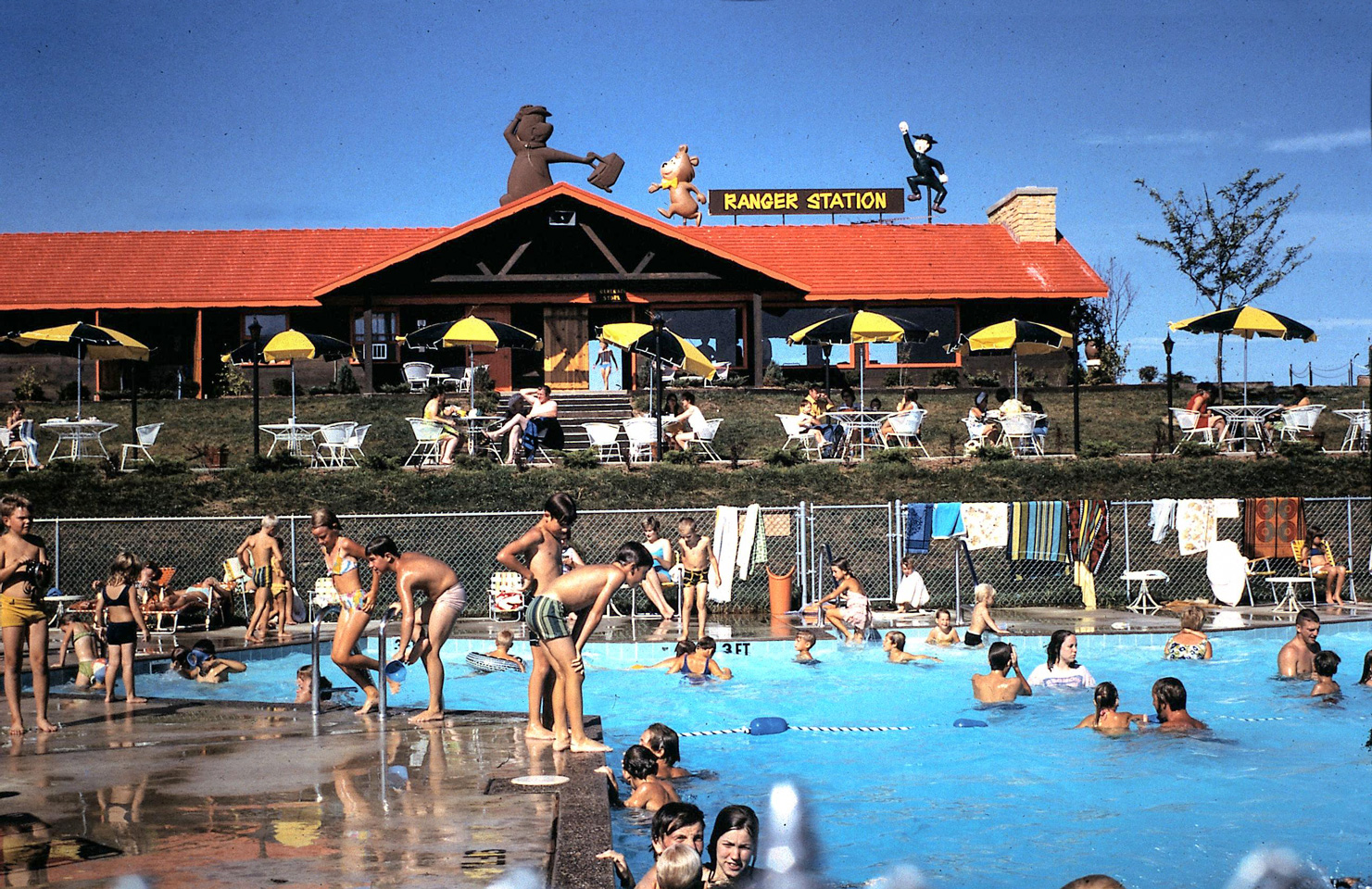
The Gassers’ Wisconsin Dells campground during its first year of operation.
But the Gassers also owned hundreds of acres of land in the Wisconsin Dells. In 1971 a couple of men approached Elinore and David Gasser, Brent’s parents, about purchasing some of the land in order to open a Jellystone Park Camp-Resort. His mom immediately started thinking how nice it would be for their family to own a campground, even though she hadn’t grown up with a tradition of camping.
“Families need to spend more time together,” Mr. Gasser recalled his mom saying, perhaps a reflection on rising divorce rates as well as her own life, which involved working long hours while craving more family time.
A 13-year-old Brent Gasser stands next to the Goodie Shoppe.
Instead of selling their land, the Gassers built what would become the third Jellystone Park in the 51-year-old franchise network. Yogi Bear’s Yellowstone Park Camp-Resort in Wisconsin Dells is also an FMCA commercial member (C2406).
“This year, we’re celebrating our 50th season,” Mr. Gasser said. He became a second-generation owner in 1983 when he took over the business from his parents. He was single at the time.
Six years later, Brent Gasser married the love of his life, Cate, who subsequently assumed responsibility for the park’s restaurant and bar operations. Once they started having kids, it didn’t take long to get them involved in the family business, too.
All four of their children started their work at the campground with garbage patrol at age 6. Now adults, the children have management roles in retail purchasing, facilities, and operations.
“It is truly a family affair,” Mr. Gasser said.
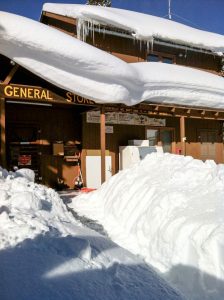
Sugar Loafin’ RV Park & Campground has survived harsh Colorado winters since 1967.
Across the United States, many campgrounds have been owned and operated by the same family for multiple generations. While the reasons these families went into the campground business may vary, they all share a common goal: to operate a business in which they can work together while providing a personal touch to their guests.
Like the Gassers, many of the early pioneers in this effort have surpassed the 50-year mark, while others aren’t far behind. In most cases, these pioneering families had to rely on other occupations for income before being able to fully develop their campgrounds and run them as self-sustaining businesses.
“I think it’s a bucket list thing for some people. It’s a wonderful business,” said Don Seppi, a second-generation owner of Sugar Loafin’ RV Park & Campground, C12393. At an elevation of nearly 10,000 feet, guests enjoy “mountain camping” near the historic mining town of Leadville, Colorado.
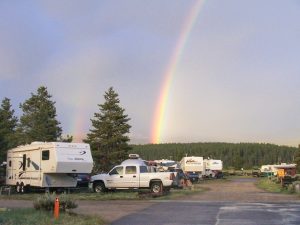
Surar Loafin’ Campground welcomes summer guests.
Mr. Seppi’s parents, Aldo and Edith, opened the campground with 18 sites in 1967 and initially charged their guests 50 cents to a dollar per night to camp there. Of course, even in the 1960s, many couples found that it wasn’t possible to sustain a family campground business solely from the fees they collected from overnight campers, particularly if they were located in an area with a relatively short camping season. It was necessary to have another business or occupation on the side.
“The season wasn’t long enough, and the volume of campers wasn’t large enough,” Mr. Seppi recalled. “Camping was an activity that was relatively popular, but nothing like it is today.”
Aldo Seppi, in fact, held various jobs in Leadville’s mining industry until he retired. “My father always worked,” the junior Seppi recalled. “He had a regular job while Mom ran the campground in summer. It was never a stand-alone business until after Dad died.”
Sugar Loafin’ Campground currently has nearly 100 campsites and two park model rentals.
The family campground business has attracted pioneers from many different professions.
Ted Bell worked as a police officer in Chula Vista, California, while building the San Diego Metro KOA with his wife, Carol. By the time they opened the campground in 1968, Ted had retired from the force with the rank of sergeant.
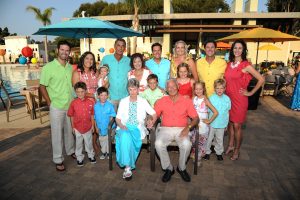
Today the Bell family owns and operates KOA campgrounds in California, Arizona, and Missouri.
The Bell family has expanded their business over three generations. The properties include two more campgrounds in California: Palm Springs/Joshua Tree KOA, C2726, and Temecula Vail Lake KOA. They also own three campgrounds in Arizona: Flagstaff KOA; Grand Canyon/Williams KOA, C11910; and Williams/Exit 167/Circle Pines KOA. And they own St. Louis West/Historic Route 66 KOA in Eureka, Missouri.
But even as the Bell family’s campground business has grown, their parks retain a personal touch. “I think guests will notice there is more of an investment of time and love in each park,” said Clint Bell, a third-generation co-owner of the campgrounds.
Those touches can be seen in the attention to detail — not only to the facilities but also in the guest service extended by every campground employee, Mr. Bell explained. “Ted and Carol started with the idea to create an environment where families could share time together around the campfire. The campground staff are just as passionate in delivering that opportunity to the thousands of families and campers that visit each year.”
Some of America’s pioneering campground families endured considerable hardships in their early days, but they persevered to keep their family businesses going.
One case in point is Baker’s Acres Campground, C13972, located in Little Egg Harbor Township in Ocean County, New Jersey, which opened in 1968.
John “Reds” Baker, the family patriarch, was a volunteer firefighter who lost his life in 1977 while battling a forest fire. The Baker family vowed to keep working to keep Reds’ dream alive through multiple generations.
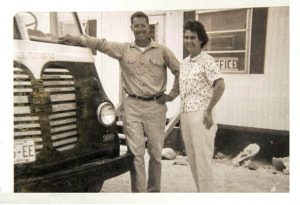
In 1948, Boyd and Elsie Hamilton traveled from Saskatchewan to Key West, Florida, as newlyweds and moved there the following year.
“Even us grandkids who never met our grandfather feel very strongly about what he did and what he stood for,” said Monica Baker Frazer, a third-generation co-owner who manages the campground with her two brothers, John and Jason Baker.
Some family campgrounds were founded by immigrants. For instance, in Florida, Boyd’s Key West Campground, the southernmost campground in the United States, was cofounded by two Canadian immigrants in 1963.
Boyd and Elsie Hamilton were natives of small prairie towns in Saskatchewan. In 1948, as newlyweds, they drove to Florida in their homemade camper, hoping to escape the bone-chilling Canadian winter.
“They kept driving south and they didn’t stop until they arrived at Key West,” said Henry Boyd Hamilton, a second-generation co-owner and operator of the park.
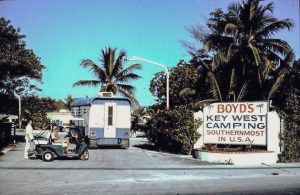
Boyd and Elsie Hamilton established Boyd’s Key West Campground in 1963.
The Hamiltons fell in love with Key West. They returned the following year and became permanent residents. Initially, Boyd worked as an electrician, a skill he learned while serving in the Royal Canadian Navy during World War II. He later built houses and apartments before deciding to open the campground.
Boyd’s has survived the ups and downs of the economy, as well as the constant threat of hurricanes, including frightening experiences with Betsy in 1965, Georges in 1998, Wilma in 2005, and Irma in 2017.
But while every campground business is subject to the vagaries of weather and the economy, another concern that lurks in the minds of many multigeneration family campground operators is whether their descendants will have the passion needed to keep their businesses going.
Fortunately, the idea of continuing a family legacy is a powerful enticement.
Normandy Farms Family Camping Resort in Foxboro, Massachusetts, was built in 1971 and currently has three generations of the Daniels family working at the park.
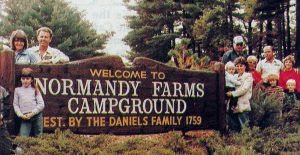
Members of the Daniels family gather at their Normandy Farms campground sometime in the 1980s.
“We want the campground to continue in the family; that’s been our vision,” said Marcia Galvin, a Daniels family descendant and Normandy Farms co-owner. “Both my sister, Krissy, and I came from other careers, because we wanted to continue the work our parents and aunt and uncle began.” Currently, Marcia’s daughter Dee is a manager and is “excelling at what she does,” she noted. Other children are in college, just beginning their careers, or still young, she added.
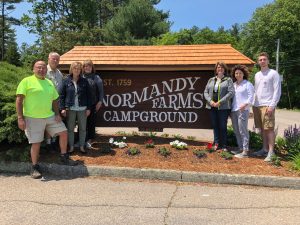
The Daniels family in 2019.
Many family campground owners encourage their kids to attend college and gather some work and life experience before deciding whether to work in the family business. Some adult children ultimately find the call of the family campground to be irresistible.
Kitty Strauss Winship grew up working with her parents at Papoose Pond Campground, C2639, in Waterford, Maine. But after going to college, she got married, gave birth to a son, and established a new life in Florida. Then came the call from her parents, Herb and Lois Strauss. They said they were getting to the point that they needed a succession plan for the campground. Did she have any interest in coming back home to start the process of taking over the family business?
Kitty recalled the fond memories she had growing up with her parents in the campground. She decided she wanted to have that life with her husband and son, too. In 2013 they moved back to Maine to run the family campground.
Meanwhile, the baton passing is already under way at Boyd’s Campground. Henry Hamilton’s son, Shaun Henry, has been a park manager for the past five years, as part of the third generation. “He has been working for 15 years at the campground and knows the campers and the lifestyle well,” Mr. Hamilton said.
Ultimately, decisions about taking over the family campground business are a matter of timing, Sugar Loafin’ Campground’s Don Seppi said. He had developed his own excavation business and worked in various positions in Lake County, Colorado, when his mom asked whether he would be willing to take over the business.
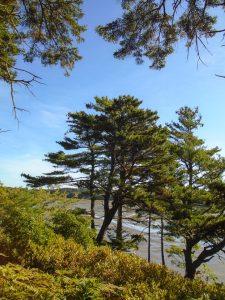
The land on Georgetown Island, Maine, where Sagadahoc Bay Campground sits today has been owned by one family since 1650.
Mr. Seppi acknowledged that running a campground is harder than most people imagine, and that it’s not as lucrative as other jobs. But he said there is nothing he’d rather do. He also has at least one daughter who might consider taking over the reins in another decade or so — or whenever he decides to retire.
Crossing Centuries
Some family-owned campgrounds in the United States have been built on land that has remained in the same family for hundreds of years.
Eric Kosalka and his wife, Pat, started building Sagadahoc Bay Campground on Georgetown Island, Maine, in 1997 on land that has been in Eric’s family since 1650. It is one of the oldest privately owned campground properties in the United States.
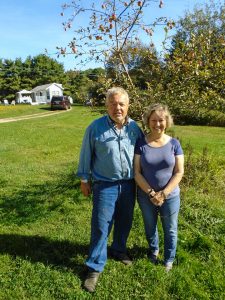
Eric and Pat Kosalka established Sagadahoc Bay Campground on Georgetown Island, Maine, in 1997.
Mr. Kosalka said his family has traced ownership of their Georgetown Island land back 18 generations. An English settler named John Parker bought Georgetown Island in 1650 from a member of the Abenaki Indian Tribe named Robinhood, he said, citing historical accounts.
Normandy Farms Family Camping Resort in Foxboro, Massachusetts, was built in 1971 on land that has remained in the Francis Daniels family for nine generations, dating back to 1759. The seventh, eighth, and ninth generations currently work at the park.
Clyde Meadows started building Merry Meadows Recreation Farm in Freeland, Maryland, in 1970, but the Meadows family has traced their ownership of the land back nine generations to 1793. In fact, they have the original goatskin deed hanging in the park office lobby.