
Nightly Rates Needed
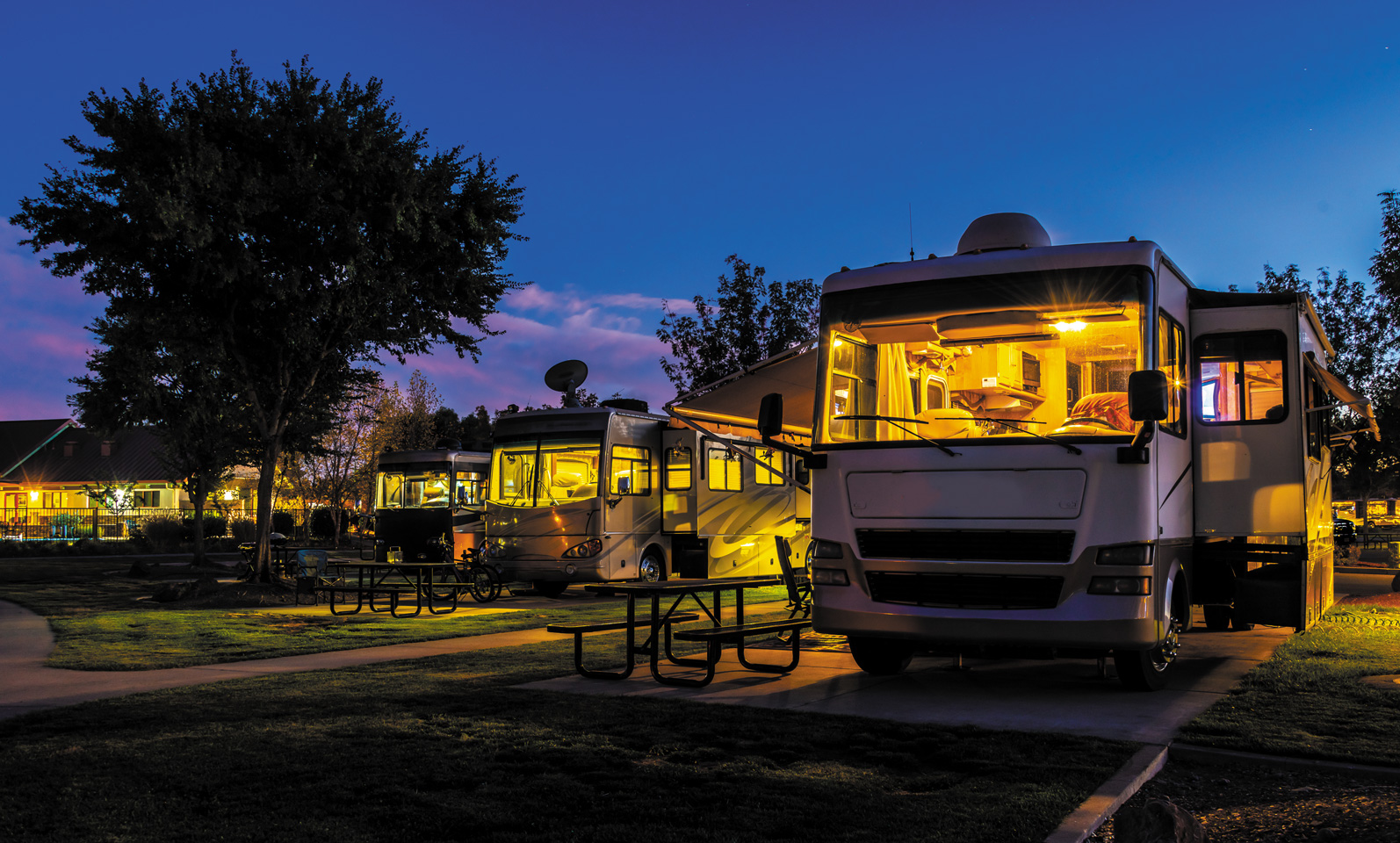
I enjoy reading the FMCA monthly magazine. Of particular interest are the articles on different RV parks. The one item that is always missing in these articles is the expected nightly price. The price makes a big difference if I want to make a specific park a destination, or even when it comes to the number of days I want to stay. I realize prices vary with the season, but there is a big difference between an expected price of $30 or $150 per night.
― Larry Hand, F376081
Port Orchard, Washington
Dear Campground Owners
We are fortunate to own an Entegra Anthem and try to spend as much time traveling as circumstances allow. One of my favorite, but most aggravating, parts of RVing is researching our trip itinerary. A lot of information I need when evaluating campgrounds just isn’t readily available online. While a glowing description of your amenities and friendly atmosphere is nice, when you own a large towable or drivable RV, not all campgrounds can hold you, and you can’t always find the answers without a phone call. My most commonly asked questions when I call are:
*Do you have pull-through sites?
*How big are your sites?
*Do you have satellite-friendly sites?
*Are you on well or city water?
Please take a look at your online and paper promotional materials and add this information if it isn’t already there. The easier you make it for me to find answers, the greater the chances I’ll choose to stay at your campground. Thank you.
― Robert Garrott, F465623
Crossville, Tennessee
More GPS Recommendations
I have tried various GPS devices for various prices during the past 20 years, and the one I like the best for RVing and even just getting around town is an app on my phone called CoPilot. Not the least of the advantages is that it is constantly updated without downloads or costs, and the app itself is FREE. Because I travel alone and don’t want to have to take my eyes off the road to look at it, I opted for it to talk to me; that feature cost me a one-time charge of $7! So, the cost cannot compare to any other GPS. And it is the best one for me, because it is always with me on my phone; the maps are downloaded into my phone so I don’t need internet to use it; and I can use it anywhere, any time.
Because you can set it for RV, car, bus, bike, walking, etc., I have even used it to find places walking around an unfamiliar town or city and to get me back to where I want to be. You have to have enough memory in your phone to accommodate the maps, so that might be the only downside, because, unlike some other GPS devices I have used, it does not cut out when traveling through mountains or heavily wooded areas, etc. where you can’t get satellite connection. It will also guide you around low clearances and propane-restricted tunnels when set on RV if you have recorded the height of your RV. In my opinion, no other GPS can match it for cost, ease of use, and convenience. I would literally be lost without it.
― Connie Buckley, F330897
Cohoes, New York
Editor’s note: Current pricing on the website — www.copilotgps.com — indicates an ongoing fee for offline voice navigation.
We use a TomTom Trucker 620. I am very satisfied with its performance. It updates regularly via Wi-Fi, and I get real-time traffic reports and guidance using my smartphone as a Wi-Fi hot spot. It has four choices: car, van, bus, and truck, and you set the parameters for all but “car.” Most of the time I use “bus” with the motorhome. The “truck” selection will plan to keep us off some routes where an RV is permitted.
― Frank Kelly, F285891
Prospect, Connecticut
My wife and I have been RVing since the 1960s, long before there was anything like a GPS for RVers. I do most of the driving, and my wife does the navigating using tried-and-true handheld, nonrechargeable, foldable paper maps. AAA is a very good resource for these, and they are updated yearly, at no additional cost. Imagine that.
We do own an outdated Garmin, but it stays at home in a storage drawer. Our children insisted that we get a smartphone to allow for phone calls, and in a health emergency access to directions to the nearest clinic or hospital.
In over half a million miles of RVing, from the Arctic Circle in Alaska to the Panama Canal in Panama and from coast to coast many times, our supply of actual paper maps has never failed us.
― Martin Kulik, F232249
Bethel, Maine
I was an Air Force navigator for 20 years before GPS. I want to make it very clear that GPS is an aid to navigation and is no substitute for good planning. I have been using GPS ever since President Reagan released it for civilian use. I currently use CoPilot Truck on my laptop, which is hooked to a 22-inch touch-screen monitor in front of me, and a Garmin Drive 51 GPS on the side window. Yes, I use two GPS. I make sure both have the same route.
For decoding, Garmin LM means lifetime maps, and Garmin LMT means lifetime maps with traffic. As I don’t use data on trips, I have found that LMT costs more and is not worth it, because of the advanced planning that I do. I have seen friends “arriving at your destination on the left‚ only to not be at their destination and routed in circles.
― Larry Turner, F163595
San Antonio, Texas
When I upgraded my GPS, I went with a Garmin Dezl 770LMT Truck Navigator. We escort RV tours for Fantasy RV Tours and were doing Alaska and Mexico. I had a Rand McNally GPS, which worked well, but it did not cover Mexico, and you could not buy a Mexico upgrade. I have another Garmin for trucks and looked into getting an RV version. After doing some research, I found that the RV version only covered the lower 48 and Canada. You could buy upgrades for Alaska and Mexico, but they were not covered when you got a lifetime update for the unit. I would have to buy a new upgrade each time. I called Garmin, and they were very helpful and recommended the Dezl 770. The Dezl 770 covers the United States (with Alaska) and Mexico and includes lifetime updates. It has the same data files as the RV version, just not the same buttons. At the time of my purchase, the cost of the 770 was less than the RV version with the add-ons of Alaska and Mexico.
― Lorrin Walsh, F410999
Bremerton, Washington
Editor’s note: The Dezl 770 seems to have been discontinued, although Amazon has “renewed‚ product available. Garmin does have a Dezl OTR series for truck navigation that RV owners may want to check out instead.
Bumper Pull Term
In your October issue, John L. Hawkins gives excellent advice on towing when your RV has a breakdown (“On The (Side Of The) Road Again, page 32). However, I am confused about one term he used more than once (and I have seen it in other articles as well), and that is in describing the types of hitches for trailers. He puts them into only two classes: fifth-wheel and “bumper-pull. Now, I’m old enough to remember when some trailer hitches were clamped to steel bumpers for temporary usage, but my recollection is that these were very temporary and died out of use about the same time as the Edsel, as no longer being practical, especially now that bumpers are nonexistent. My trailers (some of which are not the RV kind) are towed using a hitch and ball, and I believe that the smaller RV trailers are towed using the hitch and ball type. But he (and others) seems to ignore that vast usage of hitch. Hence, my confusion of what I believe to be an outmoded reference.
― Wally Bornemeier, F75200
Farmington, Utah
Editor’s note: You are correct. “Bumper pull‚ is an older term, but it seems to be used fairly often to describe a conventional travel trailer and to distinguish it from a fifth-wheel-style travel trailer.
We want to hear from you! Family RVing welcomes comments about articles published in the magazine or topics of interest to RV owners. And with bad news permeating our world of late, we’d also love to hear your good news. Gestures of kindness you’ve experienced or witnessed. An opportunity you had to do something for someone else that you’d like to share, in hopes of inspiring others to do something similar. Or just observations you have made during this unusual time. We’d love to hear your stories.
Email all letters for this column to readerswrite@fmca.com or mail to Readers Write, FMCA, 8291 Clough Pike, Cincinnati, OH 45244. Please include your name, city, and state/province. Letters may be edited for space or clarity.