
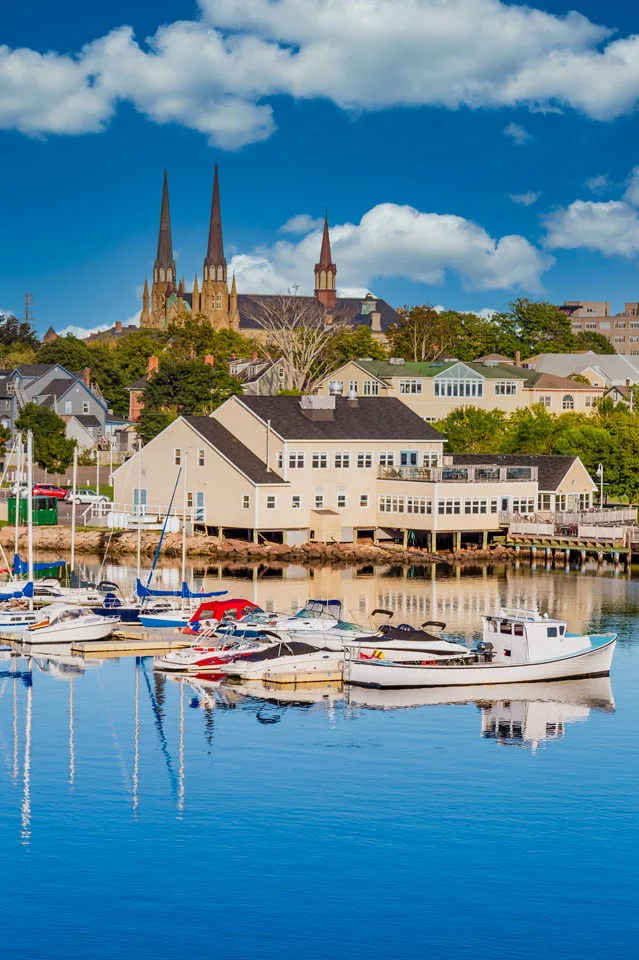
From its deep-rooted culinary culture to its historical importance, this maritime province offers plenty of things to do and see.
By Josephine Matyas, F468364
June 2024
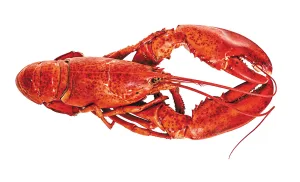 Finding fresh seafood while traveling along the coastline is one thing, but when you’re on a small island surrounded by the ocean, it’s a whole different treat for your taste buds. That’s the way life is on Canada’s smallest province, Prince Edward Island (PEI). This crescent-shaped island off the east coast of Canada is so RV friendly that a visit begins with a choice of whether to arrive by ferry or bridge.
Nicknamed “Canada’s Food Island,” PEI has strong culinary traditions that are woven deep into its small communities. This small stretch of land — about 140 miles from tip to tip — is known for its potatoes, lobsters, clams, mussels, scallops, and world-famous Malpeque oysters. Toss in one of the country’s most scenic national parks, a host of provincial parks, a few signposted coastal drives, small eateries galore, and you’ve got an RV foodie’s dream vacation.
THE PEI FOOD PRIMER
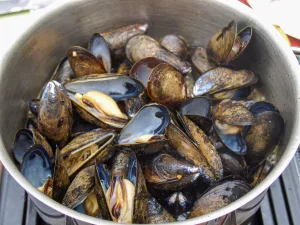
The province is known for catches from the sea, including mussels.
People come to the island for authentic food experiences, drawn by the reputation of sustainable fishery. The coastline is dotted with towns and hamlets where independent fishers tend to their traps along a seafood-rich shoreline. There are hundreds of opportunities to pull over at the docks or visit a small seafood merchant to make a dinnertime choice from the catch of the day.
The peak time of year for produce and seafood stretches from spring to late fall, which means you’ll always find something fresh in season on some point of the island. Fishermen are tightly linked to the markets, so the short interval between harvesting and processing ensures fresh flavor and texture. Cooking in our RV was a big plus. One evening, we picked up fresh mussels and island potatoes, and we cooked a feast steamed in white wine back at the campsite. On another occasion, it was sweet-tasting scallops gently sauteed with garlic and fresh chopped tomatoes bought at a farmstand.
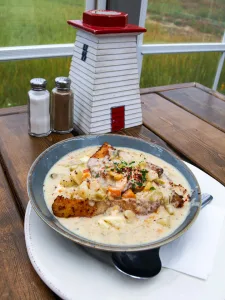
Scoring the best chowder is a fun sport in PEI.
By the second day, we’d lasered in on a culinary mission: finding the best seafood chowder the island could offer. At the Blue Mussel Café, near the docks in North Rustico Harbour, the chef brings in fresh seafood several times each day. Haddock, scallops, salmon, mussels, and potatoes are at the heart of their delicious award-winning seafood chowder. Throwing calorie caution to the wind, we also ordered the chowder poutine, prepared with the house-made seafood chowder poured over chunky roasted potatoes and topped with local cheese curds from Glasgow Glen Farm. Poutine? It’s a Canadian thing, eh?
In downtown Charlottetown, the Merchantman’s creamy seafood chowder was packed with fresh haddock, salmon, bay scallops, and mussels and served with a house-baked chive biscuit. Every diner and restaurant crows about its version of homemade seafood chowder. Picking a favorite is a waist-expanding contest.
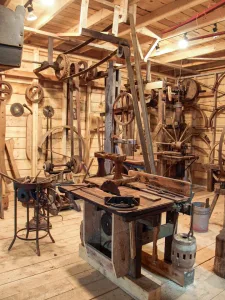
The Canadian Potato Museum displays potato-related farm machinery.
PEI is renowned for its briny-tasting Malpeque oysters, which are considered by many to be the best in the country. The majority are farmed in the nutrient-rich waters of Malpeque Bay, along the north shore and a short drive west of Cavendish (although everything on PEI is a short drive). The peak season is May through November — a perfect alignment with the RV season. Shucking and slurping oysters is almost a provincial sport. There are lots of places to try these delicacies, but head for the local favorite: the Malpeque Oyster Barn.
It makes perfect sense that The Canadian Potato Museum would have its home on this humble little island renowned for its potato crop. The museum offers extensive displays related to the origin of potatoes (in the Andes of Peru), their spread into world cuisines, and everything you’d ever want to know about growing and harvesting the lowly tubers. The museum’s small restaurant serves potato dishes as well as local desserts such as blueberry bread pudding and apple crisp. And if potato mania takes hold, you can even book a tour of a working potato farm.
THE DRIVING ROUTES
Roll down the windows, crank up a few Stompin’ Tom tunes (Canadians know this musical legend), and hit PEI’s scenic driving routes. From a bird’s-eye view, the island is like a neat and tidy patchwork quilt, edged by a ribbon of cliffs and stunning red sand beaches. Here are a few great drives — with food and other stops — to get you started.
North Cape Coastal Drive
northcapedrive.ca
Roadside attractions: Music, food, all-you-can-eat lobster experiences, beaches, and a heritage mill. The route along this western part of the island is also known as “the Canadian Oyster Coast.”
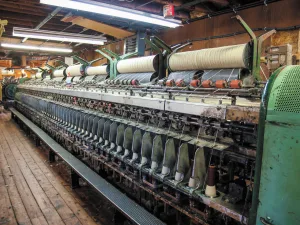
MacAusland’s Woollen Mills has been crafting virgin wool blankets and yarn since 1932.
Entering the doors of the heritage MacAusland’s Woollen Mills in Bloomfield, you are greeted by the smell of machine oil, the hum of the weaving looms, and a photo array of the Industrial Revolution. The family-run business is renowned for its traditional 100 percent virgin wool blankets created the old-fashioned way. The shelves are packed with blankets in all sizes and colors, along with sheepskin slippers, skeins of yarn, and various knitted products.
PEI produces more potatoes per person than any other place in the world. And the western part boasts the island’s peak potato production, so the drive along the North Cape Coastal Drive passes many farms. This part of the province is also home to the aforementioned Canadian Potato Museum. Farmstands sell potatoes, apples, and blueberries.
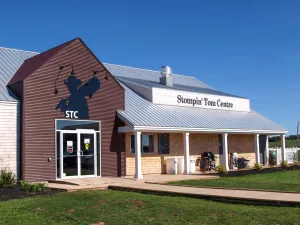
The Stompin’ Tom Centre pays tribute to a Canadian musical icon.
From Bloomfield we hugged the coastline along Route 14, past fishing harbors and views over the ocean to the far northwest reach of the island, stopping at Skinners Pond and the Stompin’ Tom Centre Homestead & Schoolhouse. The museum itself is modest, but fans of Canadian-grown music will come as a pilgrimage to Stompin’ Tom Connors, who penned such folk favorites as “Bud the Spud” and “The Hockey Song.”
Points East Coastal Drive
pointseastcoastaldrive.com
Roadside attractions: Beaches (50-plus of them!), lighthouses, history, and culture.
The 295-mile drive hugging the coastline is peppered with red and white sand beaches and the warmest waters north of the Carolinas.
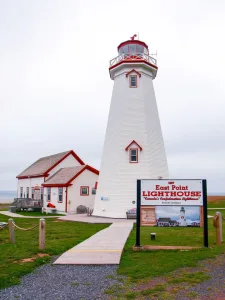
The East Point Lighthouse was built in 1867, the same year the country was established.
Centrally located Brudenell River Provincial Park has 94 sites — many with hookups suitable for larger RVs — with a pool, comfort station, Wi-Fi, wheelchair-accessible sites, a nearby dump station, and more. It makes a great base to explore this part of the province as well as attractions such as Basin Head Provincial Park, which is famous for its “singing sands,” attributed to the high silica content; the Basin Head Fisheries Museum; and the octagonal East Point Lighthouse, famous for ice cream in a waffle cone. Visitors can spot two tongue-in-cheek signs at the lighthouse overlooking the vast ocean: A sign on one side states, “End of the world,” while one on the other side counters, “Start of the world.”
The long shoreline boasts many harbors and wharves where it’s possible to buy fresh catch. If you want to know where, just inquire at tourismpei.com/askanislander, and you’ll get an answer from the locals.
Central Coastal Drive
centralcoastaldrive.com
Roadside attractions: Anne of Green Gables country, a stunning national park, and the heritage-rich capital of Charlottetown.
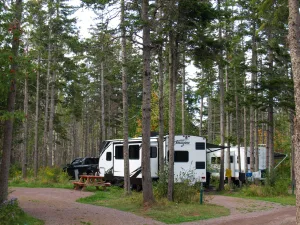
Prince Edward Island National Park welcomes RVers in its two campgrounds.
The Central Coastal Drive touches both the south shore (Red Sands Shore) and the fabled north shore (Green Gables Shore), including small towns like Summerside and pretty Victoria-by-the-Sea with its shops and community theater.
We visited in the fall shoulder season and had our pick of sites at beautiful Prince Edward Island National Park. It features beachfront and wooded campsites, many with full hookups and suitable for larger RVs, as well as showers and laundry facilities. Parks Canada has implemented environmental programs to restore the Acadian forest mix and to protect the fragile sand dunes along the shoreline. (Note that pets are not allowed on park beaches.) The Cavendish Trail and boardwalks through the wetlands are popular with walkers and bicyclists.
Nearby Green Gables Heritage Place preserves and presents the island’s most recognizable character, Anne Shirley, created by author L.M. Montgomery in her classic book Anne of Green Gables. Historic displays include the writer’s original 1906 Empire typewriter and a farmhouse filled with antiques from the late 1800s. The green-gabled farmhouse, the Haunted Wood, and Lover’s Lane form the peaceful settings depicted in Montgomery’s words.
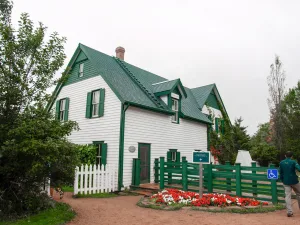
Green Gables Heritage Place, the inspiration for the book Anne of Green Gables.
Many visitors focus on the walkable urban hub of Charlottetown, a city where seafood vendors showcase their wares and world-class chefs chop, sauté, and serve as part of the PEI International Shellfish Festival each September. The festival is a signature event of the Fall Flavours Food & Drink Festival, held in communities across the island (September 26 to October 12 in 2024). The celebration includes authentic PEI tastes and traditions like lobster parties, oyster tastings, kitchen party dancing, lobster claw cracking, and local music.
It seems that no matter which route you choose to meander along or which small town’s harbor you explore, fresh tastes and friendly faces will welcome you to experience the authentic “island way.”
MORE INFO
Tourism PEI
tourismpei.com
(800) 463-4734