
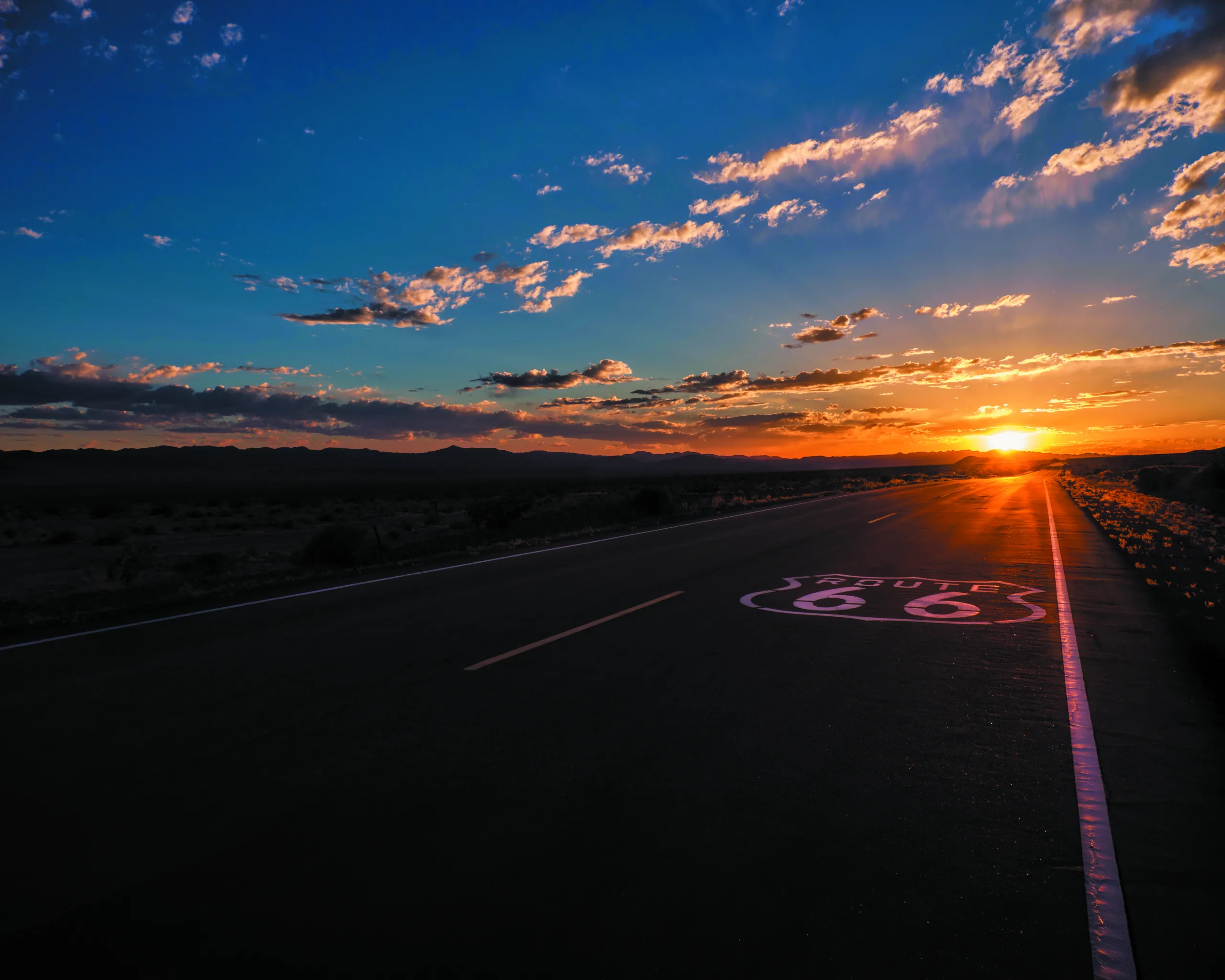
Many RVers are familiar with the history and lore of U.S. Highway 66, which celebrates its centennial in 2026. Experience the ultimate Route 66 adventure with these planning tips.
By Chris Dougherty
July-August 2026
Many spots await on Route 66.
“The journey from Chicago to Santa Monica along this ‘blue highway’ is an exploration of the way America used to be.” – Michael Wallis, Author, Route 66 – The Mother Road
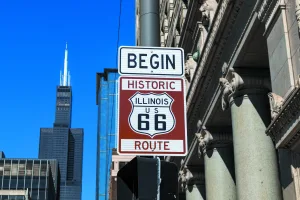
The sign for the start of the historic Route 66 highway in downtown Chicago
As a Route 66 buff for decades, I have occasionally sat introspectively wondering what the allure is. What’s drawn me to appreciate, as Route 66 historian and author Michael Wallis calls it, a “tattered and varicose ribbon of concrete and asphalt” that starts a half a continent away from where I live? Sure, I had read The Grapes of Wrath in which John Steinbeck’s Joad family traveled to California from dust bowl Oklahoma on the “Mother Road.” I had also seen the movie, and even some of the “Route 66” TV series, but it wasn’t a case of being star-struck. It was something else; something deeper and more personal.
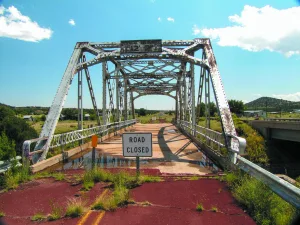
Walnut Canyon Bridge in Winona, Arizona
I appreciate the road for what it represents: the way to the west, the progression of America’s car culture, and similarly, how we have adapted to include automobiles in so many aspects of our lives. How quickly our country, and the world, took to motorized transportation, requiring the wagon trails and primitive paths to be organized into a network of planned and paved roads to accommodate the ever-growing number of vehicles.
In April 1926, Cyrus Avery of the Joint Board on Interstate Highways along with other highway officials met in Springfield, Missouri, to determine which paths and roads would combine to become highways and what they’d be called. A route connecting Chicago and Los Angeles was a priority, which would also involve other towns along the route. These highways purposely ran through the cities instead of skirting around or over them as most interstates do today. These roads were developed into a usable highway system and approved in November 1926. In 1985, when the Federal Highway Administration decertified U.S. Route 66, many sections were abandoned, frozen in time and left to decay. One state highway official later said “There’s pain in progress,” as another section of old Route 66 was dismantled for safety reasons. While true, the communities that owed their existence to Route 66 were also being abandoned, along with people’s lives that had been built along the road.
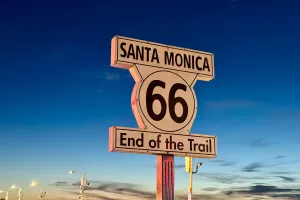
End of Route 66 in Santa Monica, California
So, while even though the U.S. Route 66 shields were removed, the roads still existed. The Eisenhower Interstate System bypassed towns that had sprung up as railroad stops and oases on Route 66 with nothing to sustain them. This prompted Angel Delgadillo of Seligman, Arizona, to begin the first state Historic Route 66 association, which would eventually encourage the development of the historic highway designation system. The Route 66 shields came back, this time in black, brown, and white. Every state on Route 66 eventually formed its own association.
As this happened, people throughout the world took interest, eventually making Route 66 the most famous road in the world. Bus, motorcycle, RV, classic car, and Corvette tours descend on the road each year. It’s a sight to behold. The towns and cities, once almost forgotten, have embraced their connection to the Mother Road. It’s a celebration of the people who built, lived, and died along that blue highway, making motels, motor courts, campgrounds, greasy-spoon cafes and diners, and their neon sign stars once again. Museums were built up and down the road to tell the local stories. People like Jim Ross and Jerry McClanahan used Department of Transportation (DOT) records to find and map every historic alignment of the road in their Route 66 map series.
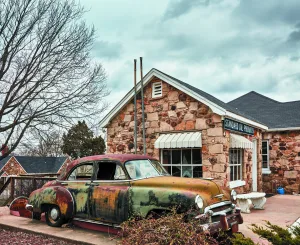
The Wagon Wheel in Cuba, Missouri, is one of many charming spots one will come across on Route 66. Built in 1936, it is the oldest continuously operating motel along the road.
No historic highway has been so well documented and preserved as Route 66. This 2,448-mile-long National Park Service corridor awaits you, my fellow RVers, on one of the greatest road trips you’ll ever take — and your RV makes it even better!
Route 66 isn’t a manufactured experience; it’s vintage Americana. It lives and breathes with real people running real businesses waiting for you to visit. You’ll (re)experience the way cross-country road travel used to be, uniquely preserved but also with ruins and ghost towns here and there that tell sad stories about lives built then lost. There are the tourist attractions that flourished during Route 66’s heyday and have been given a second chance in its rebirth. You’ll experience some of America’s greatest cities with all they offer, and in between them, fields, farms, wilderness, desert, and many small towns with interesting stories to tell.
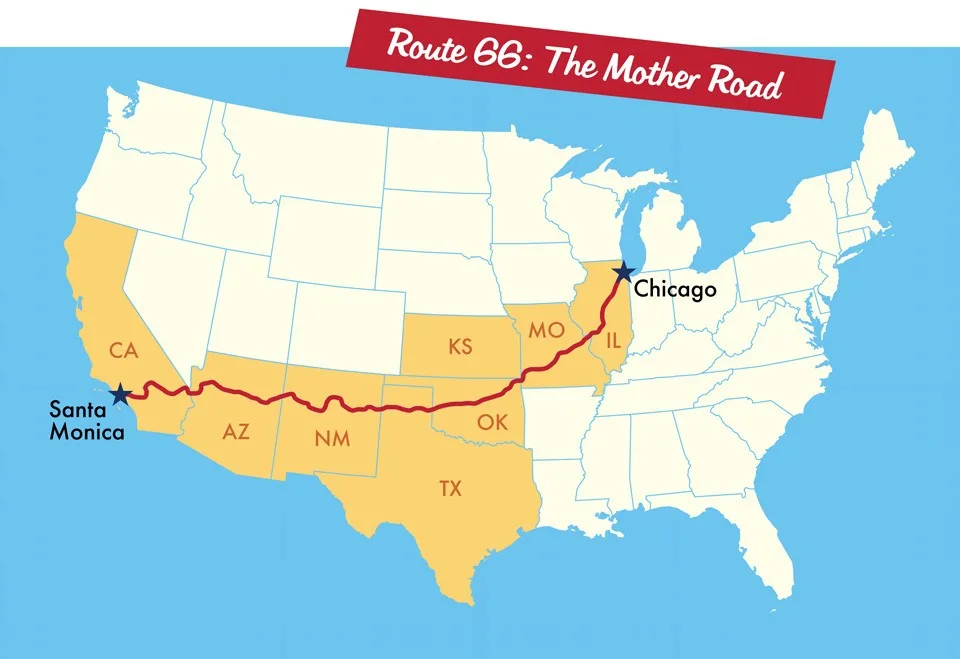
Is Route 66 RV friendly?
Yes and no.
Historic Route 66 begins and ends in two of America’s busiest cities — Chicago, Illinois, to Santa Monica, California — but travels through numerous smaller cities, towns, fields, mountains, and deserts. How accessible <I>every<I> part of Route 66 is depends on what type of RV you have, and where you want to venture to. That said, the route was at one time truck friendly.
The most Route 66-friendly RV that would allow limited downtown touring and off-road jaunts to see original alignments, would be a heavy-duty 4-wheel-drive truck with a truck camper, or a 4×4 Class B or C motorhome. However, larger RVs still can still get you around, but you must adjust your plans.
One sight along the road is the old Wagon Wheel Motel in Cuba, Missouri. So, in honor of that iconic stopover, I recommend that road warriors with larger RVs plan to attack Route 66 in a wagon-wheel fashion. Find a good place to pitch camp and drive your tow or towed vehicle for touring. When you get into the big cities, consider public transportation. It will make life much easier.
Since you’re traveling on secondary, or what are often referred to as blue roads much of the time, be especially aware of your RV’s dimensions. Know its total height and add a few inches for safety. Consider putting a water-resistant label or something similar at the top of your windshield or other convenient place that notes the vehicle’s overall height and length, and maybe even your loaded weight. Yes, be sure to weigh your RV before you start the trip if you haven’t done so already, to have a baseline. If along the road you encounter truck routes, follow those to ensure a clear route for a larger unit.
Interstate highways have replaced large swaths of Route 66, so some of your trip will be on the super slab. It’s entirely up to you how much of the original road you travel. The folks from Keep Your Daydream on YouTube traveled the route in a Blue Bird Wanderlodge, and their series is worth watching (Search YouTube for KYD Route 66 Series). They planned every detail ahead of time, went to specific sites that they could get to in the RV, and bypassed much of the rest. If you have plenty of time, you can spend more of it on the original road to experience the history. But if you’re on a tight schedule, you’ll want plan in more detail.
How long does it take to see Route 66?
There’s a lot to see in 2,448 miles! That said, some attractions and areas will be of more interest to you than others. Driving the interstates, you can motor straight through from Chicago to Los Angeles in as little as 30 hours. But that’s not what this is all about. This is a long RV road trip. Plan on a minimum of 14 days to go one way, and even at that pace, you’ll still be limiting what you have time to explore. If you want to tour the cities and all the sights, plan for a month or even an entire season. You’re in the driver’s seat! Remember, if you don’t live close to either Los Angeles or Chicago, schedule time to get to your starting point and to return home when you’ve completed the journey.
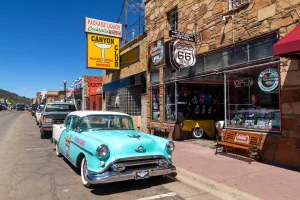
One of the many unique stops along Route 66. Located in Williams, Arizona.
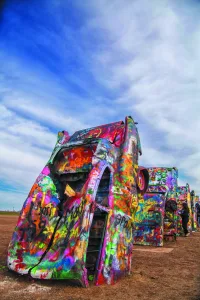
The Cadillac Ranch in Amarillo, Texas
What is there to see along Route 66?
Well, everything! One of the most intriguing aspects about taking a road trip like this is the variety of attractions, from high-population density to ghost town; forest to desert; urban to rural; gourmet to greasy-spoon; and Hermès to Eisler’s General Store.
For example, you can visit the Grand Canyon, just north of Williams, Arizona, in less than 90 minutes. In Chicago, have a croustade topped with a poached, miso-cured quail’s egg at the Michelin 3-star Smyth restaurant. Enjoy exceptional fried chicken at Dell Rhea’s Chicken Basket in Willowbrook, Illinois; an original corn dog at the Cozy Dog Drive-In in Springfield, Illinois; a 72-ounce steak at the Big Texan Steak Ranch in Amarillo, Texas; or pub fare at Ye Olde King’s Head in Santa Monica, California. (I recommend Ye Olde King’s Head; it’s near the western terminus of Route 66 and the Will Roger’s Highway Marker, with incredible cliffside views of the pier.) Breakfast at Lou Mitchell’s in Chicago is a must if you’re starting the drive there. It’s right by the BEGIN ROUTE 66 sign.
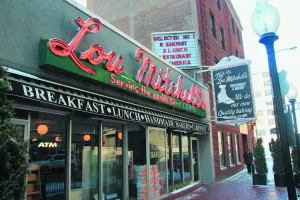
Lou Mitchell’s in Chicago, Illinois
Remember that back in the day, Route 66 was the primary road to get to the west and back, so roadside attractions, eateries, motels, and shops were abundant. Plus, museums up and down the Mother Road offered local, national, and world history. Any Abraham Lincoln fans out there? There are plenty of sites in Illinois dedicated to the 16th president of the United States. Wanna visit the first McDonald’s? It’s just a few miles from the nearest Route 66 segment in San Bernadino. Hollywood’s also right off the route, and the Queen Mary is in Long Beach, not far to the south.
Are there campgrounds along the route?
You’ll find many campground options on and close to the route. KOA, Hipcamp, and Roadtrippers are among those that have published itineraries with campgrounds. In addition, you have the world at your fingertips. When I did some online searching of my own, ChatGPT came up with a list of 25 parks with full-hookup camping along the Route 66 corridor (excluding municipal and smaller parks). Many others can be found via a more careful and defined search. There are also opportunities for dry camping along the route, as well as places like RV Overnights.
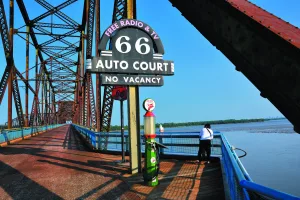
A replica of the sign for a long-gone hotel at Old Chain of Rocks Bridge on the Mississippi River.
Again, planning is key, and for 2026 especially, make sure you have reservations ahead of time.
Are there organized RV tours of Route 66?
Yes, Fantasy RV Tours and Adventure Caravans both have trips planned in 2026.
Are guides and maps of Route 66 available?
Many info sources are available for this iconic road. I encourage you to look at several, as some may have chosen different itineraries that can give you more ideas on where to stop and what to see. But here are some personal recommendations:
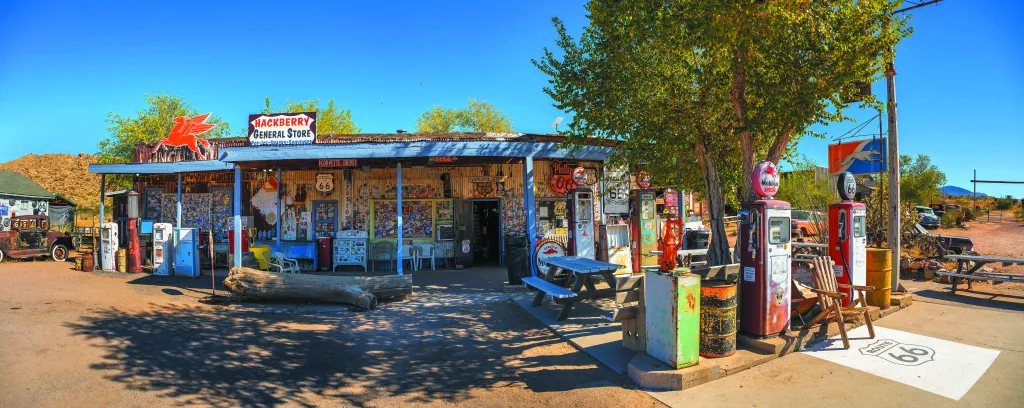
Vintage gas pumps and memorabilia at Hackberry General Store on the historic Route 66 in Hackberry, Arizona.
Route66centennial.org is the official centennial website. Great resources, including a full calendar of events for the centennial. It’s a must-visit website. Rand McNally will absolutely whet your appetite for a drive down the Mother Road, and plenty of eats, too, with its 2026 Road Atlas. It’s a “delicious” celebration that includes America’s 250th birthday from coast to coast, plus Route 66’s 100th, and a special collaboration with Atlas Obscura that shows their recommendations for the best sites and routes to see on the road.
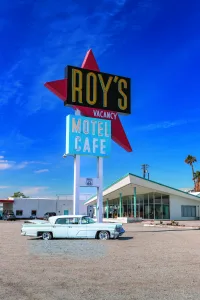
Roy’s Motel and Cafe Roadside Amboy, California, on Route 66
The Route 66 Navigator app for iOS, iPadOS, and Android is an adjacent product to the Route 66 Passport. It is CarPlay friendly and will provide non-RV specific navigation for a fee ($19.99/week, $39.99/year). It includes 1,219 Route 66 points of interest from Chicago to Santa Monica, the free “Ultimate Route 66 Guide,” news, events, downloadable maps, and more. Additional information and the free guide are available at route66navigation.com.
The Route 66 Map Series by Ross and McClanahan. These are the best paper maps of the Mother Road, in my opinion.
JimRoss66.com is the newer, virtual version of the Route 66 Map Series, and it’s free at jimross66.com. The paper map series and books are available online as well.
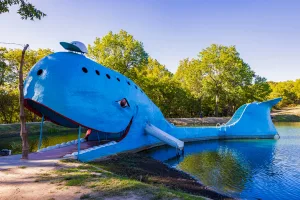
The 80-foot-long Blue Whale of Catoosa in Tucumcari, New Mexico.
GoRVing.com has an RV-friendly itinerary for 2026.
Route66roadtrip.com is a great site for traveling the road.
EZ66 Guide for Travelers by Jerry McClanahan is a terrific updated pocket guide.
Can I rent an RV to do the route?
Yes. As a matter of fact, Cruise America is a Route 66 Centennial sponsor, and this can be a good way to see the road in less time, as you can fly one direction to save time. El Monte RV also offers Route 66 Centennial rentals. They offer a brief video on their YouTube channel about RVing Route 66.
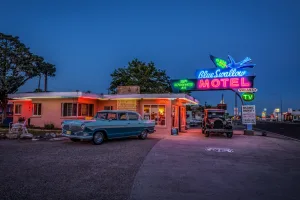
The Blue Swallow Motel in Tucumcari, New Mexico
Does it matter which direction I drive Route 66?
Many folks like to drive Route 66 from east to west following the western migration route, but, of course, people travel the other way, too. So, no; it really doesn’t matter. The Route 66 Navigator app will display the route in both directions, according to the company.
What should I watch before my trip?
Many great video resources can help you get ready. While not an exhaustive list, these are some of my favorites.
The Cruisin’ Route 66 Series by Michael Wallis. Michael is an American treasure and Pulitzer-nominated author. He and his wife, Suzanne, have been named the “Godparents of Route 66” by a federal judge! He was also the voice of the sheriff in the Disney Pixar film Cars. This series is available now for free as a playlist on YouTube
Route 66: Return to the Road with Martin Milner. This documentary, hosted by the late actor of “Route 66” and “Adam-12” TV show fame, is one of the best done to date. It’s available on Amazon and from Paget Films.
Route 66- A cruise Down Main Street with Hunter Reno. Great photography; interviews; and a unique, artistic view of the road in 1995. Available on Amazon Prime and DVD.
Take time this year to “get your kicks on Route 66” as you discover a little bit of yesterday brought back to life along this iconic highway that turns 100 this year.
MORE ONLINE RESOURCES
adventurecaravans.com/tour/historic-route-66
fantasyrvtours.com/FRVA-Club-Tours
gorving.com/tips-inspiration/travel-guides/get-kicks-route-66
koa.com/blog/the-ultimate-guide-to-route-66