
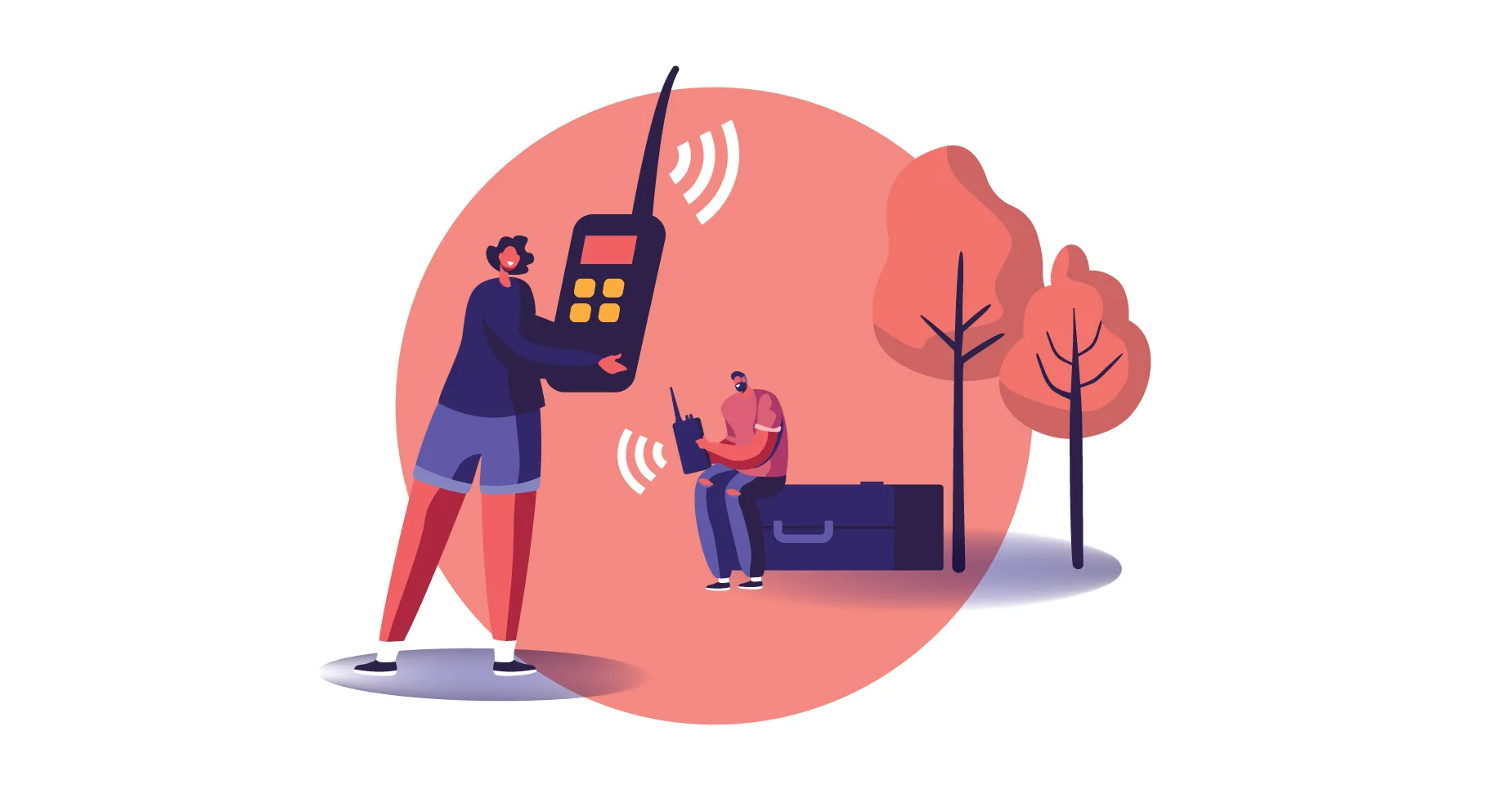
Using ham radio for emergency or recreational purposes offers many advantages but requires an FCC operator license. FRVA’s Amateur Radio Chapter can help you acquire one.
By Skip Kazmarek, F427585
November-December 2025
When natural or man-made disasters occur, or when phones and cell towers are unavailable, amateur radio is often the only way to communicate. Consider these examples:
In December 2022, a man went for a hike. When night fell, his cell phone battery died and he realized he couldn’t reach a road without bushwhacking down a mountain in the dark. Fortunately, using a small, handheld amateur radio transceiver he carried, he was able to contact another ham, who called his wife, who in turn contacted the local police department. The hiker was safely found.
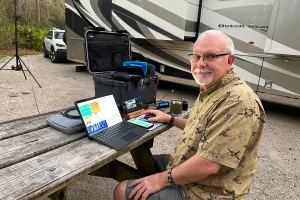
Amateur Radio Chapter VP Dennis Dugan enjoys ham radio while camping. In addition to its recreational benefits, amateur radio also enables emergency communication.
In April 2024, a family was traveling in Death Valley National Park when their car became stuck in the mud. Cell phone coverage was not available. Luckily, the father was a ham radio operator with a mobile transceiver in the vehicle. He called for help and, incredibly, another ham radio operator in Ohio heard his call. That operator relayed the message to the National Park Service, and rangers rescued the family within a few hours.
When Hurricane Helene hit western North Carolina, tens of thousands of residents lost power and cell phone coverage. Local hams were able to send text and email messages without a local internet connection. They relayed requests for supplies and medication and notified friends and family to inform them their loved ones were okay.
Although ham radio equipment requires some learning to operate, anyone who completes the basic licensing process can spring into action when needed.
Besides its value in emergencies, ham radio is also a ton of fun. Using relatively inexpensive equipment, hams can communicate locally and worldwide using voice transmissions, various digital text formats, satellites, and local repeaters.
One of the most popular forms of ham radio activities is “Parks on the Air” (POTA). Using portable equipment, battery power, and makeshift antennas, participants set up at parks and recreational areas throughout the country. Although POTA appeals to the younger set, it’s also suitable for older operators. And because the program focuses on state and federal parks, it makes a natural complement to RV travel. Since you’re likely to be in or near parks anyway, why not double the fun and join the Parks on the Air bandwagon?
Besides all that, the ham radio community is a fun-loving group. The Amateur Radio Chapter (ARC) is one of FRVA’s most vibrant, active, and growing chapters, with nearly 200 members. The group holds rallies and other gatherings several times per year throughout the United States.
In short, if you want to be prepared for emergency communications, enjoy the outdoors, stay current with technology, or are looking for a new hobby to keep your mental juices flowing, ham radio is for you.
There’s just one catch. To enjoy ham radio, you need a license from the Federal Communications Commission. In March 2026, during FRVA’s International Convention & RV Expo in Perry, Georgia, the Amateur Radio Chapter will offer training and testing to help you acquire your license.
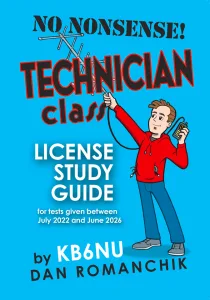
The Amateur Radio Chapter will utilize this study guide to help Perry class participants prepare for the Technician license exam.
Three levels of ham radio licenses are issued in the United States. Each level grants increasingly more privileges to use designated frequencies and requires a deeper understanding of amateur radio operations. However, the knowledge needed for the entry-level “Technician license” is minimal. One simply has to understand the basics of how a radio works and the rules and regulations that govern radio operations.
In Perry, the Amateur Radio Chapter will offer training for the Technician license. The course costs $15, and lunch is included. The session can accommodate only 25 students, so register earlyto secure your spot.
The chapter will provide everything you need to get started: You’ll attend a one-day training session, take a simple FCC multiple-choice test, and complete all the paperwork and submissions required to obtain your license.
Before arrival, students should have obtained and reviewed the Technician license study manual and completed a couple practice tests. The No Nonsense Technician Class License Study Guide by Dan Romanchik has been used successfully by thousands of students. It can be downloaded for free at kb6nu.com/study-guides. The printed version can be purchased on Amazon. The Amateur Radio Chapter will use the No Nonsense guide for instruction in Perry, and it is highly recommended. Those interested in a more in-depth explanation of the radio topics covered in the Technician exam can refer to the additional resources on the ARC website (link below).
Those who have registered for the class will arrive on the grounds in Perry on Sunday, March 15, 2026. Students are welcome to join Amateur Radio Chapter members, who will arrive the same day.
On Monday, March 16, chapter presenters will conduct a full-day review session covering the materials that may be on the FCC examination. The course will closely follow the No Nonsense guide.
Although the exam may seem intimidating, students have little to fear. Most questions are straightforward, and the answers are obvious. Some questions involve radio equipment, regulations, and radio physics. But don’t worry. The exam prep session will cover every question, provide the correct answer, explain why it is correct, and offer tips and hints to help remember it.
After the class, chapter members will stay to answer questions and walk students through any practice tests they may want to take.
Most people who review the materials a few times, take some practice tests, and attend the one-day prep session will pass the Technician license exam easily. However, if the preparation brings back memories of those high school science classes you hated, don’t despair.
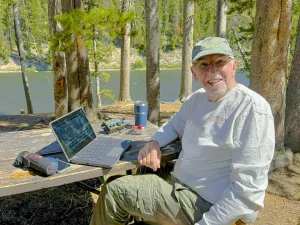
The author uses his portable radio along the banks of the Yellowstone River in Yellowstone National Park.
To ensure success, review the No Nonsense guide repeatedly and continue taking practice tests. Don’t worry if it feels like you’re just memorizing facts without fully understanding them; their meaning will become clear once you start talking to other hams on the air. A second option is to supplement the No Nonsense guide with online courses, many of which are free. Visit the “Additional Resources” section on the ARC website. Either way, rest assured; you’ll do fine.
Early Tuesday morning, hams from the Middle Georgia Radio Club will administer the FCC exam and score the test immediately. Most test-takers pass with no problem. Sometimes, however, the randomly generated question set covers topics a student may struggle to understand. Any student who doesn’t pass on their first try can retake the test right away (with a different question set) and will likely pass.
FRVA members who already have a Technician license or a General license are welcome to preregister, space permitting, to take a test on Tuesday morning to upgrade to a higher license class.Exam results for the students who have passed will be transmitted to the FCC. Each successful applicant will receive an email from the FCC asking for a $35 license fee. After payment, they will be issued a call sign. Ta-da! The successful applicant is now a licensed amateur radio operator — an official “ham”!
Besides its value during emergencies, amateur radio complements the RV lifestyle. Members of the Amateur Radio Chapter are always ready to answer questions and assist those who want to begin the ham radio journey. Feel free to contact any ARC member, or visit the chapter’s website. To learn more about the instruction and testing during the Perry convention, or to be put on the mailing list, email we4rv@fmcaarc.com.
As hams say, “73” (the abbreviation for “best regards”). We hope to “see” you on the air someday.
AMATEUR RADIO CHAPTER
fmcaarc.com